


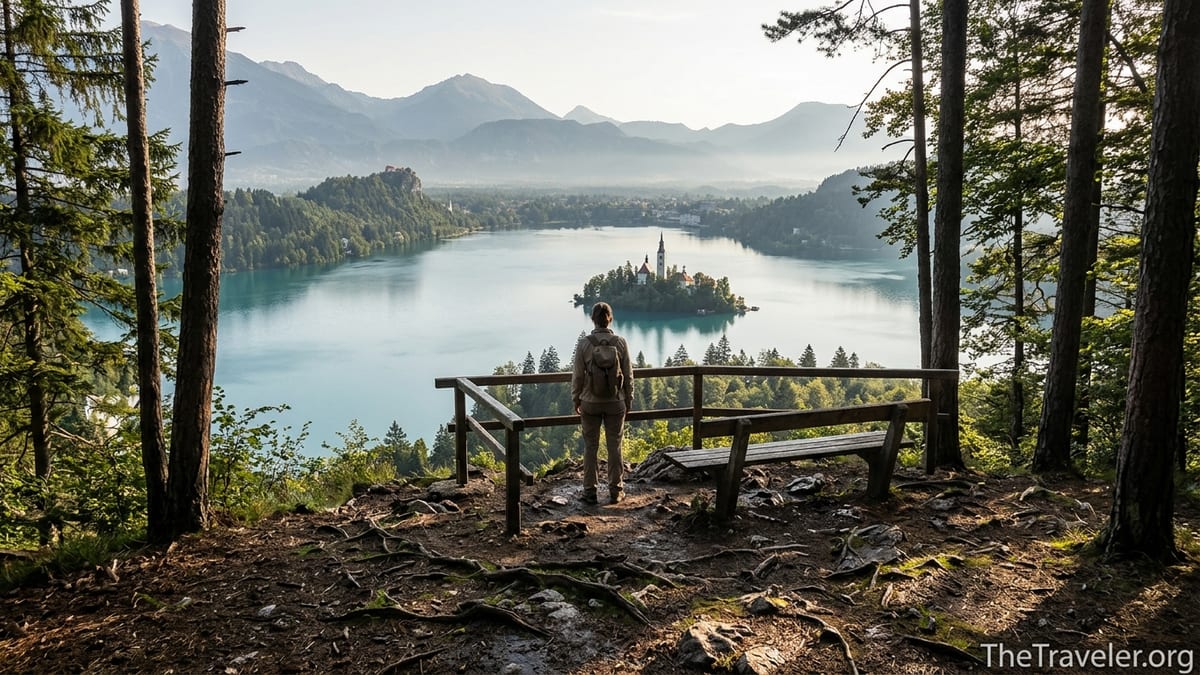
Mala Osojnica is the hillside that delivers the postcard view of Lake Bled: the turquoise water, the tiny island church, and the castle clinging to the cliff. The hike is short, but it is steeper, trickier and more weather dependent than many visitors expect. If you show up in sandals with no plan beyond “follow Google Maps,” you will still probably reach the viewpoint. To really enjoy it, avoid crowds and stay safe, it pays to understand how this little hill above Bled actually works.
Get the latest updates straight to your inbox!
Why Mala Osojnica Is Not Just a Quick Stroll Above Lake Bled
On paper, Mala Osojnica sounds easy. The main forest trail climbs roughly 45 minutes from the western shore of Lake Bled to about 685 meters above sea level, gaining a few hundred meters of elevation. In practice, many first timers are surprised by how sustained the uphill feels, especially if they came straight from a lakeside café. The path is mostly dirt and roots with some rocky sections, and toward the top there are steep wooden or metal stairs that feel closer to a ladder than a staircase.
Local tourism information describes the route as a short but steep viewpoint hike under an hour each way. That puts it somewhere between a walk and a mountain trail. Families with active kids, reasonably fit day trippers and photographers with light camera bags usually do fine, but visitors arriving in flip flops or carrying heavy picnic baskets often turn around when the trail kicks up. Treat Mala Osojnica as a genuine hike, not an extension of your promenade around the lake, and you will be much happier.
It also helps to remember that the famous viewpoint is only one part of a small hill system above the lake. Nearby Ojstrica and Velika Osojnica offer alternative angles, and several loops combine one, two or all three viewpoints. Travel blogs and outdoor platforms describe routes from around 3 to 5 kilometers with 250 to 300 meters of elevation gain if you link the viewpoints, which can easily turn your “quick photo stop” into a half day outing without you quite realizing it.
If your time in Bled is limited, going straight up and back down from Mala Osojnica makes sense. If you have a full morning, it is worth considering one of the loops that add Ojstrica or Velika Osojnica for more varied views and a more satisfying hike.
Choosing the Right Trailhead, Route and Parking
The biggest practical decision most visitors overlook is where to start. The classic and most clearly marked approach to Mala Osojnica begins near Velika Zaka on the western shore, not far from Camping Bled and the lakeside car park there. Signs for “Mala Osojnica” and “Velika Osojnica” appear near the main road and along the lakeside path. From Parking Velika Zaka, you can expect to pay by the hour, with typical posted rates in recent seasons around a few euros per hour, so a two hour hike plus some extra time for photos quickly adds up.
A slightly cheaper alternative starts near the Bled Jezero train station on the opposite side of the same bay. Hikers report day parking there for a fixed fee that is often lower than lakeside hourly prices. The trade off is a few extra minutes of walking along the lake to reach the steep forest path. For budget conscious travelers or those arriving by train from Ljubljana or Jesenice, this trailhead can be one of the most convenient options.
There is also a trailhead marked “Mala Osojnica” further south along the lakeshore near Mlino, used by some longer loop hikes that continue to Velika Osojnica and Ojstrica. This southern start makes sense if you are staying in private accommodation or small guesthouses clustered on that side of the lake. From the town center around the main bus station, plan on a 30 to 40 minute lakeside walk to either Velika Zaka or the Mlino area trailhead before you even start climbing.
What most visitors miss is how quickly parking fills on summer weekends and during school holidays. By late morning in July and August, Velika Zaka’s lot can be almost full with swimmers, campers and boat renters. Arriving before 9:00 in the morning not only makes parking easier, it often means you are on the trail during the coolest and quietest part of the day.
Trail Conditions, Footwear and What to Pack
Mala Osojnica is often described as “easy to moderate,” but those labels hide two key realities: the trail is steep in sections, and it changes character dramatically with weather. After heavy rain, the dirt path turns slick and the exposed roots become ankle traps. In late autumn and early spring, shaded sections can hold patches of mud or leftover snow while the lakeshore feels almost like spring. Even in high summer, morning dew and overnight showers can leave the wooden or metal stairs near the top damp and slippery.
That is why local hikers typically wear trail shoes or light hiking boots rather than casual sneakers. You do not need heavy alpine boots, crampons or poles, but footwear with some grip makes a noticeable difference. Travelers who continue their Slovenia trip to Bohinj or the Vintgar Gorge often re use the same shoes, so packing a pair that can handle both city streets and steep forest is a smart choice. Closed toe shoes also protect your feet from roots, loose stones and the occasional slug on the path after rain.
In terms of what to carry, think of a compact day hike. A small backpack with water, a light layer and a snack is usually enough. There are no cafés or kiosks at the viewpoint itself, only a wooden bench and sometimes a small information board. In summer, a refillable bottle and a lightweight sunhat or cap are helpful, even though most of the path is shaded, because you will likely spend time on the exposed viewpoint platform taking photos. In shoulder seasons, a thin windproof jacket or fleece makes the difference between shivering through sunrise and comfortably watching the light hit the island.
One more detail that surprises some visitors is the lack of toilets once you leave the lakeshore. Public restrooms cluster around the town center, the larger hotels and some of the structured parking areas. If you have breakfast at a café in Bled or at Camping Bled before setting out, use facilities there. Alpine etiquette applies in the forest: if you must go, do it well off the path, bury or carry out tissues and avoid leaving visible traces.
Timing Your Hike: Sunrise, Midday or Sunset
Almost every striking photo you have seen from Mala Osojnica was taken in beautiful light, not in the middle of a glaring summer afternoon. The hill’s position above the lake makes it perfect for both sunrise and early evening, but each timing comes with trade offs that visitors often overlook. In July, sunrise in this part of Slovenia can be around 5:15 to 5:30 in the morning, which means starting from the lake as early as 4:30 if you want to catch the first color from the top. That requires a headlamp for the dark forest and some confidence walking uphill on an unlit path.
For many travelers, the more realistic sweet spot is early morning after sunrise. Starting between 7:30 and 9:00 offers softer light, cooler temperatures and smaller crowds than midday, without the logistical challenge of a pre dawn wake up. By late morning, especially on weekends and in peak season, the viewpoint can feel like a rotating photo line. Tour groups, wedding photographers and drone enthusiasts sometimes converge on the small platform, which can make it harder to enjoy the scene quietly.
Sunset and the golden hour before it paint the lake in warm tones and often produce dramatic skies behind the Karavanke mountains. However, this is also when footing can become trickier. After a long day of sightseeing, tired legs and fading light increase the risk of slips on the descent. If you go up late in the day, time your turnaround so that you are comfortably back on the lakeside path before true darkness sets in. Smartphone torches can technically get you down, but they do a poor job of revealing roots at ankle height.
Season matters too. In high summer, expect heat and the occasional afternoon thunderstorm that can move in quickly over the Julian Alps. In May, June, September and early October, the air is often clearer and cooler, and crowds are thinner, although you should be prepared for showers. In winter, residents in online forums regularly remind visitors that even “small” hills like Mala Osojnica can carry snow and ice, making micro spikes and trekking poles advisable and sometimes rendering the viewpoint temporarily unsafe for inexperienced hikers.
Navigating the Path, Stairs and Viewpoints Safely
The main route to Mala Osojnica is clearly worn and signposted from near Velika Zaka, but details on the ground can still confuse first timers. At the start, the trail leaves the lakeside and heads steeply into mixed forest. You will pass junctions with signs pointing to Ojstrica, Mala Osojnica and Velika Osojnica. For the direct route, follow the arrows to Mala Osojnica. The path rises steadily on dirt, with sections of stones, roots and small switchbacks. In dry conditions it feels like a straightforward cardio workout. After rain, it demands slower, more deliberate foot placement.
Near the top, just before the viewpoint, you encounter the feature that catches many visitors off guard: very steep stairs. In older descriptions these are described as almost vertical wooden steps; more recently, hikers report sections of metal stairs and railings installed to improve safety on the steepest slope. Regardless of material, this segment is short but exposed enough to merit caution. Keeping three points of contact on the railing, taking your time and letting faster or more confident hikers pass at wider landings keeps everybody safer.
The viewpoint itself is a compact area with a wooden bench and often an information board identifying surrounding peaks like Stol, the Karavanke range and the Jelovica plateau. The ground drops steeply beyond the bench, and there is no barrier that would feel reassuring to a parent of a small child. This is not the place to let toddlers wander unsupervised or to back up blindly through your smartphone screen to frame a shot. Travel photographers suggest leaving large camera bags on the bench or on the safer side of the path rather than bringing them right to the edge.
If you choose to extend your hike beyond Mala Osojnica, connecting paths lead onward to Velika Osojnica, slightly higher at around 750 meters, and eventually to Ojstrica. The linking routes undulate with a mix of short climbs and descents. They are still forest paths, not cliffside tracks, but they feel more like a “real hike” than a quick family viewpoint outing. Carrying a simple offline map on your phone or a downloaded track from a hiking app adds peace of mind and helps you confirm you are heading to the right next junction.
Crowds, Photography Etiquette and Local Regulations
Because Mala Osojnica delivers the exact scene that sells Lake Bled to the world, it attracts everyone from casual Instagram users to professional landscape photographers. The viewpoint is small enough that competing photo agendas can easily create tension. Early morning is usually dominated by tripods and people waiting for perfect reflection of Bled Island on a calm lake. Later in the day you are more likely to share the space with couples taking engagement photos or friends trying to recreate shots they saw on social media.
Basic etiquette goes a long way. If you set up a tripod, avoid blocking the narrowest part of the platform, and step aside between exposures to let others take quick handheld photos. If you arrive in a group, take turns at the front rather than all crowding the edge at once. Visitors sometimes attempt risky poses like sitting on the outer rocks beyond the bench or leaning far over the drop; these stunts not only endanger the person, they make other hikers uncomfortable and can encourage copycat behavior.
Drone use is another hot topic above Lake Bled. Regulations in Slovenia are periodically updated, and certain areas around the lake and above private property may be restricted or require registration and permits. Locals and regular visitors increasingly report frustration with buzzing drones during quiet sunrise sessions. Before you launch, check current national aviation rules and any local signage, and think about whether another few aerial clips are worth disturbing the atmosphere that draws people here in the first place.
Finally, treat Mala Osojnica as part of a shared natural space, not as a disposable backdrop. That means packing out all trash, including fruit peels and tissues, keeping noise levels moderate and respecting any temporary closures or re routed sections that local authorities or landowners put in place to protect the forest floor from erosion. In recent years, paths here and in other Slovenian hotspots have had to be reinforced because informal shortcuts carved into the hillside by impatient hikers turned into deep, muddy ruts.
Integrating Mala Osojnica Into a Wider Bled Itinerary
Mala Osojnica works beautifully as the centerpiece of a half day around Lake Bled rather than as an isolated outing. One popular pattern is to catch a relatively early bus from Ljubljana, walk the 30 to 40 minutes along the northern shore to Velika Zaka, hike up to Mala Osojnica for late morning light, and then descend for lunch and a swim. The pebbly lakeshore near the trailhead has designated swimming areas and seasonal rental stands for rowboats and stand up paddleboards, which can turn the rest of the day into a relaxed lakeside escape.
Another option is to stay in Bled for two or three nights and combine Mala Osojnica with other low altitude walks. The 6 kilometer circuit around the lake itself is an almost flat stroll on a mix of path and pavement, suitable for all ages. You can pair an early morning hike to the viewpoint with an afternoon visit to Bled Castle, reached by a separate steep path or by car, for a different but complementary perspective on the lake. On a following day, you might explore Vintgar Gorge or take a bus to nearby Lake Bohinj for a more rugged mountain lake setting.
Families with children often appreciate breaking the hill outings into smaller pieces. One day might feature the shorter Ojstrica hike, which climbs to around 600 meters and offers a more intimate, tree framed view of the island. Another morning can then be devoted to Mala Osojnica, with enough rest in between for kids to enjoy the lakeside playgrounds or a ride on a traditional pletna boat to the island church. Because the trail network above Bled is compact, you can adjust plans based on energy levels and weather on the spot.
Whatever combination you choose, factor in public transport schedules if you are not driving. Buses between Bled and Ljubljana are frequent in high season but less so early and late in the day, and trains from Bled Jezero follow a timetable that may not align perfectly with a long sunset linger at the viewpoint. Checking return options over breakfast and leaving yourself a buffer reduces end of day stress.
The Takeaway
Mala Osojnica earns its reputation as the classic Lake Bled viewpoint, but the hike is more serious than many holiday visitors expect. Short does not mean trivial here. The forest trail is steep, the final stairs demand attention, and weather can transform the ground underfoot in a matter of hours. Coming prepared with decent shoes, a small pack and a realistic sense of your fitness is far more important than bringing specialized mountain gear.
What most visitors miss is that a bit of planning unlocks a much better experience. Choosing the right trailhead for how you arrived in Bled, starting early enough to avoid the busiest crowds, and understanding how Mala Osojnica connects to Ojstrica and Velika Osojnica all help you make the hill your own rather than simply joining a queue. Adding simple habits like checking the forecast, carrying water and respecting shared space at the viewpoint ensures that this tiny corner of Slovenia remains magical for the next wave of travelers.
If you treat Mala Osojnica as more than just an Instagram backdrop, it becomes exactly what many people are seeking when they come to Bled in the first place: a manageable alpine hike, a moment of quiet above the water and a memory that feels richer than a quick photo stop on a bus tour. Give the hill the attention it deserves, and it will reward you with one of the finest lake panoramas in Europe.
FAQ
Q1. How long does it take to hike to Mala Osojnica and back?
Most hikers take about 30 to 45 minutes to climb up from the lakeshore and 25 to 35 minutes to come down, depending on fitness, trail conditions and photo stops.
Q2. Do I need special hiking gear for Mala Osojnica?
No technical gear is required, but light hiking shoes or trail runners with good grip are strongly recommended, especially because of the steep, sometimes muddy path and the stairs near the top.
Q3. Is the trail suitable for children and older travelers?
Active children and fit older travelers usually manage fine, but the sustained uphill and steep stairs mean it is not ideal for very young kids, people with serious knee issues or anyone uncomfortable with heights.
Q4. Can I hike Mala Osojnica in bad weather or winter?
In heavy rain, snow or ice, the trail becomes slippery and potentially dangerous. In winter or during cold snaps, locals often use micro spikes and poles; visitors without experience in such conditions should consider skipping the hike.
Q5. Is Mala Osojnica accessible by stroller or for people with limited mobility?
No. The route includes steep, uneven forest sections and stairs that are not passable with strollers or wheelchairs. Those with limited mobility will find the lakeside path or viewpoints reached by road more accessible.
Q6. Are there any facilities at the viewpoint itself?
There are usually only a bench and sometimes an information board. There are no toilets, food stands or shelters, so bring your own water and snacks and use facilities before leaving the lakeshore.
Q7. What is the best time of day to visit Mala Osojnica?
Early morning, from sunrise through mid morning, offers the best combination of softer light, cooler temperatures and fewer crowds. Late afternoon and early evening can be beautiful but require careful timing to avoid descending in the dark.
Q8. Can I combine Mala Osojnica with other hikes around Lake Bled?
Yes. Many visitors link Mala Osojnica with the nearby viewpoints of Ojstrica and Velika Osojnica, or pair the climb with a full loop around the lake, a visit to Bled Castle or an afternoon trip to Vintgar Gorge or Lake Bohinj.
Q9. Is it safe to fly a drone from the Mala Osojnica viewpoint?
Rules on drone flying change over time and may restrict use around Lake Bled. Always check current Slovenian regulations and any local signs, and consider the impact of noise on other visitors before launching.
Q10. Do I need a guide to hike Mala Osojnica?
Most people hike independently using trail signs or offline maps. A guide is not essential for navigation, but guided walks are available and can be useful if you prefer extra support, want local context or are unfamiliar with hiking on steep forest trails.