


Russia remains one of the most complex destinations in the world to plan for in 2026. Political tensions, extensive sanctions, and fast-changing rules mean that a trip which once involved a simple visa and a few domestic flights now demands careful research and risk tolerance. Before committing to nonrefundable tickets, travelers should understand the security environment, entry requirements, money and payment constraints, and what day-to-day life on the ground actually looks like right now.
Get the latest updates straight to your inbox!
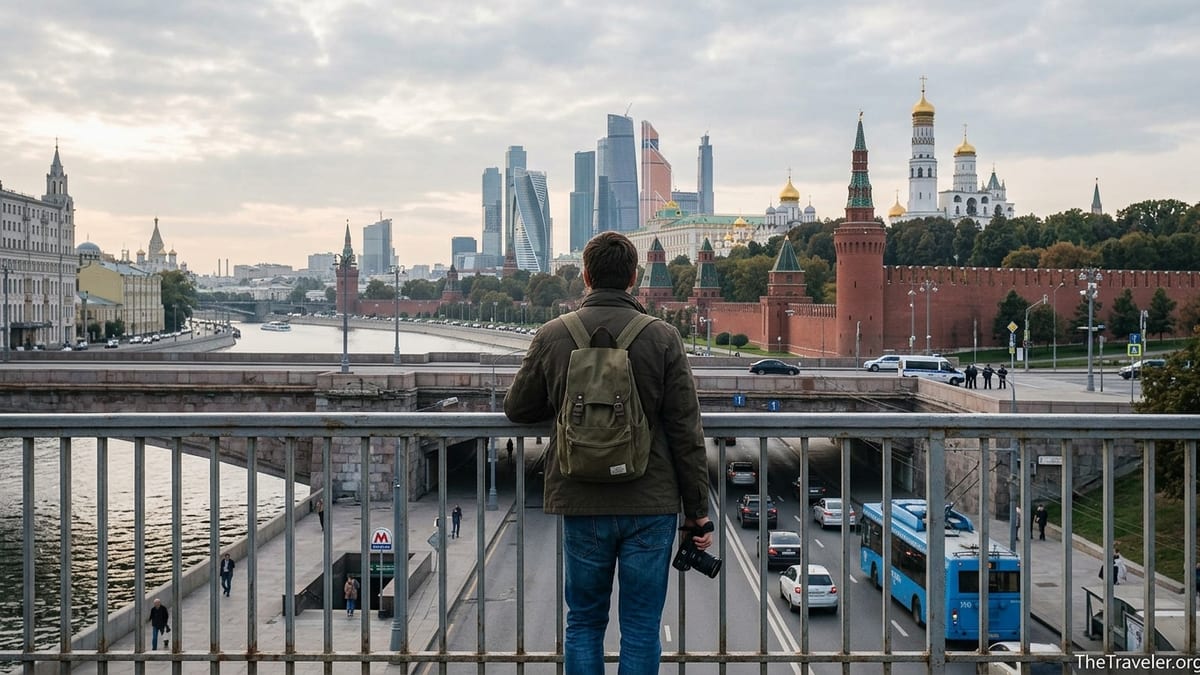
Understand the Current Risk and Travel Advisories
As of mid-2026, the United States government maintains a Level 4 “Do Not Travel” advisory for Russia, citing risks that include arbitrary enforcement of local laws, limited consular assistance and the possibility of wrongful detention. Other Western governments, such as many in the European Union and the United Kingdom, strongly discourage nonessential travel as well. This is not standard boilerplate language; it reflects an environment where rules can shift quickly, especially for foreigners perceived as linked to states seen as unfriendly to Russia.
In practice, this advisory means that if a U.S. citizen chooses to travel to Russia and something goes wrong, consular help may be severely limited. For example, staffing at the U.S. Embassy in Moscow and consulates is much lower than it was a decade ago, and routine services for travelers have been cut back. If you are detained after a street police check in Saint Petersburg or questioned while photographing infrastructure near Murmansk, you should not assume you will receive the same level of assistance you might get in Paris or Tokyo.
Travel insurance policies sometimes exclude destinations under top-tier government warnings, so a Level 4 advisory can also affect your ability to buy or use coverage. Before paying for a policy, read the exclusions section carefully and confirm in writing that trips to Russia are covered. Some specialist insurers that focus on journalists, aid workers or security contractors may still underwrite travel to Russia, but they often require detailed itineraries and higher premiums.
Finally, keep in mind that sanctions are not static. New measures announced by the United States, the European Union or allied countries can affect aviation, banking, technology and individual Russian entities with little notice. A route or payment channel that works in June 2026 might not exist by the time you travel later in the year. Anyone considering a trip should plan for contingencies and accept that last-minute changes are possible.
Entry Rules, Visas and Documentation
Russia continues to require visas for most non–Commonwealth of Independent States nationals, and the process is more bureaucratic than many travelers are used to. For most Western visitors, a standard tourist visa still requires an invitation letter (often arranged through a hotel or visa agency), a completed application form, passport photos and proof of travel insurance that specifically lists Russia as covered territory. Processing times and fees vary widely depending on the traveler’s nationality and where they apply, but applicants should allow at least several weeks in advance and avoid buying nonrefundable flights until the visa is in hand.
In some cases, Russia has introduced or expanded e-visa options for short stays, particularly for certain nationals visiting cities such as Saint Petersburg or Vladivostok, or for travelers from countries that maintain more neutral relations. However, eligibility is limited and subject to change. For example, an Indian traveler booking a seven-day itinerary to Kazan might be eligible for a streamlined e-visa, while a U.S. or Canadian traveler will typically still need to go through the full consular process with biometric data collection.
Several bilateral visa-waiver arrangements do exist, but they are highly specific. A prominent example in 2025 and 2026 is the visa-free regime for many Chinese citizens entering Russia for tourism or business for up to 30 days, which has led to a noticeable growth in organized Chinese tour groups in Moscow and the Russian Far East. This reflects geopolitical and economic ties rather than a broader relaxation of policy toward all visitors. Travelers should not assume that news about visa waivers for one nationality has any relevance to their own passport.
Once in Russia, registration requirements technically obligate foreigners to register their place of stay with the local migration authorities within a limited window, usually handled by hotels automatically. However, travelers staying in private apartments or short-term rentals in cities like Yekaterinburg or Sochi must check carefully who is responsible for registration, as fines can be imposed for noncompliance. Given the legal risk environment, it is prudent to keep copies of registration slips, visa pages and your passport photo page in both digital and paper form and to carry at least a photocopy when walking around.
Money, Sanctions and the Reality of Paying for Things
The most disruptive change for many foreign travelers since 2022 is the effective isolation of Russia’s banking system from Western payment networks. Visa and Mastercard cards issued by Western banks generally do not work for in-person transactions or ATMs in Russia, even if your card carries those logos. While cards with the same brands that are issued by Russian banks continue to function domestically via the Mir payment network, that does not help visitors who do not have local bank accounts.
As a result, most non-Russian travelers rely heavily on cash, usually U.S. dollars or euros exchanged into rubles upon arrival. A typical American traveler landing at Sheremetyevo Airport in Moscow might bring 1,500 to 2,000 dollars in clean, recent-issue notes, changing a portion at an airport exchange for immediate expenses and the remainder at city-center banks that advertise currency exchange boards. Street exchange is illegal and can be risky; reputable banks or licensed exchange booths in major shopping centers are safer choices, though spreads can still be significant.
Some travelers experiment with workarounds, such as prepaid cards issued in third countries, UnionPay cards, or digital currencies converted via intermediaries. These options are volatile. For example, reports in Russian and regional media have described how UnionPay cards from Chinese banks sometimes fail at terminals belonging to sanctioned Russian banks, so a card that works at one supermarket in Vladivostok may be declined at a hotel terminal in Moscow. Crypto-linked cards or online intermediaries can shut down abruptly if they come under sanctions or banking pressure, leaving users stranded. Treat any such tools as a backup rather than the foundation of your payment plan.
Day-to-day costs in Russia can look moderate by Western European standards but vary sharply by region and inflation. In 2026, a basic lunch in a mid-range Moscow café might cost the equivalent of 8 to 15 U.S. dollars, a short taxi ride across the city booked via a local app could run 3 to 7 dollars, and a one-way intercity train ticket on a popular route such as Moscow to Saint Petersburg can range from relatively inexpensive seats in a standard carriage to much higher prices for high-speed Sapsan business class. Because many online booking engines used by Russians require local cards, foreign visitors often rely on agencies or hotel reception staff to make domestic bookings with payment in cash.
Flights, Routes and Getting Around the Country
International air links to Russia are far more limited than they were in the late 2010s. Many Western carriers stopped serving Russian cities following the invasion of Ukraine and accompanying sanctions. Travelers coming from North America or Western Europe now commonly route through third countries that still maintain air connections to Russia, such as Turkey, the United Arab Emirates, or some countries in Central Asia and the Caucasus. For example, a traveler from New York might fly with a major Middle Eastern airline to Istanbul or Dubai and then connect onward to Moscow on a Russian or regional carrier.
These indirect routes typically add time and cost. Layovers of six to ten hours are not unusual, and schedules can be rearranged quickly when sanctions affect airlines, aircraft leasing or insurance. Travelers should avoid tight self-made connections and favor itineraries with built-in slack, particularly if they must buy separate tickets on different airlines. Travel agents experienced in the region, including some based in Istanbul, Yerevan or Dubai, can sometimes piece together more reliable combinations than generic search engines.
Inside Russia, the rail network remains extensive and is often more accessible to foreigners than domestic flights, many of which must be paid using local cards. Overnight trains on classic routes such as Moscow to Saint Petersburg, or Moscow to Kazan or Nizhny Novgorod, still offer a way to cover long distances while saving on hotel nights. Tickets can sometimes be purchased with cash at station ticket offices using passport details. However, international rail connections to neighboring countries have been curtailed or suspended, so travelers should not expect to hop on a simple train from Saint Petersburg to Helsinki as in years past.
Urban transport in major cities works reasonably well. The Moscow and Saint Petersburg metro systems are frequent, extensive and inexpensive by global standards. However, some transport apps require Russian app-store accounts or local cards to purchase tickets or passes. A common workaround is to buy paper tickets or top-up cards at metro kiosks with cash. For taxis, local ride-hailing services operate widely, but foreign travelers without Russian phone numbers or payment methods may find it easier to ask hotels or trusted contacts to book rides on their behalf and to pay cash at the end of the trip.
On-the-Ground Realities: Security, Speech and Everyday Life
For visitors who have only known Russia from pre-2022 trips or from literature and film, the social and political atmosphere on the ground in 2026 can come as a shock. Large-scale protests are rare, not because discontent is absent, but because public dissent carries real risk. Laws on “discrediting the armed forces” and other speech-related offenses have been used against Russian citizens and foreigners alike. A casual remark in a bar in Irkutsk, a social media post criticizing the war uploaded from a hotel in Yaroslavl, or taking photos near a sensitive facility could theoretically attract unwanted attention.
Police checks of documents in public spaces are not constant, but they do happen, especially in big cities or around transport hubs. A traveler walking near Red Square or on Nevsky Prospekt might be stopped and asked to show their passport, visa and migration registration. Being polite, carrying proper documentation and avoiding arguments is essential. Unlike in many Western countries, filming or photographing law enforcement interactions can escalate rather than protect you.
Despite these constraints, daily life in Russian cities retains a degree of normality. Cafés and restaurants are busy, domestic tourism has grown, and cultural institutions such as the Bolshoi Theatre or the State Hermitage Museum remain active, though some exhibitions now emphasize patriotic themes. International brands have disappeared or been rebranded in many sectors. For example, some fast-food outlets that once carried Western logos now operate under Russian names with similar color schemes and menus, offering familiar burgers and fries but under local ownership.
Internet access remains widespread but filtered. Many Western media sites and certain social media platforms are restricted or require virtual private networks to access. Relying on a VPN is legally and technically gray; while many locals use them, they exist in a regulatory gray zone and could be throttled or blocked without notice. Travelers who need reliable, secure communication for work should plan accordingly, perhaps using pre-established secure channels and assuming that anything sent over normal networks inside Russia may be monitored.
Cultural Nuance, Etiquette and Practical Tips
Russian hospitality can be warm and generous, but social interactions often feel more formal than in many Western countries. Using basic Russian phrases, addressing people with their first name and patronymic in formal settings, and avoiding loud or confrontational behavior in public can go a long way. In provincial cities such as Tula or Perm, English is less commonly spoken than in central Moscow, so travelers who do not speak Russian may want to carry a phrasebook, translation app with offline dictionaries, and printed hotel addresses in Cyrillic to show taxi drivers.
Dress codes matter more than many visitors expect. While jeans and casual clothes are fine in most places, visiting Orthodox churches or monasteries usually requires modest attire, including headscarves for women in some locations. Security checks at museums, shopping centers and metro entrances are routine, with bag scanners and guards in place. These measures can feel intrusive but are part of everyday life; arguing with guards about searches or metal detectors will rarely end well.
Practical details such as SIM cards and connectivity need advance thought. Foreigners can still buy local SIM cards from major operators in many cities, but registration procedures have tightened, and staff may be wary of serving non-Russian speakers. Expect to present your passport and possibly sign forms in Russian. Alternatively, roaming on your home plan may be possible technically but very expensive; in addition, some Western providers restrict roaming in Russia altogether. An example: a European traveler arriving in Kaliningrad finds that their usual low-cost roaming bundle does not work at all, forcing them to rely on hotel Wi-Fi and offline maps.
Food and drink remain a highlight of many visits. From Georgian cuisine in Moscow wine bars to Siberian dumplings in Novosibirsk cafes, regional diversity is rich. At the same time, supply-chain disruptions and import bans mean selection can be unpredictable. A wine list that used to feature French and Italian bottles may now emphasize Georgian, Armenian and domestic Russian producers. Supermarket shelves are full, but imported cheeses or specialty goods often carry high price tags or have been replaced with local substitutes of varying quality.
The Takeaway
Traveling to Russia in 2026 is fundamentally different from booking a weekend city break in Prague or Lisbon. It involves entering a country under heavy sanctions, subject to international isolation, and governed by laws that can be enforced in ways foreign visitors may find unpredictable. While many aspects of daily life may appear normal on the surface, the underlying political, legal and economic context is highly unusual and can change quickly.
For some travelers, especially those with strong personal or professional reasons to go, these risks may be acceptable if managed carefully through rigorous preparation, financial backup plans and a conservative attitude toward security and speech. For others looking simply for an interesting vacation, there are many alternative destinations in Eastern Europe and Central Asia that offer rich culture and history without the same level of complexity and hazard.
Anyone seriously considering a trip should weigh their motivations, consult their own government’s latest advisories, and speak with travel insurers and regional experts who have current, on-the-ground knowledge. Above all, avoid impulsive decisions driven by cheap airfares or romantic notions. A journey to Russia in 2026 should be approached as a high-risk, high-complexity project, not as a casual holiday.
FAQ
Q1. Is it legal for U.S. citizens to travel to Russia in 2026?
It is generally legal, but the U.S. government strongly advises against travel and warns that consular assistance may be extremely limited if problems arise.
Q2. Can I use my foreign Visa or Mastercard in Russian shops and ATMs?
In most cases no. Cards issued by Western banks typically do not work in Russia, so travelers should plan to rely primarily on cash and local solutions.
Q3. How far in advance should I apply for a Russian tourist visa?
Plan for several weeks at a minimum. Processing times vary by nationality and location, and you should avoid buying nonrefundable tickets until your visa is approved.
Q4. Is it safe to talk about politics while I am in Russia?
Open political discussion, especially criticism of the government or the war, can carry legal and personal risk. It is safer to avoid political conversations in public or with strangers.
Q5. What is the best way to bring money for a trip to Russia?
Many travelers bring physical U.S. dollars or euros and exchange them for rubles at reputable banks, using any alternative payment tools only as backups.
Q6. Are there still international flights directly into Russia?
Direct flights from many Western countries have ceased. Most travelers now route through third countries such as Turkey, the UAE or some Central Asian hubs.
Q7. Can I buy travel insurance that covers trips to Russia?
Some insurers exclude Russia under current advisories, while others offer coverage at higher premiums. You must read the policy wording carefully and confirm coverage in writing.
Q8. Will I need to register my stay with Russian authorities?
Yes, in most cases. Hotels usually handle registration automatically, but if you stay in a private apartment, you should confirm who is responsible to avoid fines.
Q9. Is it easy to access Western news sites and social media in Russia?
Several Western media outlets and platforms are blocked or restricted. Many residents use VPNs, but these operate in a legal and technical gray area and are not guaranteed.
Q10. Should I consider alternative destinations instead of Russia right now?
Given the security, legal and financial risks, many travelers choose culturally rich alternatives in Eastern Europe or Central Asia that do not carry similar levels of complexity.