


Russia rewards travelers who think in journeys rather than simple city breaks. From week-long rail odysseys across Siberia to leisurely Volga River cruises and Northern Lights safaris above the Arctic Circle, the country’s most memorable experiences combine movement, scenery and culture into one continuous story. If you are considering a trip and wondering which routes and tour styles are worth your time and money, this guide brings together some of the most compelling Russia tours, rail journeys and themed itineraries currently available.
Get the latest updates straight to your inbox!
Understanding Today’s Russia Travel Landscape
Planning travel in or around Russia in 2026 requires more preparation than it did a decade ago. Entry requirements, visa procedures and flight connections can change quickly, and many Western tour operators have reduced or suspended operations. That does not mean you cannot visit, but it does mean you should work with a company that is actively operating in Russia now, not one selling old itineraries from a pre-2020 brochure. When comparing offers, look for recent departure dates, up-to-date pricing in rubles or major currencies, and clear information on what is and is not included.
For most travelers, organized tours remain the most practical way to experience Russia’s long distances and language barrier. Companies based in Russia continue to run rail tours on routes such as Moscow to Vladivostok, Golden Ring circuits out of Moscow, and Murmansk-based Northern Lights trips, as well as river cruises between Moscow and St Petersburg along the Volga and its connected waterways. These operators typically arrange domestic train tickets, transfers, guiding and most meals, which simplifies logistics considerably if you do not speak Russian.
It is also important to understand seasonality. Classic city and rail itineraries such as Moscow to St Petersburg are viable from roughly April to October, with peak crowds and prices in June and July. River cruising on the Volga and Neva is concentrated in the warmer months as well. Arctic and Northern Lights tours in Murmansk and the Kola Peninsula operate primarily from September to early April, when nights are long enough to see the aurora and snow activities like dog sledding and snowmobiling are possible.
Finally, factor in long distances. A straight rail journey from Moscow to Vladivostok covers more than 9,000 kilometers and takes six to seven nights onboard. Even a relatively compact Golden Ring circuit will fill two to three days. Rather than trying to see everything, choose one or two core experiences, such as a week-long Trans Siberian segment plus several days in Moscow, or a Volga cruise paired with time in St Petersburg.
Trans Siberian & Trans Mongolian Rail Journeys
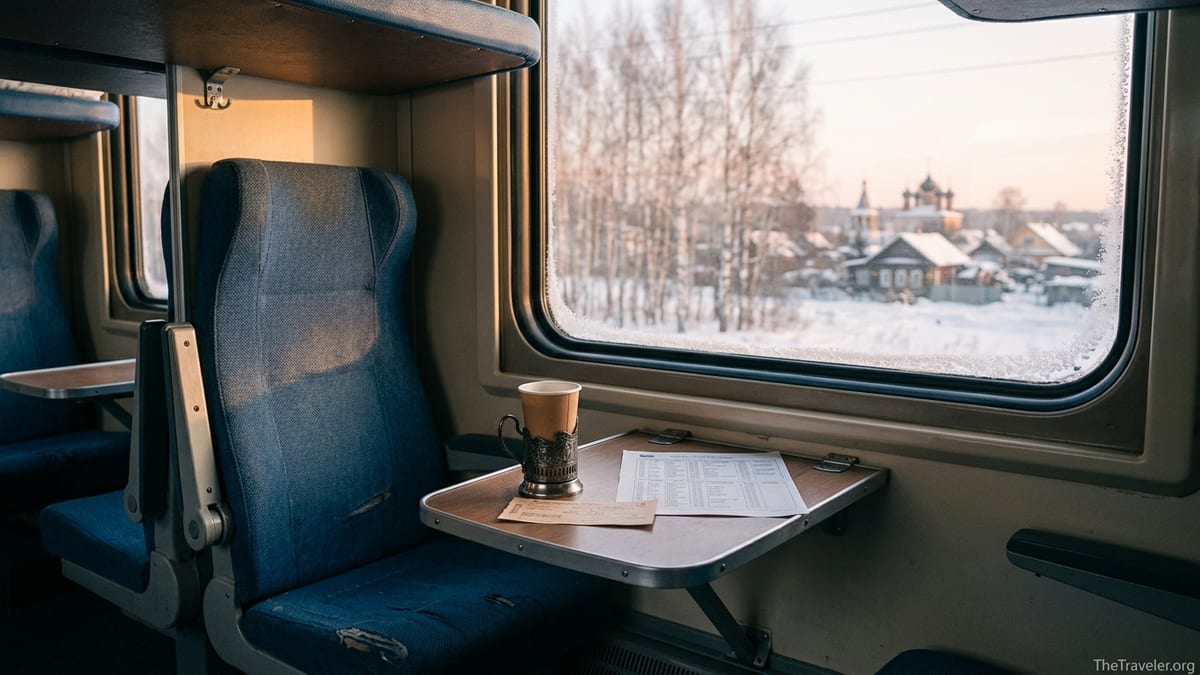
The Trans Siberian Railway remains the most iconic rail journey in Russia, stretching from Moscow’s Yaroslavsky Station across the Urals and Siberia to Vladivostok on the Pacific. Some travelers opt for the full route in one trip, spending about a week onboard, while others break it into sections. A common approach is to combine Moscow and Kazan, continue to Yekaterinburg in the Urals, then fly onward rather than remaining on the train all the way to the Pacific. This still delivers the sense of crossing the continent, with long viewing days through birch forests, industrial towns and vast taiga.
On most regularly scheduled Russian Railways services you can choose second-class four-berth compartments or first-class two-berth cabins. Prices vary by season and comfort level, but a second-class berth on a standard Moscow to Irkutsk leg often runs to a few hundred US dollars equivalent, while private tour trains with restaurant cars, guides and excursions can cost several thousand dollars for a multi-day package. Some specialist tour companies sell “hotel on wheels” style trains on similar routes, with en suite cabins, fine dining and guided sightseeing in places like Novosibirsk and Lake Baikal.
The Trans Mongolian route branches south from the Trans Siberian at Ulan-Ude and heads through Mongolia to Beijing. While direct international services have fluctuated in recent years, the route concept remains popular with overland travelers, who sometimes book separate tickets between Moscow and Ulan-Ude, then onward to Ulaanbaatar and China using regional operators. These mixed itineraries require more research and flexibility, but they reward you with nights in a ger camp on the Mongolian steppe combined with Russian city life and Siberian scenery.
When choosing a Trans Siberian or Trans Mongolian tour, pay close attention to how much time is spent actually on the train versus in hotels. Some itineraries emphasize continuous rail travel with short platform stops, while others build in two or three nights off the train in key destinations. For example, a 12 to 14 day tour might include two nights in Moscow, four to five nights on the rails with short sightseeing breaks, two nights near Lake Baikal, then an internal flight to your final city. Decide whether your priority is the rail experience itself or in-depth time on the ground.
Golden Ring & Cultural Circuits from Moscow
For travelers with less time, the Golden Ring offers a compact way to see traditional Russia within a few hours of Moscow. The Golden Ring is a cluster of historic towns northeast of the capital, known for white stone churches, kremlins and old wooden houses. Cities commonly included are Sergiev Posad, Vladimir, Suzdal, Yaroslavl and Kostroma, all linked by road and rail. Many Moscow-based agencies sell two- or three-day Golden Ring tours combining bus or minivan transport with guided walks and overnight stays in family-run hotels or guesthouses.
A typical two-day Golden Ring itinerary might leave Moscow early in the morning, drive to Sergiev Posad to visit the Trinity Lavra of St Sergius monastery complex, then continue to Vladimir for the Assumption Cathedral and Golden Gate. From there the group often overnights in Suzdal, a small town where cows graze in meadows near onion-domed churches and wooden windmills. The following day may include a stroll along the Kamenka River embankment and visits to local craft workshops before returning to Moscow in the evening. Prices for such tours can start in the low hundreds of US dollars per person, depending on accommodation level and group size.
Rail enthusiasts can combine Golden Ring culture with train travel by using regional services out of Moscow’s Yaroslavsky or Kursky stations. For example, you can take an early train to Yaroslavl, explore its riverside churches and embankment, then continue by road to smaller towns such as Kostroma or Rostov Veliky. Some agencies sell packages where a guide meets you at each station, so you get the convenience of pre-booked tickets plus local insight in each town. This hybrid approach works well for travelers who are comfortable riding trains but prefer help navigating local museums, monasteries and restaurants.
Golden Ring circuits are especially atmospheric in shoulder seasons. In late spring, apple trees bloom around monastery walls, and summer crowds have not yet arrived. In September and early October, birch forests turn golden and markets sell new honey and mushrooms. Winter can be enchanting, too, with horse-drawn sleigh rides and snow-covered domes, but you should be prepared for icy streets and very short daylight hours. Whenever you go, pack modest clothing if you plan to enter active churches and monasteries.
Volga River Cruises and Waterway Journeys
Russia’s river systems have long functioned as inland highways, and today they provide one of the most relaxed ways to tour the country. Volga River cruises typically link Moscow with St Petersburg or run along the Volga itself between cities such as Nizhny Novgorod, Kazan and Volgograd. Itineraries often last from 7 to 13 days and combine days of scenic cruising with guided shore excursions in historic towns. Many cruises operate between May and September, when river levels and temperatures are suitable for comfortable travel.
Ships on these routes range from older Soviet-built vessels refurbished with modern cabins to more upscale, boutique-style riverboats. On the Moscow to St Petersburg route, for instance, smaller ships might carry fewer than 200 passengers, with all meals, lectures and entertainment included. Onboard, you can expect compact cabins with large windows or small balconies, a main restaurant, bar and sometimes a sauna or small fitness room. Companies operating in this space include long-established Russian cruise lines that own multiple vessels navigating the Volga and interconnected canals and lakes.
Volga cruise itineraries usually include stops in places like Uglich, known for the Church of St Dmitry on the Blood; Yaroslavl, with its World Heritage old town; and Kizhi Island on Lake Onega, famous for its wooden Transfiguration Church. Shore excursions might involve walking tours, traditional craft demonstrations, visits to local homes or tastings of regional specialties such as honey and smoked fish. A typical 10 or 11 day cruise package can cost several thousand US dollars per person at current rates, depending on cabin category and whether international flights are bundled.
If you prefer more flexibility, some Russian travel companies can piece together a custom itinerary using a combination of overnight riverboats and daytime rail segments. For example, you might sail from Moscow to Nizhny Novgorod, then continue to Kazan by train to explore Tatar culture before flying back to the capital. This style of trip requires more planning but allows you to spend extra time in cities that interest you most instead of sticking strictly to a fixed cruise schedule.
Murmansk, the Kola Peninsula and Northern Lights Experiences
For many travelers, the most intriguing Russia trips today are in the far northwest, around Murmansk and the Kola Peninsula. Murmansk is one of the world’s largest Arctic cities and serves as a base for Northern Lights hunting, Arctic Ocean excursions and visits to Sami cultural sites. A number of local operators offer 3 to 5 day packages that include airport or train station transfers, hotel accommodation, evening aurora chases by minibus and daytime activities like husky sledding or snowmobiling. These tours typically run from early autumn through early spring, with peak aurora season between around September and March when nights are darkest.
A common package might include three nights in a central Murmansk hotel, such as a high-rise property overlooking the port, plus nightly drives out of the city to search for clear skies. During the day, guests visit Teriberka on the Barents Sea coast, where waves crash against rocky beaches and abandoned boats rest on pebbled shores, or head south to the Khibiny Mountains for snowshoeing or skiing. Some itineraries add a stop at a Sami-style village to learn about reindeer herding traditions and sample local food. Prices for these short Arctic breaks can start from the mid-hundreds of US dollars equivalent for group tours, rising for private, photography-focused aurora hunts.
While these trips are not rail-focused in the way the Trans Siberian is, rail still plays a role. Murmansk is connected to St Petersburg and Moscow by overnight trains, and some travelers choose to arrive or depart by rail to add a classic sleeper experience. An overnight compartment between St Petersburg and Murmansk gives you a sense of the remote forests and frozen lakes of northern Karelia as you approach the Arctic Circle. If you are combining an aurora trip with time in the major cities, this can be an atmospheric alternative to a short domestic flight.
Conditions in the Arctic can be harsh, so reputable Murmansk-based operators stress proper clothing, weather checks and flexible routing. Many aurora tours do not guarantee sightings, but they increase your chances by monitoring solar activity and cloud cover and driving out of the city lights for several hours if necessary. When choosing a provider, look for up-to-date photos, recent season dates and clear information on group sizes. Small groups of six to eight people usually have an easier time moving quickly to chase clear skies than large buses.
Themed City-to-City Journeys: Moscow, St Petersburg and Beyond
Not every Russia tour has to be epic in distance. Some of the most satisfying itineraries focus on two or three cities connected by fast train, adding day trips to nearby historical sites. The classic combination is Moscow and St Petersburg, linked by high-speed daytime trains that cover the distance in around four hours, as well as overnight sleeper services for those who prefer to travel while they sleep. Many travelers spend three or four nights in each city, with additional time for side trips.
In Moscow, rail-themed experiences might include a guided tour of the landmark metro system, often described as an underground art museum, with chandeliers and mosaics at stations such as Komsomolskaya and Mayakovskaya. Above ground, you can visit the Railway Museum near Rizhsky Station or simply watch the constant flow of long-distance trains at the cluster of stations northeast of the center. Several tour companies also offer day trips by train to places like Kolomna, known for its pastel-colored old town and pastila confectionery, or to Tula for samovars and gingerbread.
St Petersburg, by contrast, lends itself to water as well as rail. Summer visitors can combine a daytime Sapsan train journey from Moscow with evening canal cruises and excursions to nearby palace complexes such as Peterhof and Tsarskoye Selo. In winter, the city’s European-style streets and frozen canals feel particularly atmospheric under snow, and some itineraries emphasize ballet performances, museum visits and hearty Russian cuisine instead of long outdoor walks. Tour packages often include skip-the-line access to major sights like the Hermitage, which helps make good use of your limited days.
Travelers with more time sometimes add a third destination, such as the ancient city of Veliky Novgorod, reachable by train from both Moscow and St Petersburg, or the Karelia region for lakes and pine forests. These extensions can be arranged as private tours or small-group departures and often cost a few hundred US dollars per person for transport, guiding and entrance fees. The result is a layered trip that balances major urban centers with quieter, historically rich provincial towns.
The Takeaway
Russia remains a destination defined by distance, seasons and contrasts: imperial capitals and Arctic ports, wooden villages and industrial rail hubs, European river scenery and Asian steppe. The best tours and journeys do not try to cover it all. Instead, they help you follow one compelling thread, whether that is a week on the rails from Moscow towards Siberia, a Volga cruise linking riverside towns, a Golden Ring circuit through onion-domed churches or a concentrated search for the Northern Lights above the Arctic Circle.
As you evaluate options, focus on operators that are clearly active today, study recent itineraries and inclusions, and be honest about your comfort level with cold, long travel days and language barriers. A thoughtfully chosen Russia tour can still deliver powerful experiences: the rhythm of a sleeper train at night, sunrise over a Volga riverbank, or the sudden appearance of green aurora curtains over a snowy Kola landscape. With realistic expectations and solid planning, these journeys can become some of the most memorable travel chapters you will write into your own story.
FAQ
Q1. Is it currently possible for foreign tourists to take the Trans Siberian Railway?
It is still physically possible to ride the Trans Siberian Railway, but availability and practicality vary by nationality and current regulations. Many independent travelers focus on domestic segments within Russia rather than attempting a full Moscow to Vladivostok or onward-to-China itinerary. Before booking, check visa rules for your passport, confirm that long-distance trains are operating on your planned dates and consider working with a tour company that is actively arranging trips on the route now.
Q2. How far in advance should I book a Russia rail or river tour?
For complex trips such as Trans Siberian segments, Volga cruises or multi-city packages, it is sensible to start researching at least six to nine months before your intended departure. Rail tickets on popular summer dates and cabins on smaller riverboats can sell out, and visa processing may add several weeks. Shorter Golden Ring or Murmansk aurora tours sometimes have availability closer to departure, but booking early gives you more choice of dates, cabin types and hotel categories.
Q3. What is the best season for a Volga River cruise?
The main Volga cruise season runs roughly from May to September, when rivers and lakes are navigable and temperatures are milder. June and July tend to be the warmest and busiest months, with longer daylight for sightseeing. May and September are often slightly cooler but can be less crowded and may offer better value. Winter river cruising in this region is not common, so if a waterway journey is a priority, plan your Russia trip around these warmer months.
Q4. When is the best time to see the Northern Lights in Murmansk?
Murmansk and the Kola Peninsula have a long Northern Lights season, typically from about September through early April, whenever it is dark enough and skies are clear. The core months of October to March offer the strongest combination of long nights and frequent aurora activity. Many travelers choose late autumn or late winter to avoid the coldest midwinter temperatures, but dedicated aurora hunters visit throughout the season. No tour can guarantee a sighting, so aim for at least three or four nights to improve your chances.
Q5. Do I need to speak Russian to join these tours?
You do not need to speak Russian to join most organized tours, as many operators provide English-speaking guides on group departures and private trips. However, outside the main tourist centers, signage and announcements may be in Russian only. This is another reason why working with a tour company for rail tickets, transfers and excursion logistics can be helpful. If you plan to explore independently between tour segments, learning basic phrases and reading Cyrillic will make everyday tasks like ordering food and navigating stations easier.
Q6. What kind of budget should I expect for a Russia rail journey or cruise?
Budgets vary widely depending on comfort level, season and itinerary. A modest multi-day Golden Ring or Murmansk group tour can start in the low to mid hundreds of US dollars equivalent per person, excluding international flights. More elaborate Trans Siberian packages with guided excursions and midrange hotels often reach into the low thousands. River cruises between Moscow and St Petersburg or along the Volga usually sit in a similar range, with higher-end cabins and smaller ships commanding premium prices. Always pay attention to what is included, especially meals, excursions and internal transport.
Q7. Are Russia’s long-distance trains comfortable and safe?
Russian long-distance trains are generally considered safe and reasonably comfortable, especially in first and second class. Compartments are basic but functional, with bunks, bedding and shared facilities, and attendants look after each carriage. You should follow common-sense precautions as you would on any overnight train: keep valuables secure, lock your compartment door when possible and be cautious about accepting food or drink from strangers. Travelers seeking more comfort can opt for higher service classes or private tour trains that include upgraded cabins and more onboard amenities.
Q8. Can I combine a city break with an Arctic aurora tour in one trip?
Yes, many travelers combine a few days in Moscow or St Petersburg with a short Murmansk-based aurora tour. For example, you might spend four nights in Moscow, take an overnight train or a domestic flight to Murmansk for three or four nights of Northern Lights hunting and Arctic excursions, then return to St Petersburg by air or rail. Tour operators can often package these elements together, including airport and station transfers, which simplifies logistics and ticketing.
Q9. How should I pack for a winter rail or aurora journey in Russia?
For winter trips, especially to Murmansk and the Kola Peninsula, prioritize warmth and layering. A good system includes a thermal base layer, insulating mid-layer such as fleece or wool, and a windproof, waterproof outer shell. Insulated boots with good grip, warm socks, gloves, a hat and a scarf or buff are essential, as you may spend long periods outdoors on station platforms or aurora hunts. Even on trains and riverboats, cabins and lounges can feel cooler near windows, so a light down jacket or thick sweater is useful.
Q10. Is independent travel by rail in Russia still realistic, or should I only book tours?
Independent rail travel in Russia is still realistic for experienced travelers who are comfortable navigating ticketing websites, language barriers and local regulations. Many people successfully book point-to-point tickets for routes such as Moscow to St Petersburg or Moscow to regional cities. However, for more complex itineraries like multi-stop Trans Siberian journeys, or if you want integrated excursions and transfers, packaged tours provide significant convenience and support. A hybrid approach is common: use tours for the more complicated segments and travel independently between major cities where services are frequent and infrastructure is familiar.