


Saariselkä in Finnish Lapland looks like a dreamy mix of glass igloos, endless snow and dancing auroras. The reality on the ground is still magical, but also colder, darker, more expensive and more logistically specific than many first-time visitors expect. Before you lock in a bucket-list trip, it helps to understand how the seasons, prices, distances and local habits really work here.
Get the latest updates straight to your inbox!
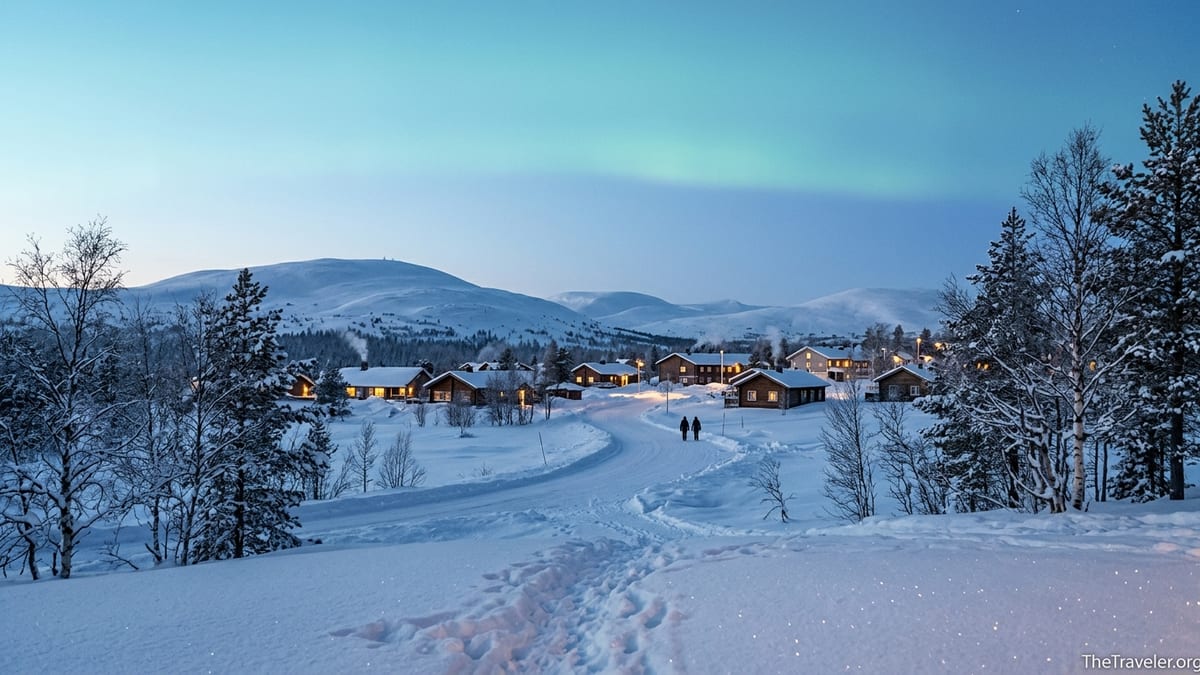
Where Saariselkä Actually Is, and Why That Matters
Saariselkä is not a single ski village tucked next to a big city. It is a small resort hub in the municipality of Inari in northern Finnish Lapland, around 250 kilometers north of the Arctic Circle. The nearest airport is Ivalo, about a 20 to 25 minute drive away, and there is no train line that reaches this far. That remoteness is part of the appeal, but it also means fewer services and higher prices than many visitors are used to in Central Europe ski resorts.
The village itself is compact. Think one main commercial strip with a supermarket, a couple of gear-rental shops, some hotels such as Holiday Club Saariselkä and Lapland Hotels Riekonlinna, plus tour operators offering husky rides, reindeer safaris and aurora excursions. Walk five minutes in almost any direction and you are already on the edge of the forest or heading up towards the fell slopes of Kaunispää and Iisakkipää. If you imagine a buzzing alpine town with nightlife on every corner, you will be surprised by how quiet and small-scale Saariselkä feels once you arrive.
Because services are clustered, it is perfectly possible to spend a winter week without a car, especially if you plan to use the ski bus that shuttles between the accommodation area and the Saariselkä Ski & Sport Resort during the season. However, if you are staying in more remote aurora cabins, at the Northern Lights Village outside the center, or combining Saariselkä with the Inari region, you should factor in taxi transfers or a rental car into your budget before booking.
That northern latitude also has a direct impact on daylight. In late December and early January, Saariselkä experiences polar night conditions when the sun does not rise above the horizon and daylight is limited to a few blue hours around midday. In March and April there can already be long, bright days, even though the landscape is still completely covered in snow. Booking blindly based on hotel photos without thinking about the light can lead to a very different experience than you imagined.
Choosing the Right Season: Not Just “Winter” or “Aurora Time”
Many visitors book Saariselkä for two reasons: snow activities and northern lights. What most do not realize before they go is that the winter season here has several distinct phases, and each one changes what you can actually do. From roughly late August to April, the nights are dark enough for auroras, but the snow cover and temperatures vary a lot within that wide window.
September and October can be stunning for autumn colors, hiking in nearby Urho Kekkonen National Park and early-season auroras reflecting in unfrozen lakes. However, there may be little or no snow on the ground, many winter tours are not yet operating, and some resorts are between seasons. At the other extreme, late April can bring slushy snow and very bright nights that make aurora viewing harder, even though ski slopes are often still open.
The core winter season most visitors imagine runs from roughly late November to late March. December brings Christmas atmosphere but also the highest prices, the deepest darkness and the greatest risk of very cold snaps that drop below minus 20 degrees Celsius. Families with children often favor February, when days are longer, slopes are in great condition and activities like tobogganing on the 1.2-kilometer Kaunispää run feel more comfortable to repeat without freezing after a single descent. Independent aurora hunters often choose March because the balance of darkness, clearer skies and daytime comfort is attractive.
If your absolute priority is seeing the northern lights, several local guides recommend planning for at least three to four nights in Saariselkä or nearby Ivalo, ideally between late September and late March, and treating auroras as a bonus rather than a guarantee. A common regret among travelers is booking a two-night package in the hope of “ticking off” the aurora and feeling disappointed when clouds roll in for 48 hours straight.
Understanding Costs So the Trip Does Not Shock Your Budget
Finland in general is not a budget destination, and remote Lapland villages like Saariselkä are noticeably more expensive than Helsinki or southern cities. Many visitors wish they had understood the real-world costs before hitting “book now.” A mid-range hotel room in winter often runs from roughly 150 to 250 euros per night for two people, while popular glass-roofed aurora cabins and all-inclusive packages at properties like Northern Lights Village can easily start above 300 euros per night per person in peak season, especially around Christmas and New Year.
Dining out is another budget line that surprises people. In the main village, a casual dinner of reindeer stew or salmon soup with a drink can quickly reach 25 to 35 euros per person, while a sit-down three-course meal in a hotel restaurant will often push higher. A simple café lunch at the ski resort, such as a bowl of soup and a pastry with coffee, might be around 15 to 20 euros. The upside is that tap water is excellent and free, and supermarket prices in the local grocery store are closer to what you would find in the rest of Finland. Many travelers lower their costs by buying breakfast items, snacks and even picnic-style dinners from the supermarket rather than eating every meal out.
Activities add up fast too. A two-hour husky safari can easily cost over 100 euros per adult. Reindeer sleigh rides, snowmobile safaris and guided snowshoe tours typically fall into the same range. A one-day ski lift pass at Saariselkä Ski & Sport Resort is generally cheaper than major Alpine resorts, but you should still budget for daily passes and equipment rental if you are not bringing your own skis or board. Some accommodations include access to spa facilities in the room rate, but others, such as the large indoor spa complex at Holiday Club Saariselkä, charge separate entrance fees that can add another 20 to 30 euros per person for a few hours of pools and saunas.
Transportation is where many first-time visitors get caught out. The short drive from Ivalo Airport to Saariselkä can cost a surprising amount if you take a private taxi, with travelers reporting fares that feel high for such a short ride. Pre-booked shared airport shuttles are often cheaper and worth arranging in advance. Once in the village, the seasonal ski bus offers a relatively economical way to reach the slopes and some outlying hotels, but if your itinerary involves frequent side trips or remote cabins, a rental car booked early can end up more economical overall.
Weather, Clothing and the Reality of Extreme Cold
Looking at pretty winter photos of Saariselkä, it is easy to underestimate how harsh the cold can feel, especially during December and January. Temperatures below minus 20 degrees Celsius are not unusual, and wind on the open fells can make it feel even colder. Many travelers discover on arrival that their usual city winter coat from London or New York is not enough on its own for standing still under the night sky waiting for auroras.
Before booking, factor in the cost and logistics of proper clothing. Most tour companies provide thermal overalls and boots as part of husky, snowmobile or aurora excursions, which helps a lot, but you will still need solid base layers, a warm mid-layer, insulated gloves, a balaclava or face mask and wool socks for everyday walking around. Families often find that renting full thermal sets from local outfitters or through their hotel is cheaper and more convenient than buying specialist gear for fast-growing children.
Another overlooked element is how the cold shapes your daily rhythm. In the depths of winter, you may find that two or three hours outside at a time is plenty, even with good clothing. Children in particular tend to get tired and cold quickly. Savvy visitors arrange their days in short outdoor blocks broken up with indoor warm-ups, for example a morning of cross-country skiing followed by hot chocolate and a sauna, then a rest before heading out again in the evening for aurora hunting.
On the flip side, those visiting in March or early April sometimes wish they had packed lighter layers along with their thermal kit. The sun can be surprisingly strong on clear days, reflecting off the snow and making it feel warm enough for sunglasses and lighter gloves while skiing, even when the air temperature stays well below freezing. Versatility in your wardrobe will go a long way.
Getting Around: Distances, Buses and When You Really Need a Car
On a map, Saariselkä looks pleasantly compact, but the combination of snow, ice and cold can make short distances feel much longer. The main hotels, supermarket and central bus stops are within easy walking distance for most visitors, provided you are comfortable on packed snow or ice. Streets and footpaths are usually well maintained, but a sturdy pair of winter boots with good grip is essential. Many travelers wish they had brought simple slip-on traction cleats for extra security on icy sections.
During the winter season, a dedicated ski bus connects the village center with the Saariselkä Ski & Sport Resort, as well as some of the larger hotels and trailheads. This bus typically operates several times a day, allowing you to ski in the morning, head back for lunch and then return to the slopes or cross-country tracks later. Because schedules can vary by season and year, it is worth checking the latest timetable once your travel dates are set, rather than assuming it runs every hour.
If you are staying in an outlying property like a glass igloo complex in the forest or one of the remote cabins near Kiilopää, you should not assume you can simply walk everywhere from your door, especially in deep winter or with heavy luggage. Airport shuttles may not serve every address. Many visitors who stay in these cabins end up taking a taxi for that first transfer and are surprised by the fare. Booking your accommodation and transport as a package or confirming exact transfer options with your host in advance can save both stress and money.
Renting a car from Ivalo Airport makes sense if you plan to explore beyond Saariselkä, for instance driving to Inari village, stopping at viewpoints along the E75 highway, or chasing clearer skies for auroras. However, winter driving in Lapland involves snow, ice, long dark stretches and extremely cold temperatures. Visitors without snow-driving experience often feel more relaxed choosing guided tours and local buses instead of taking on the responsibility of driving themselves at night.
What the Skiing and Activities Are Really Like
Saariselkä’s ski area is very different from the big Alpine resorts that many European travelers know. The vertical drop is relatively modest and there are only a handful of lifts, with just under 20 kilometers of pistes spread over the fells of Kaunispää and Iisakkipää. For beginners and intermediates, this is more than enough for a week, especially when combined with the extensive network of cross-country ski trails that start right from the village. Strong expert skiers used to huge verticals sometimes wish they had planned to mix in more non-ski days or visit other Lapland resorts like Levi on the same trip.
One of Saariselkä’s signature experiences is its toboggan run on Kaunispää, which stretches around 1.2 kilometers down towards the village. Visitors often ride up the chairlift with a purpose-built sled rented from the ski resort or a local shop, then slide down in a matter of minutes through curves lit with aurora-themed installations. It is genuinely fast and can be intimidating for very young children; many families choose the gentler lower sections of the hill instead. Helmets are strongly recommended, and goggles are almost essential in cold, windy conditions.
Beyond skiing and sledding, Saariselkä’s appeal lies in the variety of winter activities packed into a small area. Half-day husky safaris through the forest, reindeer experiences that introduce you to Sámi herding traditions, snowmobile tours onto frozen lakes and guided snowshoe hikes into Urho Kekkonen National Park are widely available. Many first-time visitors wish they had spaced these activities out rather than booking a packed schedule. A slow day wandering the village, enjoying a long lunch and soaking in a spa pool can be just as memorable as ticking off another excursion.
It is also worth understanding that daylight hours and weather can affect how activities feel. A midday husky safari in January may take place under blue twilight, while the same tour in March will run under bright sunshine. Snowmobile and aurora tours departing in the evening may run late into the night, and children especially can be exhausted after multiple late finishes. Building in buffer time to rest can keep the trip enjoyable rather than draining.
Northern Lights Expectations: How to Maximize Your Chances
Northern lights photos from Saariselkä sell a powerful dream. Glass-roofed cabins under a green sky and people sipping hot chocolate in perfectly still air are great marketing, but they can set unrealistic expectations. Auroras are a natural phenomenon that depend on solar activity, cloud cover and geomagnetic conditions. Even when the statistics look promising between late autumn and early spring, there is never a guarantee.
Travelers who leave happiest tend to approach the aurora as just one part of a broader Lapland experience. They book a mix of daytime activities, enjoy the unique atmosphere of the polar night or long winter evenings, and treat any aurora displays as a bonus. Booking at least three or four nights in Saariselkä significantly increases your chances of a clear night and some level of activity. Some visitors stay a full week and still only see a faint arc, while others catch a bright show on their very first evening.
Guided aurora tours can be worth the cost, especially if you are not comfortable reading forecasts or driving icy roads in the dark. Local guides know which nearby hills, lakes and clearings offer darker skies than the village center, and they often combine the chase with campfire stops, hot drinks and stories about local culture. Many companies offer heated sleighs or minibuses that make waiting in the cold more manageable. Visitors who try to save money by standing outside their hotel for hours every night sometimes end up colder and more frustrated than those who invest in one or two targeted excursions.
On the other hand, if you are staying in an out-of-town aurora cabin with minimal light pollution, you may find simple DIY aurora hunting from outside your door is enough. Most accommodations post basic guidance on checking local aurora forecasts and cloud cover. The most important practical tip is to keep your expectations flexible. Plan for the snow, the silence and the fells to be your main attraction, and let the sky surprise you if conditions align.
Culture, Food and Everyday Practicalities
Saariselkä may be a purpose-built resort area, but it sits within Inari, a municipality that is also one of the cultural heartlands of the Sámi, the Indigenous people of northern Scandinavia. Many of the reindeer experiences and handicraft shops you encounter will have Sámi roots. Taking time to learn a little about Sámi culture, whether through guided experiences or simply by talking to local hosts, can deepen your visit beyond the typical snow-safari circuit. Respect for reindeer herds on the roads and on trails is not just a courtesy but a practical necessity; drivers need to stay alert, because reindeer often wander across highways without warning.
Food in Saariselkä reflects both Finnish and Sámi influences. You will see reindeer prepared as stew, fillet or smoked slices, as well as Arctic char, salmon soup, Karelian pies and simple dishes like mashed potatoes with meatballs. Vegetarian options have improved in recent years, but the selection is still narrower than in Helsinki. Many travelers wish they had flagged dietary needs to their hotel or tour operator ahead of time so that suitable meals could be planned, especially on all-inclusive packages where dinners are set.
Day-to-day practicalities are straightforward but benefit from preparation. Most payments are by card, and many visitors go an entire week without using cash. English is widely spoken in hotels, restaurants and tour companies. Alcohol is tightly regulated, so if you plan to enjoy a bottle of wine in your cabin, you may want to pick it up at a supermarket with an Alko section in a larger town or at the airport before heading north, as options in Saariselkä itself are limited and can be expensive.
A final everyday tip many guests mention is to build the sauna into your daily rhythm. Almost every hotel and apartment complex has a sauna, and locals think of it as a normal, regular part of life rather than a special spa treat. Warming up in the sauna after a cold day outside is one of the simplest and most authentic pleasures of a Saariselkä winter, and it is included in many room rates.
The Takeaway
Saariselkä delivers much of what its dreamy photos promise: snow-draped forests, gentle fells, a good chance of auroras and a sense of being very far from everyday life. The visitors who come home smiling rather than shocked are those who understand where it is, how the seasons shape light and temperature, what the real costs look like and how limited the guarantee of northern lights truly is.
Before booking, think carefully about which month suits your priorities, whether you can comfortably handle deep cold and darkness, how many paid activities you truly need and whether you can stay long enough to let the weather play out. Plan for a quiet village with simple pleasures rather than a large, high-energy ski town. With the right expectations and a bit of planning, Saariselkä can feel less like a packaged bucket-list stop and more like a genuinely memorable trip into the far north.
FAQ
Q1. How many days should I spend in Saariselkä? For a winter trip that balances activities, rest and a decent chance of seeing the northern lights, most visitors find that four to six nights works well.
Q2. Do I need to rent a car in Saariselkä? Not necessarily. If you stay in or near the village, use airport shuttles and rely on the ski bus and guided tours, you can manage without a car. A rental car is more useful if you stay in remote cabins or want to explore wider Inari.
Q3. What is the best month to visit Saariselkä for northern lights? Auroras are possible from roughly late August to April, but many travelers favor February and March for the combination of dark nights, more stable weather and comfortable daytime temperatures.
Q4. Is Saariselkä suitable for young children? Yes, provided you plan around the cold and darkness. Families often choose late February or March, limit outdoor sessions to a couple of hours at a time, use rental thermal gear and focus on shorter activities like tobogganing and gentle husky rides.
Q5. How expensive is food in Saariselkä? Eating out is relatively costly. A casual dinner can easily reach 25 to 35 euros per person, while supermarket shopping for breakfasts, snacks and some simple meals helps keep costs under control.
Q6. Is the skiing in Saariselkä good for advanced skiers? The ski area is modest, with limited vertical and mostly intermediate slopes. Advanced skiers enjoy it for a few days but often value the resort more for its off-slope activities and cross-country network than for challenging downhill runs.
Q7. What kind of clothing do I really need? You need proper winter layers: thermal base layers, a warm mid-layer, an insulated jacket, snow pants, winter boots with good grip, thick gloves, a hat and preferably a balaclava or neck gaiter. Many tours provide additional thermal overalls and boots.
Q8. Can I see the aurora from the village, or do I need a tour? On strong aurora nights you can sometimes see the lights from the village, especially if you walk to a darker spot on the edge of town. A guided tour increases your chances by taking you to darker locations and away from local cloud cover.
Q9. Are there vegetarian or vegan options in Saariselkä? Vegetarian options exist, especially in hotel restaurants and larger cafés, but the range is limited compared to big cities. Vegans should inform accommodations and tour operators in advance so that suitable meals can be prepared.
Q10. Is it worth visiting Saariselkä outside the main winter season? Yes, but the experience changes. Autumn brings beautiful colors and early-season auroras with limited snow, while late spring and summer are better for hiking and midnight sun rather than winter activities. Always check which services are open for your planned dates.