


Saariselkä, in Finnish Lapland’s far north, has become one of Europe’s most reliable and atmospheric bases for seeing the Northern Lights. With low light pollution, easy access from Ivalo Airport and a cluster of specialist aurora hotels and tour companies, it offers travelers an unusually good balance of wilderness, comfort and choice. This guide highlights the best Saariselkä hotels, tours and Northern Lights experiences to book now, with concrete examples of what to expect and how to plan your own Arctic escape.
Get the latest updates straight to your inbox!
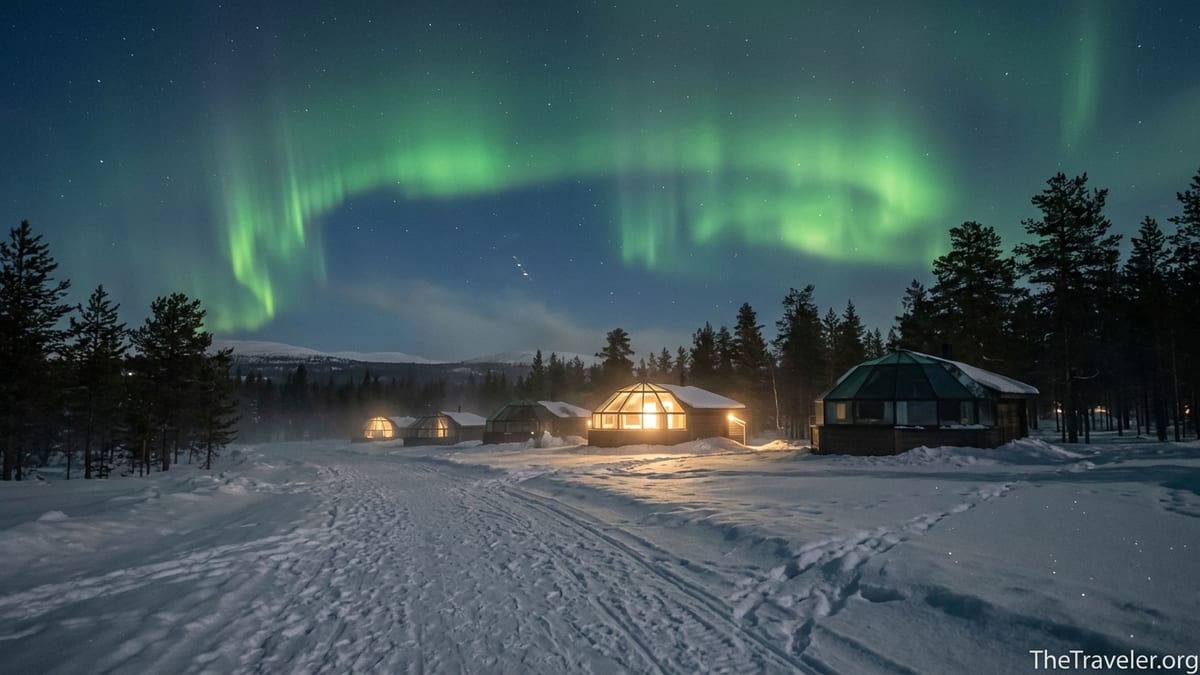
Why Choose Saariselkä for Northern Lights
Saariselkä sits well above the Arctic Circle in northern Finland, in the fells bordering Urho Kekkonen National Park. That high latitude means you are under the auroral oval for much of the season and do not need an extremely strong solar storm to see the lights. Aurora season typically runs from late August through April, with the darkest and most dependable viewing conditions from roughly mid-September to late March. Many local guides report that February and early March often bring a sweet spot of long nights combined with more stable weather.
The village itself is small, with just a few main streets and a compact ski area, but that is part of its appeal. Compared with more commercial Lapland hubs, there is less light pollution and a more wilderness-focused feel. Travelers regularly remark that they can walk for 10 or 15 minutes from the center and already be standing on open fells under a dark sky. This is a major advantage if you want to mix guided tours with some independent aurora watching.
Access is also straightforward. Most visitors fly into Ivalo Airport, about 25 to 30 minutes away by road, and either arrange a hotel transfer or take a pre-booked shuttle. Several Northern Lights–focused resorts bundle transfers into multiday packages, so once you land, your logistics are largely taken care of. For families and first-time winter travelers, this reduces friction and lets you focus on experiences rather than navigation in snow and darkness.
Importantly, Saariselkä is not only about the lights. Down days, cloudy nights and daylight hours can be filled with skiing, snowshoeing, reindeer visits and husky safaris. That breadth of activities matters because even in a strong solar cycle, no location can guarantee aurora every clear night. A good Saariselkä plan assumes you will enjoy the Arctic even if the sky goes quiet for a while.
Iconic Aurora Hotels and Glass-Igloo Stays
For many travelers, the dream is to watch the Northern Lights from bed in a glass-roofed cabin. Saariselkä is one of the few areas where you can do that at scale, with several properties built around that exact idea. These are not budget options, but they are the kind of once-in-a-lifetime stays that often define a Lapland trip.
Northern Lights Village Saariselkä is one of the best known. The resort sits in a forest clearing a short drive from the village center and is built around around 60 glass-roof aurora cabins. Each has a heated, transparent section above the bed that faces the northern sky, so if the aurora flares up at 2 a.m., you only need to open your eyes. The atmosphere is more “aurora village” than intimate boutique, which suits families and couples who like a social resort environment and an on-site activity desk. Room-only stays can start from roughly 250 to 300 euros per person per night in shoulder season, with full-board, activity-heavy packages climbing into four-figure totals for three-night trips.
Kakslauttanen Arctic Resort, a 15 to 20 minute drive south of Saariselkä, is the original glass-igloo name many people have seen in photos. It offers a mix of traditional log chalets, classic glass igloos and hybrid “kelo-glass” igloos that pair a timber cabin with a glass dome over the bed. The resort feels a little like a Lapland village in its own right, with its own chapels and Santa-themed experiences, and tends to appeal to travelers wanting that storybook Arctic look. Prices reflect its fame, especially around Christmas and New Year, when minimum stays and package rates are the norm, often selling out many months in advance.
If you would rather be close to ski lifts and services, the modern properties on Kaunispää fell above the village are worth a look. Panoramic lodgings here lean less on the igloo concept and more on large windows and elevated views over the treeline, trading novelty for a more classic Nordic design aesthetic. Expect rates broadly in line with quality Scandinavian ski hotels, rising steadily for units with the best views and private saunas.
Comfortable In-Village Hotels and Apartments
Not everyone needs a glass igloo. If you are happy to head out each night for aurora hunting and value amenities such as pools, supermarkets and easy restaurant access, staying in Saariselkä village itself can be a smart and more economical choice.
Holiday Club Saariselkä is one of the main full-service hotels in the village center. It combines straightforward hotel rooms with an indoor pool, spa area and a small waterpark that is popular with families. Being able to let children burn energy in warm water after a day in minus 15 degrees can be a major plus. Double rooms can be found from the low hundreds of euros per night outside the peak Christmas period, especially for midweek stays in January and March, and many package tour operators from the UK and central Europe use this property in their Lapland programs.
Around the main street you will find a cluster of smaller hotels, pensions and self-catering apartments. For example, simple but comfortable apartment-style units within walking distance of the ski bus stop allow you to cook your own dinners with groceries from the village supermarket. This can dramatically reduce food costs in an otherwise expensive destination. Couples on a tighter budget often pair three or four nights in an in-village apartment with a single splurge night in a glass-roof cabin to balance cost and experience.
Practicalities are straightforward. Most village hotels and apartments are within a 10 to 15 minute walk of tour company meeting points and ski-bus stops. Snow clearing is taken seriously, so even in deep winter the pavements are usually walkable with good boots and traction aids. For late-night aurora returns, many travelers appreciate being able to step off a minibus and be back in their room in minutes rather than arranging additional transfers.
Signature Aurora Tours: From Snowmobiles to Silent Forests
Even with a glass roof overhead, guided Northern Lights tours are still worth booking. They take you away from any remaining light pollution and into areas with wide horizons, and guides read the local weather and aurora forecasts in real time. Many people who work in the region say that on marginal nights, guests on tours often see displays that hotel-bound travelers miss.
Snowmobile safaris are a classic Saariselkä experience. Operators based in and around the village run evening tours where guests either drive their own machine or ride as a passenger, following guides along well-maintained trails into the fells. An example product is a three-hour aurora snowmobile trip that departs after dinner, includes warm outer clothing and a safety briefing, and stops at a wilderness hut for hot drinks and snacks while guides monitor the sky. Expect pricing to land in the region of 140 to 190 euros per adult, with discounted child rates when riding in a sleigh pulled behind the guide’s snowmobile.
If the idea of handling a snowmobile feels too intense, snowmobile sleigh rides offer a gentler option. In these, guests sit in a covered or open sleigh towed by the guide’s machine, wrapped in reindeer skins and blankets. You still reach dark-sky locations away from the village, but you can relax, take photos and keep an eye on the sky instead of on the throttle.
For a quieter and more physically engaging way to search for aurora, look at snowshoe walks and cross-country ski tours. Local outfitters run small-group trips where you strap on snowshoes and follow a guide into nearby forests and open marshes. These tours typically last two to three hours, and while they move more slowly than snowmobiles, they create an intense sense of being alone in the Arctic night. Prices are generally a little lower than motorized tours, and because you generate your own warmth by walking, they can feel surprisingly comfortable even in deep winter.
Finally, several companies operate minibus-based “aurora hunts” from Saariselkä. These are especially useful on unstable weather nights, because guides can chase clearer skies for an hour or more in whichever direction the forecast looks best. Groups remain small compared with big-coach operations in larger cities, and it is common for guides to help guests with camera settings and take souvenir photos of each couple or family under the lights when conditions cooperate.
Building the Perfect 3 to 5 Night Saariselkä Itinerary
For most travelers, three to five nights in Saariselkä strikes a good balance between aurora chances, cost and time off work. A stay shorter than three nights can work if the weather and solar activity cooperate, but it leaves little margin for cloudy evenings or travel delays. A rough rule of thumb used by many aurora specialists is to give yourself at least three proper chances to hunt the lights.
A classic three-night itinerary might look like this. Night one: arrive in the afternoon, check into your hotel or aurora cabin, and book a relaxed, gentle evening experience such as a sleigh ride or short minibus hunt. Night two: schedule a more active outing like a snowmobile safari, husky run or snowshoe hike to an aurora campfire, ideally with a guide who can explain the science behind the lights. Night three: keep flexible, either repeating a favorite activity or booking a final aurora-focused excursion based on the most promising forecast.
On a longer four or five-night stay, you can add daytime adventures such as downhill skiing on Kaunispää, cross-country loops in the national park, ice-fishing on frozen lakes or a visit to a reindeer farm. Many visitors also like to leave one afternoon mostly free to simply walk marked trails from the village out onto the fells and back, soaking in the silence and low winter sun. In March and April, when days are longer, combining a sunny ski day with an aurora hunt after dinner can feel like two trips in one.
When budgeting, remember that while some hotels advertise low nightly lead-in rates, the full cost of a Saariselkä trip includes thermal clothing rental if you do not own suitable gear, multiple activities, meals and airport transfers. A couple staying three nights in a midrange hotel, booking two guided aurora tours and one daytime activity, is likely to spend a four-figure amount in euros once everything is included, even before flights. Being realistic about this from the start helps avoid unwelcome surprises later on.
Planning, Seasons and Practical Tips
Timing is crucial. The most popular period for Saariselkä is from early December through early January, when Christmas trips and school holidays drive demand. During this window, prices are high, availability is tight and many properties insist on minimum stays. If your main goal is the Northern Lights rather than Santa-themed experiences, consider late January, February or early March instead. Nights are still long, snow conditions are excellent and the region is less crowded, often at noticeably lower prices.
From late August to October, you can sometimes see aurora reflecting in unfrozen lakes under dark, snow-free skies. These early-season months appeal to photographers and hikers who are comfortable with long, cool nights and understand that snow-based activities will be limited or absent. At the other end of the season, April brings more daylight, softer snow and a stronger spring-skiing vibe. The lights remain possible after dark, but the window of full darkness narrows quickly as you approach May.
Packing and clothing deserve serious thought. Even if you book a package that includes outer layers, you will want high-quality base layers, warm mid-layers, insulated boots and accessories such as balaclavas and hand warmers. A typical aurora outing involves standing still outside for long stretches, so the feel of minus 15 degrees in still air may be more challenging than the same temperature on a brisk daytime walk. Many Saariselkä operators provide thermal overalls and boots, but smaller items like glove liners and extra socks are your responsibility.
Finally, keep expectations realistic. No destination can promise Northern Lights on a given night, and even strong displays can come and go within minutes. The most satisfied visitors tend to be those who come for the full Arctic experience and treat the aurora as a spectacular bonus when it appears. Booking several different types of tour, leaving a little unstructured time to simply step outside and look up, and staying flexible with your plans all increase your chances of going home with that unforgettable memory.
The Takeaway
Saariselkä has earned its reputation as one of Lapland’s most rewarding Northern Lights bases. It combines reliable aurora latitude with a compact, welcoming village, purpose-built glass-roof resorts and a deep roster of local guides. Whether you want the full fairytale of a night in a glass igloo, the convenience of a pool-equipped hotel in the center or the independence of a self-catering apartment, you will find an option that matches your style and budget.
The key is to think in terms of experiences rather than just bed nights. Build your stay around three to five potential aurora outings, mix motorized and slower-paced tours, and leave space for the quiet joys of winter: the crunch of snow underfoot, a cup of hot berry juice by a fire, the soft pastels of the Lapland sky at midday. If you plan ahead, dress warmly and allow room for the weather to do its thing, Saariselkä offers one of the most accessible and memorable ways to chase the Northern Lights anywhere in the Arctic.
FAQ
Q1. When is the best time to see the Northern Lights in Saariselkä?
The main aurora season runs from late August to April, with the darkest and most popular months from about mid-September to late March. Many visitors find January, February and early March offer a good blend of long nights, deep snow and more stable weather.
Q2. How many nights should I stay to have a good chance of seeing the aurora?
Staying at least three nights is widely recommended, as it gives you multiple chances in case of cloud or low activity. Four or five nights are even better if your schedule and budget allow, increasing the odds that at least one night will bring clear skies and visible lights.
Q3. Do I need to book a glass igloo to see the Northern Lights?
No. Glass-roof cabins and igloos are memorable, but you can absolutely see the aurora while staying in a standard hotel or apartment. Guided tours and short walks out of the village quickly bring you to dark-sky locations, and many travelers on regular accommodations have excellent sightings.
Q4. Are Northern Lights tours suitable for children?
Yes, many Saariselkä operators welcome families and offer child-sized thermal clothing and gentler options such as sleigh rides or minibus aurora hunts. Late-night finishes and cold temperatures can be challenging for very young children, so consider shorter tours and properties with easy access back to your room.
Q5. How cold does it get, and what should I wear on tours?
Nighttime temperatures in midwinter often sit between about minus 10 and minus 25 degrees Celsius, with occasional colder spells. Dress in layers: thermal base layers, insulating mid-layers, a windproof outer layer, warm boots, thick socks, insulated gloves, a hat and face protection. Many tour companies provide outer overalls and boots but expect you to bring good base and mid-layers.
Q6. Can I explore on my own or do I always need a guide?
You can certainly walk marked trails and low fells near the village on your own, especially during the day or in calm weather. For deeper backcountry travel, snowmobiling or nights with heavy snowfall and poor visibility, a local guide adds safety, local knowledge and transport to the best viewing spots, which many visitors find well worth the cost.
Q7. How far in advance should I book Saariselkä hotels and tours?
For travel around Christmas, New Year and school holidays, booking six to twelve months in advance is sensible, especially for glass-igloo stays and popular family resorts. For late January, February and March, you may find more flexibility, but it is still wise to reserve key tours and your preferred hotel several months before arrival.
Q8. Is Saariselkä suitable for budget travelers?
Lapland in general is not a low-cost destination, but you can manage expenses by choosing village hotels or apartments instead of luxury aurora resorts, cooking some of your own meals and limiting paid activities. Some travelers combine one “bucket list” night in a glass-roof cabin with simpler accommodation for the rest of their stay.
Q9. Do I need special camera gear to photograph the Northern Lights?
A modern smartphone can capture bright aurora with its night or astrophotography mode, especially if you keep it steady on a small tripod. For more detailed shots, a camera that allows manual control, paired with a wide, fast lens and a tripod, works best. Many guides help guests with settings and will also take photos you can download later.
Q10. Is it safe to travel to Saariselkä in winter?
Yes. Roads, trails and infrastructure are designed for Arctic conditions, and local operators take safety seriously. The main risks are cold and slippery surfaces, which you can manage by dressing properly, using footwear with good grip and following guide instructions. For extra peace of mind, consider travel insurance that covers winter activities such as snowmobiling.