


Across northern Norway, Sweden and Finland, tours that promise a glimpse of Sámi reindeer herding, joik singing and life under the northern lights have become a staple of Arctic travel. Yet many visitors arrive with romantic ideas shaped more by brochures and Christmas marketing than by reality. Before you book a “Sámi experience” in Tromsø, Kiruna or Rovaniemi, it is worth pausing to ask what you might be getting wrong about the Indigenous people whose homeland, Sápmi, you are entering.
Get the latest updates straight to your inbox!
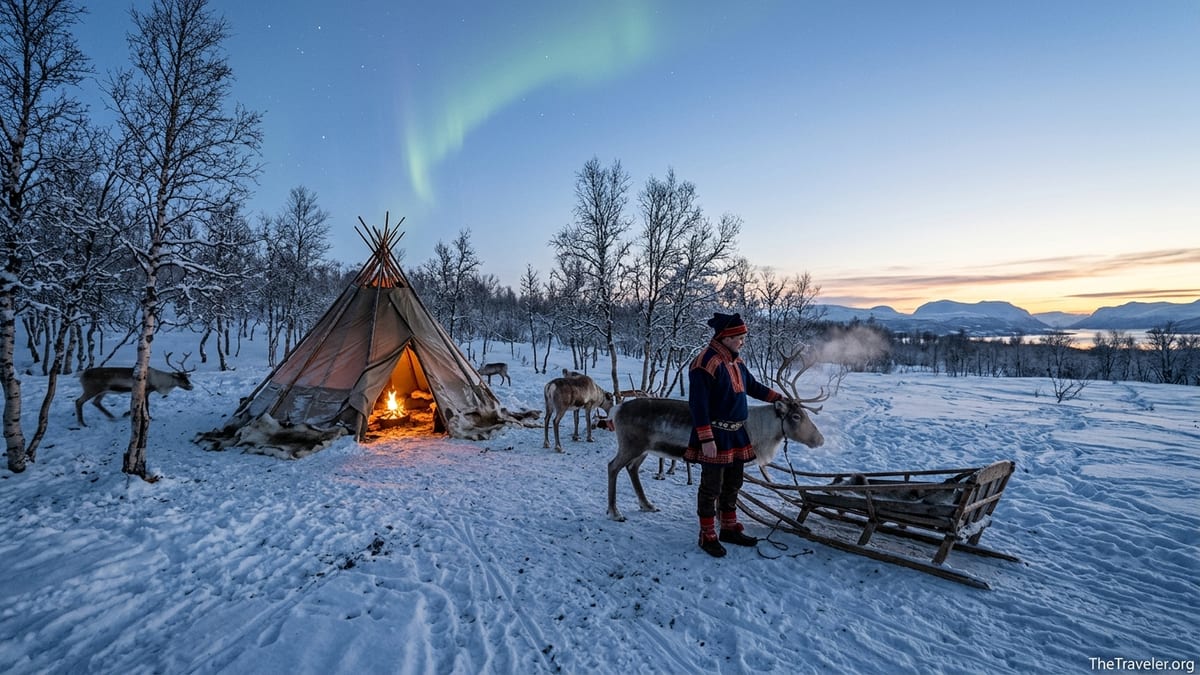
Sápmi Is a Living Homeland, Not a Snow-Globe Backdrop
Many travelers step off the plane in Tromsø or Ivalo imagining Sápmi as a remote wilderness dotted with a few reindeer herders. In reality, Sámi people live across a vast region that stretches from the Norwegian coast to Sweden, Finland and Russia’s Kola Peninsula, and many are urban professionals in cities such as Oslo, Oulu and Stockholm. When you visit a reindeer camp near Alta or a museum in Karasjok, you are not walking into a frozen past but into a contemporary society that happens to be Indigenous and Arctic.
This misunderstanding shows up in how visitors talk and act. Guides in Swedish Lapland describe guests asking whether Sámi people “still” use smartphones or go to university, as if participation in modern life and Indigenous identity were incompatible. In reality, you are just as likely to meet a Sámi reindeer herder who live-streams calving season on social media as you are to meet an elder who prefers life entirely on the tundra. Treating Sápmi as a living homeland means assuming modernity and tradition coexist rather than assuming that one cancels out the other.
The tourist economy can reinforce the snow-globe image. In Rovaniemi’s winter season, for example, visitors often see Sámi motifs tucked between Santa photo booths and husky rides, which encourages the idea that Sámi culture is simply part of Lapland’s holiday decor. A more grounded approach is to recognize that when you cross into Sápmi, you are in a homeland with its own parliaments, political debates and land rights struggles. That mental shift changes the kinds of questions you ask and the tours you choose.
Practically, this means doing a small amount of reading before you arrive and prioritizing Sámi-run cultural centers, museums and tour companies once on the ground. For instance, in places like Jokkmokk in Sweden or Karasjok in Norway, you can visit Sámi museums that present the community’s own narratives, then join locally owned experiences that connect the exhibits to what is happening in the region today.
Reindeer Are Not Props and Sámi People Are Not Santa’s Helpers
Reindeer sled rides are one of the most heavily marketed winter activities in northern Scandinavia, and they often provide important income for Sámi families. Yet they are also one of the clearest examples of how tourism can flatten culture into entertainment. In the Christmas villages around Rovaniemi, for example, reindeer and Sámi-style imagery are frequently merged into a generic “Lapland” brand: elves in costumes inspired by gákti, souvenir shops selling “Lappish” trinkets, and reindeer pens positioned as photo backdrops for groups who may never learn that reindeer herding is an Indigenous livelihood shaped by land rights, climate change and predator policies.
On Sámi-owned reindeer farms near Tromsø or Kautokeino, guides often find themselves gently correcting guests who assume Sámi people are descendants of Santa’s helpers or who ask to “borrow a reindeer for Instagram” without engaging with the animals as living creatures. Reindeer are semi-domesticated herd animals that require year-round work: moving them between seasonal pastures, monitoring health, navigating grazing conflicts with wind farms or ski resorts. When a herder invites you to feed the animals from a sled or share a meal of bidos reindeer stew, they are opening a window into a working life, not offering a fantasy ride.
As a visitor, you can respond by choosing operators who clearly state that they are Sámi-owned and who emphasize education alongside activities. In northern Norway, many reputable reindeer experiences include a storytelling session in a lávvu (traditional tent) where the host explains how migration routes and climate patterns shape their year. Paying attention in these moments, asking thoughtful questions about contemporary issues rather than just the best angle for a photo, signals that you see your hosts as people with a complex livelihood rather than performers in costume.
You can also read tour descriptions carefully. If a package advertises “Lappish elves” or offers reindeer sled rides with no mention of Sámi ownership, land or history, that is a red flag that the experience may be using cultural symbols purely as marketing. By contrast, when a company introduces its guides by name, explains their family’s herding background and is transparent about herd size and animal welfare, you are more likely to be supporting a community rather than a brand.
Traditional Clothing Is Not a Costume for Tourist Photos
Perhaps the single most sensitive misunderstanding involves gákti: the colorful traditional clothing many visitors first notice in postcards from northern Norway or at festivals like the Jokkmokk Winter Market. Gákti patterns and colors can signal a person’s home region, family connections and sometimes marital status. Sámi activists have described the garment as an extension of one’s body and identity, not simply an outfit. Yet tourists regularly encounter cheap replicas in souvenir shops from Levi to Kiruna, marketed as “Lapland dresses” or “Sámi costumes” to wear for a night or pose in front of a stuffed reindeer.
There have been repeated controversies when non-Sámi performers, fashion brands or even sports teams have used gákti-inspired designs as stage wear or theme costumes. In Lapland’s tourism zones, complaints have focused on hotels and attractions dressing non-Sámi staff in imitation outfits to greet buses of visitors. For many Sámi, this is painful because it echoes a long history in which their culture was mocked or suppressed while outsiders profited from romantic images of the Arctic. When a visitor rents a fake gákti for a novelty photo session, they may see it as playful, but locals may experience it as a trivialization of something sacred.
If you are invited by Sámi friends or family to wear a specific garment, or if you inherit genuine gákti through Sámi ancestry, etiquette becomes more nuanced. People within the community often emphasize context: whether you know how to wear it correctly, whether you understand where the design comes from, and whether you are using it in situations that respect its meaning. As a traveler without deep roots, however, you are very unlikely to encounter an appropriate situation to put on gákti briefly for a selfie in a theme village, and it is reasonable to assume that commercial costume rentals are not respectful.
A good rule is simple: admire, ask, but do not dress up. You can ask your guide to explain the symbolism of their gákti, or to point out differences between outfits from coastal and inland areas. You can appreciate the craft involved in hand-stitched pewter embroidery or traditional hats displayed in museums. But you do not need to wear them to feel closer to the culture. If a tour program includes a costume photo shoot, consider choosing a different operator and let them know why.
Souvenirs and Spiritual Symbols Are Not Just Decorative Objects
Sámi handicrafts, known broadly as duodji, are another area where good intentions can collide with misunderstanding. Travelers strolling through Christmas markets in Inari or souvenir rows in Rovaniemi will see everything from mass-produced wooden cups and tin-thread bracelets to hand-carved knives and silver brooches. Some items are made by Sámi artisans using traditional techniques and designs that support local livelihoods. Others are imported replicas that imitate sacred patterns or spiritual objects with little or no connection to Sámi makers.
Academic research and Sámi organizations have highlighted the particular sensitivity of items like shaman-style drums or certain symbols associated with pre-Christian spirituality. In the 1990s and beyond, Sámi representatives criticized the sale of toy “magic drums” and playing cards depicting Sámi people as drunken caricatures in Lapland tourist centers. More recently, scholars have described debates within the community about whether to sell drum-inspired art to visitors at all, given the risk that such objects are treated purely as exotic decor or props for social media.
As a traveler, one practical step is to look for labels or explanations that identify a piece as Sámi-made and, ideally, connected to a recognized certification or artisan cooperative. In Sweden, for example, initiatives linked to the Sápmi Experience and similar labeling systems aim to help visitors distinguish authentic Sámi tourism enterprises and crafts from imitations. In Finland, the Sámi Parliament has published guidelines on responsible Sámi tourism that stress the importance of authenticity and consent when cultural heritage is turned into products.
Even when there is no formal label, you can ask direct but respectful questions: Who made this bracelet? Are they Sámi? Where did they learn the craft? If the person behind the counter cannot answer or says the goods come from factories far away, you can reasonably assume your money is not reaching local artisans. Paying more for a single hand-made coffee bag or woven belt from a small workshop in Karasjok or Jokkmokk will usually have a far greater positive impact than buying a suitcase full of cheaper imitations that may contribute to cultural appropriation.
“Authentic” Experiences Are Not Always Sámi-Led
Tourism marketing in the Arctic leans heavily on the word “authentic.” Brochures advertise “authentic Sámi nights” or “real Lappish experiences,” sometimes with photos of people in gákti around a campfire. Yet investigations by journalists and researchers have shown that in some Nordic resorts, non-Sámi companies use Sámi imagery, hire non-Sámi staff to dress in imitation clothing, and script a simple story about reindeer and spirits that has little to do with how Sámi people present themselves. For the casual visitor, it can be nearly impossible to tell the difference without looking more closely.
One sign of a genuinely Sámi-led experience is transparency about ownership and storytelling. Reputable operators in areas like Kautokeino, Karasjok, Jokkmokk or Utsjoki often introduce the family behind the business, explain which reindeer district they belong to, and mention their involvement with local Sámi associations or festivals. Their programs typically include space for guests to ask questions about both history and present-day challenges, such as how wind power projects or new mines might affect grazing lands.
By contrast, theme villages or large resort-based excursions may keep things generic. Staff might refer to “Lappish culture” rather than Sámi, avoid naming specific communities, or rely on a fixed script heavy on myths but light on real issues. If a tour promises everything from husky rides to “ancient Lappish rituals” in a single two-hour window between cruise ship buses, it is fair to wonder who shaped the narrative and for whose benefit.
Travelers who want to avoid misunderstandings can start by cross-checking several sources before booking. Local tourist offices in towns like Kiruna, Alta or Inari increasingly highlight certified Sámi experiences or provide contact details for Sámi tourism networks. When possible, book directly with small Sámi-owned companies rather than through distant resellers who may take large commissions and dilute the educational content. Your money and your attention then support people who are accountable to their own communities.
Silencing Difficult History Is Also a Misunderstanding
A subtler misunderstanding occurs when visitors expect Sámi culture to be presented only as colorful folklore, stripped of the painful history that shaped it. Across Norway, Sweden and Finland, Sámi people experienced assimilation policies, boarding schools, loss of language and restrictions on traditional livelihoods. In recent years, institutions such as the Church of Sweden have publicly apologized for their role in these injustices, and truth and reconciliation processes have begun in several countries. These are not distant events; elders who attend reindeer festivals today may still remember being punished for speaking Sámi as children.
Some tourism products respond to visitors’ preference for cheerful storytelling by avoiding such topics altogether. A guest might leave a “Sámi evening” believing they have had an in-depth cultural encounter after hearing a joik and tasting smoked reindeer, without realizing that their hosts had to decide whether it felt safe or appropriate to talk about land rights or mining conflicts. When travelers react discomfortingly to these subjects, or change the topic back to northern lights photography, it can send a signal that their interest is only surface-deep.
Engaging respectfully means being willing to hear about colonial history, current political struggles and environmental threats as part of the story, not an unwanted digression. If your guide in Narvik mentions protests against a planned railway through grazing areas, or if a museum exhibit in Inari discusses loss of language, resist the urge to rush past. Ask how these issues affect young people today, or what kind of changes Sámi organizations are advocating. You do not need to have solutions, but your readiness to listen affirms that their experiences matter.
This does not mean demanding trauma narratives from everyone you meet. Not every Sámi person you encounter in a hotel or on a tour wants to act as an educator, and some will simply be there to do their job like anyone else. The key is to accept complexity: a single evening in a lávvu can contain laughter, song and serious reflection, and your role is to meet whatever is offered with openness rather than insisting on a purely picturesque version of the Arctic.
How to Prepare Yourself Before You Go
Many of the most common misunderstandings arise because visitors arrive in Sápmi with almost no prior knowledge and must construct an understanding from the limited cues provided by tourism marketing. A little preparation before you land in Kirkenes, Luleå or Rovaniemi can dramatically change the quality of your encounter. Even a few hours spent reading about Sámi history, watching interviews with Sámi cultural workers, or listening to contemporary Sámi music can help you recognize when a presentation feels genuine versus when it feels like a caricature.
In practical terms, consider learning basic place names and terms. Understanding that “Sápmi” refers to the broader homeland, or recognizing words like “lávvu” (tent), “joik” (a traditional form of song) or “duodji” (craft) can help you follow explanations on tours and signal to your hosts that you cared enough to prepare. Before booking, research whether there are Sámi festivals, markets or exhibitions taking place during your visit. Events such as the winter market in Jokkmokk or Easter celebrations in Kautokeino and Karasjok often combine public programming with community gatherings, offering a richer picture than a single packaged excursion.
Budget realistically for respectful choices. An evening with a small Sámi-run operator near Tromsø, including reindeer feeding, storytelling and a hot meal in a lávvu, may cost more than a large bus excursion that mixes several activities. Similarly, a hand-made duodji item from a recognized artisan in Inari will be more expensive than a factory-made souvenir. Viewing those higher prices as an investment in cultural survival and fair livelihoods, rather than as a premium for “authenticity,” can help shift your mindset from consumption to contribution.
Finally, be prepared to adapt your plans. Winter storms might cancel a visit to a reindeer herd. A political meeting could mean your intended guide is not available. When this happens, resist the urge to pressure operators into delivering a fixed “product” regardless of circumstances. Approaching your trip as a chance to build relationships and learn, rather than to tick off Instagram moments, leaves more room for genuine connection and fewer misunderstandings.
The Takeaway
Visiting Sápmi can be one of the most memorable parts of a journey to the Nordic north, but only if you recognize that you are stepping into a living Indigenous homeland, not a themed winter park. Many of the misunderstandings that frustrate Sámi hosts stem from narrow expectations: seeing reindeer as props instead of animals, gákti as costumes instead of deeply personal clothing, duodji as generic souvenirs instead of cultural expression, and Sámi people as background characters in a Christmas story rather than as political actors facing real-world challenges.
The good news is that travelers have significant power to change this dynamic. By choosing Sámi-led tours, paying fairly for authentic crafts, declining to participate in costume photo ops, and being willing to listen to difficult history alongside beautiful song, you help create space for more respectful, sustainable tourism. The difference between a shallow “Sámi show” and a meaningful encounter is rarely about how many activities are included; it is about whether you show up as an informed, curious guest rather than as a consumer of stereotypes.
Before you book that next Arctic adventure, take the time to learn, to question the imagery used in brochures, and to seek out Sámi voices directly wherever possible. In doing so, you not only avoid the most common traveler misunderstandings, you also contribute to a version of tourism that supports cultural continuity instead of eroding it. The respect you carry into Sápmi will shape the stories you bring home.
FAQ
Q1. Is it acceptable for non-Sámi visitors to wear gákti during a trip?
In general, no. For visitors without deep Sámi connections, gákti is not a costume but a culturally specific garment that carries personal and regional meaning. It is best to admire and learn about it without wearing it.
Q2. How can I tell if a Sámi experience is really Sámi-owned and led?
Look for clear information about who owns the company, where the guides come from, and how they describe their community. Sámi-led operators usually introduce their family background, use the term Sámi rather than vague “Lappish culture,” and are open about current issues as well as traditions.
Q3. Are reindeer sled tours always exploitative or disrespectful?
No. Many Sámi families run reindeer tours as part of their livelihood and take animal welfare seriously. The key is to choose operators who are transparent about their herding work, treat the animals well, and include cultural explanation rather than using reindeer solely as photo props.
Q4. What should I look for when buying Sámi handicrafts or souvenirs?
Ask who made the item, whether they are Sámi, and where they learned their craft. Prefer shops and stalls that identify specific artisans, explain traditional techniques, and, where available, participate in Sámi craft or tourism certification schemes rather than selling generic “Lapland” products.
Q5. Is it offensive to join in joik or other cultural activities if invited?
If a Sámi host explicitly invites you to participate in a song, craft activity or other practice, it is usually fine to join in with humility and respect. Follow their lead, avoid recording or sharing moments that feel private without consent, and remember that being invited once does not give you license to reproduce the activity on your own.
Q6. How much background reading should I do before visiting Sápmi?
Even a few hours of preparation can make a real difference. Learning basic terms, understanding the broad outlines of Sámi history, and reading about current issues such as land rights or language revitalization will help you ask better questions and recognize respectful tourism offerings.
Q7. Are big Lapland holiday resorts a bad choice if I want to support Sámi culture?
Large resorts often mix many influences and may use Sámi imagery without Sámi leadership, but practices vary. If you stay at a big resort, you can still seek out certified Sámi experiences, visit Sámi museums and markets, and book directly with Sámi-owned operators for specific activities.
Q8. How can I talk about difficult topics like historical injustice without overstepping?
Let Sámi people set the pace. If a guide or museum exhibit raises such issues, listen attentively and ask open, respectful questions. Avoid demanding personal stories of trauma, and accept it if someone prefers not to discuss sensitive subjects.
Q9. Is it better to avoid buying spiritual or religious items altogether?
If you are unsure whether an item has spiritual significance, it is safer to avoid it or ask detailed questions. Many visitors choose to focus on everyday duodji such as textiles, wooden cups or practical leather goods, which are less likely to carry sensitive symbolism.
Q10. What is the single most important thing to remember when visiting Sámi areas?
Remember that you are entering a contemporary Indigenous homeland where people live, work and debate their future. Approach every encounter with humility, curiosity and a willingness to support Sámi-led initiatives rather than treating culture as a backdrop for your holiday.