


Oslo is compact enough that you can cross the center on foot in under half an hour, yet its neighborhoods feel strikingly different. Two of the most popular areas for visitors could not have more contrasting personalities: creative, café filled Grünerløkka and polished, waterfront facing Aker Brygge. Both are easy to reach on Oslo’s efficient public transport and both can anchor a short city break. The better choice for you comes down to budget, travel style and what you want your Oslo days and nights to look like in practice.
Get the latest updates straight to your inbox!
Grünerløkka vs Aker Brygge at a Glance
Grünerløkka sits just northeast of central Oslo, a former working class district along the Akerselva river that has evolved into the city’s creative heart. Old brick factories now house bars and galleries, street art colors many walls, and locals linger for hours in cafés around Olaf Ryes plass and along Thorvald Meyers gate. You come here for neighborhood character, people watching and a strong sense of “this is where Oslo lives.”
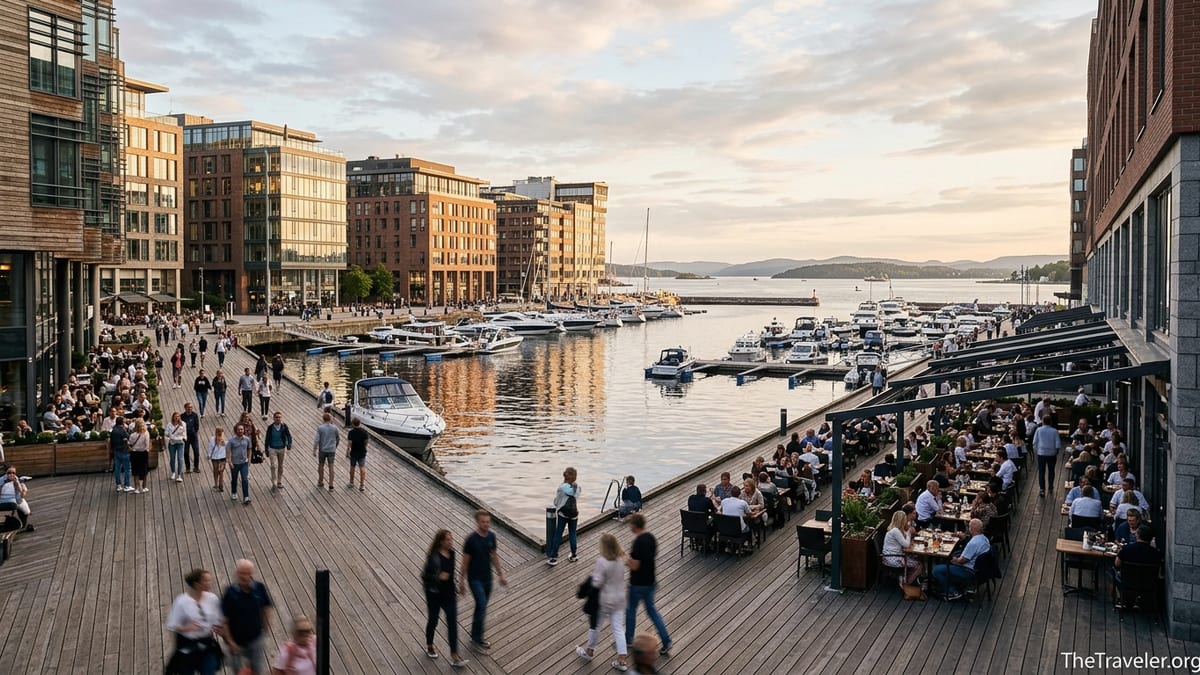
Aker Brygge, on the other hand, feels like Oslo’s waterfront living room. Built on a converted shipyard west of the city hall, it is a sleek promenade of boardwalks, glass fronted apartments, marinas and restaurant terraces stretching toward the modern art district of Tjuvholmen. On warm days, office workers and visitors crowd the outdoor tables overlooking the Oslofjord, and swimmers head for the small urban beach at the tip of Tjuvholmen.
Both areas are solidly central in terms of logistics. From Oslo Central Station, you can reach Aker Brygge in about 10 to 15 minutes on foot past the city hall, or by tram on the Vika line to the Aker Brygge stop. Grünerløkka is a similar distance in the opposite direction; walking up Torggata takes around 20 minutes, or you can hop on a tram toward Grünerløkka and be in the heart of the neighborhood in roughly 10 minutes. Ticket prices for Zone 1, which covers both areas, start around the cost of a few euros for a single ride or more for 24 hour passes, making it easy to bounce between them during your stay.
For a first time visitor with two or three days in Oslo, it rarely makes sense to choose only one district and ignore the other. A smarter approach is to stay in the one that matches your style and budget, then plan at least half a day to explore the other, using it as a contrast to round out your sense of the city.
Atmosphere: Hip Street Life or Polished Waterfront?
If you imagine yourself wandering past thrift stores and specialty coffee bars, Grünerløkka is likely your match. On a Saturday around late morning, Thorvald Meyers gate fills with people pushing prams, students meeting for brunch and groups of friends moving between bakeries and vintage shops. Cafés set out blankets and heaters so you can sit outside much of the year, and music from buskers or small venues often drifts through side streets. The mood is casual and creative rather than glamorous.
Aker Brygge’s street life is anchored by its boardwalk. In summer, the promenade can feel like a small seaside resort: couples stroll hand in hand with ice creams, yacht owners adjust ropes on their boats, and Oslo residents meet for after work drinks with a sunset over the fjord as their backdrop. The architecture is contemporary, with clean lines and floor to ceiling windows. Even in winter, the marina and waterfront views give the area a bright, open feel, especially when snow reflects the low Nordic light off the water.
Grünerløkka tends to attract travelers who like neighborhoods that feel a bit messy in the best way: not every façade is renovated, and new pop up concepts come and go in old industrial spaces. You might spend one evening listening to experimental music at a small bar, another at an improv theater or a late night record shop event. In many ways, it is Oslo’s test kitchen for culture and food.
Aker Brygge is more about refinement and ease. You do not need to hunt to find something appealing; a walk along the pier exposes you to a curated strip of restaurants serving seafood platters, Italian style pizzas and Nordic bistro food, often with menus in multiple languages. The area is designed to be instantly accessible to visitors, with wide car free walkways, plenty of outdoor seating and clear sightlines to major landmarks like the city hall and fortress.
Food, Coffee and Nightlife: Where You Will Actually Eat and Drink
Grünerløkka is where Oslo’s reputation for excellent coffee really comes alive. Small specialty roasters and independent cafés dot streets like Markveien and Thorvald Meyers gate, and it is normal to see laptops and sketchbooks open alongside meticulously prepared filter coffee. A typical latte in a quality café might cost in the range of 45 to 55 Norwegian kroner, which is not cheap by international standards but standard for Oslo. Brunch plates like avocado toast or Norwegian style open sandwiches usually sit somewhere between 150 and 220 kroner, depending on toppings and portion size.
After dark, Grünerløkka leans into its bar culture rather than glitzy clubs. Craft beer bars pour Norwegian microbrews, while cozy corner spots focus on natural wines or classic cocktails. Prices for a draft beer in Oslo often land around 100 to 130 kroner in central areas, and Grünerløkka is no exception, though happy hour deals and slightly more modest venues can sometimes shave a bit off the bill. Live music venues along the river and under old brick arches give the area a distinct soundtrack, from jazz and indie rock to electronic nights.
Aker Brygge’s food scene is dominated by sit down restaurants with strong waterfront views. You will find upscale brasseries serving mussels, steak and Norwegian seafood, Italian trattorias focusing on pasta and pizza, and Nordic inspired menus that highlight local ingredients like Arctic char or lamb. Because of the location and high demand for terrace tables, main courses here are often among the most expensive in the city center. It is common to see mains in the range of roughly 280 to 380 kroner for a fish or meat dish, with starters and desserts priced accordingly. Many visitors see one splurge meal on the waterfront as part of the Oslo experience, then eat more casually elsewhere to balance their budget.
For quick bites in Aker Brygge, look for bakeries and casual cafés tucked between larger restaurants, where a sandwich or pastry with coffee might cost less than a full sit down meal but still command premium pricing for the view. The nightlife here centers on wine bars and cocktail lounges with harbor views, which make a great setting for a sunset drink but can add up quickly if you stay all evening. Many Oslo locals will do exactly that: meet at Aker Brygge for a pre dinner drink, then hop on a tram toward Grünerløkka or another neighborhood with more variety and slightly softer prices.
Budget & Value: What Your Kroner Buy in Each Area
Norway has a reputation for high prices, and Oslo is no exception. The real question is where you get the most value for what you spend. In Grünerløkka, independent cafés and restaurants often price themselves a bit below the waterfront strip, partly because they serve a local crowd year round. You can expect to spend less on a simple lunch or casual dinner here than at a comparable sit down restaurant in Aker Brygge, especially if you choose noodle bars, Middle Eastern eateries or pizza places that are popular with students and young professionals.
Accommodation around Grünerløkka tends to be apartments, guesthouses and smaller hotels rather than large chains. Nightly rates vary with season, but you may find better deals on short term rentals and boutique stays compared with the premium associated with a sea view. Staying in the neighborhood also helps you trim transport costs, since so many bars, bakeries and parks are within a short walk of each other.
Aker Brygge and neighboring Tjuvholmen sit at the top end of Oslo’s price range. Apartments here are among the most expensive in the city, which is reflected in hotel and dining prices. If you choose to stay directly overlooking the marina, you are paying for location as much as the room itself. For travelers who prefer chain hotels, there are several modern properties in and around the waterfront and nearby Vika, with business friendly amenities and higher nightly rates, especially in summer and on weekdays when corporate demand is strong.
No matter which base you choose, you can balance your budget using the city’s integrated public transport. A single ticket in Zone 1, which covers most visitor friendly areas including both Grünerløkka and Aker Brygge, costs in the ballpark of a few dozen kroner and is valid for a set period of time across trams, buses, metro and local ferries. A 24 hour pass costs more up front but allows unlimited travel in that time. Many travelers buy a day pass when they know they will be zigzagging between neighborhoods, museums and viewpoints, and then walk more on days centered in one area.
Things To Do Nearby: Culture, Parks and the Waterfront
Staying in Grünerløkka gives you instant access to one of Oslo’s most atmospheric urban rivers. The Akerselva flows right by the neighborhood, with walking paths, cascades and remnants of old industry lining its banks. You can stroll south toward the city center, passing converted mills turned into cultural centers and cafés, or head north into quieter residential zones and green spaces. In warmer months, locals sunbathe on the grass by the river, while in autumn the foliage glows in shades of yellow and orange.
Markets and street life are a big part of Grünerløkka’s appeal. On weekends, small design and vintage markets often pop up in courtyards and along the streets, selling everything from handmade ceramics to secondhand clothing. Independent galleries showcase local artists, and the neighborhood’s street art rewards casual exploration. You might turn a corner and find a large mural covering the side of an apartment building, or small stencils hidden near doorways.
Aker Brygge’s main attraction is the Oslofjord itself. From the boardwalk, you can watch ferries depart for islands in the inner fjord and see the changing weather roll in over the water. The area is also a jumping off point for longer boat excursions, whether you are taking a sightseeing cruise among the islands or a ferry across the fjord to residential communities. Walking from Aker Brygge into Tjuvholmen brings you to a prominent modern art museum and a sculpture dotted waterfront that doubles as a public swimming spot on warm days, with ladders directly into the sea.
In terms of culture, Aker Brygge and its surroundings connect easily to major city sights. The Akershus fortress sits a short walk away, rising over the harbor with views back toward the modern skyline. From here, you can follow the harbor promenade past the opera house and new library, making a long but rewarding waterfront walk that links multiple districts. Conversely, from Grünerløkka it is simple to explore alternative cultural institutions, such as small theater spaces and live music venues that highlight Oslo’s underground and emerging scenes.
Getting Around, Safety and Practicalities
Both Grünerløkka and Aker Brygge are within Oslo’s central transport zone, and both are easy to navigate on foot once you arrive. Streets in Grünerløkka are laid out in a fairly regular grid, though a few angled roads add charm. The main tram lines run along key streets like Thorvald Meyers gate and through the nearby avenues, making it simple to hop into or out of the area. From early morning until late at night, trams link Grünerløkka to downtown, the main train station and other neighborhoods, with separate night bus services at weekends.
Aker Brygge is served by tram and is also an obvious stop on many visitors’ walking routes, since it sits between the city center and the western museum peninsula. The area is largely car free, with broad wooden walkways and paved plazas. Elevators and ramps make the waterfront accessible for strollers and wheelchairs. In winter, the harbor can be windy and colder than inland neighborhoods, so dress accordingly, but paths are generally well maintained.
In terms of safety, both districts are considered safe by big city standards. Usual urban common sense applies: keep an eye on your belongings in crowded bars and on trams, and avoid leaving valuables unattended on café terraces. Late at night, Grünerløkka’s side streets can feel quieter than the main bar strips, while Aker Brygge’s mood depends heavily on season; summer evenings can be lively late into the night, while winter nights see the terraces empty earlier.
Language is rarely a barrier in either place. Most people working in cafés, restaurants and shops speak excellent English, and menus are often available in both Norwegian and English, especially in Aker Brygge. Paying by card is the norm across Oslo, and mobile payments are widely accepted, which is particularly convenient when moving between small venues in Grünerløkka.
Who Should Stay Where: Matching Neighborhood to Travel Style
If you are a budget conscious traveler, a solo visitor or someone who likes to feel part of local daily life, Grünerløkka is usually the stronger fit. You can start your days with coffee at a neighborhood roastery, browse indie boutiques and vintage shops in the afternoon, and join locals for craft beer or live music at night. The slightly lower restaurant prices, especially if you gravitate to ethnic eateries or simple bistros, help stretch your budget without sacrificing quality.
Grünerløkka also suits travelers who value creative energy over postcard waterfront views. Photographers will find plenty of interesting corners, from colorful doorways and murals to the combination of industrial brick and leafy parks. Families with older children or teens may appreciate the relaxed atmosphere, open squares and access to parks, while still being close enough to central Oslo’s major attractions by tram.
Aker Brygge is ideal if you prioritize comfort, sea views and convenience in a compact area. Couples on a short city break might appreciate waking up to water views, wandering straight out to the boardwalk and having a wide choice of restaurants within a few minutes’ walk. If your Oslo trip leans heavily toward museums and waterfront walks, staying here or nearby can reduce your commute time to places like the fortress, the modern art museum and fjord cruises.
Business travelers often gravitate toward Aker Brygge and neighboring Vika because of the concentration of modern hotels and offices. The area suits those who prefer polished surroundings, reliable chain hotel standards and quick access to both the harbor and key business districts. Even then, many still choose to spend at least one evening in Grünerløkka to see a more relaxed side of the city before returning to their waterfront base.
The Takeaway
Choosing between Grünerløkka and Aker Brygge is less about right or wrong and more about the kind of Oslo experience you want day to day. Grünerløkka offers creative energy, independent businesses, strong café culture and nightlife that feels rooted in local life rather than tourism. It is where you are more likely to chat with Oslo residents over a shared table in a busy brunch spot or stumble upon a small concert in a former factory.
Aker Brygge delivers classic city break pleasures in a compact, polished package: sunsets over the fjord, modern architecture, restaurant terraces and easy access to major sights. It is where you go to feel Oslo’s relationship with the sea, to treat yourself to a waterfront dinner and to start or end long walks along the harbor promenade.
For many travelers, the best answer is not choosing one over the other but combining them. Base yourself where the accommodation and atmosphere fit your style, then plan an afternoon to cross town. Spend a morning exploring Grünerløkka’s river paths and street art before a waterfront lunch in Aker Brygge, or reverse the order and end your day with live music back in the east. Oslo’s compact size and efficient trams make this kind of mix and match approach easy, and it is often what turns a good city trip into a memorable one.
FAQ
Q1. Is Grünerløkka or Aker Brygge better for a first visit to Oslo?
For a first trip, Aker Brygge is better if you want classic waterfront views and easy access to big sights, while Grünerløkka is better if you prefer local neighborhood character and a strong café and bar scene. Many visitors split their time between the two regardless of where they stay.
Q2. Which area is more budget friendly, Grünerløkka or Aker Brygge?
Grünerløkka is generally more budget friendly. Everyday cafés, casual restaurants and some accommodation options are typically cheaper there than in Aker Brygge, where waterfront rents and tourist demand keep prices high, especially for sit down dinners with harbor views.
Q3. Is it easy to travel between Grünerløkka and Aker Brygge?
Yes, it is straightforward. Both districts sit within Oslo’s central transport zone and are connected by tram and bus. In practice, many visitors buy a Zone 1 ticket or day pass and use that to move between the two in about 15 to 20 minutes, or they walk via the city center if the weather is pleasant.
Q4. Which neighborhood has better nightlife?
Grünerløkka has more varied nightlife, with craft beer bars, wine bars, small music venues and late night cafés that spill onto the streets in warmer months. Aker Brygge offers stylish waterfront bars and lounges that are great for an evening drink with a view, but most people head to other neighborhoods, including Grünerløkka, for more diverse and often less expensive late night options.
Q5. Is Grünerløkka safe at night?
Grünerløkka is considered safe by big city standards, including at night. As in any urban area, you should keep an eye on your belongings and stick to well lit streets if you are walking late, but violent crime is rare and the main bar streets remain lively on weekends.
Q6. Can I see the fjord easily from Grünerløkka?
No, Grünerløkka is not on the waterfront, so you will not have fjord views from the neighborhood itself. However, trams and buses connect it quickly to the harbor areas, including Aker Brygge, and you can reach the water in roughly 15 to 20 minutes using public transport or a longer walk through the city center.
Q7. Which area is better for families?
Families who like parks, playgrounds and relaxed streets often enjoy Grünerløkka, thanks to its squares, riverside paths and casual eateries. Aker Brygge suits families who want flat, stroller friendly promenades by the water and easy access to boat trips and major waterfront attractions. The choice depends on whether your children prefer parks and street life or boats and the sea.
Q8. Where should I stay if I am in Oslo for business?
Business travelers often prefer Aker Brygge or nearby Vika because of the concentration of modern office buildings, business oriented hotels and straightforward access to the city center. After work, many still take a tram or short ride to Grünerløkka to experience a different side of Oslo before returning to their waterfront base.
Q9. Do locals actually go to Aker Brygge, or is it only for tourists?
Locals do use Aker Brygge, particularly for after work drinks, special occasion dinners and waterfront walks on sunny days. That said, many Oslo residents treat it as a place to visit occasionally rather than their everyday hangout, while Grünerløkka and other neighborhoods see more day to day local life in cafés, bars and parks.
Q10. If I have only one day in Oslo, which area should I prioritize?
If you have a single day and good weather, prioritize Aker Brygge for its fjord views and proximity to major sights, then fit in a short tram ride and walk through Grünerløkka for contrast. If the weather is poor or you care more about independent cafés and local culture than scenery, focus on Grünerløkka and save the waterfront for a future visit.