


The Southwest Rapid Rewards Priority Credit Card is built for travelers who fly Southwest at least a couple of times a year and want their everyday spending to turn into free or discounted flights. For beginners, though, the mix of points, perks, tier credits, and the Companion Pass can feel confusing. This tutorial walks you through how the card works today, what you actually get for the annual fee, and how to use the benefits in real travel scenarios, from long weekend trips to family vacations.
Get the latest updates straight to your inbox!
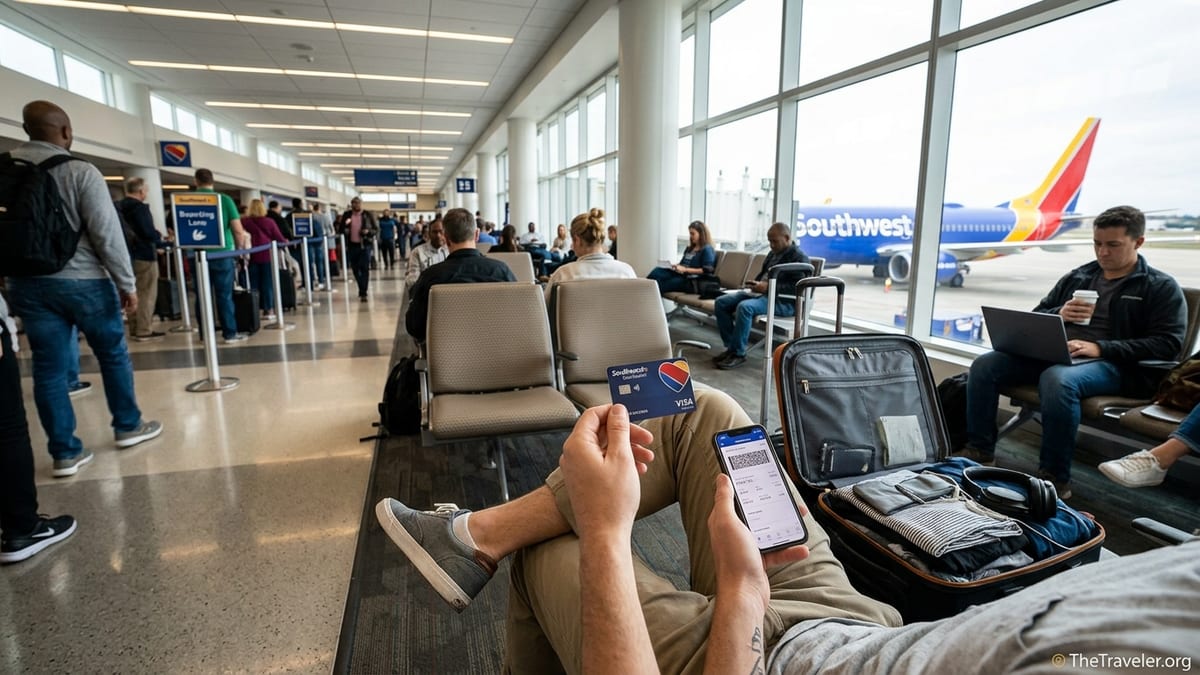
What the Southwest Rapid Rewards Priority Card Is in 2026
The Southwest Rapid Rewards Priority Credit Card is the top-tier personal Southwest card issued by Chase. As of mid 2026, it carries a relatively high annual fee of about $229, which makes it most attractive for people who already like flying Southwest and can regularly use the built-in perks. The card earns Rapid Rewards points on every purchase and layers on airline benefits tied specifically to Southwest flights.
Unlike general travel cards that let you transfer points to many airlines, this card is tightly focused on Southwest. That focus is important. If you mostly fly other carriers, you will likely get more value elsewhere. But if you often fly Southwest between cities such as Denver and Las Vegas, Chicago and Phoenix, or Dallas and Orlando, the Priority card can help you earn points faster, secure better seats, and move more quickly toward Southwest elite status and the Companion Pass.
The Priority card is part of the broader Rapid Rewards ecosystem. When you open the card, it links to your existing Rapid Rewards account or creates one for you. Every point you earn from the card flows into that same account alongside the points you earn from flying or hotel and car partners. Redemptions are then made directly through Southwest when you book or modify flights.
Because Southwest has overhauled its seating, fee structure, and card benefits over the last couple of years, it is important to understand the current version of this card rather than relying on older articles that reference perks like a $75 annual travel credit that no longer apply to new accounts in 2026. What you get today is a different, more seat- and status-focused package.
Core Earning Structure: How Points Add Up
At its heart, the Priority card is a points-earning tool. As of 2026, new cardholders typically earn more points per dollar on Southwest purchases with this card than with the cheaper Southwest personal cards. Public terms can change, but current marketing commonly highlights 4 points per dollar on Southwest purchases, 2 points per dollar at gas stations and restaurants, and 1 point per dollar on everything else.
To see what this looks like in practice, imagine you book a round-trip Southwest flight from Los Angeles to Denver for $300 using your Priority card. You would earn around 1,200 Rapid Rewards points from the credit card spending alone if the 4x rate applies to the full ticket price. Separately, you would still earn flight-based Rapid Rewards points as a Southwest member for actually flying the route, which are calculated based on the fare type. Those two streams of points stack together in your Rapid Rewards account.
Now add in everyday spending. Suppose each month you spend $500 at restaurants, $200 on gas, and $800 on other purchases on the card. At 2x for restaurants and gas and 1x for everything else, that would generate about 1,800 points per month, or roughly 21,600 points a year without counting any flights. Combined with even a few Southwest trips, many beginners find they can cross the 30,000 to 40,000 point mark in a year reasonably quickly.
This earning structure matters because Rapid Rewards points have a value that loosely tracks the cash price of Southwest tickets. While the value can move with sales and demand, each point generally covers a fraction of a cent of airfare. When Southwest runs a fare sale and that Los Angeles to Denver ticket drops to, say, $120 each way, the number of points needed for an award ticket also drops, letting your balance go further.
Key Built-in Perks and How to Use Them
The Priority card’s value is not just in the points. Its airline-specific perks are designed to make flying Southwest easier and more comfortable, especially now that the airline has shifted away from traditional open seating and introduced more structured seat and boarding options.
One core ongoing benefit is the annual allotment of bonus Rapid Rewards points. The Priority version typically provides 7,500 anniversary points each cardmember year. If you value Rapid Rewards at a modest fraction of a cent per point, those anniversary points alone can often offset a significant portion of the annual fee. For example, 7,500 points might cover a one-way fare on a shorter route such as Houston to New Orleans during a sale, or meaningfully reduce the cost of a more expensive ticket.
Another major perk for 2026 is the ability to earn tier-qualifying points toward A-List status through card spending. Current structures award a set number of tier-qualifying points for every $5,000 in purchases. Because there is no cap, high spenders can use the card to close the gap to A-List, which brings benefits like priority boarding and bonus points on flights. For instance, a traveler who is 10,000 tier points short of A-List after a busy summer might generate those points by routing $20,000 of planned expenses through the card over several months.
You also get flight-related comforts that apply when you fly Southwest. These generally include early boarding priority within Southwest’s new group system and benefits around preferred seating when you use the card to book your ticket. In real terms, that might mean being able to choose a Standard or Preferred seat at booking on a popular weekend flight from Nashville to Orlando, rather than waiting until 24 hours before departure and risking a cramped seat toward the back of the plane.
Welcome Bonuses and Companion Pass Strategy
For many beginners, the biggest initial draw of the Priority card is the welcome offer. Public promotions change frequently, but recent examples in 2026 have included offers that combine a chunk of bonus points with a temporary Companion Pass qualification when you meet a spending requirement in the first few months. In some cycles, Southwest and Chase have emphasized the Companion Pass heavily in marketing, especially at the start of the calendar year.
To understand why this matters, you need to know what the Companion Pass is. Once you reach the required number of qualifying Rapid Rewards points in a calendar year, you can designate one person as your companion. That person can then fly with you for just the taxes and fees on both paid and award tickets you book. For a couple who flies together regularly between, say, Baltimore and Fort Lauderdale, this can easily represent hundreds or even thousands of dollars of airfare saved over the life of the pass.
A typical beginner strategy looks like this: Apply for the Priority card when there is an elevated welcome offer that includes a significant number of bonus points after you spend a set amount, often around $2,000 to $5,000 in the first three months. Time your application for early in the calendar year so that the points you earn and any Companion Pass promotional boost count toward that year’s qualification. Then, concentrate your spending and Southwest flying in those same months to reach the qualification threshold.
For example, a family in Dallas planning two round-trip vacations in one year, one to Cancun and one to San Diego, might open the Priority card in February, meet the initial spending requirement by putting a home project and everyday purchases on the card, and then use the welcome points plus their flight activity to push themselves over the Companion Pass line. With the pass active, one adult can designate the other as a companion and only pay taxes and fees for that second ticket for each trip through the rest of the qualification period.
Redeeming Rapid Rewards Points with the Priority Card
The Priority card does not change how you redeem Rapid Rewards points, but it helps you build a balance that you then spend through Southwest. Southwest uses a revenue-based redemption system: the number of points required for a flight depends on the cash price and fare type, rather than on a traditional award chart. Taxes and some fees are still due in cash on award tickets.
Say you want to book a round-trip flight from Chicago Midway to Phoenix in November. Cash tickets for your dates are pricing around $350. When you switch the booking engine to points, you might see that the same flights cost around 25,000 to 30,000 Rapid Rewards points plus taxes and fees. If you have accumulated that amount of points primarily through Priority card spending and its welcome and anniversary bonuses, you could effectively cover the airfare portion of the trip just from your card use.
Another advantage of Southwest’s system is flexibility. If a fare drops after you book, you can often reprice and receive the point difference back into your Rapid Rewards account without traditional change fees. In practice, a traveler from San Diego who books a spring break flight to Denver for 18,000 points round-trip might notice a sale a month later that drops the flight to 14,000 points. Repricing would return the extra 4,000 points to their account, where they can use them toward another trip.
Importantly, Rapid Rewards points do not expire as long as your account remains open and in good standing. This allows beginners to build balances over time. Even if you only take one or two trips a year, you can steadily add points via Priority card spending and redeem them when an attractive fare pops up, such as a late-summer sale between cities like St. Louis and Tampa.
Is the Annual Fee Worth It for Beginners
The Priority card’s relatively high annual fee in 2026 is the biggest psychological hurdle for many first-time travel card users. Rather than asking whether the fee is good or bad in the abstract, it is more helpful to run through realistic scenarios and see whether the built-in value offsets the cost for your travel pattern.
Consider a traveler in Denver who flies Southwest three times per year for leisure, typically paying between $250 and $350 per round-trip. If they put those flights and around $1,500 a month in mixed spending on the Priority card, they could easily earn 30,000 to 40,000 Rapid Rewards points over the year. On top of that, they would receive the 7,500 anniversary points. If they redeem their points during fare sales, it is plausible that they could get two or more domestic one-way flights covered from points alone. The effective dollar value of those redemptions, plus the comfort benefits like better boarding and seating, can collectively justify the fee for that kind of traveler.
On the other hand, if you only fly once a year or rarely choose Southwest because your home airport is dominated by another carrier, you might struggle to make the perks pay for themselves. For instance, someone based at an airport with minimal Southwest service who mostly flies long-haul international routes on other airlines will likely be better served by a general travel card that earns flexible points and offers broader benefits such as airport lounge access or travel statement credits that work across many carriers.
A simple rule of thumb for beginners is this: The more you fly Southwest and the more you can concentrate your everyday spending on this card, the easier it is to make the annual fee feel like a discount rather than a burden. If your Southwest trips are infrequent or your spending is spread thinly across many cards, the Priority version might be overkill and one of the cheaper Rapid Rewards cards could be a better fit.
Keep in mind that card benefits and the annual fee can change over time. When renewal approaches, it is always worth reviewing the latest benefit guide from Chase, comparing it against your last year of travel, and deciding whether to keep, downgrade to a lower-fee Southwest card, or switch to a different travel product entirely.
Practical Ways to Maximize Value in Everyday Life
To get the most out of the Priority card, beginners should think in terms of habits rather than one-off tricks. The card works best when it becomes the default for certain categories of spending that earn bonus points and for all Southwest purchases, while you still remain mindful of your budget and pay the balance in full each month to avoid interest charges.
One practical approach is to assign the Priority card to travel, dining, and gas while using a separate no-annual-fee card for categories where the Priority card only earns 1 point per dollar. For example, a family in Phoenix might decide that every time they fill up the car, grab takeout, or book a Southwest flight to visit relatives in Oakland, they will reach for the Priority card. Over a year, those repeated small decisions could generate enough extra Rapid Rewards points for at least one person’s ticket to be covered on a future trip.
Another useful habit involves timing redemptions. Southwest regularly runs fare sales during off-peak periods. If you are flexible, you can stretch your points further by planning trips around these sales. A couple in Chicago might see that midweek flights to Nashville in late September are pricing significantly lower than weekend flights in October. By nudging their trip to those sale dates and booking with points from the Priority card, they effectively turn the higher annual fee into concrete savings on a city-break getaway.
Finally, pay attention to your progress toward status and Companion Pass in your Rapid Rewards account. Because the Priority card contributes both points and, through spending, tier-qualifying points, it can help push you over thresholds you are already approaching from flying. For instance, after a busy year of work travel on Southwest, you might find yourself a small number of points away from A-List status or from renewing the Companion Pass. In those situations, routing a planned large purchase such as a home appliance or vacation rental deposit through the Priority card can be the controlled push that unlocks a year of extra benefits.
The Takeaway
For beginners who are already leaning toward Southwest for their domestic trips, the Southwest Rapid Rewards Priority Credit Card can be a powerful tool. It combines elevated earning on Southwest purchases, a meaningful annual anniversary points bonus, and airline perks that improve the experience of flying under Southwest’s updated seating and boarding system. The price of admission is a higher annual fee than many entry-level travel cards, which makes it important to be honest about how often you fly Southwest and how much spending you can realistically channel through the card.
Used thoughtfully, the Priority card can turn regular expenses such as gasoline, restaurant visits, and Southwest tickets into free or discounted flights, faster elite status, and, with the right timing, progress toward the Companion Pass. Used casually or without a plan, the annual fee can outweigh the occasional free flight, especially if you are not loyal to Southwest or rarely travel.
The best first step is to examine your past year of flying and spending. If you can envision at least two or three Southwest trips a year and enough ongoing spending to trigger the welcome bonus and make regular use of the anniversary points, the Priority card is worth a serious look. If not, you may be better off starting with a lower-fee Rapid Rewards card or a more flexible general travel card until your travel pattern changes.
FAQ
Q1. Is the Southwest Rapid Rewards Priority Credit Card good for beginners who are new to travel rewards?
The Priority card can be a strong choice for beginners who already fly Southwest at least a couple of times a year and want to focus on one airline. If you rarely use Southwest or are unsure about your travel plans, a lower-fee or more flexible travel card may be a safer first step.
Q2. What is the current annual fee for the Southwest Priority card in 2026?
As of mid 2026, new accounts for the Southwest Rapid Rewards Priority Credit Card carry an annual fee of around $229. Existing cardholders who opened the card under older pricing may see a different fee until their next renewal.
Q3. How many points do I earn on Southwest flights with the Priority card?
Current marketing generally offers elevated earnings on Southwest purchases, often around 4 points per dollar when you use the Priority card to buy flights or other Southwest products. You also earn separate Rapid Rewards flight points based on the fare and distance, which stack with the credit card earnings.
Q4. Do Rapid Rewards points earned from the Priority card expire?
Rapid Rewards points do not expire as long as your account remains open and in good standing. If your Rapid Rewards account or credit card account is closed and remains inactive, you could eventually lose access to unused points.
Q5. Can the Priority card help me qualify for the Southwest Companion Pass?
Yes. Points from the Priority card’s welcome offer and from everyday spending typically count toward Companion Pass qualification, and the card also includes an annual boost of qualifying points. By timing your application and spending early in the calendar year, you can use the card to accelerate your path to the pass.
Q6. How does the anniversary points bonus work on the Priority card?
Each year on your account anniversary, you receive a fixed number of Rapid Rewards points, typically 7,500, deposited into your Rapid Rewards account. These points are separate from your regular earning and can be used like any other Rapid Rewards points for award flights.
Q7. Is there still a Southwest travel credit included with the Priority card?
Older versions of the card included an annual Southwest travel credit. For new accounts in 2026, the focus has shifted toward higher earning rates, status-boosting points, and seating and boarding benefits rather than a simple travel credit, so beginners should rely on the current benefits listed in their card agreement.
Q8. Does the Southwest Priority card charge foreign transaction fees?
Recent benefit summaries list no foreign transaction fees on the Priority card, which means you can generally use it abroad without paying extra percentage charges on each purchase. However, Southwest’s route network is primarily within the United States and nearby international destinations, so a separate global travel card may still be useful for extensive overseas trips.
Q9. What credit score do I need to be approved for the Priority card?
Approval decisions depend on multiple factors, but in practice the card tends to favor applicants with good to excellent credit. Many successful applicants report credit scores in the mid 600s to 700s or higher, along with solid income and a clean payment history.
Q10. Can I downgrade or upgrade my Southwest card later if my travel changes?
In many cases, existing Southwest cardholders can request a product change between different Rapid Rewards personal cards by contacting the issuer. For example, if the Priority card’s fee becomes hard to justify, you may be able to move to a lower-fee Southwest card while keeping your same account history. Any change should be confirmed directly with the bank before you decide.