


Paraga Beach often appears on shortlists of “must see” places in Mykonos, thanks to its blend of natural beauty and headline making beach clubs like Scorpios and SantAnna. Yet the same reputation that draws visitors in can also make budget travelers and quieter beach seekers wonder if it is truly worth a stop. Whether Paraga deserves a place on your itinerary depends a lot on when you go, how you like to spend a beach day, and what you are prepared to spend once you get there.
Get the latest updates straight to your inbox!
What Makes Paraga Beach Stand Out on Mykonos
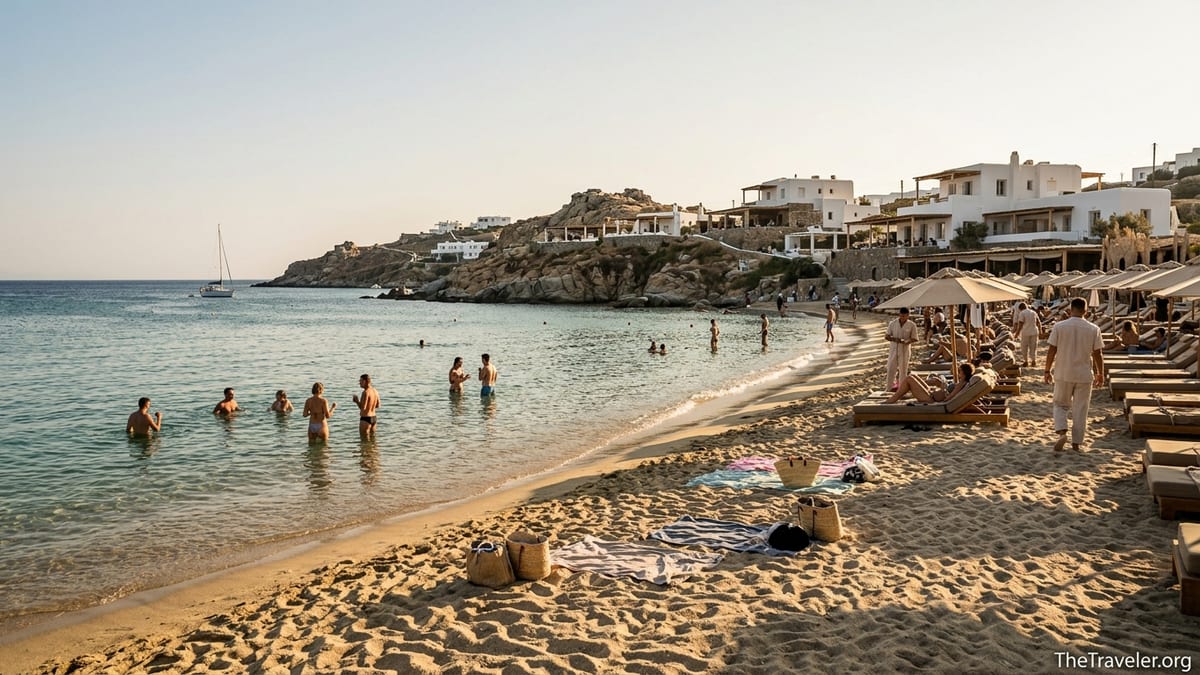
Paraga Beach sits on the south coast of Mykonos, roughly 4.5 to 6 kilometers from Mykonos Town depending on your route, in a sheltered cove with soft sand and rocky headlands at each end. The setting is classic Cyclades: clear Aegean water, low scrubby hills and whitewashed buildings scattered above the shore. Compared with long sandy stretches such as Elia, Paraga feels more compact and intimate, which adds to its atmosphere when the beach fills up on summer afternoons.
The beach itself is split in character. One side in front of the big clubs is highly organized, with neat rows of loungers, waiter service and music that builds as the day goes on. Walk a few minutes toward the rocky ends and you find a simpler area where people spread towels on the sand or rent basic sunbeds from smaller tavernas. For many visitors this mix is the appeal: you can combine a swim in relatively calm water with food and drink that ranges from casual Greek fare to high end Mediterranean menus by name brand chefs.
Paraga also benefits from its position among several of the island’s signature beaches. From here you can walk to Paradise Beach in about 10 to 15 minutes over a low coastal path, or reach Psarou and Platis Gialos in a short taxi or boat ride. Travelers who only have one or two full days on Mykonos often use Paraga as a base for a “south coast sampler” because it lets them experience both the quieter morning seaside and the more glamorous party scene without zigzagging across the island.
However, it is important to know that Paraga is not an untouched, off the grid spot. Even in shoulder season it feels developed, with multiple bars, restaurants, rental rooms and the long running Mykonos Camping complex set just above the sand. If your ideal Greek beach is a simple taverna and a handful of umbrellas, you may find Paraga energetic and commercial. If you are drawn to buzz and amenities, its density of options is a major advantage.
Beach Vibe, Crowd, and Seasonality
From late June through early September, Paraga Beach draws a diverse but decidedly social crowd. You will see couples in their 30s and 40s booking pricey daybeds at Scorpios for the sunset “rituals,” groups of friends in their 20s drifting between SantAnna and the more casual bars, and budget minded backpackers staying at the campground and using the free section of beach. Families with older teenagers often pick Paraga because there is enough energy to keep everyone entertained without the full scale thumping party you find at Paradise Beach at peak hour.
During high season, music from the clubs becomes prominent from mid afternoon onward, especially on days when international DJs play at SantAnna or when Scorpios hosts its well known Sunday events. On those days the vibe tilts firmly toward barefoot luxury partying: think people arriving by transfer vans in designer resort wear, tables ordering magnums of rosé and a queue at the entrance of Scorpios before sunset. If you prefer a low key swim and nap on the sand, aim to visit in the morning, or time your trip for late May, early June or late September when the sound levels are more moderate and reservations are easier.
Outside the core summer months, Paraga changes character. In early May and October, some sections of the beach are still serviced with loungers from smaller tavernas, but headline venues may be closed or running limited operations. Travelers arriving on spring cruises sometimes find that clubs like Scorpios only open from mid May onwards, while SantAnna may start weekend operations slightly earlier and expand as the season progresses. If your main goal is a big name beach club experience, it is wise to verify opening dates and event calendars for the specific week you plan to visit.
Dress at Paraga skews stylish but relaxed. You will see linen shirts, one piece swimsuits, straw hats and leather sandals more often than flashy clubwear. At the more casual tavernas a simple swimsuit and cover up is perfectly acceptable, while Scorpios and SantAnna suggest smart or elegant beach attire. In practical terms that means you can arrive straight from the sand but might want to avoid sports jerseys or very casual gym clothes if you plan to dine or sit in prime areas at the top venues.
Costs, Daybeds, and What You Get for Your Money
Whether Paraga is “worth it” financially depends almost entirely on how you plan to use the beach. At the top end, full day sunbed packages or cabanas at clubs like Scorpios and SantAnna can run into the hundreds of euros for a pair during peak season, especially for front row spots on event days. Minimum spends vary by date and section, but it is common for prime areas to require a significant food and beverage commitment that effectively turns your visit into a full day experience with lunch, drinks and sunset cocktails.
To put this in real terms, a couple reserving a front row cabana at SantAnna in late July might easily spend several hundred euros by the time they add a bottle of wine, some sushi or seafood platters, and a few rounds of cocktails. At Scorpios, people often treat the day as a special occasion, ordering sharing plates of Mediterranean inspired dishes, large mezze spreads and multiple rounds of drinks. Travelers on recent seasons have described these as splurge days comparable in cost to a fine dining evening in a major European city.
At the mid range level, smaller beach bars and tavernas on Paraga rent two sunbeds and an umbrella for far less than the flagship clubs. Prices change year to year and across the season, but visitors often find that basic sets on the quieter side of the beach cost the equivalent of a simple taverna lunch for two. In return you still get waiter service for drinks and snacks, access to toilets and showers, and a designated spot on the sand. If you are willing to share space or arrive early, you can sometimes negotiate slightly better prices, especially at the beginning or end of the season.
There is also a small area of Paraga where people use their own towels without paying for sunbeds, though it can feel crowded when the beach is busy. This is most popular with campers and backpackers staying at the nearby Mykonos Camping and hostel style accommodations above the beach, where nightly rates are far below those of the island’s luxury hotels. Many of these travelers buy only the occasional drink or snack from the mini market or bar and otherwise treat Paraga as a free, social seaside hangout.
Getting To and From Paraga Beach
For most visitors, Paraga is one of the easier Mykonos beaches to reach without a car. Public buses run from the Fabrika station in Mykonos Town to Paraga in season, with more frequent services in July and August. Journey times are usually around 15 to 20 minutes depending on traffic, and tickets are bought either from the driver or from nearby kiosks and ticket machines. Buses also connect Fabrika with Platis Gialos, from where small shuttle boats sometimes serve Paraga and other south coast beaches when sea conditions are suitable.
Taxis and private transfers are another common option, especially for groups heading to SantAnna or Scorpios for afternoon and evening events. Transfer companies often advertise set prices for drop off to Paraga or directly to the club entrances, and hotel concierges on the island are well used to arranging cars for these trips. During peak sunset hours or late at night after parties wind down, demand for taxis across Mykonos can be intense, so many visitors pre book their return journeys to avoid long waits.
If you have a rental car, you can drive to Paraga in under 15 minutes from Mykonos Town in light traffic, but parking can be a challenge. Some venues offer their own parking lots, sometimes with attendants, which fill up quickly on party days. There are also informal dirt lots on the hillside above the beach where drivers leave cars for a small fee. The roads near Paraga are narrow, with occasional tight turns and pedestrians, so it is wise to drive cautiously and avoid alcohol if you are the one at the wheel.
Active travelers sometimes choose to walk between neighboring beaches as part of their Paraga day. A well trodden coastal path leads from Platis Gialos past several coves and on to Paraga, with views over the Aegean and the small offshore islets. From the opposite direction, a rougher trail links Paraga to Paradise Beach, famous for its more raucous beach parties. In summer heat these walks can feel strenuous, so bring water, a hat and proper sandals rather than relying on flimsy flip flops.
Swimming Conditions, Facilities, and Practicalities
Paraga’s south coast location gives it some protection from the strong northern winds that can whip across Mykonos in July and August. The water is typically clear and relatively calm, with a shallow entry in many sections that makes it comfortable for less confident swimmers. There are, however, scattered rocks underfoot in places, so water shoes can be helpful if you have sensitive feet. Lifeguard presence can vary by section and season, so it is best to swim within sight of organized areas and pay attention to local advice on the day.
Facilities along Paraga are plentiful compared with more remote beaches. In addition to the large beach clubs and tavernas, you will find toilets, freshwater showers, changing areas, small shops selling beach essentials, and multiple places to buy snacks and cold drinks. Mykonos Camping above the beach offers extra services such as shared kitchen areas, laundry and cheaper cafeteria style food, which budget travelers appreciate after a few days of island prices.
For families, Paraga can work well if you time things right. Mornings tend to be quieter, with children playing in the shallows and parents enjoying coffee at beachfront cafes. As the day wears on, music intensifies and the scene becomes more adult focused, especially near the big clubs. Many parents choose to leave by mid afternoon, or base themselves at the calmer end of the beach further from SantAnna and Scorpios to keep noise levels manageable.
Accessibility is mixed. The approach from the main road down to the sand involves some gentle slopes and steps, and the beach itself is soft sand rather than boardwalk, which can be tricky for travelers with mobility issues. Some venues, particularly the higher end ones, have ramps and staff who can assist with seating, but it is worth contacting them ahead of time if accessibility is a priority. Shade is widely available via umbrellas and pergolas, although during peak weeks you will want to reserve or arrive early to secure a covered spot.
Scorpios, SantAnna, and the High-End Beach Club Factor
A major reason Paraga features so heavily in Mykonos discussions is the presence of two of the island’s most talked about beach clubs: Scorpios and SantAnna. Scorpios occupies a rocky peninsula between Paraga and the adjacent Kavos area, using natural stone, wood and canvas to create a boho luxe environment that blends with the landscape. It is known not only for its setting and design but also for curated music programs and sunset ceremonies that attract a global crowd of visitors every summer season.
SantAnna, set directly on the sands of Paraga, brands itself as a full day destination, with one of the largest seawater pools on the island, multiple bars, a sushi and Mediterranean restaurant, and a roster of DJs and performers throughout the season. It leans modern and high energy, with guests moving between poolside cabanas, beach loungers and the sea. On special event days, entrance policies and ticket prices may apply, while on others you can simply book a bed with a minimum spend and enjoy the facilities.
The presence of these clubs has shaped both the economy and the atmosphere of Paraga. On the plus side, they have raised the quality of food, drinks and service, and put the beach firmly on the map for travelers seeking a stylish, music driven day by the sea. They also provide employment for local residents and seasonal workers, and support a satellite scene of smaller bars, transfers and vendors catering to their guests.
On the downside, their popularity has contributed to higher prices across the area and a level of crowding that some visitors find overwhelming. Reservations at Scorpios in particular can fill weeks in advance for peak dates, and some travelers describe the overall experience as less spontaneous and freewheeling than earlier eras of Mykonos nightlife. If your picture of Greece is a quiet plate of grilled fish at a simple taverna, the carefully choreographed environment of a high end beach club may feel out of step with your expectations.
Who Will Love Paraga Beach and Who Might Skip It
Paraga Beach is likely worth a visit if you are drawn to places where natural beauty and social energy intersect. Travelers who enjoy people watching, good music, design led spaces and the option to spend on special experiences tend to rate Paraga highly. A typical example might be a couple in their early 30s who plan one big “treat day” during a Greek island trip: they book a mid level sunbed at SantAnna, share a seafood lunch and cocktails, take a dip in the pool and sea, then walk over to the rocks above Scorpios for sunset views before heading back to town.
It also suits groups of friends who want flexibility. One part of the group can splurge on a table at a club, while others base themselves on the public section of the beach or at cheaper loungers, meeting up for swims, walks and sunset. The presence of camping and hostel style accommodation makes it one of the few south coast areas where people on very different budgets can still share a beach day without being miles apart.
By contrast, Paraga may not be ideal if your priorities are peace, space and low costs. Those who imagine spending long, quiet hours listening to the sound of waves might find the soundtrack and crowds from mid afternoon irritating. Budget travelers who are happy with simple facilities might enjoy the free or low cost options at Paraga but could find better value and more local character by heading to less hyped beaches further from town, where sunbed prices and restaurant menus tend to be lower.
Finally, if your time on Mykonos is very limited, you will need to weigh Paraga against other famous spots. If you want postcard perfect turquoise water with a bit less development, a half day at Agios Sostis or Fokos might appeal more. If you are primarily interested in iconic whitewashed alleys and windmills, you may prefer to invest your hours in Mykonos Town and save the full beach club experience for another island or a future trip.
The Takeaway
Paraga Beach is not a simple yes or no proposition. It is a concentrated slice of what modern Mykonos has become: visually stunning, highly serviced, social and, at times, expensive. For many travelers, that combination is exactly what they are looking for on this island. A day spent between a sun lounger, the Aegean and a well executed lunch, capped by a sunset soundtrack at one of the headline clubs, can be a highlight of a Cyclades itinerary.
Whether it is worth visiting on your trip comes down to matching expectations with reality. If you go in understanding that Paraga is more curated scene than hidden cove, and budget appropriately for at least some food and drink, you are likely to appreciate its energy and amenities. If, on the other hand, you crave tranquility or want to keep daily spending very low, you may be happier sampling one of Mykonos’s quieter beaches and simply viewing Paraga’s buzz from afar.
If time allows, the compromise many travelers choose is to spend a morning on the sand at the quieter end of Paraga, enjoy a reasonably priced lunch at a traditional taverna, and then wander along the coast toward the bigger clubs to see whether the atmosphere feels like a fit. In the end, the answer to whether Paraga Beach is worth it is intensely personal, but with clear eyes and the right timing, it can be an unforgettable part of your Mykonos story.
FAQ
Q1. Is Paraga Beach suitable for families with children?
Paraga can work for families, especially in the morning when the beach is calmer. The water is generally shallow near the shore and there are plenty of facilities. As the afternoon progresses, music and crowds increase around the big clubs, so many families choose to leave by mid afternoon or stay at the quieter end of the beach away from the speakers.
Q2. Do I need to reserve sunbeds at Paraga Beach in advance?
For basic loungers at smaller tavernas, you can often just walk up, especially outside peak July and August weeks. For premium beds or cabanas at Scorpios and SantAnna, advance reservations are strongly recommended in high season. On popular event days, prime spots may sell out weeks ahead, so booking early gives you better choice of location and minimum spend.
Q3. How expensive is a day at Paraga Beach?
Costs range widely. At the top clubs, a couple can easily spend several hundred euros on a daybed, lunch and drinks during high season. At mid range tavernas, two loungers and an umbrella plus a simple lunch and a few drinks might cost closer to what you would pay for a casual meal out in a European city. Using the free section of sand and bringing your own snacks keeps costs far lower, especially if you are staying at the nearby campground.
Q4. What is the best time of day to visit Paraga Beach?
If you prefer a relaxed swim and room to spread out, arrive in the morning, ideally before 11 am. The beach is quieter, temperatures are more forgiving and you will have more choice of loungers. If you are after a livelier atmosphere with music and sunset views, plan to arrive mid afternoon and stay until early evening, when the light softens and the clubs pick up energy.
Q5. How do I get to Paraga Beach from Mykonos Town without a car?
In season, public buses run from the Fabrika station in Mykonos Town to Paraga, with journey times of roughly 15 to 20 minutes. Tickets are purchased from the driver or nearby kiosks. Many visitors also use taxis or pre booked transfer services, especially when heading to or from events at Scorpios and SantAnna, although you may need to allow extra time for traffic during peak hours.
Q6. Is Paraga Beach open year round?
The beach itself is always accessible, but services are highly seasonal. Most organized facilities, including the major clubs and many beachfront tavernas, operate roughly from late spring to early autumn. Outside that window, you may find only a handful of places open and fewer loungers available, so Paraga will feel more like a simple coastal walk and swim spot than a full service beach destination.
Q7. Can I visit Paraga Beach on a budget?
Yes, it is possible, though you will need to make conscious choices. Staying at the nearby campground or hostel style rooms, using the free section of beach, and buying drinks and snacks from the mini market instead of ordering full meals at the clubs can keep your costs manageable. You can still enjoy the setting, swim in the same water and soak up some of the atmosphere without committing to high minimum spends.
Q8. How does Paraga compare with Paradise Beach for partying?
Paradise Beach is generally louder and more overtly party focused, with long running beach bars that turn up the volume and attract younger crowds for dancing and shots. Paraga, by contrast, leans more toward upscale beach club culture, with curated music, stylish spaces and an emphasis on dining and cocktails. If you want a more polished scene and are willing to pay for it, Paraga may suit you better, while Paradise appeals to those after a more casual and rowdy party.
Q9. Is the water at Paraga Beach good for swimming and snorkeling?
The water at Paraga is typically clear and inviting, with a mix of sandy and rocky sections underfoot. It is excellent for casual swimming, and confident swimmers enjoy exploring closer to the rocky headlands. Light snorkeling is possible around the rocks where fish tend to gather, though this is not a major snorkeling destination compared with some other Greek islands. Always take care around boats and stay aware of changing sea conditions.
Q10. Do I need a specific dress code for Scorpios or SantAnna at Paraga?
Both venues embrace stylish yet relaxed beachwear. Swimsuits with chic cover ups, linen shirts, tailored shorts and beach appropriate footwear are all common. You do not need formal evening clothes during the day, but very casual gym wear or beach gear that looks overly worn may feel out of place in restaurant areas. In the evening, many guests elevate their look slightly with smarter resort wear while still keeping it comfortable for a seaside setting.