


More news on this day
Air travel across Europe faced another difficult day as airports in Belgium, Portugal, Spain, Ireland and Germany reported around 230 cancelled and 1,284 delayed flights, disrupting schedules for carriers including Ryanair, Vueling, KLM, Pegasus and several other European and regional airlines.
Get the latest news straight to your inbox!
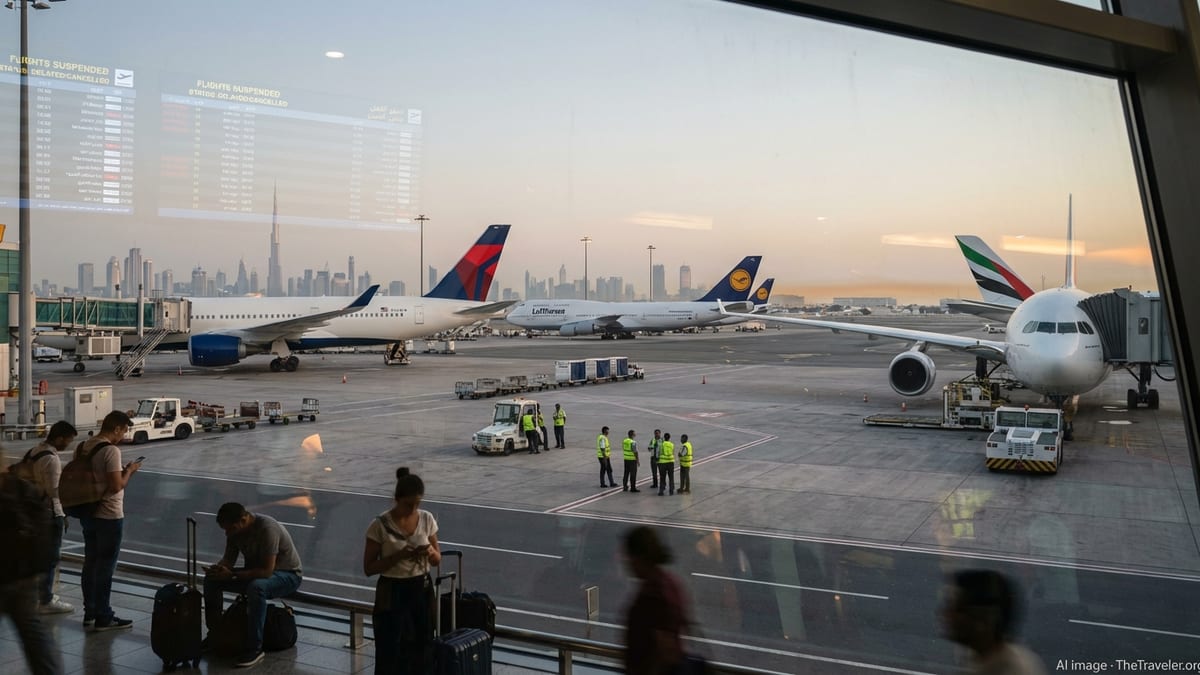
Brussels, Porto, Madrid and Dublin Among Hardest-Hit Hubs
Publicly available disruption trackers and passenger-rights data show that flight operations at several key European airports have been heavily affected, with Brussels, Porto, Madrid and Dublin featuring prominently among the hardest-hit hubs. The figures, drawn from airport-level monitoring tools and compensation platforms, point to a sharp spike in cancellations and delays concentrated within a single operating day.
At Brussels Airport and Brussels South Charleroi Airport in Belgium, live disruption dashboards highlight a pattern of scrubbed services and late departures across short-haul European routes. Individual flight-status feeds list multiple cancellations on links to Spain, Ireland and other nearby markets, indicating that knock-on effects are spreading through regional networks rather than being confined to one or two isolated services.
Similar conditions have been recorded in Portugal and Spain, where Porto and Madrid report a high volume of delayed departures and arrivals. Traffic into and out of Dublin has also been affected, with monitoring services citing a build-up of late-running flights across the afternoon and evening banks as airlines attempt to re-stabilise their rotations.
Germany has not escaped disruption, with published disruption overviews for the country showing additional cancellations and extended delays at major airports. That broader pattern underscores how quickly operational issues in one part of the European network can cascade across borders.
Low-Cost and Network Carriers Struggle to Maintain Schedules
The disruption has cut across airline business models, affecting both low-cost carriers and full-service network airlines. Passenger-rights specialists and travel-industry summaries indicate that Ryanair, Vueling, KLM and Pegasus are among the carriers with services caught up in the latest wave of cancellations and delays, alongside several other European operators.
Flight-status feeds show individual Ryanair services from Brussels to Madrid among those cancelled, mirroring recent weeks in which the airline has frequently appeared in European disruption tallies. Previous April and early May analyses by compensation platforms already placed Ryanair and KLM among carriers facing triple-digit totals of delayed or cancelled flights across the continent, suggesting that the latest figures build on an already strained operating environment.
Vueling and Pegasus also appear in punctuality and disruption statistics covering European routes, with recent historical data for both airlines showing relatively high completion rates but pockets of irregular operations on busy leisure and city-pair sectors. On days with concentrated disruption, even a small percentage of cancellations can translate into thousands of affected passengers as aircraft rotate through multiple legs.
For network carriers such as KLM, operational issues at one hub can reverberate across global schedules. If an aircraft or crew fails to arrive on time from a European feeder route, onward long-haul services can be delayed or require last-minute rebooking of connecting passengers, multiplying the impact beyond the original airport pairs.
Weather, Air Traffic Control and Staffing Behind Recent Volatility
While the precise mix of triggers behind the latest 230 cancellations and 1,284 delays differs by airport and airline, recent European disruption reports point to a familiar combination of causes. Analyses released in April 2026 linked previous surges in cancellations to Atlantic storms and air traffic control staffing shortages, which left carriers and airports with limited flexibility to recover from schedule shocks.
In those earlier events, passenger-rights platforms counted more than 1,600 disrupted flights in a single day across Europe, with around 550 cancellations and a far larger number of delays. Germany, the Netherlands and Spain were among the worst affected, illustrating how meteorological and capacity pressures can converge on the same markets that are once again experiencing heightened disruption.
Operational summaries suggest that even when severe weather moves on, residual effects can linger for several days as aircraft and crews return to their planned positions. If those recovery efforts coincide with already busy travel periods or infrastructure constraints at key hubs, the margin for further disruption narrows, making additional cancellations and delays more likely.
Staffing remains another recurring theme. Air traffic control agencies and ground-handling providers across parts of Europe have publicly acknowledged tight staffing conditions at various points over the past year, and industry reporting indicates that these constraints continue to limit the system’s resilience during peak traffic or adverse weather events.
Thousands of Passengers Face Missed Connections and Overnight Stays
With more than 1,500 flights disrupted in total, the passenger impact stretches well beyond the terminals listed in daily cancellation charts. Standard load factors on European short-haul routes mean that hundreds of thousands of travellers may have encountered late arrivals, missed connections or last-minute rebookings during the latest disruption cycle.
Case studies published by passenger-advocacy groups describe how missed onward flights often force travellers into overnight stays at transit hubs while they wait for available seats on alternative services. When a cancellation affects a last flight of the day between two cities, options can be particularly limited, especially for routes that operate only a few times per week.
Knock-on effects are also visible in ground transport and accommodation markets, with previous disruption waves prompting reports of full hotels near major airports and increased demand for rail alternatives on busy intra-European corridors. Although the current event is still unfolding, early indications suggest that similar pressures are emerging once again around key gateways.
Families, business travellers and holidaymakers are all affected, with some facing the added complication of missed tours, meetings or cruise departures. Published guidance from travel-insurance providers frequently advises policyholders to document expenses such as meals and overnight stays in case these can later be claimed from insurers or airlines.
EU261 Rights Put Spotlight on Compensation and Care Duties
The scale of disruption has renewed attention on passenger protections under EU Regulation 261, which sets common rules for compensation and assistance in cases of long delay, cancellation and denied boarding on flights departing from or arriving in the European Union. Official guidance explains that, in many cases, airlines must provide care such as meals, refreshments and hotel accommodation while passengers wait for rebooked services.
Under EU261, travellers may also be entitled to financial compensation when cancellations or long delays are not caused by what the regulation describes as extraordinary circumstances. Passenger-rights portals and legal summaries note that the amount can reach up to several hundred euros per person depending on flight distance, although eligibility is assessed case by case.
Travel-law specialists and consumer watchdogs continue to encourage passengers affected by disruption to keep boarding passes, booking confirmations and any written communications from airlines. These documents can be important when submitting claims directly to carriers or via third-party services that assist travellers with compensation processes.
As European aviation heads into the peak summer season, the latest cancellation and delay figures highlight the ongoing sensitivity of the region’s air travel network to weather, capacity and staffing shocks. With major hubs in Belgium, Portugal, Spain, Ireland and Germany once again under pressure, both airlines and passengers are confronting another reminder of how quickly the system can be stretched.