


Belize is one of the few places on earth where you can spend the morning on a shallow coral garden, the afternoon on a sheer blue-water wall and still be back at your beach bar in time for sunset. The Belize Barrier Reef and its three offshore atolls offer very different personalities, conditions and logistics. Understanding how local reef dives compare with Turneffe, Lighthouse and Glover’s Reef will help you build a smart, realistic dive plan instead of chasing headlines about the Great Blue Hole alone.
Get the latest updates straight to your inbox!
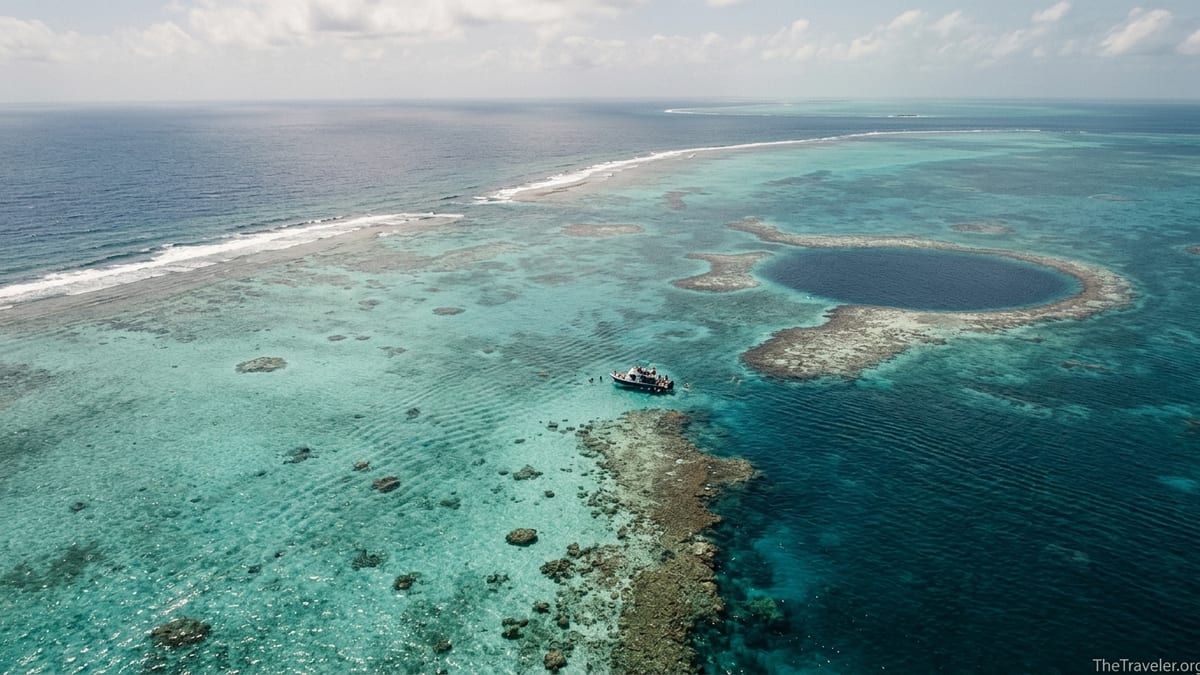
Understanding Belize’s Barrier Reef vs the Offshore Atolls
The Belize Barrier Reef itself runs for roughly 185 miles along the coast, with dozens of “local” dive sites easily reached in 10 to 20 minutes by small boats from bases like Ambergris Caye, Caye Caulker, Hopkins and Placencia. These sites tend to be fringing reef and spur-and-groove formations on the inside and crest of the barrier, with maximum depths commonly in the 60 to 80 foot range. Operators in San Pedro on Ambergris Caye, for example, routinely advertise two-tank morning trips that leave around 8:30 am and are back by early afternoon, with prices often in the range of 110 to 150 US dollars including tanks and weights.
Farther offshore sit Belize’s three atolls: Turneffe Atoll, Lighthouse Reef and Glover’s Reef. Each is an oval ring of coral and cayes rising from deep water, which creates steeper walls, more open-ocean exposure and, in many cases, better chances of seeing pelagic species such as reef sharks, eagle rays and the occasional passing dolphin. Getting here is a bigger commitment. Day boats from Ambergris Caye or Caye Caulker typically take 1.5 to 2.5 hours each way to Lighthouse, with 6 am departures normal for Blue Hole trips, and similar or slightly shorter timings to Turneffe.
Because the atolls sit away from the mainland and its runoff, visibility is often clearer there, especially in rainy months when coastal waters can be milky. It is common to have 60 to 100 feet of visibility at Lighthouse Reef when nearshore sites are closer to 40 to 60 feet. That said, sea conditions are usually calmer on the protected inner barrier reef, so newer divers or those prone to seasickness often prefer to base much of their trip on local reefs and add only one or two long offshore days.
Crucially, the Great Blue Hole at Lighthouse Reef is just one dive site in a much larger offshore playground. Most reputable operators sell it as a three-dive day that also includes spectacular wall dives at Half Moon Caye and Long Caye, where you are more likely to enjoy colorful coral, reef sharks and eagle rays in shallower, more relaxed conditions than inside the Blue Hole itself.
Local Barrier-Reef Diving: Ambergris, Caye Caulker, Hopkins and Placencia
If you want maximum dive days with minimum boat time, basing yourself on the barrier reef is the simplest option. Ambergris Caye, centered on San Pedro town, has the widest choice of dive operators, from long-established shops with big covered boats to boutique outfits running smaller groups. Daily two-tank reef trips are the bread-and-butter product here, often paired with afternoon snorkel runs to the Hol Chan Marine Reserve and Shark Ray Alley where snorkelers and divers can mix.
Caye Caulker, a smaller and more laid-back island 30 to 45 minutes away by water taxi, offers a similar menu at a slower pace. Here, you will find a handful of PADI and SSI centers running two-tank mornings to nearby sites like Esmeralda and Tuffy Canyon, with prices often slightly lower than Ambergris. Many budget travelers choose Caye Caulker because room rates a block back from the water are typically more affordable, and you can still book full-day trips to Turneffe or Lighthouse on certain days of the week.
Farther south, the coastal villages of Hopkins and Placencia give you a different slice of the reef. From Hopkins, you are often boating 30 to 45 minutes out to the barrier, with a mix of spur-and-groove coral, sandy channels and patch reefs that suit both training dives and relaxed fun dives. Placencia acts as a gateway not only to local reef sites but also to southern destinations such as Gladden Spit, where seasonal whale shark encounters are possible around the spring full moons. Several Placencia operators run three-tank offshore days to Glover’s Reef when sea conditions allow.
Conditions on the local barrier reef are generally forgiving: modest currents, moderate depths and plenty of protected leeward sites if the wind is up. This is why most Belize dive centers recommend you complete entry-level Open Water or Advanced Open Water courses on local reefs first. Many shops will combine a four-day Open Water certification with two additional fun-dive days on the same familiar sites, giving new divers time to gain confidence before committing to long offshore runs.
Turneffe Atoll: Channels, Walls and Convenient Variety
Turneffe Atoll is the closest atoll to the mainland and Belize City, and for many divers it offers the best balance of variety and accessibility. The atoll is riddled with mangrove-lined channels and lagoons that empty through deeper cuts in the reef. These “reef channels” funnel nutrients and water movement, attracting schooling fish, turtles and, at certain sites, larger predators such as Caribbean reef sharks. Turneffe’s walls often start shallower than those at Lighthouse, making it a comfortable step up for newer divers who are ready to experience wall diving without dropping straight into extreme depths.
From Ambergris Caye or Caye Caulker, day trips to Turneffe typically involve a 1.5 to 2 hour boat ride each way, with three dives included and lunch served onboard or on a caye. Expect pricing somewhat higher than local reef days, often in the 200 to 250 US dollar range plus marine park fees. Resorts based directly on Turneffe, such as dedicated dive and fishing lodges, offer another model: you arrive once by transfer boat and spend the week diving sites only minutes away, with occasional longer outings to the atoll’s eastern wall or even a day trip to Lighthouse Reef in good weather.
Dive profiles at Turneffe are a mix of sloping reefs, vertical walls and channel dives. You might start on a 40 foot coral garden where schools of grunts and snappers gather, then follow your guide down to 70 or 80 feet along a wall festooned with sponges and gorgonians. On another day the group may drop into a channel like The Elbow at the southern tip, known for strong currents, big schools of horse-eye jacks and regular sightings of reef sharks and eagle rays. Those more advanced channel dives are often limited to experienced divers with recent logged dives in current.
Turneffe is particularly attractive for mixed-ability groups because operators can select easier sites on the western side in rougher weather, or more advanced walls on the east when conditions are calm. For many visiting divers, a single three-dive Turneffe day from Ambergris or Caulker provides a memorable upgrade from local reefs without the extra time and cost of overnighting at an atoll resort.
Lighthouse Reef & The Great Blue Hole: Beyond the Bucket List
Lighthouse Reef is the easternmost and most exposed of Belize’s atolls, famous worldwide because of the Great Blue Hole. Almost every major dive shop on Ambergris Caye and Caye Caulker runs some version of a Blue Hole day trip, often once or twice per week. A typical itinerary begins with a very early departure between 5:30 and 6:30 am, a 2.5 hour ride offshore in a large twin-engine boat, then three dives: the Blue Hole in the morning, followed by Half Moon Caye Wall and Long Caye or a similar Lighthouse site in the afternoon.
Understanding what the Blue Hole actually offers is crucial. The signature part of the dive is a descent along the sheer wall to a depth of about 130 feet, where overhanging stalactites and caverns from the ancient cave roof come into view. Bottom time at that depth is necessarily short, often just 8 to 10 minutes before beginning a slow ascent and safety stop. Light can be dim, colors muted and there is relatively little coral. Many divers see a few reef sharks circling in the blue, but the experience is more about the cavernous formations than abundant marine life. This profile is beyond the recommended limits for basic Open Water divers and is usually restricted to Advanced Open Water or equivalent, sometimes with a minimum logged dive requirement.
By contrast, the second and third dives at Lighthouse, especially Half Moon Caye Wall, are where Belize often lives up to the glossy magazine spreads. Here the wall usually starts in the 30 to 40 foot range, dropping vertically into deep blue water. Healthy spur-and-groove formations on top host schools of chubs, angelfish and parrotfish, while the drop-off is patrolled by reef sharks, eagle rays and the occasional loggerhead turtle. With depths around 60 to 80 feet and gentler conditions, these dives are accessible to a wider range of certified divers and often become the highlight of the day even for those who came for the Blue Hole.
A full Blue Hole and Lighthouse Reef day is physically demanding. You might leave your hotel before dawn, spend 5 hours or more total on the boat and pay in the ballpark of 300 to 400 US dollars, including three dives, Marine Reserve fees and lunch. For some divers, this is absolutely worthwhile. Others, especially those with limited deep experience or who are sensitive to long bumpy rides, may be better served by choosing a Lighthouse Reef day focused on Half Moon Caye and surrounding walls without doing the Blue Hole itself, an option some operators will arrange if there is enough demand.
Glover’s Reef: Remote Walls, Fewer Boats and Seasonal Highlights
Glover’s Reef, to the south, is the least visited of Belize’s atolls and often cited by experienced reef divers as their favorite. Because access usually runs from southern bases such as Placencia or Dangriga, or from rustic caye-based camps on the atoll itself, daily volume is lower than at Lighthouse. The reward is a sense of space and intact reef: coral buttresses, plate corals, sand channels and walls that drop into clear blue water with relatively few other bubbles in sight.
Day trips to Glover’s from Placencia are longer and more weather-dependent than local reef outings, often leaving around 7 am and returning near sunset. For many travelers, especially those who prioritize relaxed atmospheres and spending more time on the atoll, staying several nights at one of the small eco-resorts or camps on Glover’s is the more appealing choice. These setups can be relatively simple, with cabana or cabin accommodation, communal dining and multiple dives per day on nearby sites just minutes from shore by skiff.
Diving at Glover’s typically emphasizes vibrant coral cover, schools of reef fish and wall dives in the 50 to 90 foot range rather than destination-defining deep dives like the Blue Hole. Large pelagics such as sharks and eagle rays are present, though not guaranteed every dive. In season, boats from Placencia also head to nearby Gladden Spit, where whale sharks occasionally gather between March and June to feed on spawning fish. While those encounters are tightly regulated and not guaranteed, combining a Glover’s week with at least one Gladden Spit day can satisfy travelers keen to maximize their chances of seeing big animals.
Because Glover’s is more remote and infrastructure is simpler, it suits divers who are already comfortable with their gear and buoyancy and who enjoy being “offline” and off the grid between dives. If you need a full-service resort, nightlife and multiple restaurant choices, Ambergris or Placencia’s main village are better bases; you can still book a one-off Glover’s day in good conditions if your schedule and budget allow.
Certification Levels, Dive Styles and Liveaboard Options
Belize’s dive environments are diverse enough to reward almost every certification level, but matching your qualifications to the right sites is essential. Newly certified Open Water divers will find an abundance of 40 to 60 foot reef dives off Ambergris Caye, Caye Caulker, Hopkins and Placencia. Many shops offer “refresher” dives on very shallow sites such as Hol Chan Marine Reserve, where maximum depths can be around 30 feet, ideal if you have not been in the water for a few years.
Advanced Open Water or equivalent opens more doors. Operators commonly ask for this level plus a minimum of 20 to 25 logged dives for Blue Hole trips, because of the required depth and need for precise buoyancy control during the ascent and safety stop. Stronger channel dives at Turneffe, such as The Elbow, and certain wall dives in choppy conditions may also be recommended only for experienced divers. If you are close to qualifying, consider completing your Advanced course early in your trip on local reefs so you can safely enjoy atoll dives later in the week.
Most visitors structure their diving around local two-tank boat dives, with occasional three-tank full-day trips to the atolls. A classic one-week itinerary for an enthusiastic intermediate diver based on Ambergris might look like four mornings of local two-tank dives at 110 to 150 US dollars per day, plus one Turneffe day and one Lighthouse or Blue Hole day at 250 to 400 US dollars each. This balances cost, fatigue and variety while building in at least one rest morning in case of wind-related cancellations.
Liveaboard diving condenses that variety into a single floating base. Boats operating out of Belize City typically run seven-night itineraries that spend most of the week on Turneffe and Lighthouse Reef, offering up to four or five dives per day. This style suits experienced divers who want to maximize bottom time and are comfortable with repetitive wall profiles and night dives on similar moorings. Pricing varies widely by season and cabin type but is usually comparable to a high-end resort stay once you factor in meals and the number of dives included.
Weather, Seasons and Dealing With Cancellations
Belize has a tropical climate with a pronounced dry season roughly from late November to May and a wetter season from June to November. For diving, the most consistently calm conditions usually occur between February and May, when northeast trade winds are steady but not extreme and rain is less frequent. This is also high season for tourism, so dive boats and accommodations book up early and prices are typically at their peak.
During the wetter months, squalls, stronger winds and occasional tropical systems can affect sea state, particularly on exposed runs to the atolls. It is not unusual for operators to cancel Blue Hole or Glover’s trips with only a day or two of notice if forecasts show high winds offshore, even when local reef diving remains perfectly doable. Many seasoned Belize travelers build flexibility into their itinerary by planning atoll days toward the middle of their stay rather than on the last possible day before a flight, reducing the risk that a single cancellation will ruin a long-held dream.
When planning, ask dive shops in advance how they handle weather cancellations and refunds. Some require a deposit for Blue Hole or Turneffe trips that becomes fully refundable if the operator cancels for safety but not if you change your mind. Others run a waiting list for atoll days and may consolidate bookings across multiple days to fill a larger boat when conditions align. In practice, if you are traveling in the heart of the dry season and staying a week on Ambergris or Caye Caulker, you will usually have at least one viable window for an atoll trip; shoulder-season travel calls for more patience and backup plans.
Regardless of season, UV radiation and heat are intense on the water. Sunburn and dehydration can end a dive trip just as surely as bad weather. Pack a wide-brim hat, reef-safe sunscreen, a light long-sleeve rash guard and plenty of water for boat days. Many Belize boats provide drinking water and simple lunches such as rice and beans, chicken and salad, but bringing your own snacks is wise on long crossings where surface intervals can stretch to an hour or more.
Choosing the Best Dive Base for Your Style of Trip
For newer divers or those combining diving with nightlife and a wide choice of restaurants, Ambergris Caye is usually the most convenient base. You can walk from many hotels directly to the dock, hop on a two-tank reef boat most mornings and still have energy left for beach bars or exploring San Pedro town. The large number of operators creates competition and choice: everything from budget outfits catering to backpackers to higher-end centers with spacious boats, small groups and camera rinse tanks.
If your priority is a quieter, more budget-friendly scene with easy reef access, Caye Caulker is appealing. You trade some of Ambergris’s variety for a more relaxed village feel, sandy streets and generally lower room rates. Caye Caulker operators still run Blue Hole and Turneffe days, although not always as frequently, so check schedules in advance if an atoll trip is non-negotiable for you.
Hopkins and Placencia are ideal if you want to pair reef diving with jungle trips, river tubing or visits to Maya sites. Several travelers choose a split itinerary: a few days inland near San Ignacio, then four to six nights in Placencia or Hopkins with a mix of local reef dives and one or two offshore days to Glover’s or Gladden Spit in season. These southern bases also tend to feel less developed than Ambergris, with more of a small-town Caribbean vibe and longer boat rides to many dive sites.
For divers who care more about maximizing time at the atolls than about onshore amenities, staying directly on Turneffe, Lighthouse or Glover’s can be transformative. Atoll-based resorts and camps usually offer two or three boat dives daily plus unlimited shore diving or snorkeling, with the reef just a short skiff ride or swim away. This model is particularly attractive to underwater photographers who benefit from revisiting the same sites in different light, and to experienced reef divers who want to immerse themselves in the ecosystem without long daily commutes.
Recommendations by Diver Type
For newer divers, or those with fewer than 25 dives, the best Belize itinerary usually centers on local barrier-reef dives with just one carefully chosen atoll day. A solid plan might be four or five two-tank mornings off Ambergris or Caye Caulker, including a mix of shallow coral gardens and slightly deeper walls in the 50 to 70 foot range, plus a Turneffe day if conditions are good. If you are tempted by the Blue Hole, have an honest conversation with your chosen dive center about your experience level; in many cases, Half Moon Caye and other Lighthouse walls without the deep Blue Hole descent are a safer and more rewarding choice.
Experienced reef divers who already have solid buoyancy, deep and night diving experience will get the most from Belize by focusing on the atolls and deeper outer walls. A one- or two-week stay at an atoll resort on Turneffe or Glover’s, or a seven-night liveaboard that splits time between Turneffe and Lighthouse, can easily deliver 20 to 25 dives without repeating too many sites. Adding one or two local reef days at the start or end of the trip, perhaps from Ambergris or Placencia, provides a gentle warm-up and a chance to enjoy Belize’s topside culture.
Travelers who primarily prioritize pelagic marine life should aim for a combination of atolls and seasonal hot spots. Reef sharks and eagle rays are most reliably seen on walls and channels at Turneffe and Lighthouse. Between March and June, consider basing in Placencia to access Gladden Spit, where whale shark sightings are possible on regulated trips tied to fish spawning events. While no operator can guarantee big animals, stacking your trip with higher-probability sites and seasons significantly improves your odds compared with staying solely on sheltered local reefs.
Whatever your profile, remember that Belize rewards flexibility. Sea conditions, boat schedules and your own energy levels will all shape your final dive count. Leave room for a rest day, a spontaneous inland excursion or a second visit to a favorite site that surprised you. The barrier reef and atolls are close enough together that, with a bit of planning, you can sample all three major environments on a single well-structured trip.
The Takeaway
Diving Belize is not just about ticking the Great Blue Hole off a list. The real strength of the country lies in the interplay between its accessible local barrier-reef dives and the wilder, deeper walls of Turneffe, Lighthouse and Glover’s Reef. By choosing the right base, matching dive sites to your certification level and building in both reef and atoll days, you can create an itinerary that feels adventurous without being exhausting.
Newer divers will be happiest using Ambergris Caye, Caye Caulker, Hopkins or Placencia as home bases for easy two-tank mornings on the barrier reef, perhaps with one well-timed atoll day to sample deeper walls. Experienced reef divers and pelagic seekers should look harder at atoll-based stays or liveaboards, where wall dives, channels and offshore visibility become the norm rather than the exception. Whatever route you take, give yourself time to appreciate Belize’s reef as a living system, not a single photo from a postcard.
FAQ
Q1. Do I need to be Advanced Open Water certified to dive in Belize?
Open Water certification is enough for most local reef dives, but Advanced Open Water or equivalent is strongly recommended for deep sites like the Great Blue Hole and certain channel or wall dives at the atolls.
Q2. Is the Great Blue Hole worth it for newer divers?
For many newer divers, the deep, short Blue Hole dive is less rewarding than the shallower, more colorful Lighthouse Reef walls done on the same day. Talk honestly with your dive shop about your comfort and experience before committing.
Q3. How much do typical two-tank dives cost in Belize?
Two-tank local reef dives from islands like Ambergris Caye or Caye Caulker often run in the range of about 110 to 150 US dollars per person, including tanks and weights but not equipment rental.
Q4. What is the best time of year to dive Belize?
The most consistently calm, clear conditions generally occur between February and May, during the dry season. However, diving is possible year-round, with more variable weather between June and November.
Q5. Which base is best if I want easy diving and nightlife?
Ambergris Caye offers the widest choice of dive shops, restaurants and bars, plus short boat rides to local reefs, making it a strong choice for divers who also want a lively evening scene.
Q6. Where should I stay if I want the most pristine reefs and fewer boats?
Staying on Turneffe or Glover’s Reef at an atoll-based resort or eco-camp typically puts you close to less crowded walls and coral gardens, with multiple dives per day and minimal boat travel.
Q7. How often are Blue Hole trips canceled due to weather?
Atoll trips are more vulnerable to wind and sea conditions than local reef dives. Operators may cancel several trips a month in the wetter season, but during the dry season most scheduled departures run as planned.
Q8. Can snorkelers join Belize dive trips?
Yes, many operators welcome snorkelers on local reef outings and some atoll trips, especially to sites like Half Moon Caye. The Blue Hole itself is less spectacular for snorkelers, but the surrounding reefs can be excellent.
Q9. Are liveaboards in Belize suitable for beginners?
Belize liveaboards generally cater to certified divers who are already comfortable with boat entries, repetitive diving and basic navigation. Confident newer divers can enjoy them, but a few days of local reef diving first is wise.
Q10. How many dive days should I plan for a first Belize trip?
Five to seven dive days is a good starting point. This usually allows three or four local reef days plus one or two atoll trips, with at least one rest or weather-flex day built into your schedule.