


The Belize Barrier Reef is the country’s defining natural attraction, stretching roughly 190 miles along the Caribbean coast and sheltering hundreds of cayes, sandbars and coral atolls. For first-time visitors, the challenge is not whether to go, but where to base yourself and which part of the reef to actually explore. This guide explains the key regions, how they differ, and what it is really like to snorkel, dive and stay near the reef from the main hubs of Ambergris Caye, Caye Caulker, Belize City, Hopkins, Dangriga and Placencia.
Get the latest updates straight to your inbox!
Understanding the Belize Barrier Reef, Atolls and Marine Reserves
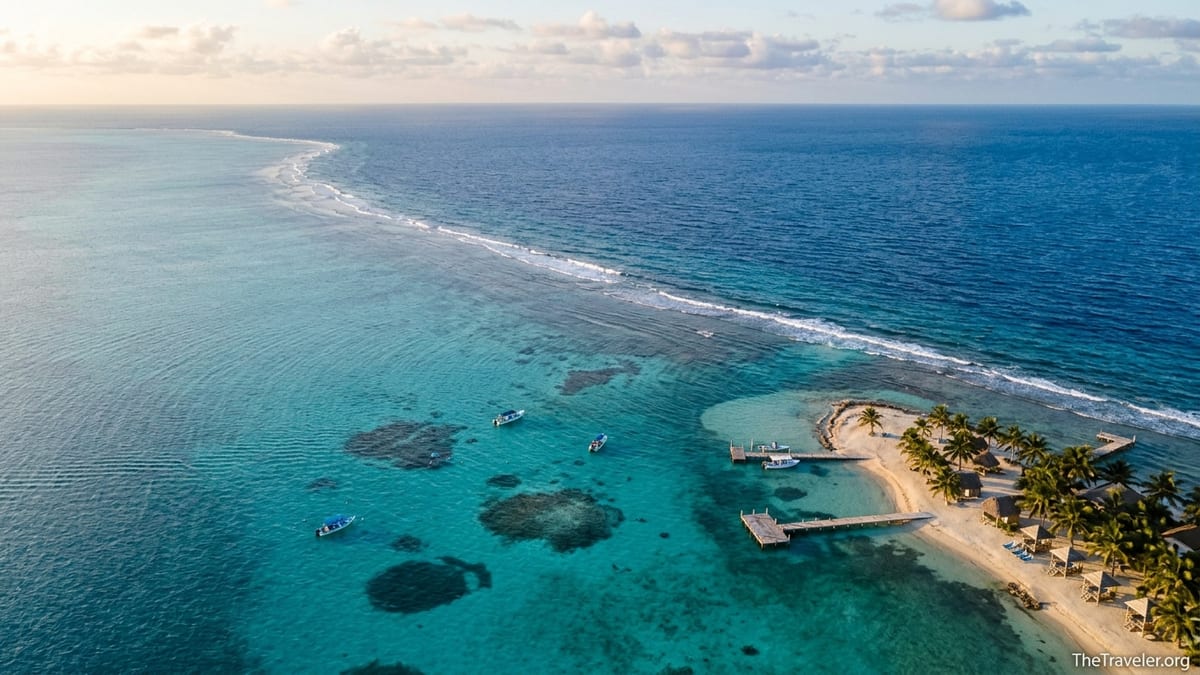
The Belize Barrier Reef is part of the wider Mesoamerican Reef system, the second largest barrier reef system in the world. For most travelers, “the reef” means the long coral wall that runs parallel to Belize’s coast, usually visible as a line of white surf a short boat ride offshore from Ambergris Caye, Caye Caulker and the central and southern coast. In practical terms, this barrier reef provides the sheltered, clear water that makes boat trips, snorkeling and shallow diving so accessible.
Offshore atolls are something different. Lighthouse Reef, Turneffe Atoll and Glover’s Reef sit well outside the main barrier, as large, roughly circular reef structures that rise from deep water and enclose calm lagoons. These atolls feel wilder and more remote. Reaching them typically requires 1.5 to 3 hours by boat from the mainland or from the northern cayes, and most visitors either join full-day dive or snorkel excursions or stay at small, often all-inclusive lodges on the atolls themselves.
Marine reserves are protected zones created to conserve particular sections of reef, seagrass and mangroves. Hol Chan Marine Reserve near Ambergris Caye, South Water Caye Marine Reserve off the Hopkins and Dangriga coast, and the Turneffe Atoll and Glover’s Reef marine reserves are a few of the best known. These areas often have ranger stations, mooring buoys and specific rules about fishing, touching coral or feeding wildlife. On a practical level, when you book a snorkel or dive trip, you usually pay a modest park fee per person to enter these reserves, collected in cash by the tour operator or ranger on site.
For first-time visitors, the key distinction is this: staying on Ambergris Caye, Caye Caulker, Hopkins, Dangriga or Placencia puts you next to the main barrier reef, where daily half-day trips reach shallow coral gardens and channels. Choosing an atoll lodge at Turneffe, Lighthouse Reef or Glover’s Reef puts you right on top of the reef in a remote setting, but removes easy access to towns, shops and non-water activities.
Where to Base Yourself: Matching Bases to Reef Experiences
Ambergris Caye, centered on the town of San Pedro, is the busiest reef base in Belize and a logical choice if you want the greatest number of tour operators, restaurants and mid-range to upscale hotels. Many dive shops can pick you up directly from your hotel dock in the morning and have you at popular reef sites in 10 to 15 minutes by skiff. Typical two-tank dive trips cost in the region of 120 to 180 US dollars before equipment rental, while half-day snorkel outings to nearby sites might run around 60 to 90 dollars per person, depending on inclusions and group size. You trade some tranquility for infrastructure and choice, but for a first-timer who wants things to be easy, this trade is often worthwhile.
Caye Caulker is smaller and more laid-back than Ambergris, with sand streets and a “go slow” vibe. It offers a similar menu of day tours, but at a slightly lower-key pace and with more guesthouses, hostels and simple beach hotels. Travelers who want to keep costs moderate and do not mind more basic comforts often choose Caulker as a base. Typical one-day snorkel tours from here might combine several reef sites, often including Hol Chan Marine Reserve when conditions allow, with prices commonly around 80 to 120 US dollars including lunch and gear. You will not have the same volume of nightlife or luxury resorts as San Pedro, but the village feel and easy access to the reef appeal to many.
On the mainland coast, Hopkins, Dangriga and Placencia form a separate cluster of bases, closer to South Water Caye Marine Reserve, Gladden Spit and the Silk Cayes, and, farther out, Glover’s Reef. These towns generally feel more local and less built up than Ambergris, although Placencia has a well-established tourist strip along its narrow peninsula and Hopkins is developing a small but growing collection of beachfront lodges. Travelers who want to combine reef time with rainforest, Garifuna culture or inland adventures such as Cockscomb Basin hikes or waterfalls often choose one of these southern bases to avoid backtracking through Belize City.
Belize City itself is not a beach destination but does act as a transport hub to offshore atolls. Several atoll lodges at Turneffe and Lighthouse Reef include boat transfers from marinas near the city in their package rates. A few day tour operators run diving and snorkeling trips from Belize City to Turneffe or to closer sections of the barrier reef, typically priced at a premium compared with similar trips from the cayes because of the longer boat rides and fuel costs. Unless you have a specific tour in mind, first-time visitors generally use Belize City mainly for transit to the islands, inland lodges or atoll-based resorts rather than as a reef base in its own right.
Snorkeling and Diving: What to Expect in Different Regions
For introductory snorkeling, the northern barrier reef off Ambergris Caye and Caye Caulker is hard to beat. The reef crest lies so close to the islands that you can be finning above coral in less than 20 minutes from the dock. Typical half-day tours visit two or three sites that might combine shallow coral gardens, channels that cut through the reef, and sandy areas where stingrays and nurse sharks congregate. Visibility is often around 15 to 25 meters in calm conditions, and most tours provide life jackets, fins and masks, along with a guide who enters the water and points out turtles, rays or schools of grunts and snappers.
Hol Chan Marine Reserve, a short boat ride from both Ambergris and Caye Caulker, offers a compact introduction to Belize’s marine life in a controlled setting. Operators often time their visits to avoid the busiest hours, but you should still expect several boats on site in high season. Many combine the main Hol Chan channel with a stop at Shark Ray Alley, where southern stingrays and nurse sharks commonly gather. For a first-timer, this can feel like a curated highlight reel of the reef: you might see corals, reef fish, turtles and larger animals in a single outing. It is an excellent choice if you only have one day on the water.
Farther south, snorkeling trips from Hopkins, Dangriga or Placencia often focus on the patch reefs and tiny sand cayes near South Water Caye and the Silk Cayes. These sites tend to feel wilder and less crowded than Hol Chan, with more of a “desert island” atmosphere. A small day lodge or picnic area on a palm-fringed caye might serve as your base, with several snorkel sessions from the beach or boat throughout the day. While conditions vary with wind and tide, many visitors report seeing healthy stands of coral, schooling fish, occasional eagle rays and, in some seasons, distant glimpses of larger pelagics along the drop-offs.
Diving follows a similar pattern. Beginners often start with easy reef dives from Ambergris or Caye Caulker, progressing to deeper wall dives or specialty trips. Certified divers with more experience may target Turneffe Atoll for varied topography and fish life, Lighthouse Reef for steep walls and the famous Blue Hole, or Glover’s Reef for remote expedition-style diving. Day trips to Turneffe or Lighthouse from the northern cayes often involve early departures, 1.5 to 3 hours of boat travel each way and two or three dives, so they appeal most to travelers who are comfortable spending a full day at sea and who prioritize underwater time over other activities.
Ambergris Caye and Caye Caulker: Northern Gateway to the Reef
Ambergris Caye functions as Belize’s main reef town, and its location just inside the barrier makes logistics remarkably simple. Many hotels run private docks where local boats pick up guests for morning and afternoon tours. You might stay in a mid-range condominium just south of town and be able to walk to beach clubs in the evening, while still meeting your dive operator at 8 a.m. for a quick run to nearby sites. Well-known operators based in San Pedro arrange daily snorkel outings, open-water courses, Hol Chan and Blue Hole trips, as well as fishing and sunset cruises, so it is realistic to plan an entire week’s worth of varied excursions without repeating the same itinerary.
Caye Caulker, roughly 30 minutes by water taxi from Ambergris, offers a more compact base with most accommodations clustered near the island’s narrow “Split.” Budget-minded snorkelers might stay in a simple guesthouse or small hotel and book day tours at storefront agencies on the main street. One traveler might choose a full-day Hol Chan and Shark Ray Alley snorkel trip one day and a local barrier reef circuit another, interspersed with afternoons at waterside bars and simple seafood restaurants. The island’s smaller size makes it easy to get around on foot, but you should plan to carry cash for park fees and small extras, as card acceptance can be inconsistent.
Both Ambergris and Caye Caulker are also jumping-off points for day trips to Lighthouse Reef and Turneffe Atoll. For example, a typical Blue Hole and Lighthouse Reef excursion from San Pedro or Caulker departs before sunrise, serves breakfast on board and includes three dives or snorkel sessions, often at the Blue Hole, Half Moon Caye and Long Caye. Prices vary by operator and season but generally fall in a higher tier than local reef trips, reflecting the longer distances and fuel consumption. First-time visitors who are not avid divers sometimes find that one such signature excursion, combined with several shorter local reef outings, strikes a good balance between effort and reward.
When choosing between Ambergris and Caye Caulker, consider how much structure and nightlife you want. If you prefer a wide selection of mid to high-end hotels, air-conditioned restaurants and beach clubs, Ambergris is usually the better choice. If your priority is a relaxed island pace, walking everywhere and perhaps saving on accommodation while still accessing professional tour operators, Caye Caulker is an excellent alternative.
Hopkins, Dangriga and Placencia: Southern Doorway to South Water Caye and Glover’s Reef
The southern coast of Belize has a different feel from the northern cayes, with a mix of Garifuna, Creole and Maya cultures and easy access to jungle-covered hills. For reef travelers, the main draw is proximity to South Water Caye Marine Reserve, Gladden Spit and Silk Cayes, and the more remote Glover’s Reef Atoll. Bases like Hopkins, Dangriga and Placencia allow you to combine snorkeling and diving with inland trips such as Garifuna drumming lessons, cacao farm visits or hiking in Cockscomb Basin Wildlife Sanctuary.
Hopkins is a small, beach-fringed village with a growing number of beachfront lodges and guesthouses. Several local operators run daily snorkel and dive trips to South Water Caye Marine Reserve and nearby patch reefs. A typical day might involve a 30 to 45 minute boat ride to a tiny caye with a handful of palm trees and perhaps one small resort or research station. From there you can snorkel right off the beach over patch reefs in waist-deep water or make short jumps by boat to nearby drop-offs. This setup works particularly well for mixed groups where some travelers want guided snorkel tours and others prefer to relax on the sand between sessions.
Dangriga, a larger town and transport hub, has fewer beach resorts but is even closer by boat to South Water Caye itself and to Glover’s Reef trips. Some small lodges on South Water Caye are accessed via boat transfers from Dangriga, which keeps you right on the edge of the reef with very little travel time to morning snorkel or dive sites. This kind of base is ideal if you want a quiet ocean-focused stay, happy to trade nightlife and restaurant variety for maximum time in and on the water.
Placencia, at the end of a narrow peninsula, blends laid-back Caribbean village vibes with a well-developed tourism strip. Dive shops along the main sidewalk advertise daily reef dives, whale shark season trips to Gladden Spit, snorkel excursions to the Silk Cayes and occasional overnight or multi-day stays on Glover’s Reef. Travel times to the reef here tend to be a bit longer than from Hopkins or Dangriga, but still reasonable for day trips. Placencia also offers one of the best selections of restaurants and bars along the Belizean coast, making it a good choice if you want to alternate reef days with evenings out, or intersperse your trip with inland excursions to Maya sites or river tours.
Offshore Atolls: Turneffe, Lighthouse Reef and Glover’s Reef in Brief
Turneffe Atoll is the closest atoll to the mainland, lying roughly 20 to 30 miles offshore from Belize City. It is surrounded by a complex of mangrove islands and coral reefs, with dive sites that range from shallow coral gardens to drop-offs such as the Elbow. Several small, often all-inclusive resorts on the atoll include boat transfers from Belize City, meals and daily dives or snorkel excursions in package rates. Stays here suit committed divers or anglers who can comfortably spend several days in a remote marine setting with limited independent dining or shopping options.
Lighthouse Reef, farther offshore, is best known for the Great Blue Hole and for Half Moon Caye, a tiny island with a nesting colony of red-footed boobies, and Long Caye, where some small dive lodges operate. Travelers typically reach Lighthouse via multi-dive day trips from Ambergris or Caye Caulker, or by staying at one of the few small lodges on the atoll. Conditions here usually feel more exposed than on the inner barrier reef, with deeper walls, currents and the sense of being far from the mainland. This appeals strongly to experienced divers seeking dramatic drop-offs and clearer water, while first-time snorkelers may prefer the more sheltered sections of the barrier reef or atoll lagoons.
Glover’s Reef Atoll, to the south, encloses a large, shallow lagoon studded with patch reefs. Small, rustic lodges and camping-style operations on the atoll offer multi-night stays that focus almost entirely on water-based activities: snorkeling, diving, kayaking and paddleboarding. Access usually involves a scheduled boat transfer from Dangriga or sometimes Placencia, and supplies are more limited than on the mainland. For adventurous travelers happy with off-grid comforts and communal dining, Glover’s provides some of the most pristine shallow reef environments in the country.
For a first-time visitor, the main question is whether to commit to staying on an atoll or to sample these environments via day trips. If you are already a certified diver, comfortable at sea and willing to focus your trip almost entirely on marine life, a 3 to 5 night atoll stay can be a trip-defining experience. If you are traveling with children, mixed-interest groups or anyone prone to seasickness, you may find it more practical to base on Ambergris, Caye Caulker, Hopkins, Dangriga or Placencia and book one or two longer excursions to an atoll instead.
Hol Chan, South Water Caye and Other Key Marine Reserves
Hol Chan Marine Reserve, just outside Ambergris Caye and Caye Caulker, is often the first stop on a Belize reef itinerary. Its relatively small size, clearly defined zones and established moorings make it easy to manage boat traffic and visitor flows. Many tours schedule visits in early morning or late afternoon to avoid the mid-day peak. The channel itself offers a cross-section of reef habitats, from seagrass beds where turtles graze to walls where groupers and snappers school. For travelers who are new to snorkeling, guides often demonstrate basic techniques in the shallows before leading the group over slightly deeper water.
South Water Caye Marine Reserve, off the coast near Dangriga and Hopkins, protects a broad swath of barrier reef, mangroves and seagrass beds. Small lodges on islands like South Water Caye and nearby Tobacco Caye allow guests to snorkel right from the beach over patch reefs and seagrass, or take short boat rides to outer reef walls. Day visitors from Hopkins or Dangriga might spend their surface intervals on a tiny caye, walking its sand paths between snorkel sessions. Compared with Hol Chan, sites here are more spread out, so you are less likely to share the water with many other boats at the same time, especially outside peak holiday periods.
Turneffe Atoll Marine Reserve and Glover’s Reef Marine Reserve are more extensive and remote, with regulations that often include limits on fishing, collection and anchoring to protect sensitive coral and seagrass habitats. Access normally comes built into full-day tours or atoll lodge packages. Visitors may notice ranger stations or patrol boats, and dive briefings usually emphasize not touching corals, maintaining good buoyancy and keeping a respectful distance from turtles, rays and sharks. The sense of being in a protected, lightly visited environment is part of the appeal for many travelers.
These reserves are complemented by additional protected areas like Gladden Spit and Silk Cayes Marine Reserve off Placencia, known for seasonal whale shark encounters associated with fish spawning aggregations. Even if you are not specifically targeting whale sharks or distant atolls, it is worth paying attention to which reserves your chosen tours visit. That information gives you a quick indication of likely travel times, site quality and the level of environmental oversight you can expect during your trip.
The Takeaway
Planning a first-time trip to the Belize Barrier Reef is less about finding the single “best” spot and more about matching your base to the kind of reef experience you want. Ambergris Caye and Caye Caulker offer the easiest logistics, with quick access to the northern barrier reef, Hol Chan Marine Reserve and long day trips to Lighthouse Reef and Turneffe. Hopkins, Dangriga and Placencia open the door to South Water Caye, the Silk Cayes and Glover’s Reef, along with a richer mix of inland and cultural excursions. Offshore atolls such as Turneffe, Lighthouse Reef and Glover’s reward travelers who are ready to commit to remote, water-focused stays.
By understanding the difference between the barrier reef itself, the offshore atolls and the key marine reserves, you can choose where to stay with far greater confidence. If you want short boat rides, plenty of dining options and easy snorkeling, favor the main cayes or southern coastal villages. If your priority is world-class wall diving and uncrowded patch reefs, consider at least a day trip or short stay on one of the atolls. In every case, booking with reputable operators, respecting local guidelines and giving the reef the time it deserves will help ensure that your first Belize Barrier Reef trip feels both manageable and unforgettable.
FAQ
Q1. Is the Belize Barrier Reef suitable for first-time snorkelers?
Yes. Areas near Ambergris Caye, Caye Caulker, Hopkins and Placencia offer shallow, sheltered sites where guides lead small groups, making conditions comfortable for beginners who can swim and use basic gear.
Q2. Where should I stay if I want the easiest access to the reef?
For simple logistics and many tour options, Ambergris Caye or Caye Caulker are excellent choices. If you also want inland excursions, Hopkins, Dangriga or Placencia give good reef access plus easy links to rainforest and cultural activities.
Q3. Do I need to be a certified diver to enjoy the Belize Barrier Reef?
No. Many visitors only snorkel and still see turtles, rays and colorful reef fish. If you are curious about diving, most operators offer introductory experiences under close supervision in shallow water.
Q4. How long should I stay to experience both reef and inland Belize?
A week allows time for several snorkel or dive days and at least one inland trip. With 10 to 14 days, you can comfortably split your stay between a reef base such as Ambergris, Caye Caulker or Placencia and an inland lodge near San Ignacio or the southern mountains.
Q5. What is the difference between staying on a caye and staying on an atoll?
Staying on a caye like Ambergris or Caye Caulker gives you town services, many restaurants and short boat rides to the barrier reef. Staying on an atoll such as Turneffe, Lighthouse or Glover’s means a remote lodge with few or no outside services, but faster access to dive and snorkel sites and a more isolated, marine-focused experience.
Q6. Are day trips to the Blue Hole and Lighthouse Reef worth it for first-timers?
They can be, if you are comfortable with long boat rides and want to see dramatic offshore scenery. Many first-time visitors, especially snorkelers, find that combining one such signature excursion with several shorter local reef trips offers a good balance.
Q7. Is Belize City a good base for reef activities?
Belize City is mainly a transport hub. Some atoll lodges include boat transfers from marinas there, and a few operators run day trips, but most first-time visitors prefer to base on a caye or in a coastal village and only pass through the city in transit.
Q8. How much should I budget for snorkeling or diving tours?
Prices vary, but many half-day snorkel trips cost roughly the same as a typical day tour in the Caribbean, while two-tank reef dives and all-day offshore excursions usually cost more. Atoll-based packages often bundle accommodation, meals and multiple dives into a single per-night rate.
Q9. Is it better to book reef tours in advance or on arrival?
During busy periods or if you have specific dates, atoll trips or courses in mind, advance booking is wise. For more flexible travelers visiting outside peak holidays, many local reef and snorkel tours can be arranged a day or two in advance through hotels or village tour desks.
Q10. What is the best time of year to visit the Belize Barrier Reef?
Conditions are usually calmest and driest from around late November through April, with clearer water and more predictable boat schedules. The wetter months often bring greener landscapes and fewer visitors but may come with stronger winds or occasional trip cancellations due to weather.