


The Belize Barrier Reef is often sold as a single, catch all snorkeling destination. In reality, it is a chain of very different reef systems, cayes and atolls that feel nothing alike once you are in the water. For snorkelers who want to match their base, budget and boat time to the right kind of coral and marine life, it pays to choose carefully rather than simply booking the first “Belize Barrier Reef snorkeling” tour you see in a search result.
Get the latest updates straight to your inbox!
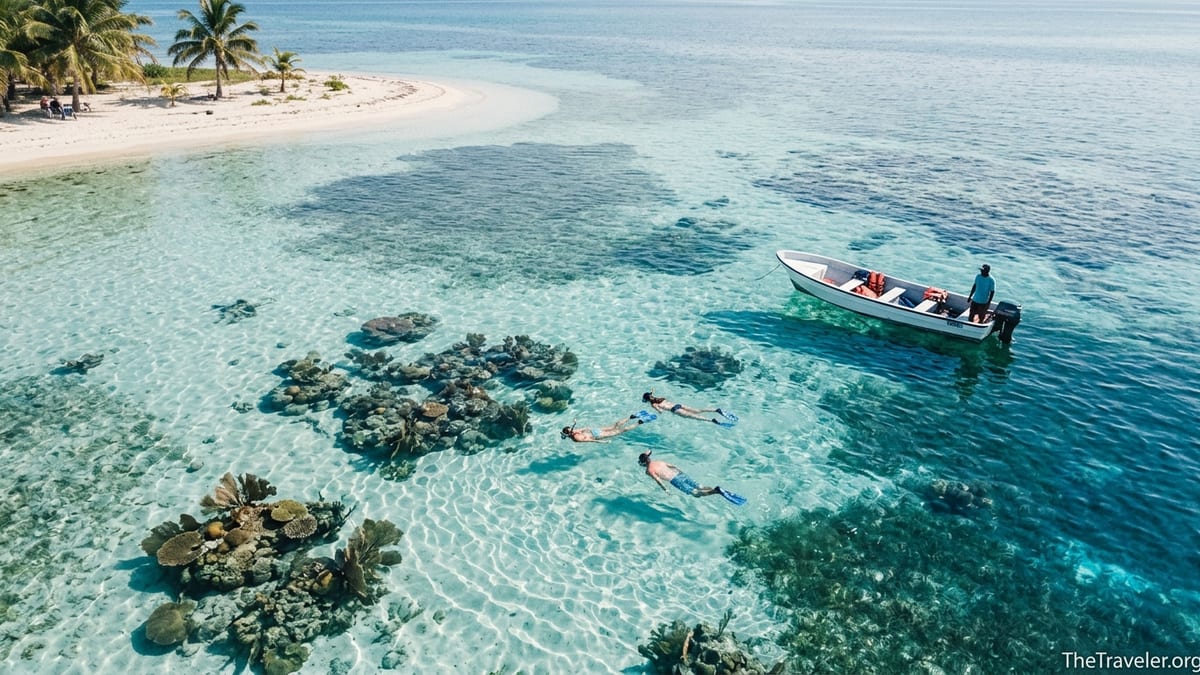
How the Belize Barrier Reef Is Laid Out for Snorkelers
The Belize Barrier Reef runs roughly parallel to the mainland, with popular island bases strung along its length. Ambergris Caye and Caye Caulker sit off the north coast and are closest to headline names like Hol Chan, Shark Ray Alley and Mexico Rocks. Farther south, placid Placencia and tiny offshore cayes such as Tobacco Caye and South Water Caye give access to quieter sections of reef and the Silk Cayes. Beyond the barrier itself lie offshore atolls such as Turneffe and Lighthouse, which require longer, pricier day trips or overnight stays.
Most visitors encounter the reef on organized boat tours. From San Pedro on Ambergris Caye, classic half day outings combine Hol Chan Marine Reserve with Shark Ray Alley, with total boat time of around 45 minutes split into short hops between sites. Caye Caulker operators run similar trips north toward Hol Chan or Mexico Rocks. From Placencia, boats head 45 to 90 minutes offshore to Laughing Bird Caye, Silk Cayes or the South Water Caye Marine Reserve, making those mainly full day excursions with lunch on a caye beach.
Conditions vary notably between areas. Some sites are shallow, sheltered and ideal for a first time snorkeler who wants to be able to stand occasionally on sand. Others are cut channels in the barrier reef with 20 to 30 feet of water, noticeable currents and more open ocean feel. Understanding those differences will help you decide whether your ideal day is drifting gently over patch reefs in waist to chest deep water or finning along the edge of a drop off looking for eagle rays and turtles.
In this guide, the focus is on comparing the major snorkeling areas from a snorkeler first perspective. You will find details on depth, currents, coral quality, the likelihood of turtles, rays and nurse sharks, plus whether each destination usually works as a half day outing or demands a full day at sea. Concrete examples of tour patterns and typical travel times will help you anchor the planning to real world options you can actually book.
Hol Chan & Shark Ray Alley: Belize’s Iconic Double Act
Hol Chan Marine Reserve sits at a natural cut in the barrier reef off Ambergris Caye. Here the reef opens into a channel, effectively a marine highway for fish moving between inside and outside waters. Snorkel boats typically moor in 15 to 30 feet of water, so you will not be standing, but visibility is usually excellent and the sense of swimming above a living canyon is strong. You can expect coral gardens, sea fans and schooling grunts, plus good chances of spotting green or hawksbill turtles, nurse sharks, eagle rays and big groupers as you follow your guide along the channel.
Currents at Hol Chan can be noticeable, especially around tidal changes, though operators consider it manageable for beginners who are comfortable in deep water. Most guides provide life jackets for floating. It is common to see families and nervous swimmers using vests and staying close to the guide while stronger snorkelers range wider. Because the reserve is so popular, expect multiple boats at peak times. In practice, this means more fin traffic at the surface but also a sense of security for first timers.
Shark Ray Alley, officially part of the Hol Chan reserve, is a shallow sandy cut a short five to ten minute boat ride away. Depths drop to around 5 to 12 feet and the bottom is mainly sand with scattered seagrass. Fishermen once cleaned their catch here, and many operators still chum lightly, so nurse sharks and southern stingrays congregate predictably around the boats. It is visually dramatic even from the deck as dozens of shadows swirl. Once in the water you are eye level with four to six foot nurse sharks and large rays gliding past.
Hol Chan plus Shark Ray Alley is typically sold as a half day trip from both San Pedro and Caye Caulker, sometimes with a third shallow reef stop added. Expect to leave mid morning and be back in town early afternoon, or choose a sunset version. For serious snorkelers, the appeal is high fish density and reliable turtle and shark encounters. For absolute beginners, the mix of a guided deep water drift followed by a shallow, sandy site provides a good first ocean experience, though those who are very uneasy in deep water may prefer to start at a shallower patch reef first.
Mexico Rocks & Caye Caulker Reef Trips: Shallow Patch Reefs and Calmer Water
North of San Pedro, Mexico Rocks is a shallow patch reef system inside the barrier reef. Depths typically range from about 4 to 10 feet, with coral heads rising toward the surface from a seagrass bottom. The area is protected from ocean swells, so surface chop and current are usually lower than at the Hol Chan channel. This makes Mexico Rocks well suited to novice snorkelers, families with younger children and anyone who prefers to float above coral without the psychological factor of deep blue water below.
Coral rather than big animal encounters is the headline here. Expect healthy hard coral mounds, sea fans and soft corals sheltering schools of juvenile fish. There are still rays and occasional turtles, but in general you come for color and structure rather than for the concentration of sharks and rays visible at Shark Ray Alley. Because it is shallower, photography is easier with natural light and you can pause above specific coral heads to watch cleaning stations or parrotfish grazing without drifting off a steep edge.
Caye Caulker operators run a variety of reef trips that blend parts of the same ecosystem into longer snorkel days. A common pattern is a full day tour with multiple stops: Hol Chan, Shark Ray Alley, a shallow coral garden closer to Caye Caulker, and perhaps a seahorse spotting stop near the island. Boats often leave around 10:30 in the morning and return near sunset, with lunch served on board. For a shorter outing, some companies offer half day trips focusing on Caye Caulker’s local reef and one major site. These tours suit travelers based on Caye Caulker who want to avoid multiple days of fast boat travel but still reach the star sites.
In practical terms, choosing between Mexico Rocks and Hol Chan as your main snorkel from Ambergris often comes down to your comfort in deep water and whether you prioritize coral or charismatic megafauna. If your ideal day is gliding over shallow coral gardens that feel like a natural aquarium with minimal current, Mexico Rocks fits the bill. If you want turtles cruising through a reef channel, larger schools of fish and a follow up session among sharks and rays, Hol Chan plus Shark Ray Alley remains the higher energy, more wildlife dense choice.
Placencia’s Inner Reef: Laughing Bird Caye
Placencia, on the southern mainland coast, feels quieter than Ambergris Caye but still offers standout snorkeling. Laughing Bird Caye National Park is the classic inner reef destination here. It sits on a long narrow caye perched on a coral ridge, within reach on a roughly 45 minute to 1 hour boat ride from Placencia depending on sea conditions and boat size. Because it lies on the inner part of the reef, conditions are often calmer than on the outer barrier, and tours commonly market it as beginner friendly.
Snorkeling at Laughing Bird Caye usually takes place in relatively shallow water around patch reefs near the island. Expect depths in the 5 to 15 foot range with sandy patches where novice snorkelers can rest while staying clear of coral. Currents tend to be light, and operators regularly bring small groups, making it a good setting for first time ocean snorkelers who want plenty of guide attention. You are likely to see colorful hard corals, sponges, schooling fish and a scattering of rays. Turtles are possible but less guaranteed than in high traffic spots like Hol Chan.
Logistically, Laughing Bird Caye can work as an efficient half day from Placencia, especially with fast boats, but is more commonly sold as a relaxed full day tour. Many outfits include two snorkel sessions separated by barbecue lunch or picnic on the caye, with hammocks and beach time in between. Prices fluctuate by operator, but examples in recent seasons have fallen roughly in the 80 to 120 US dollar range per person including park fees and lunch, which is competitive with or slightly below some of the atoll trips further offshore.
For travelers basing in Placencia who are traveling with kids or nervous swimmers, Laughing Bird Caye is often the recommended first outing. It delivers classic turquoise shallows and accessible reef without committing you to the longer runs and choppier open water that come with more distant sites. Once everyone is comfortable after a Laughing Bird day, you can then consider stepping up to Silk Cayes or South Water Caye for more dramatic outer reef scenery.
Silk Cayes & South Water Caye: Outer Reef Adventure from the South
Silk Cayes, sometimes spelled Silk Keys, sit on the outer barrier reef roughly 90 minutes by boat from Placencia. The approach crosses more open water, so expect some chop on windy days and a greater sense of being offshore compared with Laughing Bird Caye. Snorkeling here is typically in deeper water, often 15 to 30 feet, along the outer reef wall or around patch reefs bordering drop offs. The tradeoff for the longer ride is access to clearer water and bigger animals, especially turtles, spotted eagle rays and occasionally reef sharks or large nurse sharks.
Currents around Silk Cayes can be moderate, and guides usually give clear briefings about staying with the group and avoiding the edge of stronger flow. This does not mean the site is only for experts, but it does reward snorkelers who are confident swimming in open water and comfortable floating without standing. Many tours include a stop at a nearby sandy flat where fishermen clean conch or lobster, attracting turtles and nurse sharks in shallow water. Standing on the sand while turtles cruise past at arm’s length becomes a highlight for many visitors.
South Water Caye, further north in a large marine reserve, offers a contrasting take on the outer reef. Some lodges sit directly on the caye, giving walk off the beach access to snorkeling in 5 to 20 feet of water above sea grass and coral heads. Day trips from Dangriga or Hopkins generally run as full days due to boat time that can easily exceed an hour each way. Once there, you can alternate between shallow coral gardens on the lagoon side and slightly deeper slopes near the reef crest. Marine life includes healthy coral, schools of reef fish and frequent rays; turtles are present but less choreographed than the feeding stops at Silk Cayes.
Both Silk Cayes and South Water Caye excursions are almost always sold as full day trips including lunch and two or three snorkel sessions. For budget and time planning, you can think of them as a step up from Placencia’s inner reef in both price and ambition. They suit travelers who have already snorkeled comfortably elsewhere or who are happy committing a full day on the water for a shot at Belize’s more remote outer reef scenery and larger marine life.
Atoll Snorkeling: Turneffe, Lighthouse & Glover’s Reef
Beyond the barrier reef lie Belize’s offshore atolls: Turneffe, Lighthouse and Glover’s Reef. From a snorkeler’s point of view, these are the most remote and pristine feeling destinations commonly available as excursions. Reaching them typically involves 1.5 to 2.5 hours of boat travel each way depending on departure point, sea conditions and whether you are on a large dive boat or faster charter. Because of that investment in time and fuel, atoll trips are usually all day affairs and often priced toward the top of the snorkeling menu.
Turneffe Atoll, reachable on day trips from Belize City, Ambergris Caye and sometimes Caye Caulker, offers sheltered lagoons and patch reefs in relatively shallow water as well as outer wall sites. Some operators have created guided snorkel trails where you follow a series of underwater markers across a gentle slope, hovering above coral heads and seagrass beds. Depths in lagoon areas are often 5 to 20 feet with minimal current, making them comfortable for intermediate snorkelers who want variety and a sense of remoteness without constant deep water.
Lighthouse Reef, home to the famous Blue Hole, is more commonly marketed to divers but can also be visited by snorkelers on combination trips. These long days usually leave from Caye Caulker or Ambergris before sunrise, stop for snorkeling on the rim of the Blue Hole, then continue to sites like Half Moon Caye or Long Caye where snorkeling depths are generally 5 to 25 feet. Expect clear water, large sea fans, schools of jacks or snappers and a good chance of turtles and rays. Because the boat crossings are long and can be rough, these trips are best for fit snorkelers who are prepared for a very full day.
Glover’s Reef, a more southerly atoll, sees fewer mainstream day trips and is better known as the domain of small eco lodges and week long sea kayaking or snorkeling packages. If you choose to base directly on an atoll resort, the snorkeling perspective shifts entirely. Boat rides to reef sites shrink to minutes, you can often step off a beach into 3 to 6 feet of gin clear water over coral heads, and multiple outings per day become realistic. The catch is cost and logistics: reaching and staying on these atolls generally requires more planning and a larger budget than mainland or barrier island bases.
Choosing Your Belize Base by Snorkel Style
Because “Belize Barrier Reef snorkeling” is now a large standalone booking category, it is easy to forget that where you sleep determines which parts of that reef you will actually see. Picking a base that matches your snorkel style can make the difference between squeezing in one rushed outing and spending several satisfying days exploring varied sites without burning out on boat rides.
If you want several half day outings and flexibility to mix snorkeling with restaurants and nightlife, Ambergris Caye is the logical choice. From San Pedro you can book Hol Chan plus Shark Ray Alley in the morning, be back for lunch and then decide whether to add a Mexico Rocks trip the next day. Shorter boat runs and a large pool of operators keep prices competitive and options varied. This base suits travelers who are content focusing on the northern reef, with one possible long day to Turneffe or Lighthouse if conditions and budget cooperate.
Caye Caulker appeals to travelers who prefer a slower pace and are happy to concentrate their snorkeling into one or two big days out. Full day reef tours that combine Hol Chan, Shark Ray Alley and local coral gardens are easy to arrange and tend to have a social, small group feel. You sacrifice a bit of flexibility compared with Ambergris because there are fewer departures overall, but you gain an island atmosphere where you can walk everywhere and slip into the water for casual off the pier swims between boat trips.
For those who care more about quieter cayes and a mix of inner and outer reef, Placencia and the southern coast make sense. Here you trade quick half days for more committed full day trips to Laughing Bird Caye, Silk Cayes or South Water Caye. The payoff is less crowded water, more frequent turtle and ray encounters on the outer reef and the possibility of combining snorkeling days with inland excursions to waterfalls or Maya sites without changing bases. Finally, if your priority is maximizing pristine reef time and your budget allows, basing directly on an atoll or on small islands like Tobacco Caye or South Water Caye itself can turn snorkeling into a daily rhythm rather than an occasional excursion.
Half Day vs Full Day: Matching Time, Stamina and Conditions
When comparing Belize reef areas, it helps to think in terms of realistic half day and full day patterns rather than just placing pins on a map. Around Ambergris Caye and Caye Caulker, half days primarily target Hol Chan plus Shark Ray Alley or Mexico Rocks plus a nearby coral garden. These itineraries typically include 60 to 90 minutes of actual snorkel time spread over two or three stops, with total boat time under an hour. They suit travelers who may not want to spend a full day in the sun or who are introducing children to snorkeling.
Full days in the north either chain together more sites in the same area or venture farther afield. A catamaran day from Caye Caulker might include Hol Chan, Shark Ray Alley and a slow sail back along the reef crest with an extra swim stop thrown in. At the higher end of ambition, a Lighthouse Reef or Turneffe day will push close to 10 to 12 hours dock to dock, with several hours of open water crossing to reach the atoll and two or three extended snorkel sessions once there. These should be approached as centerpiece days of a trip, not casual add ons.
In the south, the line between half and full day blurs because even relatively close sites like Laughing Bird Caye involve enough boat time that operators commonly structure them as leisurely days out with lunch and island time. Silk Cayes and South Water Caye trips are unambiguously full days, and it is wise to leave a buffer evening without fixed plans in case wind or chop make you more tired than expected. Realistically, if you only have two or three vacation days total, basing where short half day outings exist will give you more chances to get in the water.
Weather and sea conditions add another layer to these decisions. Trade winds can pick up in the afternoon, especially in March through June, making morning snorkels smoother. During the wet season, operators may cancel or reroute trips if visibility drops after heavy rain or if a cold front brings rough seas. When comparing operators and itineraries, ask specifically about typical sea state on the routes you are considering and whether they offer sheltered alternatives like Mexico Rocks or inner lagoon reefs on windier days.
FAQ
Q1. Is Hol Chan or Mexico Rocks better for beginners?
Hol Chan offers more dramatic scenery and wildlife but involves deeper water and potential current. Mexico Rocks is shallower, more sheltered and generally better for nervous first time snorkelers.
Q2. Can I visit Hol Chan and Shark Ray Alley on a half day tour?
Yes. From both San Pedro and Caye Caulker, classic half day trips combine Hol Chan and Shark Ray Alley with about an hour of actual snorkeling and short boat rides between sites.
Q3. Are the nurse sharks at Shark Ray Alley dangerous?
Nurse sharks are generally docile and operators focus on safe, controlled encounters. You still need to follow your guide’s instructions, avoid touching the animals and keep hands away from any feeding activity.
Q4. How long is the boat ride to Laughing Bird Caye from Placencia?
Typical rides take around 45 minutes to 1 hour each way depending on the boat and sea conditions, which is why most operators package Laughing Bird as a relaxed full day outing.
Q5. Do I need to be an expert swimmer for Silk Cayes or South Water Caye?
You do not need to be an expert, but you should be comfortable swimming in deeper open water without standing. Life jackets are normally available, yet a basic level of fitness and confidence is important.
Q6. Are atoll snorkeling trips like Turneffe or Lighthouse worth the long boat ride?
For keen snorkelers who value clear water, healthy coral and a remote feel, atoll trips can be highlights, but the days are long and relatively expensive compared with barrier reef outings.
Q7. Which base is best if I want several different snorkeling days without long boat rides?
Ambergris Caye offers the greatest variety of short half day trips, including Hol Chan, Shark Ray Alley and Mexico Rocks, making it ideal if you want multiple outings with minimal travel time.
Q8. Can I snorkel directly from the beach anywhere in Belize?
Yes, in some spots. Small cayes like Tobacco Caye or lodges on South Water Caye and certain atolls have house reefs accessible from shore, though most visitors still book boat trips for the best sites.
Q9. What is the best time of day to snorkel on the Belize Barrier Reef?
Morning usually offers calmer seas and better visibility, especially during windier months. Many travelers choose morning trips and leave afternoons free to relax or explore on land.
Q10. Should I book Belize snorkeling tours in advance or on arrival?
In high season it is wise to reserve at least key trips like atoll excursions in advance. For common half day tours around Ambergris or Caye Caulker, you can often compare and book after arriving, especially outside peak holiday weeks.