


More news on this day
A CSX freight train derailed in Bensalem, Pennsylvania, on June 30, 2026, disrupting a major suburban rail corridor, prompting shelter-in-place alerts for nearby neighborhoods and intensifying public focus on freight safety in densely populated commuter areas.
Get the latest news straight to your inbox!
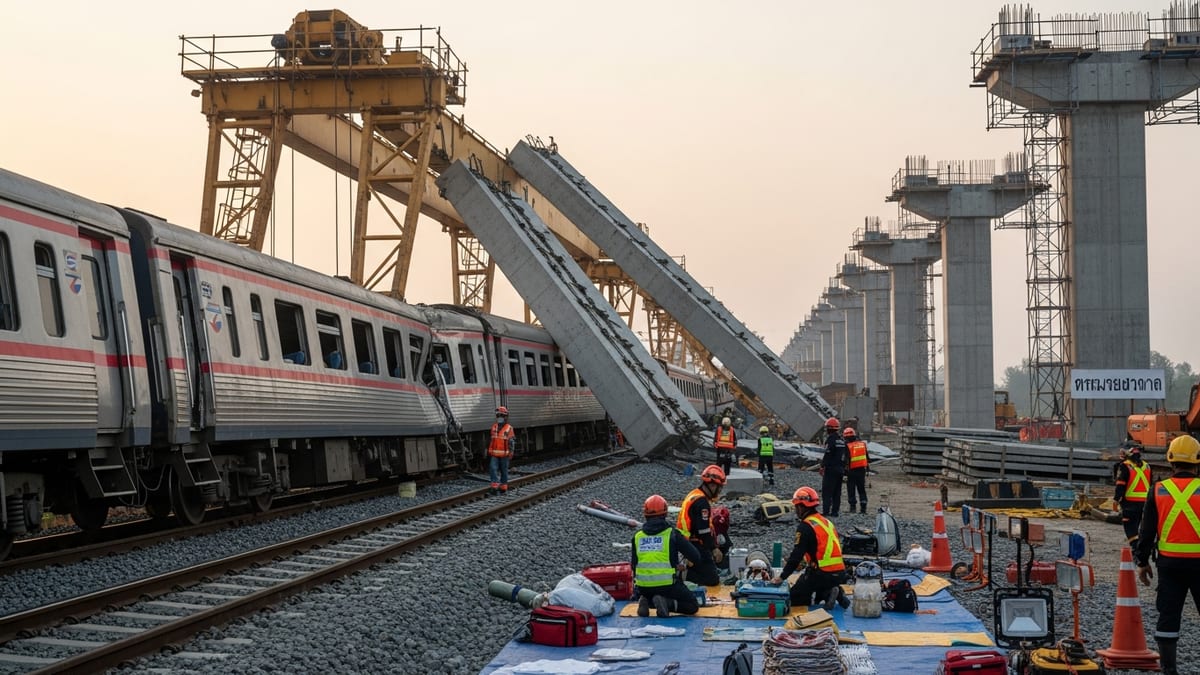
Derailment near Neshaminy Falls: What happened first
According to publicly available information from local television coverage, the derailment occurred shortly after 2 p.m. on June 30 along tracks between Street Road and the Neshaminy Falls commuter rail station in Bensalem Township. Early reports described between five and ten freight cars leaving the rails and coming to rest at various angles along the right-of-way.
Initial images from the scene showed multiple railcars jackknifed and leaning, with at least one car partially overturned. Coverage from Philadelphia-area outlets identified the train as a CSX freight consist moving through a corridor that also carries regional passenger service. No injuries were reported in the first hours after the incident.
Reports indicate that local roads remained open but heavily monitored as emergency teams worked along the trackside. The derailment quickly drew attention in nearby residential communities, where residents described hearing a prolonged metallic noise followed by sirens and helicopter activity.
Rail operations in the corridor were immediately affected. Early indications suggested significant delays for both freight movements and commuter trains that typically use the parallel tracks, although full service impact assessments were still developing through the afternoon.
Shelter-in-place alerts and hazmat concerns
Within hours of the derailment, local broadcast outlets reported that Bensalem officials issued a shelter-in-place alert for areas closest to the tracks. Residents were advised to stay indoors and close windows as a precaution while emergency crews assessed the railcars and their cargo.
Coverage from multiple news organizations noted that some of the derailed cars were believed to be carrying materials that required careful inspection, prompting concern about possible vapors or leaks. On social media, residents in the Bensalem and Trevose area shared screenshots of alert messages and described confusion about which neighborhoods were covered by the advisory, underscoring the challenge of real-time public communication during fast-moving infrastructure incidents.
Later in the afternoon, follow-up reporting highlighted that air monitoring and on-scene evaluations did not identify an active hazardous material release. Philadelphia-based outlets reported that emergency personnel did not detect leaks from the derailed cars and that there was no confirmed danger to the wider public. Even so, the shelter-in-place guidance remained an important part of the response until teams could fully verify conditions along the entire train.
The sequence of alerts and subsequent reassurance reflected a familiar pattern in modern rail incidents: an initial focus on worst-case scenarios, followed by more detailed assessments as specialists and railroad representatives reached the site and completed inspections.
Emergency response and rail corridor disruption
Publicly available accounts show that fire, police and specialized hazmat teams converged on the corridor shortly after the first 911 calls. Crews established a perimeter along the tracks and restricted access points while they evaluated each derailed car, checked for structural damage to the rail bed and inspected nearby drainage channels.
Television helicopter footage and ground images published by regional outlets showed responders moving deliberately from car to car, marking equipment and using meters to check for possible emissions. Rail workers could be seen assessing damaged couplers and wheel assemblies as they prepared for what was expected to be an extended cleanup operation.
The derailment occurred on a line that runs through one of the most heavily traveled suburban rail zones outside Philadelphia. While early reports did not specify the full extent of service disruptions, commuter rail passengers faced delays and possible cancellations as dispatchers rerouted or held trains away from the affected segment. Freight traffic on the corridor also appeared to be paused in both directions while inspectors examined the track structure.
As day turned to evening, recovery planning became the focus. Cranes and heavy equipment were expected to be brought in to re-rail cars, remove damaged equipment and restore the integrity of the line. Public information released through news reports suggested that a full reopening of all tracks could take many hours, if not longer, depending on the damage discovered under the railcars.
Context: Bensalem’s busy rail landscape and public concern
The derailment in Bensalem unfolded in a community already familiar with rail-related risk. The Neshaminy Falls station area sits within a dense mix of homes, commercial properties and roadways, where freight and commuter trains pass at frequent intervals throughout the day. Published coverage in recent years has highlighted the overlapping presence of passenger and freight operations along this corridor.
Residents posting on regional forums shortly after the June 30 incident questioned how often freight trains traverse the line and what types of cargoes move through the township. Some comments focused on the proximity of the tracks to homes, schools and shopping centers, reflecting broader concerns that have surfaced across Pennsylvania after higher-profile derailments elsewhere in the state.
In that broader context, the Bensalem incident immediately drew comparisons to other rail events reported around the region. While the circumstances and cargo appeared different from prior accidents involving hazardous releases in the wider Mid-Atlantic, the sight of tilted freight cars beside a commuter corridor reinforced ongoing questions about rail infrastructure maintenance, train length, and the balance between freight efficiency and community safety.
Transportation analysts and advocacy groups have previously pointed to suburban corridors like the one in Bensalem as examples of how freight operations interface closely with growing residential areas. The June 30 derailment is likely to re-energize local discussions about notification systems, emergency planning and transparency around what moves by rail through Bucks County.
What investigators are expected to examine next
As the immediate emergency phase transitions to cleanup and analysis, attention is turning to how and why the Bensalem train left the tracks. According to prior investigative practices documented in other rail cases, investigators typically review train speed, track condition, recent maintenance records, train makeup and any signal or braking issues that might have contributed to a derailment.
In incidents involving multiple derailed cars but no immediate evidence of a collision, specialists often focus on track geometry, rail wear, wheel condition and the forces acting on the train, particularly on curves, grades or transitional sections of track. Publicly available federal safety data and earlier case summaries show that train length, weight distribution and the placement of heavy cars within a consist can also play a role in how a train behaves under stress.
In Bensalem, investigators are expected to collect data from locomotive event recorders, inspect components from the derailed cars and document the physical state of the track structure before repairs proceed. Findings from these steps typically take weeks or months to emerge in formal reports, long after the visible damage has been cleared and normal rail service has resumed.
For residents along the corridor, those eventual findings may help answer lingering questions about how close the region came to a more serious emergency on June 30. For policymakers and rail operators, the incident adds a new data point in a growing national conversation about how to manage heavy freight traffic through densely populated suburban communities.