


More news on this day
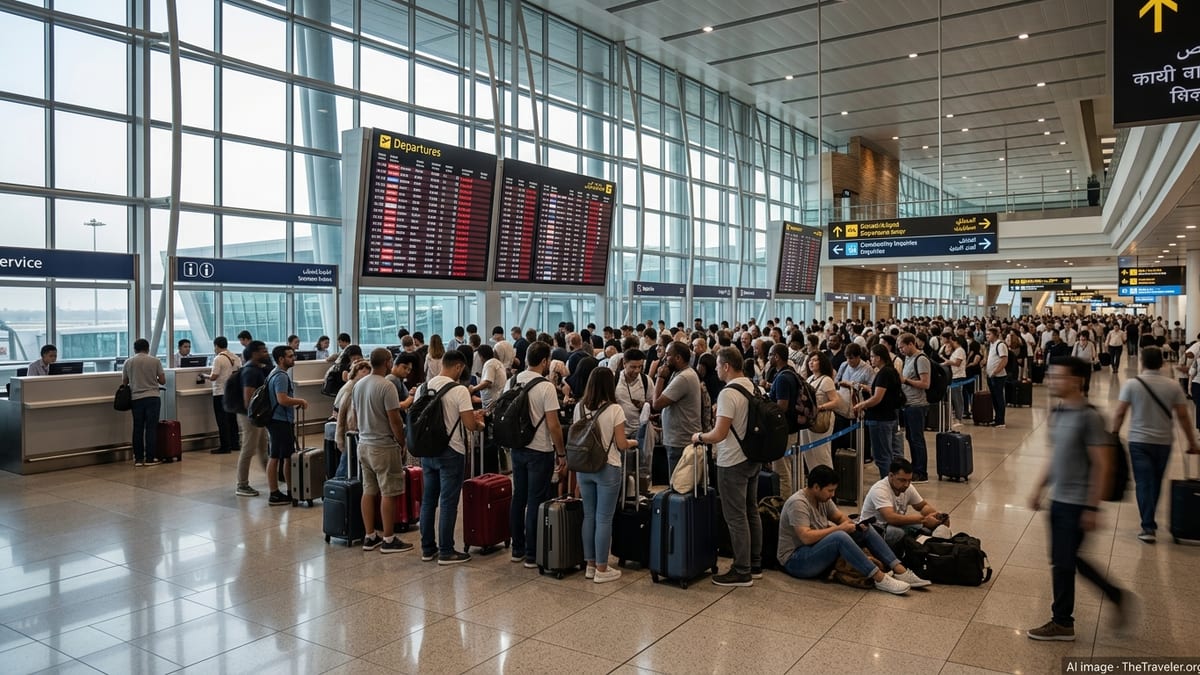
Air travel across Asia and the Middle East is facing another punishing day of disruption, with operational data pointing to at least 410 flight cancellations and around 8,252 delays affecting key hubs in Indonesia, the United Arab Emirates, India and Saudi Arabia, and rippling through airline networks from Jakarta and Dubai to Mumbai, Jeddah and beyond.
Get the latest news straight to your inbox!
Jakarta, Dubai, Mumbai and Jeddah Emerge as Pressure Points
Publicly available tracking dashboards and aviation analytics platforms for late June 2026 indicate that several of the region’s busiest gateways are again shouldering a disproportionate share of disruption. Jakarta’s Soekarno Hatta International, Dubai International, Mumbai’s Chhatrapati Shivaji Maharaj and Jeddah’s King Abdulaziz International all feature prominently in cancellation and delay tallies, underscoring their vulnerability when regional conditions tighten.
In Indonesia, recent monitoring has repeatedly highlighted elevated delay levels at Jakarta, affecting both domestic and regional flights. Services operated by low cost and hybrid carriers, including Citilink and other Indonesian airlines, appear particularly exposed when weather and congestion intersect with tight aircraft utilisation, amplifying knock on effects across the country’s archipelagic network.
Dubai’s role as a global super hub means that even modest schedule disruptions can have outsized consequences. Recent regional coverage notes that dozens of flights touching the emirate have been cancelled or suspended on peak days, while daily delay counts at Dubai International have periodically led Middle East rankings. That pressure is then transmitted along connecting routes into South and Southeast Asia, including heavily trafficked corridors to Mumbai and Jakarta.
India’s western gateway of Mumbai and Saudi Arabia’s Jeddah are also registering increased irregular operations. Real time status feeds for services between Mumbai and Gulf hubs show repeated instances of extended departure times, while regional reports on Jeddah indicate strains during busy evening and overnight banks when transfer and pilgrimage traffic are both high.
China Eastern, Akasa, Air Arabia and Citilink Among Affected Carriers
The disruption is not confined to any single airline or country. Published coverage from regional travel outlets and industry trackers highlights China Eastern, Akasa Air, Air Arabia and Citilink among the carriers navigating heightened operational stress, alongside a range of other international and domestic airlines.
On some recent days, China Eastern has ranked among the most impacted carriers in Asia by total number of delayed departures, with a mix of domestic Chinese flights and international sectors contributing to the totals. When large Chinese hubs slow down because of weather or airspace flow controls, knock on effects can quickly reach Southeast Asia and Gulf destinations, compounding the challenges now seen in Jakarta and Dubai.
In India, newer entrant Akasa Air continues to expand rapidly across domestic trunk routes and selected international sectors. That growth, while significant for competition and connectivity, also leaves the carrier more susceptible to cascading delays when aircraft and crew rotations have little slack. Monitoring across late June shows Akasa flights appearing regularly in delay tables at high traffic airports such as Mumbai.
Middle East low cost operator Air Arabia and Indonesia based Citilink are likewise contending with a crowded airspace environment and high seasonal demand. Publicly available information suggests that both airlines have experienced clusters of delays and scattered cancellations on routes linking Gulf hubs with the Indian subcontinent and Southeast Asia, particularly on days marked by convective storms or sand and dust events.
Weather, Congestion and Tight Schedules Drive the Numbers
While no single cause explains the latest tally of 410 cancellations and more than 8,200 delays, several familiar factors are emerging from regional aviation reporting and operational data. Seasonal weather remains a major driver, with heavy rain, thunderstorms, low visibility and strong crosswinds periodically disrupting approaches and departures at coastal and inland airports alike.
At the same time, airspace congestion and knock on effects from earlier irregular operations are compounding the strain. When one major hub in the network, such as Shanghai, Beijing, Dubai or Delhi, experiences an extended ground stop or flow restriction, aircraft and crews can end up out of position hours later in Jakarta, Mumbai or Jeddah. That dynamic is especially visible on long haul and wide body routes that rely on precise rotations over 24 hour cycles.
Industry analyses published throughout 2026 also point to the enduring challenge of rebuilding staffing and infrastructure resilience after the pandemic period. Many airlines and airports are still balancing hiring, training and retention of pilots, cabin crew, ground handlers and air traffic specialists with robust travel demand. On peak days, this can translate into longer recovery times once the first disruptions occur, helping explain the large gap between the number of outright cancellations and the far greater volume of delays.
Knock On Effects for Passengers Across Asia and the Middle East
For travellers, the aggregate figures translate into missed connections, extended time on the ground and complicated rebooking journeys. Reports from recent disruption waves in Asia describe passengers in Beijing, Jakarta, Dubai, Mumbai and Jeddah facing rolling departure time changes, overnight waits for the next available seat and uncertainty around downstream itineraries involving multiple carriers.
Passengers connecting between smaller regional points and major hubs are particularly exposed. A delayed feeder flight into Jakarta or Mumbai can easily cause a missed long haul departure to the Gulf, Europe or North America, with limited alternatives once flight banks have closed. Similar dynamics play out in reverse for travellers originating in the Middle East and transiting through Dubai or Jeddah on their way to Southeast Asia and Australia.
Published travel advisories and consumer facing guidance consistently recommend that passengers build more buffer time into complex itineraries within Asia and the Middle East while the region experiences elevated irregular operations. Flexible tickets, direct services where feasible and careful monitoring of airline apps and airport information channels are all being presented as practical steps to mitigate the impact of sudden schedule changes.
Outlook: Elevated Risk of Disruption to Persist
Looking ahead into the core of the northern summer travel season, aviation observers expect the risk of significant daily disruption across Asian and Middle Eastern networks to remain elevated. Seasonal monsoon patterns in South and Southeast Asia, combined with high temperatures and occasional dust or sand storms in the Gulf, typically make June through September a more volatile operating period.
At the same time, demand indicators and booking trends suggest that leisure and visiting friends and relatives traffic will stay strong through the coming weeks. That leaves airlines such as China Eastern, Akasa, Air Arabia, Citilink and other major regional players with little room to reduce schedules, even as they work within constrained operational environments.
For travellers planning itineraries that touch Jakarta, Dubai, Mumbai, Jeddah or other busy hubs, the current wave of 410 cancellations and 8,252 delays across Indonesia, the UAE, India and Saudi Arabia is a clear reminder of how interconnected the region’s aviation system has become. A disruption in one corner of the network can now ripple quickly across borders, underscoring the value of contingency planning and real time information before heading to the airport.