


More news on this day
A freight train derailment in Bensalem Township, Pennsylvania on Tuesday, June 30, 2026, sent freight cars off the tracks near a busy commuter corridor, prompting a temporary shelter-in-place alert, a large emergency response and renewed questions about rail safety in the densely populated Bucks County suburb.
Get the latest news straight to your inbox!
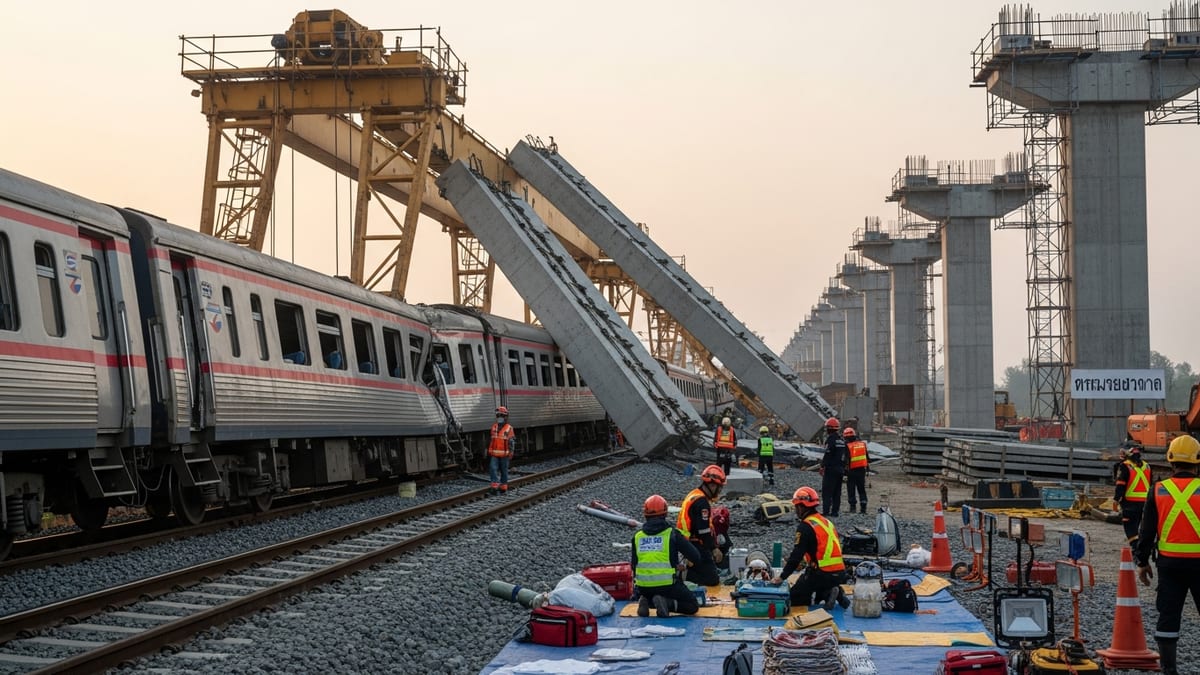
The derailment near Neshaminy Falls: what happened
According to published coverage, the incident involved a CSX freight train traveling through Bensalem Township, just northeast of Philadelphia, on a line that runs parallel to the heavily used commuter route serving Neshaminy Falls station. Reports indicate that between 5 and 10 freight cars left the tracks between Street Road and the Neshaminy Falls stop, scattering across the rail bed in an area bordered by residential neighborhoods and commercial development.
Local television and newspaper reports describe several cars jackknifed or leaning at sharp angles, with some partially overturned. Early images shared on social media showed twisted freight wagons beside intact sections of track, underscoring how narrowly the derailment avoided nearby roads and properties. Initial information suggested that at least some of the derailed cars carried hazardous materials, although details of the train’s full manifest continued to emerge throughout the evening.
The derailment occurred in midafternoon, at a time when both freight and passenger traffic typically move through the corridor. Publicly available information indicates that no passenger trains were directly involved, but the proximity to the Neshaminy Falls station and nearby grade crossings quickly raised concerns about wider disruption for commuters and local drivers.
Afternoon emergency alerts and shelter-in-place order
Shortly after the cars left the tracks, Bensalem Township issued a shelter-in-place directive covering the area around Street Road and the Neshaminy Falls station. Television outlets in Philadelphia reported that residents and businesses were instructed to remain indoors with windows closed while hazmat teams assessed the derailed cars and their contents.
Regional news coverage notes that the shelter-in-place radius focused on neighborhoods closest to the derailment site, reflecting caution over potential leaks from tank cars believed to be carrying industrial chemicals. Helicopter footage broadcast by local stations showed hazmat crews staging near the tracks and fire apparatus positioned along access roads leading to the rail line.
At the same time, alerts circulated on social media and via local news apps, with some residents in Bensalem and adjacent communities reporting that they learned of the derailment from push notifications and live streams rather than from direct community alerts. Online posts from people working in the area described traffic building along alternate routes as drivers tried to avoid roads near the rail corridor.
Evening assessments: no hazardous leak detected
As hazmat specialists and railroad personnel moved along the line to inspect the derailed cars, early fears of a chemical release began to ease. By later in the afternoon and into the early evening, multiple outlets including Philadelphia television stations reported that air monitoring in the immediate vicinity had not detected hazardous concentrations, and that no active leaks from the derailed cars were confirmed.
Publicly available information from news organizations indicates that approximately a dozen or more cars were involved in the incident, although exact counts varied as agencies refined their assessments. Despite the number of affected cars and the presence of hazardous material shipments, there were no immediate reports of serious injuries among train crew or nearby residents.
With monitoring results in hand, local authorities moved to scale back the shelter-in-place directive. Coverage from national and regional outlets noted that the alert was lifted later that day, though people were advised to continue avoiding the area while responders and railroad contractors secured the site and began planning the complex process of rerailing or removing damaged equipment.
Impact on travel and the surrounding community
The derailment rippled across both rail operations and local road networks. While no passenger trains were reported to have derailed, the incident occurred along a corridor often shared with commuter services, prompting precautionary suspensions and schedule adjustments. News updates from Philadelphia-area outlets mentioned delays and cancellations while dispatchers rerouted or held trains to keep them clear of the affected segment.
On the ground, drivers encountered closures near Street Road and surrounding streets as emergency vehicles and heavy equipment moved into position. Residents described on social media how normally busy routes backed up as traffic diverted away from the rail line. For travelers heading between suburban Bucks County and central Philadelphia, the derailment added uncertainty to afternoon and evening commutes that were already under strain from summer construction and weather-related slowdowns.
The location of the derailment, close to homes, retail centers and major highways, also heightened concern among residents about what might have happened had a release occurred or had passenger coaches been involved. Some online commentary from local community forums pointed to the growing volume of freight traffic through suburban corridors and questioned whether existing safety investments are keeping pace with risk.
Ongoing investigation and safety questions
As of Wednesday, July 1, 2026, publicly available information shows that investigators have not yet released a definitive cause for the derailment. Rail safety specialists typically examine track conditions, train speed, equipment performance and recent maintenance records, and it is expected that federal regulators and the railroad will conduct detailed inspections of both the rail infrastructure and the derailed cars.
The derailment follows a series of high-profile rail incidents across the United States that have intensified scrutiny of freight operations, especially trains carrying hazardous materials through populated areas. National reporting in recent years has highlighted calls from advocacy groups and some public officials for tighter inspection standards, more advanced monitoring technology and stricter routing rules around communities.
In Bensalem, the swift confirmation that no hazardous leaks occurred and that no serious injuries were reported has tempered the immediate impact. Yet the sight of freight cars piled beside a well-used commuter corridor has renewed local debate over how rail risk is managed in fast-growing suburbs. Residents and travelers passing the damaged train now face a visible reminder of the complexities and vulnerabilities of moving heavy freight through metropolitan regions.