


More news on this day
Travel to El Salvador from Europe is set to face fresh uncertainty after indications that Air France will temporarily suspend its Paris–San Salvador route during part of the 2027 spring season, prompting concern among tour operators and long haul travelers who rely on the direct link.
Get the latest news straight to your inbox!
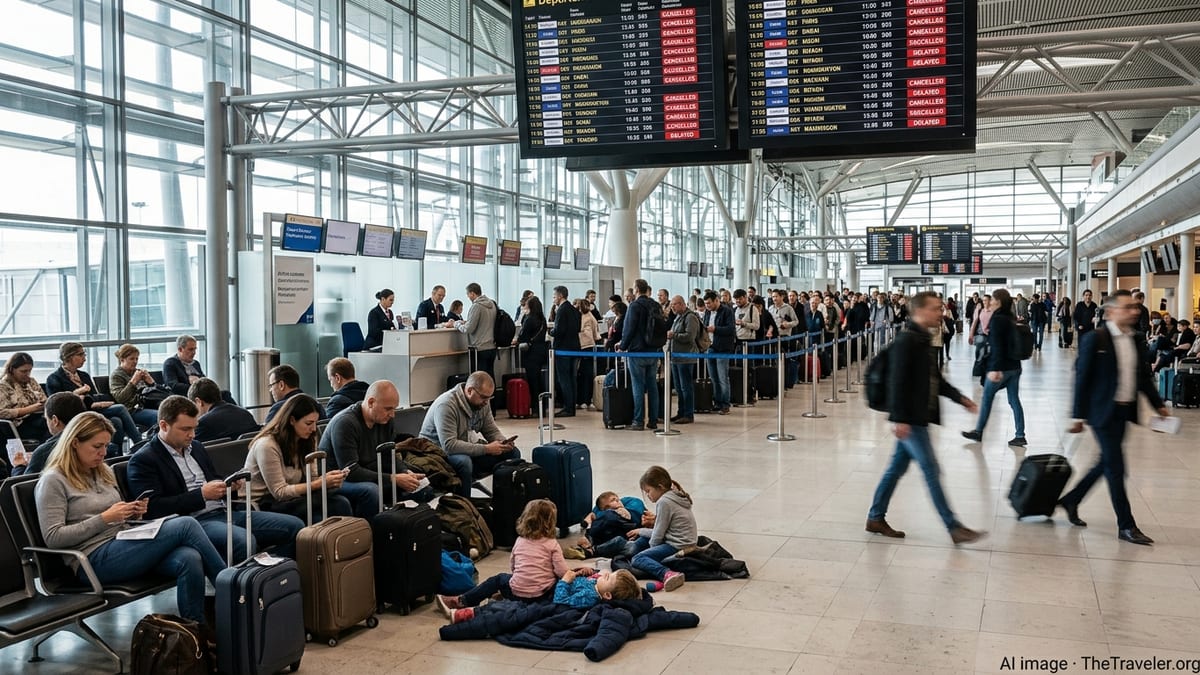
Seasonal Adjustment Hits A Niche Transatlantic Link
Publicly available schedule data and airline timetable summaries for upcoming seasons suggest that Air France is preparing a temporary pause of its Paris Charles de Gaulle to San Salvador service during spring 2027, treating the route as a seasonal operation rather than a continuous year round link. While the carrier has not positioned the move as a full withdrawal, the gap in planned flights covers key weeks around the Easter and spring break period when demand typically rises from Europe and North America toward Central America.
The adjustment continues a pattern seen across the Air France long haul network, where routes with thinner year round demand are increasingly concentrated into high season windows. Industry documentation for prior years already shows the group using seasonal scheduling on several leisure focused services in Latin America and the Caribbean, with capacity trimmed or suspended during shoulder months to contain costs and redeployed to higher yielding transatlantic and Asia Pacific markets.
For El Salvador, the route has been a symbolic and practical bridge to Europe, offering one stop access from San Salvador to dozens of onward destinations via Paris. Its temporary removal in the published 2027 spring schedules narrows the choices for travelers seeking to avoid multiple connections through other Central American or U.S. hubs.
The pause also highlights the vulnerability of relatively new or specialized links at a time when airlines remain cautious about fuel prices, geopolitical risks and aircraft availability. Network planners are under pressure to prioritize routes with proven year round performance, and connections to smaller markets can be among the first to be reshaped when conditions change.
Impact On El Salvador’s Tourism And Business Travel
The apparent suspension arrives at a sensitive moment for El Salvador’s tourism sector, which has spent recent years promoting the country as a surf, culture and “Bitcoin tourism” destination to long haul visitors. Direct connectivity from Europe is a key part of that narrative, reducing overall travel time and making short and medium length leisure trips more viable for visitors from France, Spain, Germany and beyond.
Tourism businesses that package multi country Central America itineraries often rely on European flag carriers to bring travelers into the region before distributing them onward to neighboring countries. A temporary gap in nonstop Paris–San Salvador capacity during spring 2027 could push more itineraries toward competing entry points such as Costa Rica or Panama, where long haul schedules appear more stable in forward timetables.
Business travel may also feel the effects. El Salvador has sought to attract foreign investment in technology, financial services and infrastructure, and direct long haul links are frequently cited by investors as an important factor in location decisions. Even if the Air France change is framed as a seasonal optimization, the perception of reduced accessibility can weigh on corporate planning and conference bids that are scheduled years in advance.
For Salvadoran residents in Europe, the route has served as a straightforward option for family visits and remittances driven travel. The move toward a spring 2027 pause is likely to force many passengers onto more complex itineraries involving U.S. transit or multiple regional connections, potentially increasing both travel time and total trip cost.
Options For Affected Travelers In 2027
Travelers who have already booked Paris–San Salvador trips for the affected spring 2027 period through Air France or partner loyalty programs will need to monitor their reservations closely as the airline’s finalized schedule is loaded. Past schedule changes on other long haul routes have often resulted in rebooking on alternative dates, rerouting via partner hubs, or the option to request a refund, depending on fare rules and local consumer regulations.
With the direct link absent from parts of the timetable, most itineraries between Europe and El Salvador are likely to route via other Central American or North American gateways. Connections through Panama City, San José, Mexico City, Miami or Houston are among the options commonly used when nonstop capacity is unavailable, although these routings often increase total journey time compared with the Paris flight.
Travel advisors are expected to recommend that passengers with fixed travel dates in March and April 2027 build in additional buffer time for connections and consider overnight stops where schedules are tight. Travelers using mileage programs may also find that award availability shifts away from nonstop options toward multi segment journeys, sometimes at higher mileage costs.
For those planning new trips to El Salvador in spring 2027, the evolving schedule underscores the importance of checking not only initial search results but also fare rules related to changes and cancellations. Flexible tickets or itineraries booked through carriers with multiple daily frequencies to their main hubs can provide more room to maneuver if the network changes again before departure.
Regional Connectivity And Competitive Responses
The temporary suspension of the Paris–San Salvador route in spring 2027 is likely to be watched closely by other airlines active in Central America. Competing carriers may see an opportunity to capture connecting traffic from Europe through their own hubs, particularly those in Panama, Costa Rica, Mexico and major U.S. gateways that already function as collection points for Central American demand.
Airport and tourism authorities in El Salvador have invested in positioning the country as an emerging regional connection point, with infrastructure upgrades and marketing aimed at raising its profile beyond the local market. A seasonal loss of nonstop European capacity in 2027 runs counter to that strategy and could intensify efforts to court additional partnerships or code share agreements to preserve long haul access.
In the broader Central American context, the move fits within an ongoing reshuffle of long haul services as airlines recalibrate to post pandemic travel patterns and shifting economic conditions. Carriers across the Atlantic have displayed a willingness to open and close routes more rapidly than in the past, testing new leisure destinations but pulling back when performance does not meet expectations outside peak holiday periods.
Industry observers note that seasonal pauses do not always signal a long term retreat. Some routes have returned in subsequent summers or winters with adjusted frequencies or aircraft types. However, the experience of other secondary long haul markets shows that once nonstop capacity is removed, it can be challenging to restore unless demand clearly strengthens.
What The Shift Signals For Future Long Haul Planning
The planned spring 2027 pause on Paris–San Salvador service underscores a wider shift in how European network airlines view niche long haul markets. Instead of maintaining year round operations at lower load factors, carriers are increasingly designing their schedules around pronounced peaks and troughs, concentrating flying into periods that offer stronger yields and then withdrawing for several weeks or months.
For travelers and destinations alike, this can create a more volatile planning environment. Tourism boards and hotel operators must work with incomplete information about future capacity when pitching new events or campaigns, while passengers face a higher likelihood that flights booked far in advance may be rescheduled or rerouted before departure.
At the same time, the adjustment highlights the continued importance of diversified access to El Salvador. Reliance on a single nonstop European route has left the market exposed to decisions made in distant corporate headquarters. Efforts to deepen links through regional hubs, attract low cost long haul experiments or strengthen code sharing with other global alliances may become more prominent as the country seeks to safeguard its connectivity beyond 2027.
Whether the Air France link ultimately returns in late 2027 or future seasons, the temporary withdrawal set for spring reinforces a central lesson for long haul travelers to Central America: nonstop options can appear and disappear within a single planning cycle, and keeping flexible routings in mind is increasingly part of the journey.