


Beşiktaş is one of Istanbul’s most lived-in nightlife districts, a place where students, football fans, office workers and locals all share the same streets. Unlike more polished neighborhoods along the Bosphorus, Beşiktaş feels informal and energetic, with clusters of bars, meyhanes, cheap eats and late ferries feeding people in and out well past midnight. This guide walks you through a full evening here, from the first drink to your last kokoreç sandwich, with practical detail on prices, crowds, safety and how it all stacks up against nearby Taksim.
Get the latest updates straight to your inbox!
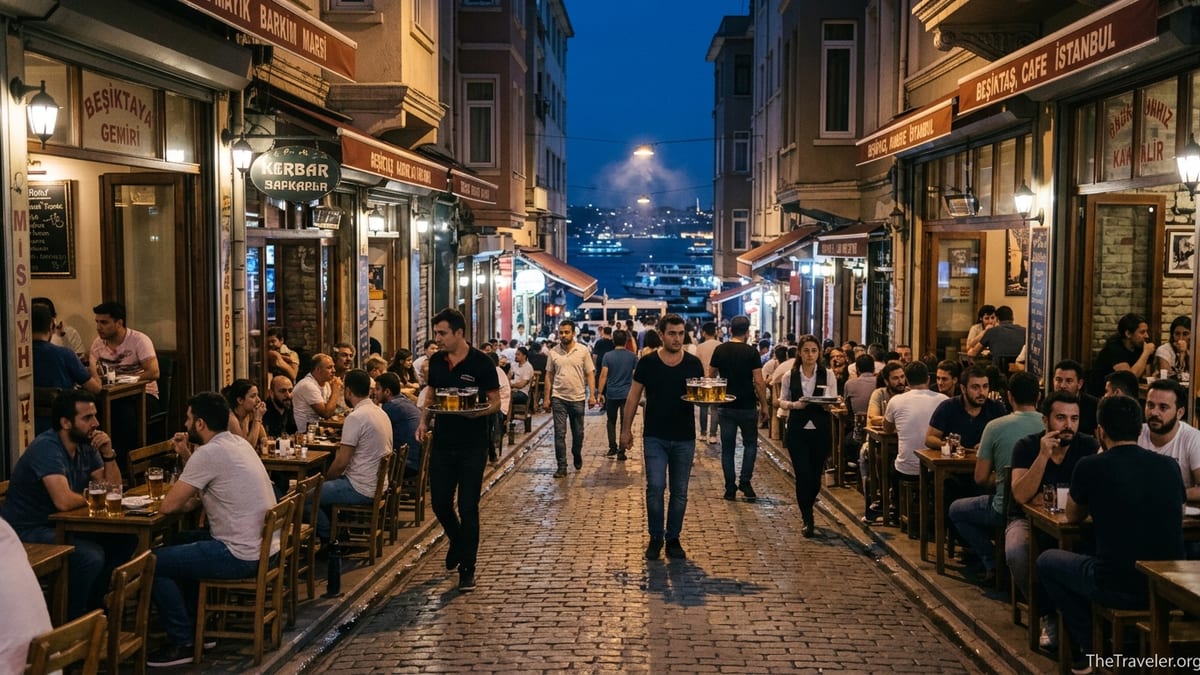
Getting Oriented: How Beşiktaş Feels at Night
Most visitors experience Beşiktaş around the Çarşı area, the dense grid of streets just uphill from the ferry docks. By day this is a market and transport hub, but after work and class it turns into one of Istanbul’s busiest going-out zones. Streets around Ihlamurdere Caddesi, Süleyman Seba Caddesi and the alleys signposted as “Barlar Sokağı” fill with students carrying plastic cups of beer, groups sharing meze plates, and fans in black and white Beşiktaş J.K. jerseys.
The atmosphere is casual and unpretentious. You are more likely to be drinking Efes beer at a metal table than sipping a designer cocktail under chandeliers, although there are a few smarter options in Akaretler and along the waterfront. Prices reflect the crowd: a draft beer in a simple student bar can be significantly cheaper than in Karaköy or Taksim, and a shared rakı bottle at a local meyhane typically costs less than in more touristy districts.
Noise is part of the package. On warm evenings voices echo through the narrow streets, music spills from bar speakers and waiters thread through the crowds with trays of tea and snacks. If you want quieter corners, you will find them slightly uphill in Abbasağa or in more restaurant-focused side streets, but the core of Beşiktaş nightlife is about being in the middle of an urban crowd.
For orientation, imagine three main pockets: the Çarşı grid next to the ferry pier, the slightly more polished Akaretler row of restored townhouses toward Maçka and Dolmabahçe, and the slopes of Abbasağa, popular with students and younger locals. Most visitors will naturally gravitate between these three over the course of an evening.
Bar Streets and Student Hangouts
Beşiktaş’s student energy comes from nearby campuses and dorms, and it shows in the density of small bars along what locals simply call the “bar streets.” Around Ihlamurdere Caddesi and the narrow alleys feeding into Çarşı, you will find dozens of places with simple wooden or metal chairs, loud playlists and chalkboard menus advertising draft beer and shot deals. Many do not look like much from the outside, but tables often spill into the street and it is easy to join by just grabbing an empty chair.
Expect a very relaxed dress code. Jeans, sneakers and T-shirts are the norm, even late at night. Couples, friend groups and Erasmus students drink side by side, and it is common to see people bring in simit or dürüm from nearby takeaway stands to eat with their drinks. Some bars lean rock or metal in their music, others play Turkish pop or 90s hits, but few have cover charges or strict door policies. It is normal to hop between two or three in the space of an hour, paying as you go.
If you prefer a slightly more polished version of Beşiktaş, walk down toward Akaretler. Here, restored 19th century buildings house sleek lounges and wine-forward bars with proper cocktail lists and terrace seating. You can start your evening with an aperitif in Akaretler, then drift back uphill to the student streets once you want a busier, less formal scene. This combination gives you both sides of Beşiktaş nightlife without needing to change neighborhoods.
One thing to note is that most bars here stay lively until around 1 or 2 a.m. on weekends, a bit earlier on weeknights. Very late hours are more the territory of kebab houses and kokoreç stands than drinking bars. Plan your bar-hopping for the earlier part of the night, and then transition to food or waterside walks later on.
Meyhanes and Long Rakı Evenings
Beşiktaş may be known for its student pubs, but there is also a strong meyhane culture tucked into side streets around Çarşı and in the direction of Ortaköy. Meyhanes are traditional taverns where the night revolves around rakı, shared meze and conversation rather than loud music or dancing. Tables are often covered in small plates of eggplant salads, fried calamari, pickles, white cheese and seasonal vegetables, and the pace of the evening is deliberately slow.
Prices in Beşiktaş meyhanes are generally mid-range by Istanbul standards. A couple sharing a bottle of rakı and an array of meze plus one or two hot dishes will typically pay far less than in heavily touristed meyhane streets near Taksim. Many places also offer “fix menus” that bundle a selection of cold and hot dishes with a set amount of rakı, which can help you control costs and avoid surprises on the bill.
Some meyhanes feature live fasıl or folk music, especially on Friday and Saturday nights. The musicians move between tables, taking requests and encouraging guests to sing along. If you are not used to this tradition, it can feel intense at first, but it is one of the most characterful ways to experience Istanbul’s old-school nightlife. If you prefer something calmer, ask in advance whether there is live music and choose an earlier sitting or a quieter venue.
Reservations are wise for popular meyhanes, especially on weekends and on evenings when Beşiktaş J.K. plays. Locals tend to linger for hours, so tables do not turn over quickly. Call ahead earlier in the day or ask your hotel reception to help secure a booking. Arriving before 8 p.m. increases your chances of getting a good table and gives you time to enjoy the full, unhurried meyhane rhythm.
Live Music, Pubs and Alternative Venues
While Beşiktaş is not Istanbul’s main live music district, you will still find several venues that host bands or acoustic sets, often leaning toward rock, blues or Turkish covers. These are usually upstairs or basement spaces above street-level bars, with small stages, affordable entry and a loyal local following. Doors open in the early evening, but bands often go on stage later in the night, after 10 p.m.
A number of pubs in Beşiktaş also double as sports bars and live music venues. Some show Turkish league football and European matches on multiple screens, then switch to local rock bands once the game is over. This hybrid format suits the district’s character: you can start the night watching a Beşiktaş match with a crowd in team colors, then stay put as tables are cleared for a performance.
Akaretler and the streets climbing toward Maçka are where you will find more “international” style bars that focus on cocktails, wine lists and quieter background music. These attract a slightly older crowd of young professionals and visiting travelers. Outdoor terraces, softer lighting and better sound systems make them suitable for conversation-heavy evenings rather than late-night partying.
For travelers who like variety, one realistic itinerary is to begin in Akaretler with a cocktail or glass of wine at a bar overlooking the street, walk ten minutes up into Çarşı for a round of beers and maybe a live set in a pub, then finish with a plate of kokoreç or dürüm outside. Everything is close enough that you rarely need a taxi once you have arrived in Beşiktaş.
Match Nights and Football Crowds
Beşiktaş is home to Beşiktaş J.K., one of Turkey’s most passionately supported football clubs, and match nights transform the district. When the team plays at home in the stadium near Dolmabahçe, especially in big derby games against Fenerbahçe or Galatasaray, streets around Çarşı and the waterfront fill hours before kick-off. Fans gather in specific bars and cafés to chant, drink beer and wave scarves, and you will hear club songs echoing through the alleys.
For many visitors this is a highlight rather than a warning. Watching a match in a Beşiktaş bar gives you a window into local culture that you will not find in more generic nightlife zones. You can buy a black and white scarf from one of the many vendors on the street, order a beer and small snacks, and join in the atmosphere even if you do not have tickets to the stadium. It is normal for people to stand in the street outside packed bars, watching games on TV screens through open windows.
The downsides are crowding and noise. On big match nights, streets can be almost gridlocked with people, and it may be difficult to move quickly between venues. Police presence increases around the stadium and main roads, and some streets are closed to traffic. If you are not interested in football and prefer a more relaxed evening, consider planning your Beşiktaş night for a non-match day, or staying in the quieter upper streets while the game is on.
Despite the intensity, serious trouble is rare in areas where tourists usually go, and most of the energy is celebratory. As in any football environment, avoid provoking arguments about rival teams, do not film people at very close range without asking, and keep your valuables secure in the crowd. If you treat it as a local festival rather than a risk, a Beşiktaş match night can be one of your most memorable Istanbul experiences.
Late-Night Food: Kokoreç, Dürüm and Beyond
Beşiktaş is particularly strong in late-night food, which is good news if you have been drinking. Around Çarşı and the main arteries that run toward the stadium and Ortaköy, you will find kokoreç specialists, dürüm shops, döner stands and börek bakeries staying open into the early hours. This is where locals stream after the bars close, and a quick look at the queues usually tells you which places are most trusted.
Kokoreç, a grilled lamb offal sandwich chopped with spices, is a classic post-drinking snack in Istanbul. Dedicated kokoreç shops in Beşiktaş often serve it from morning through the night, alongside midye dolma (stuffed mussels) and hearty soups like kelle paça. If you are hesitant about offal, you can ask for a small portion or share one sandwich between two people to sample the flavor without committing to a full meal. Prices are typically modest, and you pay at the counter before grabbing a stand-up table or eating on the move.
For something milder, dürüm and döner shops are everywhere. You can order chicken or meat döner wrapped in thin lavash with salad and sauce, or try grilled köfte in bread with pickles. Many places also offer vegetarian options like fried vegetables, falafel or cheese pide, though the selection is not as wide as daytime restaurant menus. Expect service to be very fast; these businesses are set up to deal with a rush of hungry people in a short window around midnight.
Finally, do not overlook the 24-hour bakeries and simit stands. A warm börek stuffed with cheese or spinach, or a freshly baked simit with a small cup of tea from a nearby stall, can be the simplest and most comforting way to end the night. If you need coffee before heading back to your hotel, look for third-wave cafés that extend their hours on weekends or more utilitarian spots around the main transport nodes that brew Turkish tea and instant coffee around the clock.
Safety, Noise and Choosing Where to Stay
For most travelers Beşiktaş feels busy but reasonably safe well into the night, especially on main streets and near the ferry docks where people are coming and going constantly. The presence of students, families and workers heading home helps keep the area from feeling like a pure party district. Petty crime can occur as in any big city, so keep wallets and phones zipped away in crowded bar streets and on match nights, but violent incidents involving tourists are unusual.
Noise is the main practical issue. If you stay in a hotel or apartment directly on a bar street in Çarşı, expect music and voices to run past midnight, especially in the warmer months between April and October. Windows in older buildings often have thin glass, so even third or fourth floor rooms may hear bass or shouting from below. Light sleepers should look for accommodation a short walk uphill in Abbasağa or closer to Yıldız, where residential streets quiet down earlier but you can still reach the nightlife on foot in ten to fifteen minutes.
Solo travelers, including women, routinely go out in Beşiktaş at night, particularly in the busier central streets. Common sense rules apply: avoid very dark side alleys, keep your drink in sight and be polite but firm if you do not want to engage in conversation. Street harassment is not a defining feature of the district, though unwanted attention can happen from time to time, as in most large cities.
For families or those who prefer a calmer base, it can make sense to stay in nearby areas like Nişantaşı or Maçka and take a quick taxi or bus down to Beşiktaş for the evening. That way you get the best of both worlds: the energy of the nightlife and a quieter night’s sleep. If you do choose to stay in Beşiktaş itself, confirm the exact street of your hotel or rental on a map and check whether it coincides with the densest bar clusters.
Beşiktaş vs Taksim: How the Nightlife Compares
Many visitors planning a first trip to Istanbul wonder whether to focus their nights on Beşiktaş or Taksim. Taksim and the surrounding Beyoğlu district historically formed the heart of the city’s nightlife, with dense clusters of clubs, meyhanes and rooftop bars off İstiklal Caddesi. Today that area still draws large weekend crowds and offers more late-night clubs and tourist-oriented bars than Beşiktaş, but it can also feel more commercial and, in some spots, more aggressive in touting and pricing.
Beşiktaş, by contrast, has a more local and student-driven vibe. You will see far more Istanbul residents than foreign tourists in the average bar, and the layout of Çarşı feels like a neighborhood first and a nightlife zone second. Prices for beer and simple mixed drinks are often lower than in Taksim’s most famous streets, and most venues do not charge a cover. The trade-off is that you will find fewer big-name clubs with international DJs and slightly less English spoken by staff in small, local bars.
In terms of safety, both areas are busy and generally fine if you stay on the main streets and follow basic precautions. However, visitors report more bar scams and aggressive touting in certain parts of Taksim, especially on side streets that target solo male travelers. Beşiktaş has fewer of these highly tourist-focused venues, which reduces some of the risk of being steered into an overpriced club. That said, you should still be cautious about accepting invitations from strangers to unknown bars in either district.
For many travelers, the best approach is not to choose but to sample both. You might spend one evening bar-hopping in Beşiktaş’s student streets, eating kokoreç at midnight and watching local football, then another night in Taksim exploring a rooftop bar with Bosphorus views and perhaps a meyhane off İstiklal. Experiencing both gives you a fuller sense of how Istanbul’s nightlife has diversified across neighborhoods.
The Takeaway
A night out in Beşiktaş is less about ticking off famous venues and more about joining the flow of the neighborhood. You wander between simple bars, duck into a meyhane for meze and rakı, share a table with students or football fans, and finish with a street-side sandwich before catching a late ferry or taxi home. It is informal, relatively affordable and intensely social.
If you want glamorous clubs, curated cocktail menus and dress-code door policies, Taksim and certain Bosphorus districts may suit you better. If you are curious about how Istanbulites themselves spend a Thursday or Friday night, Beşiktaş is one of the best places to see it up close. With a little preparation around where to stay, how to handle match nights and where to find late food, you can make the most of this energetic district without feeling overwhelmed.
Plan your evening around your own pace: start early with a stroll around the market and waterfront, linger over dinner at a meyhane, then dive into the bar streets for as long as your energy and ears can handle the noise. Whether you are traveling solo, with friends or as a couple, Beşiktaş offers a lived-in, unvarnished slice of Istanbul nightlife that stays with you long after the last ferry has left.
FAQ
Q1. Is Beşiktaş safe at night for tourists?
Beşiktaş is generally busy and feels reasonably safe on main streets late into the evening. Stick to well-lit areas, keep valuables secure and avoid very quiet side alleys, especially after midnight.
Q2. What time do bars in Beşiktaş usually close?
Most bars and pubs are lively from around 8 p.m. and begin to wind down between midnight and 2 a.m., with later hours on Friday and Saturday. Food places like kokoreç and döner stands often stay open longer.
Q3. How does Beşiktaş nightlife compare to Taksim?
Beşiktaş feels more local and student-focused, with cheaper drinks and fewer tourist traps, while Taksim offers more clubs, rooftop bars and explicitly tourist-oriented venues.
Q4. Do I need reservations for meyhanes in Beşiktaş?
On weekends and match nights, reservations are strongly recommended for popular meyhanes. On quieter weeknights you may find a table by walking in, especially if you arrive early.
Q5. What should I wear for a night out in Beşiktaş?
Casual clothing is fine almost everywhere: jeans, sneakers and T-shirts are common. Slightly dressier outfits fit better in Akaretler’s more polished bars but there is rarely a strict dress code.
Q6. Is there good vegetarian or vegan food late at night?
Options are more limited after midnight, but you can usually find cheese or spinach börek, vegetarian pide, falafel wraps and various salads in dürüm shops and bakeries.
Q7. How do I get to Beşiktaş at night from other parts of Istanbul?
You can reach Beşiktaş by taxi, bus or ferry from several districts. Ferries from the Asian side and central piers run into the evening, and taxis are easy to find around the main square and stadium later at night.
Q8. What is a typical price for a beer in Beşiktaş bars?
Prices vary, but a draft beer in a basic student bar is typically cheaper than in tourist-heavy areas like Taksim or Karaköy, while craft or imported beers in more upscale venues cost more.
Q9. Are there clubs and dancing in Beşiktaş?
The district leans more toward bars, pubs and meyhanes than full-scale clubs. You will find some venues with DJs and dancing, but for large clubs many locals still head to Taksim, Karaköy or Bosphorus venues.
Q10. Is Beşiktaş a good area to stay in for nightlife access?
Yes, if you enjoy a lively, local neighborhood and do not mind street noise. Choose accommodation a few blocks away from the busiest bar streets for a better balance between nightlife access and sleep.