


Beşiktaş is one of Istanbul’s liveliest central districts: a transport hub, a football stronghold and a neighborhood of cafés, bars and Bosphorus views. For many visitors it feels more local and less touristy than Sultanahmet or Taksim, yet it is still very much on the beaten path. The question most travelers ask is simple: is Beşiktaş safe, especially at night, around the ferry piers and on big match days? This guide looks at real conditions on the ground in 2026 and offers concrete tips on where to stay, how to move around and what to watch out for.
Get the latest updates straight to your inbox!
How Safe Is Beşiktaş Overall?
Beşiktaş is generally considered one of the safer central districts of Istanbul, with a busy street life at almost all hours and a strong local residential feel rather than a purely tourist zone. Recent neighborhood assessments rate Beşiktaş relatively high on perceived safety compared with other inner-city districts, with particular strengths in daytime safety, walkability and public transport access. At the same time, visitors should understand that they are in a dense, urban environment where petty crime, taxi overcharging and occasional scams do occur.
In practical terms, most travelers experience Beşiktaş as energetic and noisy rather than threatening. Around the main square, the fish market and Çarşı bazaar streets, you will see students heading to class, office workers on lunch breaks, and fans in black and white shirts on match days. Violent crime against tourists is rare, and serious incidents tend to be exceptional and highly publicized. The biggest day-to-day risks for visitors are usually pickpocketing in crowds, aggressive taxi drivers and over-priced nightlife venues, particularly closer to the waterfront and in nearby Ortaköy.
Police presence is visible in and around Beşiktaş, especially near the ferry piers, in front of Tüpraş Stadium (commonly still called Vodafone Park by locals) and around major intersections. This presence intensifies significantly on derby days and during political demonstrations. While this can create a tense atmosphere during specific events, it also means key areas are heavily monitored at the times when crowds are largest.
One long-term concern often mentioned in media and official reports is the memory of the December 2016 bombing near the stadium after a Beşiktaş–Bursaspor match. That attack targeted police, not tourists, but it remains an important part of local security planning. Since then, stadium perimeters, fan flows and match-day policing have become much tighter, with streets closed and crowds managed through controlled checkpoints. For most visitors today, this translates into occasional inconvenience rather than direct danger.
Day vs Night: What Beşiktaş Feels Like Hour by Hour
By day, Beşiktaş is at its most relaxed. From early morning, commuters line up at the ferry docks heading to Üsküdar and Kadıköy, and the streets around Barbaros Boulevard and the fish market are busy with delivery vans, street vendors and school groups. In daylight, the main risks are traffic, especially when crossing chaotic intersections, and the usual pickpocket risk in any crowded urban area. Keeping phones and wallets in front pockets or zipped bags and avoiding leaving items on café tables is usually sufficient.
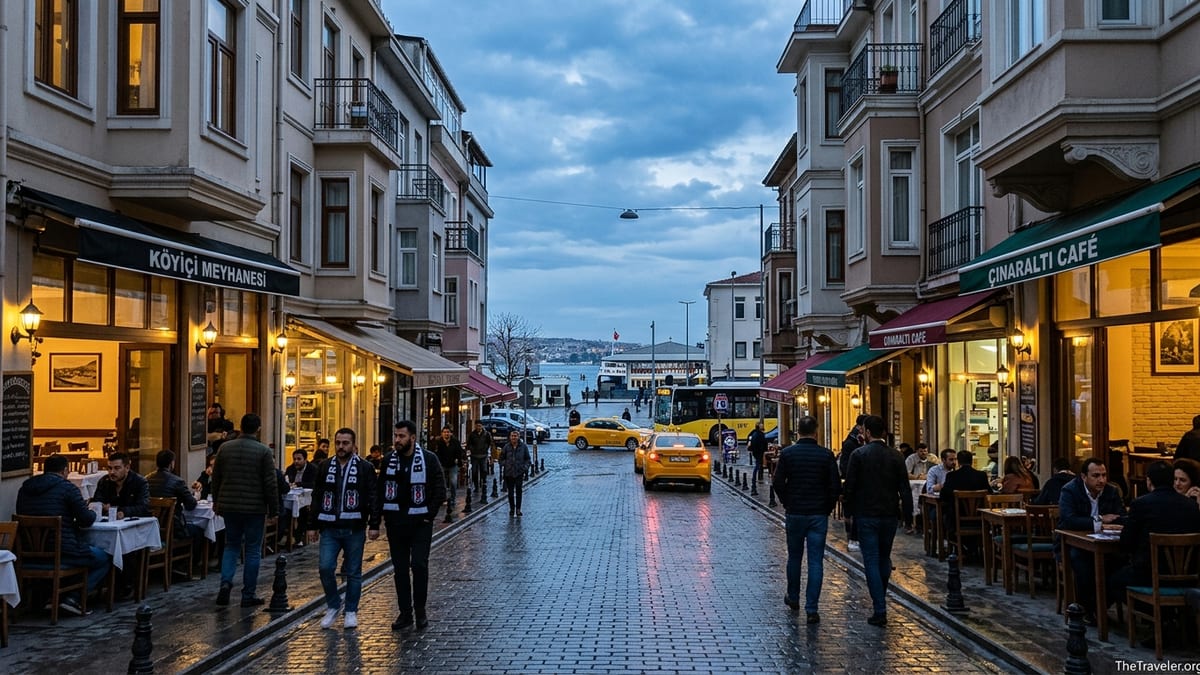
In the evening, particularly from about 7 pm to midnight, the atmosphere shifts. The café streets between the main square and Abbasağa fill with young locals and students. Bars on side streets can be packed, and streets like Beşiktaş Çarşı Caddesi turn into semi-pedestrian social spaces where people spill out onto the pavement. This is still broadly safe for visitors, including solo travelers, but it is louder, more crowded and more alcohol-fueled. Mild jostling, occasional arguments between locals and rare bar fights can break out, though they are typically quickly contained.
Late at night, after midnight, the crowds thin, shutters come down on shops, and the side streets above the square get noticeably quieter. Around the main bus stops, ferry area and bar streets you will still see people, but smaller backstreets uphill toward Yıldız and quieter residential lanes in Sinanpaşa and Vişnezade can be almost empty on weeknights. Walking home at 1 or 2 am is something many locals do without incident, yet travelers should apply basic big-city caution: avoid very dark alleys, stay on reasonably busy streets where possible and consider a reputable ride-hailing taxi if you are returning alone from a bar or club.
For families, the difference between day and night is mostly a question of noise and energy rather than security. A stroll with children along the waterfront towards Dolmabahçe Palace or a morning ferry ride feels relaxed. After 10 pm in the bar-dense blocks above the square, parents might find the area less comfortable due to smoke, volume and crowds, even if it is not especially dangerous.
Crowded Streets, Ferries and Waterfront Safety
Beşiktaş is a transport hub, which is a key advantage for visitors but also means heavy foot traffic and occasional confusion. The ferry terminals for Üsküdar, Kadıköy and the Bosphorus lines draw commuters and tourists all day long. In peak hours, platforms can be densely packed, and queues at the turnstiles sometimes back up to the main square. This is where pickpockets are most likely to operate, particularly around ticket machines and when people are distracted trying to top up their Istanbulkart. Keeping bags closed and in front of your body and avoiding displaying wallets or cash at the machines greatly reduces your exposure.
The waterfront promenade running from Beşiktaş to Dolmabahçe and further toward Kabataş is generally safe and well used. Joggers, dog walkers and couples stroll there well into the evening, and there is regular vehicle and foot traffic on the adjacent main road. The main practical hazards are tripping on uneven surfaces near the old stone quay edges and the occasional reckless scooter or delivery bike cutting across pedestrian areas. Children should be supervised closely near the water’s edge, as railings are low or broken in some spots and fishing lines can tangle small feet.
Ortaköy, technically just up the waterfront in the same municipality, is a popular evening extension of Beşiktaş outings, famous for kumpir (loaded baked potatoes) and Bosphorus views near the Ortaköy Mosque. The area itself is lively and well policed, but local media reports have periodically highlighted scams in some late-night venues, including cases where tourists were lured into small clubs and charged inflated bills. Visitors who wander from Beşiktaş to Ortaköy at night should stick to established cafés and restaurants clustered around the main square and avoid anonymous upstairs clubs that send staff into the street to pull customers inside.
Ferries themselves are among the safest and most pleasant ways to get around. They are heavily used by locals, follow set timetables and are generally well maintained. Occasional minor safety issues such as slippery decks in wet weather and gaps between gangplank and ferry are worth noting, particularly for travelers with mobility issues. Staff will usually help if you wait until the first rush of boarding passengers has cleared rather than pushing through the crowd.
Nightlife: Bars, Clubs and Common Scams
Beşiktaş is a nightlife destination in its own right, with even more intense clubbing zones nearby in Ortaköy and along the Bosphorus toward Kuruçeşme. For most travelers, an evening here means grabbing a craft beer on a side street bar, catching a football match on TV in a meyhane, or sitting in a nargile (shisha) café. These venues are generally safe, and prices, while no longer cheap by local standards, are usually posted clearly. A typical beer in a casual bar in 2026 might cost the equivalent of a few euros, while a mezze spread and fish dinner for two at a midrange waterfront restaurant could run to several dozen euros depending on the catch of the day.
The riskiest nightlife experiences tend to involve unmarked or aggressively marketed clubs, often located up staircases from the street with blacked-out windows. Investigative reports in Turkish media and frequent traveler anecdotes mention scenarios in which tourists are invited in with promises of live music and modest cover charges, only to receive hugely inflated bills later for drinks or “service fees.” In some well publicized cases in Ortaköy, tourists were charged thousands of lira for a few drinks and faced intimidation when they refused to pay. While these are not the norm, they are serious enough that travelers should avoid venues where prices are not clearly displayed or where staff pressure them to enter.
Inside ordinary bars and pubs in Beşiktaş proper, the main concerns are typical of any nightlife district: keeping an eye on your drink, watching your bag, and knowing your limits with alcohol. Drink spiking is not widely reported but cannot be ruled out. Ordering bottles or sealed cans and watching the bartender pour can help, especially for solo travelers. If someone you have just met insists on changing venues to an unknown club or offers to order drinks “on their tab,” be cautious and consider declining politely.
Noise and crowding are also a practical factor. Streets around the Çarşı and up toward Abbasağa can be extremely loud on Friday and Saturday nights, with music from multiple venues blending into a constant background roar. For guests staying in budget hotels or Airbnb apartments immediately above bar streets, this can make sleep difficult until 2 am or later. If you prefer quiet nights, choosing accommodation a few blocks uphill or closer to the stadium side of Beşiktaş can make a significant difference.
Football Match Days and Stadium Crowds
Beşiktaş is home to one of Turkey’s biggest football clubs, and match days, particularly derbies against Galatasaray or Fenerbahçe, transform the entire district. The Tüpraş Stadium sits between Dolmabahçe and Beşiktaş square, and on home-game evenings thousands of fans pass through the area, filling bars, chanting in the streets and marching toward the stadium. Local authorities respond with extensive traffic closures, diversions and a very heavy police presence, including riot police units stationed near key junctions and fan gathering points.
For most visitors, this creates an intense but festive atmosphere rather than a threatening one. Streets around the Çarşı buzz with black-and-white Beşiktaş jerseys, and many visitors choose to join locals in watching the match in a bar even if they do not have tickets. However, high emotions, alcohol and rivalries mean scuffles can break out, particularly in the hour before and after the game. Away fans are often escorted in groups, and police lines are used to keep rival supporters apart. Travelers who are not interested in the match may prefer to schedule sightseeing in other parts of the city on these evenings and avoid trying to drive or take taxis through Beşiktaş.
Inside or near the stadium, security checks are thorough. Large bags, glass bottles and certain objects are banned, and ticket checks happen through electronic turnstiles and stewards. If you attend a game, arrive early, follow police instructions and stay with the main flow of fans when entering and leaving. It is wise to avoid wearing the colors of rival Istanbul clubs in Beşiktaş on derby days, not because serious assaults are common but because it can provoke aggressive language or minor harassment from passionate supporters.
Visitors sometimes ask whether the 2016 bombing means they should avoid the stadium area altogether. In practice, this part of Beşiktaş is one of the most heavily monitored zones on match days, with extensive surveillance and controlled perimeters. The chance of being caught up in serious violence is extremely low. The greater inconvenience is simply congestion: roads along the Bosphorus can be closed for hours, buses rerouted, and the short walk between Kabataş, Dolmabahçe and Beşiktaş square can take much longer than usual due to security barriers and crowds.
Taxis, Transport and Getting Around Safely
Public transport is the safest and most predictable way to get in and out of Beşiktaş. Buses, minibuses and ferries run from early morning to late at night, and the newer metro lines and funicular connections at nearby Kabataş and Taksim make it easy to link Beşiktaş with both the historic peninsula and the Asian side. Using an Istanbulkart to tap in and out keeps costs transparent and avoids the negotiation issues that often arise with taxis.
Taxis in Istanbul, including those serving Beşiktaş, have a widely acknowledged reputation problem. Local and international media reports, along with frequent traveler accounts, describe patterns of overcharging, refusing short journeys, taking unnecessarily long routes and sometimes inventing “extra” fees such as bridge tolls or night surcharges. In one widely circulated incident in the central area near Ortaköy, a taxi driver demanded several times the normal fare for a short trip to Taksim, and reacted aggressively when the passenger objected. These stories are not representative of every driver, but they are common enough that visitors should plan defensively.
Practical steps include using reputable ride-hailing apps that integrate with licensed taxis where possible, checking that the meter is running from the moment you start, and following your route on a mapping app so you can see if the driver is making extreme detours. From Beşiktaş to Taksim, for example, the drive is relatively short in distance; in light traffic it should not run into the kind of very high fares sometimes quoted to unknowing tourists. If a driver insists on a flat price that feels unreasonably high for an inner-city journey, calmly decline and step away before getting into the car.
Late at night, when buses and metro lines thin out, taxis may seem like the only option to get back to your accommodation in Beşiktaş after an evening in Beyoğlu, Karaköy or Kadıköy. In these cases, wait at well lit, busy taxi stands near major hotels or transport hubs rather than hailing cabs on a deserted corner. Take a photo of the taxi license plate and visible ID inside the car before starting the ride. Most drivers will not object, and the small act of documenting the car can deter bad behavior.
For many visitors, the healthiest balance is to rely on public transport for most journeys, reserve taxis for late-night or door-to-door trips, and walk within Beşiktaş itself. The district’s compact streets, abundant cafés and human-scale blocks make it one of the most walkable central neighborhoods in Istanbul, provided you stay aware of traffic and occasional uneven pavements.
Where to Stay: Calmer Streets, Families and Solo Travelers
Choosing the right base in Beşiktaş can significantly shape your sense of safety and comfort. The blocks closest to the main square and ferry piers are the most convenient for transport but also the noisiest, particularly late at night and on match days. Budget hotels and guesthouses here may offer great access but thin walls above bar streets can mean music and voices late into the night. Travelers who are comfortable in busy urban areas often enjoy this energy, but light sleepers and families with young children may not.
For a quieter experience, look slightly uphill and inland from the square. Residential streets in the Sinanpaşa and Vişnezade neighborhoods, between Beşiktaş and the stadium, tend to be calmer after dark, with more apartment buildings and fewer late-opening bars. Small hotels and serviced apartments here can offer a better balance between access and tranquility. Similarly, areas further up Barbaros Boulevard toward Yıldız and the edges of the Yıldız Park offer more greenery and a more local, residential feel while still allowing you to walk down to the ferry in 10 to 20 minutes.
Solo travelers often favor streets close enough to the main square to avoid long, empty walks at night, but not directly above the busiest bars. For example, choosing accommodation a couple of side streets off the main Çarşı area can give you easy access to bus stops and cafés while placing you on calmer, better lit residential lanes. Women traveling alone frequently report feeling reasonably comfortable walking in Beşiktaş up to late evening, especially along main arteries and waterfront routes, though many still prefer taxis or ride-hailing after midnight.
Families might appreciate being closer to green spaces like Yıldız Park or near the waterfront promenade between Beşiktaş and Dolmabahçe, where children can run around during the day. Booking midrange or international chain hotels on the Beşiktaş side of Dolmabahçe often provides more standardized security measures, such as 24-hour reception, cameras in common areas and key-card elevators, while still leaving you within a short walk or tram ride of Beşiktaş proper.
Practical Safety Tips for Different Types of Travelers
For solo travelers, particularly women, the key strategies are to stay on well lit, populated streets at night, choose accommodation with reliable reviews mentioning security and reception presence, and trust your instincts if a bar, club or encounter feels off. If you feel uncomfortable walking back to your hotel late, do not hesitate to take a taxi or ride-hail, but be assertive about using the meter and confirming the approximate fare range before you set off. Sharing your live location with a friend while in transit is a simple yet effective added safeguard.
Couples and groups can leverage strength in numbers but should still designate meeting points in case they get separated in crowded areas like Çarşı or outside the stadium. When watching a match in a local bar, it is fine to cheer, but avoid provocative gestures or loud negative comments about the home team, especially on derby days. Respecting local passion for football is part of staying safe and showing cultural sensitivity.
Families with children will find Beşiktaş manageable if they plan around rush hours and late-night crowds. Using ferries during off-peak hours, such as mid-morning or mid-afternoon, makes boarding easier and less stressful with strollers. Teach older children to memorize the name and address of your hotel and to stay put if they get separated in the square or ferry terminal. Carrying a small card with hotel details in Turkish can be helpful if you need assistance from police or transport staff.
Business travelers staying in Beşiktaş for conferences or meetings in nearby hotels or at venues around Dolmabahçe should factor in match days and major events when scheduling airport transfers or evening commitments. Checking in advance whether a Beşiktaş home game or large concert is on during your stay allows you to avoid heavy traffic windows and choose meeting spots less affected by stadium closures.
The Takeaway
Beşiktaş today is a vibrant, lived-in part of Istanbul that balances local life, student energy, football culture and Bosphorus views. For most visitors it is a safe place to stay, provided they approach it with the same big-city awareness they would use in any major European metropolis. Serious crime against tourists is uncommon, and the district benefits from steady foot traffic, visible policing and excellent public transport options.
The main safety considerations are practical rather than dramatic: crowded ferry terminals where pickpockets can operate, taxi drivers who may attempt to overcharge, noisy bar streets that feel chaotic late at night, and football match days when emotions run high and movement is restricted. By choosing accommodation on calmer nearby streets, favoring public transport and reputable venues, and keeping an eye on belongings in crowds, travelers can enjoy Beşiktaş’s strengths while minimizing its downsides.
Whether you are a solo traveler watching the sunset from the waterfront, a family exploring Dolmabahçe Palace by day and retreating to a quiet hotel by night, or a football fan soaking up the atmosphere around the stadium, Beşiktaş offers a rich slice of Istanbul life. With a bit of planning and streetwise common sense, it can be not only one of the most convenient bases in the city but also one of the most rewarding.
FAQ
Q1. Is Beşiktaş safe to walk around at night?
Beşiktaş is generally safe to walk at night along main streets and the waterfront, which remain active late. As in any big city, avoid very quiet alleys, keep valuables out of sight and consider taxis or ride-hailing for long walks after midnight, especially if you are alone.
Q2. Are the ferry terminals in Beşiktaş safe for tourists?
The Beşiktaş ferry terminals are busy but broadly safe and well monitored. The main risk is petty theft in crowds, particularly around ticket machines and boarding gates, so keep bags closed, watch your pockets and avoid flashing cash or phones while navigating queues.
Q3. How risky is Beşiktaş on football match days?
On match days near Tüpraş Stadium, Beşiktaş fills with chanting fans and a heavy police presence. The atmosphere is intense but usually festive. Most visitors experience congestion and noise rather than danger, though minor scuffles can occur, so steer clear of confrontations and avoid wearing rival team colors.
Q4. Are there specific streets in Beşiktaş that are quieter for hotels?
Streets a few blocks uphill from the main square, in residential parts of Sinanpaşa, Vişnezade and near Yıldız Park, tend to be calmer at night than the bar-dense blocks around the fish market and Çarşı. These areas still offer easy access to buses and ferries but with less late-night noise.
Q5. Should I worry about terrorism in Beşiktaş because of past attacks?
Beşiktaş was the site of a major stadium-area attack in 2016, which deeply shaped local security planning. Since then, match-day controls and surveillance have increased significantly. While no place can be guaranteed risk-free, the likelihood of being affected by such an incident as a visitor today is very low.
Q6. How bad are taxi scams around Beşiktaş?
Taxi overcharging and route-padding are well documented across central Istanbul, including Beşiktaş. Many rides are honest, but issues are common enough that you should insist on the meter, check the approximate route on a map, and avoid cars that quote unusually high fixed prices for short inner-city trips.
Q7. Is Beşiktaş suitable for solo female travelers?
Many solo female travelers stay in Beşiktaş and report feeling reasonably comfortable, especially in busy café areas and along the waterfront. Choosing accommodation with 24-hour reception, staying on main streets at night and using taxis or ride-hailing for late returns can make the experience feel safer and more relaxed.
Q8. Is Beşiktaş a good area for families with children?
Yes, if you pick the right streets. Families often appreciate staying near green spaces like Yıldız Park or closer to the waterfront promenade toward Dolmabahçe, which offer more room for children to play. Avoid hotels directly above loud bar streets if your children are light sleepers.
Q9. Are the bars and nightlife in Beşiktaş safe?
Most bars and pubs in Beşiktaş are safe and frequented by locals, students and fans. Problems arise mainly in anonymous or pushy clubs, especially closer to Ortaköy, that do not clearly display prices. Stick to well known venues, watch your drinks and avoid clubs where staff pressure you to enter or order.
Q10. Is it safer to stay in Beşiktaş or in more touristy areas like Sultanahmet?
Both Beşiktaş and Sultanahmet are generally safe, but they feel different. Sultanahmet is more tourist-focused and quiet at night, while Beşiktaş is more local, busier and livelier after dark. If you prefer local atmosphere and easy transport with moderate noise, Beşiktaş is a strong choice; for early nights and proximity to historic sights, Sultanahmet may suit better.