


If you have only one day in Grand Cayman, the choice can feel impossible: spend it on the postcard-perfect sands of Seven Mile Beach or head out by boat to the famous Stingray City sandbar. Both are among the island’s star attractions, both work for cruise visitors and land-based travelers, and both deliver the kind of Caribbean memories people talk about for years. This guide breaks down how each experience works in practice, how much time you really need, what it costs, and whether it is realistic to fit both into a single day.
Get the latest updates straight to your inbox!
Seven Mile Beach vs Stingray City at a Glance
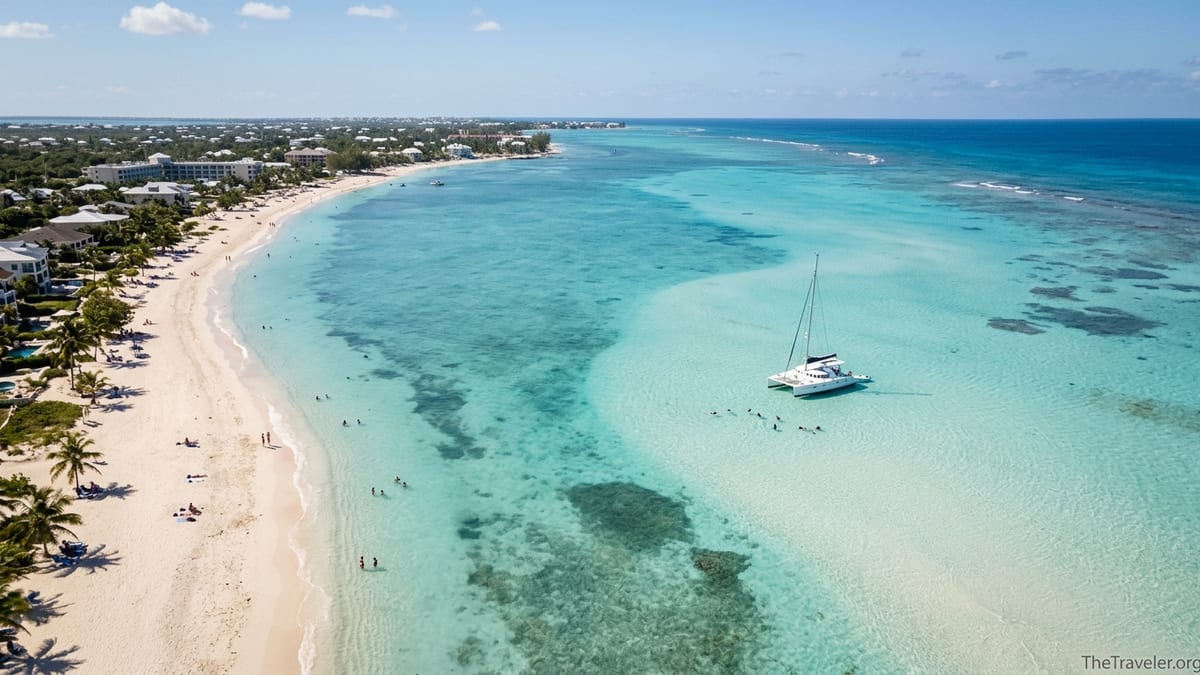
Seven Mile Beach is Grand Cayman’s long curve of soft white sand on the island’s western shore, a public beach lined with resorts, beach bars and watersports operators. In reality it is closer to five and a half miles long, but it remains one of the Caribbean’s most famous stretches of sand, with easy access from George Town and calm, usually clear turquoise water that suits swimmers of all ages.
Stingray City is not a city at all but a shallow sandbar in the North Sound, reached only by boat. Here, southern stingrays glide around in waist-deep water and are accustomed to people; tours allow guests to stand on the sandbar, touch and sometimes hand-feed the rays under guide supervision. Most trips also include a snorkel stop at a nearby reef or coral garden.
In simple terms, Seven Mile Beach delivers a relaxed, flexible day with restaurants, shade, showers and plenty of space, while Stingray City is a time-defined boat excursion built around one signature wildlife encounter. Many visitors ultimately choose based on pace: slow and open-ended on the beach, or structured and activity-focused on the water.
For travelers with a full day on the island, combining a morning Stingray City tour with an afternoon on Seven Mile Beach is common. Tour operators and local taxis are used to this pattern, and the driving time between the marinas that serve Stingray City and the main beach area is usually around 10 to 20 minutes in normal traffic.
How Much Time You Really Need
A relaxed beach day on Seven Mile Beach can be as short as two hours or stretch to an entire day. Cruise visitors who tender into George Town around mid-morning often take a taxi or public minibus to the public beach section, spend three to four hours swimming and lounging, and then return with a comfortable buffer before last tender. Resort guests commonly walk or take a short bus ride from their hotel and plan at least half a day, especially if they want to rent kayaks or stand-up paddleboards or linger over lunch at a beachfront restaurant.
Reaching Seven Mile Beach from the George Town cruise tender area typically takes about 10 minutes by taxi in light traffic. Some people choose to walk to the southern access points of the beach; that walk can be around 25 to 35 minutes in the heat, so it is better suited to fit travelers packing light. With transport in both directions, check-in at a beach club and some time to shower off sand, even a “quick” beach visit usually requires at least two and a half hours door to door.
Stingray City, by contrast, requires a firmer block of time. Most organized tours run three to four hours total, including check-in, the boat ride out through the North Sound, time on the sandbar and one snorkel stop. Marina check-in is usually 30 to 45 minutes before departure to fit everyone with snorkel gear, life vests and waivers. With transfers from George Town or Seven Mile Beach hotels to the marina, you should plan on a four to five hour window from the moment you leave your ship or hotel to when you return.
Because of those time blocks, visitors with extremely short port calls, such as ships that arrive at 8:00 a.m. and depart by early afternoon, sometimes find that a beach-only day is the safer choice. Guests with a full 8 to 10 hours in port typically have enough time for either one substantial excursion or a combined Stingray City and beach itinerary if they are comfortable moving briskly between activities.
Cruise Passenger Logistics and Limited Time
Grand Cayman is a tender port, meaning cruise ships anchor offshore and passengers are ferried to the George Town pier on smaller boats. On busy days with several ships in port, the tendering process can add 30 to 60 minutes at each end of the day. This is important when weighing whether you can manage a half-day boat tour plus beach time before the last tender back to your ship.
For cruise passengers who want a simple, low-stress plan, Seven Mile Beach is often the easier choice. Taxis wait by the cruise terminals and shared vans regularly shuttle visitors to focal points like Seven Mile Public Beach, Governor’s Beach or popular beach clubs that rent loungers and umbrellas. The ride is usually about 10 minutes, and some visitors report paying roughly 15 to 30 US dollars per taxi each way, depending on group size and exact beach stop. Those willing to use the public minibus system can often ride for a few US dollars per person, though service can be sporadic at peak times.
Cruise-line-sponsored Stingray City tours are designed to work with ship schedules and include transfers from the tender pier to the marina. They are typically more expensive than booking directly with a local operator but carry the advantage that the ship will generally wait or assist if the tour is delayed. If you book independently, leaving a generous buffer of at least an hour between scheduled tour end time and last tender is wise, especially when multiple ships are anchored.
Some cruise itineraries have a relatively short call in George Town of around six hours. In that scenario, many travelers choose only one major activity. A dedicated beach day allows for flexible arrival and departure, drifting between the water, a shaded lounger and a casual lunch without clock-watching. A focus on Stingray City, on the other hand, packs a memorable, structured marine-wildlife experience into a defined slot, but may leave only an hour or two afterward for a quick drink or brief stroll by the waterfront before reboarding the tender.
Costs: What You Can Expect to Spend
Seven Mile Beach can be either budget-friendly or surprisingly expensive depending on how you set it up. The sand and sea are public, so there is no entrance fee. However, most visitors pay for some mix of transportation, beach chairs, umbrellas, drinks and food. A taxi from George Town to the main beach area is commonly quoted at around 15 to 30 US dollars each way per cab, and a shared minibus can be significantly cheaper per person if you do not mind waiting and riding with others.
Once on the beach, simple lounger and umbrella packages at popular beach clubs and hotel-front concessions often cost in the region of 20 to 40 US dollars per person for the day, though exact prices change with season and demand. Ordering a casual lunch, for example a grilled fish sandwich and a soft drink at a mid-range beach bar, can easily reach the mid-teens or more in US dollars once taxes and service charges are factored in. Families on a budget sometimes bring their own towels and sit directly on the sand near public access points, then buy only drinks or snacks as needed.
Stingray City boat tours are a more defined line item. Shore excursion prices marketed through major cruise lines frequently fall somewhere in the range of about 60 to 120 US dollars per adult for a three-hour trip that includes a sandbar visit and snorkeling. Direct bookings with local operators on island can sometimes be at the lower or middle end of that range, depending on group size and what is included. A smaller-group catamaran with onboard drinks and a longer snorkel stop may sit at the higher end, whereas a basic powerboat trip with simple gear may be more affordable.
Families should factor in child pricing, which is often discounted but still significant, and the cost of photos. On both Seven Mile Beach and at Stingray City, photographers frequently offer images for purchase. A single digital stingray encounter photo might cost in the teens or more in US dollars, and multi-image packages can rise higher. Bringing your own waterproof camera or phone case offers more control over both your images and your budget, though you should always handle devices carefully in the saltwater environment.
Family Travel, Safety and Comfort
For families with young children or multi-generational groups, Seven Mile Beach delivers a straightforward environment. The water near shore is generally calm and shallow for a short distance, with soft sand underfoot that is easy on small feet. Public access sections often have restrooms, showers and sometimes playground equipment or small parks nearby. Parents can choose how much time children spend in the sun and retreat to shade under trees or umbrellas during the fiercest midday heat.
Stingray City can also be an excellent family experience, but it is more intense. The boat ride itself may be exciting for children, especially when flying fish or seabirds appear along the way. Once at the sandbar, the water usually ranges from about waist to chest deep for adults, though exact depth varies with tides and operator choice. Guides generally instruct guests on how to stand still, keep arms at their sides and let the rays glide past. Some children are thrilled; others are nervous when a large, smooth-backed ray brushes by. It can help if a parent or older sibling goes into the water first to demonstrate.
Life jackets are normally available on reputable tours, and families should not hesitate to request them for weaker swimmers or anxious kids. Those who prefer not to enter the water can often stay on the boat and still watch the rays from above. Parents should be aware that the sun can be more intense on the open water, with light reflecting off both sea and boat surfaces, so broad-brimmed hats, reef-safe sunscreen and UV-protective swim shirts are useful for both adults and children.
From a comfort perspective, motion-sensitive travelers may find the boat ride to and from Stingray City mildly challenging on choppy days, even though the North Sound is usually protected compared to open ocean. Bringing motion-sickness remedies and choosing a larger, more stable catamaran rather than a small speedboat can help. On the beach side, the main considerations are heat, hydration and occasional bursts of crowds when multiple cruise-ship groups arrive at the same public access points at once.
Photography: Where You Get the Best Shots
Seven Mile Beach is tailored for classic Caribbean photographs. The long arc of pale sand, rows of palms and gentle surf provide a ready-made backdrop for wide shots and casual portraits. Sunset can be particularly impressive since the beach faces west, creating warm golden light and colorful horizons. Visitors staying at beachfront resorts often wander down from their rooms just before evening to capture silhouettes of paddleboarders or sailboats in the last light.
Midday on the beach, the sun is high and bright, which flattens shadows and can make photos feel harsh. In those conditions, shooting closer to the water where the turquoise shallows occupy much of the frame and keeping the sun slightly to the side can help. Families may want to snap photos early in the morning or late afternoon when the light is softer, which also coincides with slightly cooler temperatures.
Stingray City offers an entirely different photographic opportunity. The water over the sandbar is famously clear and shallow, often appearing almost electric blue in pictures taken from the boat. Wide shots looking back at your vessel and out across the North Sound can be striking. In-water photos with stingrays require more planning; a simple waterproof phone case or a compact waterproof camera allows you to get eye-level images of the rays gliding by people’s legs or hands.
Tour operators sometimes bring their own photographers who move through the group, posing guests holding or gently touching a ray under supervision. These images can be high-quality but come at an additional cost. Travelers who value candid shots may prefer to have one group member stand back a little and take photos while others interact with the rays. Because saltwater and electronics are a risky mix, having a lanyard or wrist strap for any device you bring into the water is practical insurance.
Can You Combine Stingray City and Seven Mile Beach in One Day?
Combining both experiences in a single day is entirely realistic for many visitors, especially those staying on island for several days or cruise passengers with long port calls. A common pattern is to book a morning Stingray City tour departing between about 8:00 and 9:30 a.m., which returns to shore around lunchtime. From the marina, you can take a short taxi ride to Seven Mile Beach, arrive early to mid-afternoon and relax by the sea until it is time to return to your ship or accommodation.
For example, a family staying at a mid-range resort along Seven Mile Beach might be picked up by a tour company van at 8:00 a.m., reach the marina by 8:20 a.m., spend about three hours on the water visiting the stingrays and snorkeling, and be back at their resort pool by around noon. After a quick rinse and lunch at a beachfront restaurant, they can wander back to the sand for swimming and sunset, effectively enjoying both signature experiences without feeling rushed.
Cruise guests need to be more precise. If your ship is in port from roughly 8:00 a.m. to 5:00 p.m., you might catch an early tender to shore, join a 9:00 a.m. cruise-line-sponsored Stingray City excursion, and return to the pier early afternoon. From there, you could grab a taxi to Seven Mile Beach, swim for an hour or two close to a beach club that can easily call a cab, and still be back at the tender pier with time to spare. A shorter six-hour call, however, may make that kind of combination uncomfortably tight once tendering and potential delays are considered.
Those planning to combine both should carry everything needed for the full day from the start: swimsuits, towels, reef-safe sunscreen, a dry bag for valuables and a change of clothes if you want to be more comfortable on the ride back to your ship or hotel. It is generally easier to go from the more active boat excursion to the more relaxed beach, rather than the other way around; after several hours in the sun and saltwater, few people want to rush to a dock to make a fixed boat departure time.
The Takeaway
Choosing between Seven Mile Beach and Stingray City does not have to be an all-or-nothing decision, but understanding the character of each experience helps you prioritize. If you crave an unstructured day of swimming, strolling and people-watching with full access to facilities and food options, Seven Mile Beach is the natural pick. It suits a wide range of budgets and mobility levels and is especially simple for families with young children or anyone who dislikes tight schedules.
If you want a distinctive encounter you are unlikely to replicate elsewhere, and you are comfortable committing several hours to a guided excursion, Stingray City delivers something special. Standing in waist-deep, sapphire-blue water while wild stingrays brush past your legs stays with people long after tan lines fade. It is particularly rewarding for older kids, teens and adults who enjoy marine life and do not mind getting splashed.
When time and port schedules allow, combining a morning at Stingray City with a relaxed afternoon on Seven Mile Beach offers the best of both worlds. You experience Grand Cayman’s famous marine wildlife up close, then unwind on one of the Caribbean’s most celebrated shorelines. By budgeting realistic time for tendering, transfers, food and rest, you can stitch these highlights into a smooth, satisfying day that feels rich rather than rushed.
FAQ
Q1. Is Seven Mile Beach or Stingray City better if I am on a tight cruise schedule?
Seven Mile Beach is usually better for very short port calls because you control your timing, can leave whenever you like and avoid the fixed departure and return times of boat tours. Stingray City works best when you have at least four to five hours between first and last tender so you can account for transport and any minor delays.
Q2. How long is a typical Stingray City tour from hotel or cruise ship pickup to drop-off?
Most visitors should plan for about four to five hours total. That includes pickup from the cruise pier or your hotel, check-in at the marina, the boat ride, time spent at the sandbar and snorkel stop, and the return transfer.
Q3. Can young children safely do Stingray City?
Yes, many families bring children, but it depends on each child’s comfort in the water and around large marine animals. Life vests are commonly provided, and kids can stay on the boat if they prefer. For very young or anxious children, a calm day on Seven Mile Beach may feel more relaxed and predictable.
Q4. What does it typically cost to visit Seven Mile Beach for the day?
The beach itself is free, but you should budget for transport, chairs, umbrellas and food. A taxi from the cruise pier might be in the tens of US dollars each way per cab, and chair and umbrella rentals at beach clubs or resort fronts often total several tens of dollars per person for the day, plus whatever you spend on drinks and meals.
Q5. Is it possible to walk from the cruise pier to Seven Mile Beach?
It is physically possible to walk from George Town’s tender area to the southern sections of Seven Mile Beach, but it can take around 30 minutes in strong sun along busy roads. Many visitors prefer a short taxi or minibus ride instead, especially when carrying beach bags or traveling with children.
Q6. Do I need to be a strong swimmer to enjoy Stingray City?
No. The sandbar is shallow and most adults can stand with their heads well above water. However, you should be comfortable in waist to chest-deep sea water and with boats. Non-swimmers should request a life vest and remain close to guides, and may choose to watch from the boat rather than enter the water if they feel uneasy.
Q7. Which option is more budget-friendly for a family of four?
A basic beach day on Seven Mile Beach can be more economical if you keep extras modest, for example by sharing a taxi, renting only a couple of loungers and eating at a casual spot. Stingray City tours have fixed per-person prices, so costs add up quickly for four people, though the experience is also more structured and includes an activity rather than just access to the beach.
Q8. Will I have time to see both Seven Mile Beach and Stingray City in one cruise day?
You might, depending on your ship’s hours in port. With a full day in George Town, many travelers book a morning Stingray City excursion and then spend a few hours at Seven Mile Beach afterward. If your port time is only around six hours, it is generally safer to choose one highlight and enjoy it thoroughly.
Q9. Are there restrooms and food options at both places?
Yes, but in different ways. Along Seven Mile Beach, beach clubs, hotels and some public areas offer restrooms, showers and multiple food choices. At Stingray City, you are on a boat and a sandbar with no facilities, so you rely on the boat’s onboard restroom and the snacks or drinks the operator provides, if any.
Q10. What should I bring if I plan to do both in one day?
Pack swimsuits, towels, reef-safe sunscreen, a hat, sunglasses, a waterproof pouch or dry bag for valuables, and a change of clothes if you prefer to return to your ship or hotel dry. Water shoes or sturdy sandals, a reusable water bottle and a simple waterproof phone case are also useful when shifting from the boat to the beach without returning to your room in between.