


Ultra-low-cost airlines can keep airfare impressively cheap, but they often make up the difference with bag fees, seat selection charges, and other add-ons. Airline credit cards are one way to claw back value on these carriers. This guide compares the Spirit Airlines Free Spirit Travel Mastercard with a handful of other top-rated budget airline credit cards, focusing on real-world costs and perks that matter when you are trying to fly more while spending less.
Get the latest updates straight to your inbox!
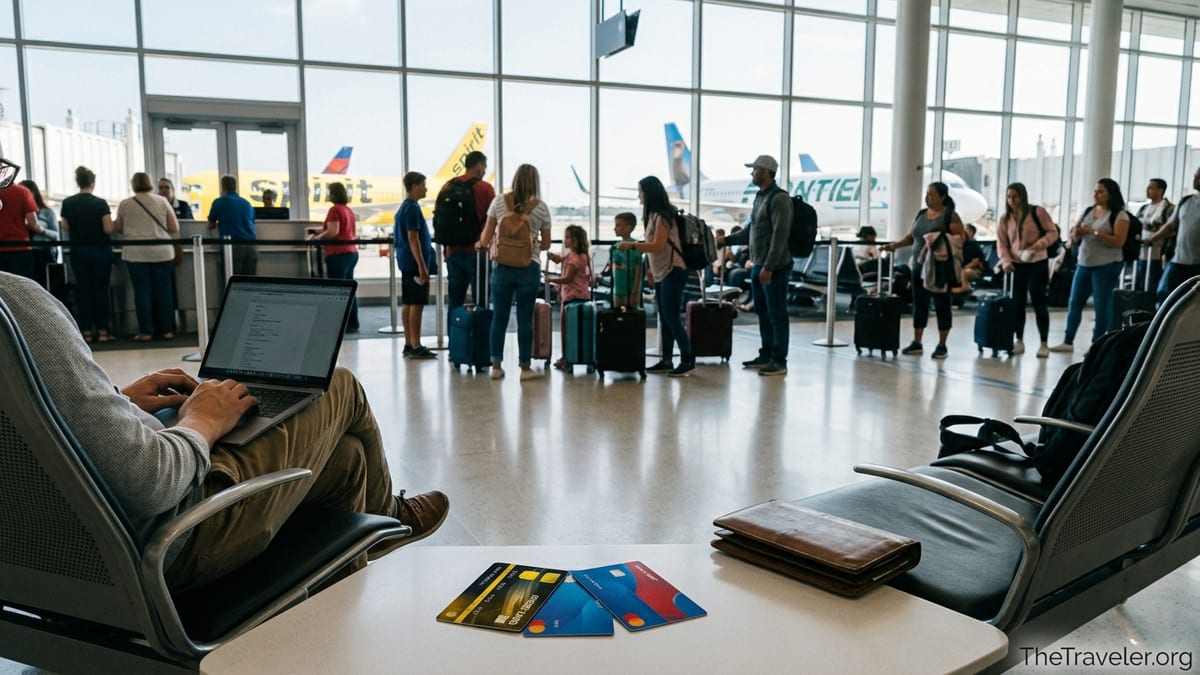
How Budget Airline Credit Cards Actually Save (or Cost) You Money
Budget airline credit cards are built around a simple idea: trade an annual fee and your everyday spending for airline points and a few key perks. In practice, though, the math can look very different depending on which airline you choose, how often you fly, and how many extras you usually pay for. A Spirit loyalist who checks a bag on every single trip might see huge value from a Spirit card that includes free checked bags, while an occasional Southwest flyer could do better with a cheaper card that mostly serves as a points generator.
Consider a typical long weekend trip from Fort Lauderdale to San Juan in March. On a bare-bones Spirit ticket, a traveler might pay a relatively low base fare but then pay extra for a carry-on, a checked bag, and a window seat. The same traveler flying JetBlue or Southwest might pay slightly more upfront yet avoid some of the nickel-and-dime charges. A co-branded airline card changes the equation by offering free bags, bonus points, or credits that offset the extras. The key is to compare the annual fee with the value of the perks you are realistically going to use each year.
It also helps to think in terms of dollars, not just points. For instance, if 10,000 airline points reliably offset about 120 to 150 dollars of airfare on your favorite routes, a welcome bonus alone could cover a couple of short flights. On the other hand, if the card has a 79 or 99 dollar annual fee and you only fly that airline once per year, you might be better served by a general travel card with flexible points or a no-fee airline card that simply earns a modest stash of miles on your grocery and dining spending.
What follows is a practical comparison of the Spirit Free Spirit Travel Mastercard and three popular alternatives from other budget and value-focused airlines: Southwest’s Rapid Rewards Plus Credit Card, the JetBlue Card, and Frontier’s co-branded card. Each has a different balance of fees, earning rates, and perks, and each makes sense for a different type of traveler.
Inside the Spirit Free Spirit Travel Mastercard
The Spirit Airlines Free Spirit Travel More Mastercard, issued by Bank of America, is designed specifically for frequent Spirit flyers who want to tame the airline’s famous fees. The card typically charges a moderate annual fee around the price of a checked bag on one round-trip itinerary and targets travelers who fly Spirit several times per year. While exact promotions change, it often includes a welcome bonus large enough to cover at least one off-peak domestic round-trip flight if you book early on popular routes such as Orlando to Atlantic City or Dallas to Las Vegas.
The main draw for many travelers is the free checked bag benefit for the primary cardholder when flying Spirit on eligible fares. If you normally pay roughly 50 to 60 dollars each way for a checked bag when you prepay online, two round trips can easily reach 200 to 240 dollars in bag fees over a year. In that scenario, even after paying the annual fee on the card, you can come out ahead. The card also boosts your mileage earning rate on Spirit purchases and everyday categories like dining or groceries, helping you accumulate Free Spirit points faster than if you relied only on flying.
There is also a status component. In the current Free Spirit program, holding the Travel More Mastercard helps with qualifying points toward status, which can unlock extra benefits such as priority boarding or additional point bonuses on flights. For a traveler based in a Spirit stronghold such as Fort Lauderdale, Orlando, or Las Vegas, this can make a noticeable difference in the airport experience. For example, boarding early often means guaranteed overhead bin space, which matters on aircraft where many travelers bring bulky carry-on bags to avoid checked-bag fees.
That said, the Spirit card is not universally attractive. It makes the most sense for someone who is comfortable with Spirit’s bare-fare model and flies the airline at least a few times a year. If you live in a city where Spirit only offers one or two routes, or you strongly prefer a full-service carrier, you may never recoup the annual fee. Additionally, Spirit’s route network is heavily focused on leisure destinations like Orlando, Cancun, and San Juan, which is perfect for some travelers but limiting for those whose trips are spread across smaller or business-focused airports.
Southwest Rapid Rewards Plus: A Friendlier Fee Structure
For travelers who prefer a low-cost airline with fewer surprise fees, the Southwest Rapid Rewards Plus Credit Card from Chase is a logical comparison point. This entry-level card charges a relatively low annual fee, often under 100 dollars, and is typically paired with a welcome bonus in the ballpark of 50,000 points after meeting a modest spending requirement in the first few months. On many Southwest routes, 50,000 Rapid Rewards points can equate to several one-way flights, especially from Southwest-heavy airports like Denver, Chicago Midway, or Dallas Love Field.
Southwest’s no-change-fee policy and two free checked bags on every ticket dramatically change the value calculation compared with Spirit. You do not need the credit card to get the free bags, which means the Rapid Rewards Plus card is more about earning extra points than unlocking basic travel rights. In a real-world example, a traveler who flies from Phoenix to San Diego and back three or four times per year might earn enough anniversary bonus points and ongoing rewards from everyday purchases to cover at least one of those round trips, all while enjoying built-in free bags regardless of whether they pay with the card.
The card also comes with a small annual anniversary points bonus and helps you accumulate points toward the coveted Southwest Companion Pass, which allows a designated companion to fly for only the taxes and fees on paid or award tickets. For a couple who regularly flies Southwest to visit family in Houston or vacation in Cancun, combining the Plus card’s earning power with a Companion Pass can generate outsized value, even though the card itself is relatively basic compared with premium travel cards.
Where Southwest’s entry-level card lags behind the Spirit card is in ultra-low base fares. Southwest generally prices closer to full-service carriers than ultra-low-cost airlines, particularly on peak travel dates. If you are extremely price sensitive and do not mind paying separately for bags and seat assignments, the Spirit model can still beat Southwest on certain routes, even when you factor in Southwest’s free-bag policy and the Rapid Rewards Plus card’s earning potential.
JetBlue Card: No Annual Fee and Comfort-Focused Flying
If the idea of paying any annual fee for an airline card gives you pause, the JetBlue Card issued by Barclays is a standout among budget-conscious options. It charges no annual fee and still offers bonus points on JetBlue purchases along with elevated earnings at restaurants and grocery stores. Recent reviews from personal finance outlets note that travelers can earn triple points on eligible JetBlue purchases and double points on everyday categories like dining and groceries, which makes it a reasonable everyday card for someone who flies JetBlue a few times per year.
To visualize the value, imagine a New York-based traveler who spends about 5,000 dollars per year on groceries and 3,000 dollars at restaurants. On the JetBlue Card, that spending can generate around 16,000 JetBlue points annually without considering any flights at all. On many East Coast routes, such as New York to Fort Lauderdale or Boston to Charleston, that kind of points balance can easily cover a round-trip ticket or more if you book in advance and choose off-peak dates.
JetBlue’s onboard experience is also a selling point for many budget-minded but comfort-conscious travelers. The airline is known for relatively generous legroom in standard economy, free Wi-Fi on most flights, and complimentary snacks, all of which reduce the temptation to pay extra for add-ons. While the no-fee JetBlue Card does not include free checked bags, its combination of solid earning potential and zero annual cost makes it one of the most forgiving choices if your travel habits shift and you temporarily stop flying JetBlue.
Compared with the Spirit Free Spirit Travel Mastercard, the JetBlue Card trades rich airline-specific perks like bag waivers or priority boarding for broader everyday earning power and a lower commitment. For anyone who wants to experiment with an airline credit card without signing up for an annual fee, or who splits time between JetBlue and other carriers, it can be a smarter starting point than a fee-based Spirit card, especially if your home airports include JetBlue focus cities such as New York JFK, Boston, or Fort Lauderdale.
Frontier and Other Ultra-Low-Cost Airline Cards
Frontier Airlines, which operates a model similar to Spirit with aggressive base fares and extensive add-on fees, also has a co-branded credit card that appeals to budget travelers who commit to the airline’s ecosystem. Offers change over time, but the Frontier card often includes an annual fee that is modest relative to full-service airline cards and a welcome bonus large enough to cover several short-haul flights between Frontier cities like Denver, Las Vegas, and Phoenix, especially if you book midweek or shoulder-season dates.
Where Frontier’s card can provide outsized value is in bag benefits and family travel perks. Depending on the specific version and promotion, cardholders may receive free or discounted checked bags or carry-ons when flying Frontier, which can transform a 39 dollar one-way Denver to Las Vegas ticket from a trap of added fees into a genuinely cheap weekend getaway. Some card variants also highlight family pooling, which lets your household combine miles into a single account more easily, so that a couple or family traveling together reaches award thresholds faster than if each person earned miles separately.
For a traveler who lives near a major Frontier hub such as Denver or Orlando and flies the airline three or four times a year, the savings on bags alone can be stronger than those offered by the Spirit Free Spirit Travel Mastercard if Frontier’s bag policies align better with the traveler’s habits. On the flip side, Frontier’s route network and schedule can be more limited in some regions, and its operational reliability varies, so the card’s value depends heavily on how comfortable you are being tied to a single ultra-low-cost carrier.
Other regional and low-cost airline cards, including those from Allegiant and Sun Country, also compete in this budget space, though their networks are narrower. These cards may appeal to travelers based in specific cities such as Minneapolis or mid-size Florida airports. In all cases, the central trade-off looks similar: a modest annual fee in exchange for bag and seat perks, plus a stream of airline-specific points that are most useful if you regularly fly that same carrier.
Real-World Cost Comparison: What a Year of Flying Looks Like
To understand how these cards compare in practice, it helps to walk through a sample year of travel for three different types of budget flyers. Take a young professional in Orlando who makes four round trips on Spirit each year to visit family in Detroit and enjoy weekend breaks in Cancun. If this traveler checks a single 40-pound bag on each trip and pays roughly 55 dollars per checked bag each way when purchasing in advance, they are looking at around 440 dollars in bag fees per year. With the Spirit Free Spirit Travel Mastercard’s free checked bag benefit for the primary cardholder, much of that cost can be eliminated, even after accounting for the card’s annual fee.
Now consider a Denver-based traveler who makes the same number of trips, but splits them between Southwest and Frontier. On Southwest, they enjoy two free checked bags per ticket, regardless of whether they hold a Southwest card. On Frontier, however, they might pay separately for a carry-on and seat assignment. If they hold the Southwest Rapid Rewards Plus card and use it for everyday purchases, they might earn enough points and anniversary bonus miles to knock the cost of at least one round-trip flight down to only the taxes and fees, which can be as low as a few dollars on domestic routes. A Frontier card could, in turn, help reduce bag and seat fees on the remaining trips.
A third example is a Boston-based traveler who flies JetBlue for leisure twice per year and mostly wants a straightforward card that does not require mental accounting. With the no-fee JetBlue Card, they can earn points on groceries and dining throughout the year and occasionally redeem for a short-hop flight to Florida or the Caribbean, without having to worry whether they have “made back” an annual fee. For this traveler, a Spirit or Frontier card with a fee could be the wrong fit, even if those airlines sometimes offer cheaper base fares, because the card’s value is so tightly tied to frequent use of a single carrier.
These scenarios illustrate that the Spirit Free Spirit Travel Mastercard shines in a narrow but meaningful slice of the market: frequent Spirit flyers who routinely check bags and book Spirit’s cheapest fares. For everyone else, especially those who mix airlines or only fly a handful of times per year, a low-fee Southwest card or no-fee JetBlue card often provides more flexible value with fewer strings attached.
Key Factors to Weigh Before Choosing a Card
Before settling on the Spirit Free Spirit Travel Mastercard or a competing budget airline card, it is worth running through a short checklist. Start with your home airport and typical routes. If you live near Fort Lauderdale, Orlando, Las Vegas, or Dallas and routinely see Spirit offering the lowest fares on your preferred routes, the Spirit card’s bag perks and earning structure may be compelling. If instead your main airport is Denver, Chicago Midway, or Baltimore and you frequently see Southwest or Frontier running attractive fare sales, one of their co-branded cards might make more sense.
Next, look at how often you fly and how many bags you check. A traveler who flies once or twice a year with only a personal item may never break even on a fee-based Spirit or Frontier card. On the other hand, a family of four that checks multiple bags on two or three trips per year can easily extract several hundred dollars of value from a card that offers free checked bags or discounted carry-ons. In that context, the Spirit Free Spirit Travel Mastercard’s benefit for the primary cardholder’s checked bag is a powerful lever if one adult always handles luggage check-in for the family.
Finally, consider how much you value flexibility. Airline-specific cards are at their best when you are confident that most of your travel over the next few years will be on the same carrier. If your plans are more fluid, a no-fee airline card like JetBlue’s, or even a general rewards card that earns flexible bank points, can be safer. It is also wise to factor in each airline’s reputation for customer service and operational reliability. A card that locks you into flying with an airline that frequently cancels flights from your home airport may not be worth the savings, no matter how enticing the sign-up bonus looks on paper.
In all cases, paying balances in full is critical. Interest charges can quickly erase any value from welcome bonuses and free bags. If you anticipate carrying a balance, even occasionally, a low-interest card is usually a better choice than any airline co-branded card, regardless of the perks.
The Takeaway
When stacked against competing budget airline credit cards, the Spirit Airlines Free Spirit Travel Mastercard offers strong, but highly specific, value. Its most compelling feature is the potential to erase hundreds of dollars in annual bag fees for travelers who fly Spirit multiple times per year and routinely check luggage. Add in elevated earning on Spirit flights and everyday spending, and it can be a powerful tool for a Spirit loyalist based in one of the airline’s major markets.
By contrast, the Southwest Rapid Rewards Plus card leans into a more customer-friendly fee structure where checked bags are free for everyone and the card primarily functions as a points accelerator and Companion Pass tool. The no-fee JetBlue Card aims for simplicity and flexibility, letting you dabble in airline miles without committing to an annual fee, while Frontier and other ultra-low-cost cards mirror Spirit’s model for travelers who live near their respective hubs.
The right choice ultimately comes down to your home airport, preferred airline, and willingness to navigate ultra-low-cost pricing structures. If you find yourself regularly choosing Spirit because its fares from your city are consistently the lowest, the Free Spirit Travel Mastercard deserves a close look. If your travel patterns are more scattered or you place a premium on flexibility and comfort, one of the rival budget airline cards or a general travel rewards card may serve you better in the long run.
FAQ
Q1. Is the Spirit Free Spirit Travel Mastercard worth it for occasional travelers?
For occasional travelers who only fly Spirit once a year or less, the card rarely makes sense. The annual fee is hard to justify unless you are saving significant money on checked bags or earning enough points from frequent Spirit flights and everyday spending to cover multiple award tickets.
Q2. How many Spirit flights do I need each year to break even on the card?
The exact break-even point depends on current bag fees and the card’s annual fee, but many travelers find that two or three round trips with a checked bag can offset the cost. If you typically pay around 50 to 60 dollars each way for a checked bag, a single year of four one-way segments can easily cover a moderate annual fee.
Q3. How does the Spirit card compare with the Southwest Rapid Rewards Plus card?
The Spirit card is focused on eliminating or reducing Spirit-specific fees, particularly checked bags, while Southwest already includes two free checked bags for all passengers. The Southwest Rapid Rewards Plus card is more about earning points and accessing perks like anniversary miles and easier progress toward a Companion Pass, rather than unlocking basic travel benefits.
Q4. Is the JetBlue Card a better option if I want to avoid annual fees?
For travelers who prefer not to pay an annual fee, the JetBlue Card is often a better fit than the Spirit Free Spirit Travel Mastercard. It earns bonus points on JetBlue purchases and everyday categories like groceries and dining without charging a yearly fee, which makes it easier to keep even if your travel frequency fluctuates.
Q5. Can I use Spirit Free Spirit points on other airlines?
Spirit Free Spirit points are primarily meant for flights on Spirit itself. While partnerships and redemption options can evolve over time, the program is not as broadly flexible as bank points or the mileage programs of large global alliances, so you should plan on redeeming most of your rewards for Spirit-operated flights.
Q6. Do any of these budget airline cards include free checked bags for companions?
Spirit’s Free Spirit Travel Mastercard typically focuses on the primary cardholder’s bag benefits, while some competing airline cards, particularly from larger carriers, include free checked bags for companions on the same reservation. Budget airline cards like Spirit, Frontier, or entry-level Southwest products usually emphasize savings for the primary traveler rather than a full family group.
Q7. What happens to my airline points if I close one of these credit cards?
With most airline cards, the points sit in your airline loyalty account, not with the bank. Closing the card generally does not immediately erase your miles, but inactivity or airline-specific expiration policies can eventually cause them to lapse. It is smart to review the airline’s rules and consider using or topping up your points before closing an account.
Q8. Are these budget airline cards good for international travel?
They can be, but it depends on the destinations and the card’s foreign transaction fees. Spirit operates many routes to the Caribbean and Latin America, while JetBlue and Southwest also fly to international leisure markets. If you frequently travel abroad, choosing a card with no foreign transaction fees and reliable international coverage can be as important as the mileage benefits.
Q9. Should I get a general travel rewards card instead of an airline-specific card?
If you fly multiple airlines each year or value flexibility, a general travel card that earns flexible points can be a better fit. Those cards often allow redemptions with several airline partners or straightforward statement credits for travel purchases, which avoids tying your rewards to a single carrier such as Spirit or Frontier.
Q10. Can I carry a balance on a budget airline credit card without losing value?
Carrying a balance on any rewards credit card will quickly erode the value of points, free bags, or sign-up bonuses because interest charges add up over time. To truly benefit from the Spirit Free Spirit Travel Mastercard or any competing budget airline card, it is important to pay your statement in full each month and treat the rewards as a bonus, not a reason to take on debt.