


Rome Fiumicino Airport, officially Leonardo da Vinci International Airport, has grown into one of Europe’s most impressive duty-free hubs. For many travelers it feels almost like a high-end mall attached to the runway, with a vast Aelia Duty Free walkthrough store, luxury Italian fashion boutiques and shelves of regional wine, olive oil and gourmet treats. This guide focuses on where to find the best value and most interesting purchases in 2026, and how to navigate Fiumicino’s terminals so you can enjoy the shopping without risking your boarding time.
Get the latest updates straight to your inbox!
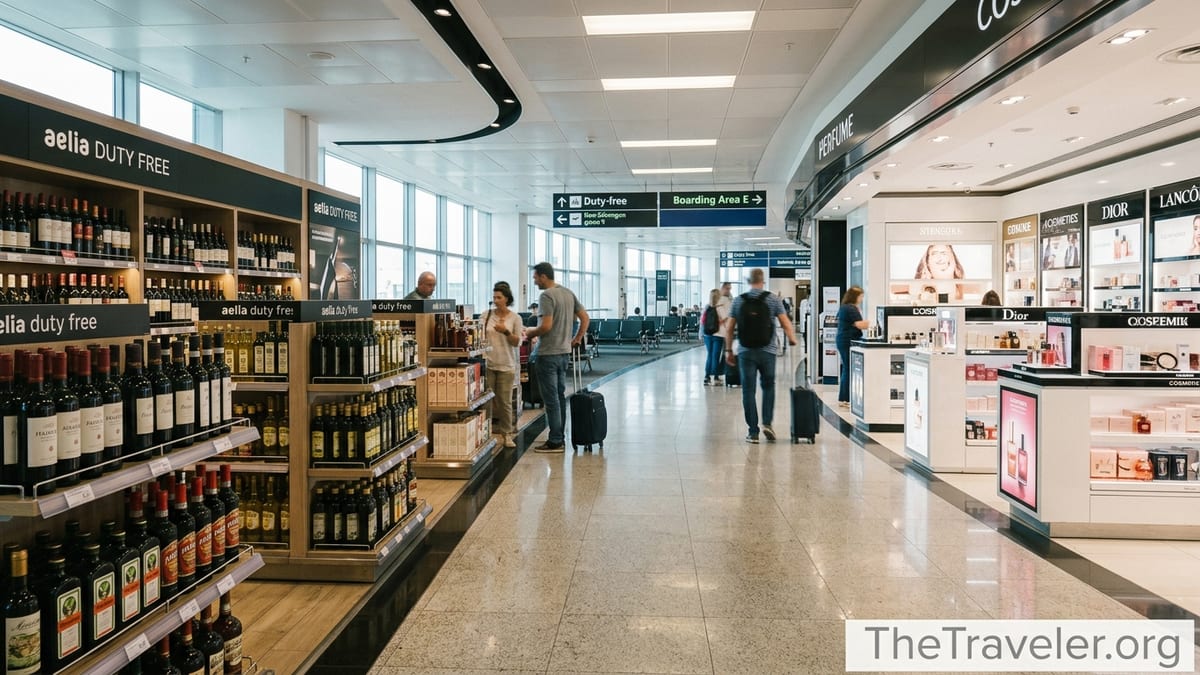
How Duty-Free Works at Fiumicino in 2026
Before you start browsing the shelves, it helps to understand how duty-free actually works at Rome Fiumicino. The airport serves both Schengen and non-Schengen flights, and that distinction matters for what kind of savings you will see. Passengers flying to destinations outside the European Union are typically eligible for full duty-free prices on alcohol and tobacco, and often slightly better pricing on perfume and cosmetics compared with downtown stores. If you are flying within the EU or Schengen, you will still find Aelia-branded shops, but many items are sold at “travel value” prices rather than fully tax-free, which means smaller discounts.
In practice, this means that a one-litre bottle of a mainstream Scotch whisky in the main non-Schengen duty-free zone might cost around 24 to 30 euro, compared with 30 to 40 euro for a 700 ml bottle in a typical Italian supermarket. A popular 100 ml bottle of designer perfume might be 10 to 20 percent lower than standard Italian department store pricing. On the other hand, high-end fashion and electronics are often priced very close to what you will see in central Rome, with the advantage mainly being convenience and stock availability rather than dramatic savings.
Another important distinction is between duty-free shopping and VAT refunds. Non-EU residents can often reclaim Italian VAT on eligible purchases made in the city, using companies such as Global Blue or Tax Free Worldwide, once they get to Fiumicino. That is separate from the airport’s own duty-free stores. If you have bought a leather bag or designer clothing in Rome, you will need to visit the tax refund counters in the departures area, get your forms validated and then, if required, show the goods before checking them in or taking them through security.
Ultimately, the best value at Fiumicino tends to be in categories like spirits, mid-range perfume and cosmetics gift sets, Italian gourmet foods packaged for export and some multi-buy offers on confectionery. Travelers looking for a true bargain on luxury fashion or the latest smartphone are usually better off comparing prices carefully or focusing on the unique “Made in Italy” items that are harder to find at home.
Understanding Terminals, Gates and Walkthrough Stores
Fiumicino currently operates mainly with Terminal 1 and Terminal 3 for passengers. Terminal 1 serves domestic and Schengen flights, while the larger Terminal 3 handles many non-Schengen and long-haul departures, including flights to North America, the Middle East and Asia. The airport has invested heavily in creating large, continuous retail areas after security, so you will encounter duty-free almost as soon as you enter the airside zone.
In Terminal 3, the centerpiece is the Aelia Duty Free walkthrough store located in the Avancorpo and Pier E area. Industry reports describe this as one of the largest Aelia duty-free spaces in the world, covering a broad sweep of international brands and “Made in Italy” specialties. All passengers heading to non-Schengen gates in Area E must pass through this walkthrough zone, which is deliberately designed as an obligatory path between passport control and the boarding concourse. Expect well-lit aisles lined with perfume, cosmetics, spirits, wine, tobacco, confectionery and travel accessories, with Italian brands strongly highlighted.
Terminal 1, which has been undergoing a modernization and reconfiguration program, now includes its own substantial Aelia Duty Free store and a luxury fashion area connected to boarding Area A. Recent developments have brought big-name Italian and international brands closer to passengers on short and medium-haul European flights, so you no longer have to be on a long-haul itinerary to access high-end shopping. That said, the very largest duty-free assortments and premium boutiques are still concentrated around Terminal 3’s Area E, so travelers flying to destinations like New York, Dubai or Tokyo have the widest choice.
When planning your time, remember that Rome Fiumicino is large and can feel like a maze of walkways and escalators. From the moment you clear security and passport control in Terminal 3, you should allow at least 15 to 20 minutes to walk through the duty-free zone and along the piers to distant E-gates, especially during busy summer peaks. A practical approach is to locate your gate on the screens first, then work backwards: browse duty-free within a comfortable radius rather than drifting too far and risking a last-minute dash.
Perfume, Cosmetics and Skincare: Where to Find Value
One of the strongest categories at Aelia Duty Free in Fiumicino is beauty. The main walkthrough store in Terminal 3 carries a full range of international brands such as Chanel, Dior, Lancôme, Estée Lauder and MAC, alongside Italian favorites like Acqua di Parma, Collistar and KIKO Milano. You will find displays of best-selling fragrances right by the entrance, often with staff offering blotter cards and sample strips, while skincare and makeup counters sit deeper in the store with more space for consultation.
For many travelers, beauty is where the combination of convenience and modest savings makes the most sense. A standard 100 ml bottle of a flagship women’s fragrance might be a few euros cheaper than the same product in central Rome, but the difference adds up when you are buying gift sets or multiple items. Seasonal promotions are common, too: two-for-one offers on mid-range fragrances, travel-exclusive sets of miniatures from brands like Versace or Dolce & Gabbana, or discounted multipacks of mascara and eyeliner aimed at frequent travelers.
If you prefer skincare, look out for travel-size kits and value bundles, particularly from brands that are strong in European markets. Italian labels sometimes offer airport-only sets featuring smaller tubes of face cream, cleanser and serum, sized specifically to meet cabin baggage liquid rules. These can be a cost-effective way to try a new routine or secure a supply for a long trip without packing bulky jars. You may also find premium Korean skincare and niche fragrance brands in curated corners of the store, although prices on these tend to be closer to global retail levels with less obvious discounting.
In terms of strategy, it is worth checking approximate prices in your home country before traveling, especially for high-end perfumes. In some cases, travelers from outside the eurozone may find that exchange rate fluctuations reduce or erase the duty-free advantage. On the other hand, if you collect particular lines or limited editions that are not widely sold at home, Fiumicino’s large beauty assortment can be an opportunity to track them down, even if the saving is modest rather than dramatic.
Spirits, Wine and Italian Amari: A Sweet Spot for Savings
Alcohol is one of the classic categories where Fiumicino’s duty-free shops can deliver clear value, particularly for non-EU bound travelers. Aelia Duty Free in Terminal 3 maintains a broad spirits section that ranges from big-brand blended Scotch and premium single malts to Italian grappa, limoncello and regional amari. Shelves typically feature international names like Johnnie Walker, Jameson and Tanqueray alongside Italian labels such as Nonino, Nardini and Luxardo, and there is usually a dedicated area for prosecco and sparkling wine.
Travelers who enjoy Italian bitters and liqueurs will find an especially rich selection. Recent traveler reports describe rows of amari including Averna, Montenegro, Cynar, Braulio and Ramazzotti, sometimes with travel-exclusive bottle sizes or gift packaging that includes branded glasses. Prices vary, but a one-litre bottle of a well-known amaro can often be around 15 to 20 euro in the duty-free shop, which is competitive compared with many foreign markets where the same bottle might be significantly more expensive or harder to find.
Wine lovers will also find plenty to explore. The “Made in Italy” focus means that Tuscan reds, Piedmontese Barolo and Barbaresco, Sicilian Nero d’Avola and sparkling Franciacorta are strongly represented. You might see curated displays featuring Brunello di Montalcino or Super Tuscan labels, often in smart gift boxes designed for easy transport. While the absolute best boutique wines from small estates are usually bought directly in wine regions, Fiumicino’s duty-free can be a convenient place to pick up a high-quality Italian bottle en route to a dinner with friends or as a gift on arrival.
As always, be aware of customs allowances in your destination country. Non-EU outbound passengers should check home-country rules on how many litres of spirits or bottles of wine they can bring in before extra duty becomes payable. Many travelers sensibly limit themselves to one or two bottles of spirits and a couple of wines, using duty-free chiefly as a way to obtain something distinctive such as an Italian amaro that is difficult to source elsewhere.
“Made in Italy” Food, Coffee and Gifts
Beyond spirits and perfume, one of Fiumicino’s real strengths is edible souvenirs. The airport’s retail strategy leans heavily into Italian gastronomy, which means you will find entire sections of Aelia Duty Free and adjacent shops devoted to pasta, olive oil, balsamic vinegar, truffles, chocolate and coffee. For many travelers this is where the airport genuinely feels like a last, tempting extension of their time in Italy.
In Terminal 3’s shopping gallery, particularly around the “Made in Italy” center, you can expect to see branded gift boxes of bronze-cut pasta, jars of pesto alla genovese, bottles of extra-virgin olive oil from regions such as Puglia or Tuscany, and aged balsamic from Modena presented in travel-friendly packaging. While these products are usually not dramatically cheaper than in a high-end grocery store in Rome, the assortments are curated with travelers in mind: smaller bottle sizes suitable for cabin baggage where allowed, robust cardboard sleeves to protect glass, and ready-made assortments that work well as gifts.
Coffee is another major attraction. Shelves are stacked with Italian brands like Lavazza, Illy and Kimbo, often in vacuum tins and multipacks designed specifically for the travel-retail market. Many passengers pick up a kilo of espresso beans or ground coffee to recreate the flavor of a Roman breakfast at home, and prices are typically competitive with supermarkets in major European cities. You can also find regional biscuits, cantucci, torrone and gianduja chocolate, making it easy to assemble a complete Italian-themed gift bag without leaving the airside area.
When choosing food items, think about the practicalities of your onward journey. Soft cheeses, fresh meats and liquids above cabin limits are unlikely to be accepted at security if you are connecting through another airport, and some countries impose strict rules on bringing in meat or dairy. Shelf-stable options in sealed packaging are the safest choice. Many travelers focus on olive oil in 250 ml or 500 ml bottles, vacuum-packed salumi where permitted, and dry goods like pasta, chocolate and coffee that travel well and respect most customs regulations.
Luxury Fashion, Watches and Accessories
Rome Fiumicino has positioned itself as a showcase for Italian fashion, and this is especially evident in the luxury boutiques concentrated around Terminal 3 and the upgraded areas of Terminal 1. The list of brands present in the airport’s tax-free and duty-free zones reads like a roll call of Italian style: Gucci, Prada, Fendi, Bulgari, Valentino, Armani and Max Mara among others, alongside international names in watches, jewelry and leather goods.
These boutiques are typically located along the main shopping promenades rather than inside the Aelia Duty Free walkthrough. Many are operated directly by the brands in partnership with travel-retail specialists, and their interiors mirror the look of flagship stores in central Rome, albeit scaled down to fit the airport environment. You will find current-season handbags, small leather goods, sunglasses, silk scarves, ties and ready-to-wear collections, displayed in window vitrines that encourage browsing even if you are not planning a major purchase.
When it comes to pricing, travelers should not expect huge discounts on luxury fashion simply because they are in an airport. In most cases, prices for designer bags and watches closely match official boutique levels in Italy, with the main advantages being tax-treatment for non-EU passengers and the ability to purchase items at the last moment without detouring into the city. Some items may be marginally cheaper due to duty savings, but the more meaningful benefit is often the VAT refund you can claim when exporting the goods as a non-EU resident. Staff in these boutiques are usually familiar with the paperwork and can guide you on how to combine a purchase with tax-refund procedures at Fiumicino.
For many people the best way to enjoy this area is simply to window-shop and, if the budget allows, pick up a small accessory that captures the essence of Italian design without committing to a major investment. A pair of sunglasses, a silk pocket square or a logo belt can serve as a satisfying, long-lasting souvenir of a trip to Rome, and the airport setting means you can compare several brands in a single short walk before returning to your gate.
Practical Tips: Timing, Tax Refunds and Smart Shopping
To make the most of Fiumicino’s duty-free offering, timing is critical. Security and passport control queues can be unpredictable, especially in the morning bank of departures and during summer holidays, so it is wise to prioritize reaching the airside area with at least 90 minutes to spare for intercontinental flights. Once through the formalities, check your gate area, walking time and boarding start, and then allocate a realistic window for shopping. Remember that in Terminal 3 you will naturally pass through the main Aelia Duty Free store on the way to non-Schengen gates, so you do not need to schedule a separate detour.
If you plan to process VAT refunds on purchases made in Rome, build extra time into your schedule. Non-EU travelers usually need to get their forms validated at tax refund counters before checking in hold luggage that contains the goods. Once the forms are stamped, you may still need to visit a refund desk or kiosk to receive your partial refund, either in cash or to your payment card. Queues can form at peak times, and delays here will reduce the time you have available for browsing duty-free.
From a budgeting perspective, it helps to have a rough list of what you intend to buy before arriving at the airport. For example, you might decide in advance to allocate 60 euro for a bottle of high-end perfume, 30 euro for an amaro, and 30 to 40 euro for coffee and chocolate gifts. Knowing these figures can prevent impulse purchases of items that are not truly cheaper than in your home country. Many experienced travelers now compare prices by checking approximate figures online in advance, then using the airport’s shelf prices to confirm whether a deal is genuinely attractive.
Finally, keep baggage and security rules in mind. If Fiumicino is a connection point rather than your final departure, liquids bought duty-free may need to be placed in sealed, tamper-evident bags and accompanied by a receipt so they can pass through additional screening at your next airport. If you are close to your airline’s cabin or checked baggage allowance, heavy items like wine and olive oil could tip you into excess-fee territory. In such cases, smaller bottles, gift sets and lightweight products like scarves or cosmetics can deliver the pleasure of airport shopping without creating logistical headaches.
FAQ
Q1. Where is the main duty-free store at Rome Fiumicino Airport?
The largest duty-free store is the Aelia Duty Free walkthrough in Terminal 3, serving non-Schengen departures, particularly around the Avancorpo and Pier E area.
Q2. Is there duty-free shopping in Terminal 1 as well?
Yes. Terminal 1 has its own Aelia Duty Free store and a growing luxury shopping area near boarding Area A, mainly serving domestic and Schengen flights.
Q3. Are prices for luxury brands like Gucci and Prada cheaper at Fiumicino?
Prices for major luxury brands at Fiumicino are usually similar to official boutiques in Rome. Any savings tend to come from tax treatment for non-EU travelers rather than large discounts.
Q4. What products offer the best value in Fiumicino’s duty-free shops?
Spirits, especially Italian amari and mainstream whiskies, along with mid-range fragrances, cosmetics gift sets and “Made in Italy” food and coffee, often provide the most noticeable value.
Q5. Can I get a VAT refund on items I bought in Rome city at the airport?
Yes, non-EU residents can validate tax refund forms at Fiumicino before departure. You usually need to show receipts, forms and in some cases the goods themselves.
Q6. How early should I arrive if I want time to shop before my flight?
For long-haul non-Schengen flights, aim to be airside at least 90 minutes before departure to allow for passport control, walking to the gate and unhurried browsing.
Q7. Are food items like olive oil and pasta allowed through security?
Dry goods and solid foods generally pose no problem, but liquids are subject to cabin baggage rules on volume, and some countries restrict fresh meat or dairy on arrival.
Q8. Is it cheaper to buy wine and spirits downtown or in the airport?
Every case is different, but Fiumicino’s duty-free shops often offer competitive prices on one-litre bottles and travel-exclusive editions, particularly for non-EU-bound travelers.
Q9. Can I access the big Terminal 3 duty-free area if I am flying within the Schengen zone?
No. The largest duty-free mall in Terminal 3 is located after passport control and is reserved mainly for non-Schengen departures, so Schengen passengers normally cannot enter that zone.
Q10. Are there late-night shopping options if my flight departs very early or very late?
Yes. Many of the core duty-free stores at Fiumicino operate from early morning until the last departures of the day, though smaller boutiques may have shorter hours.