


Hidden in the sandstone labyrinth of Cedar Mesa in southeastern Utah, Grand Gulch is less a single trail than an outdoor museum of Ancestral Puebloan history braided through miles of remote desert canyons. With its cliff dwellings, rock art panels, and rare year-round pools, this Bears Ears gem offers some of the most rewarding backpacking and guided hiking experiences in the American Southwest. It also demands serious preparation, smart route choices, and respect for fragile cultural sites. This guide walks you through the best Grand Gulch hiking routes, how to join guided tours, and what to expect from multi-day backpacking trips, using real itineraries, permit rules, and outfitter examples you can actually book.
Get the latest updates straight to your inbox!
Understanding Grand Gulch and How to Access It
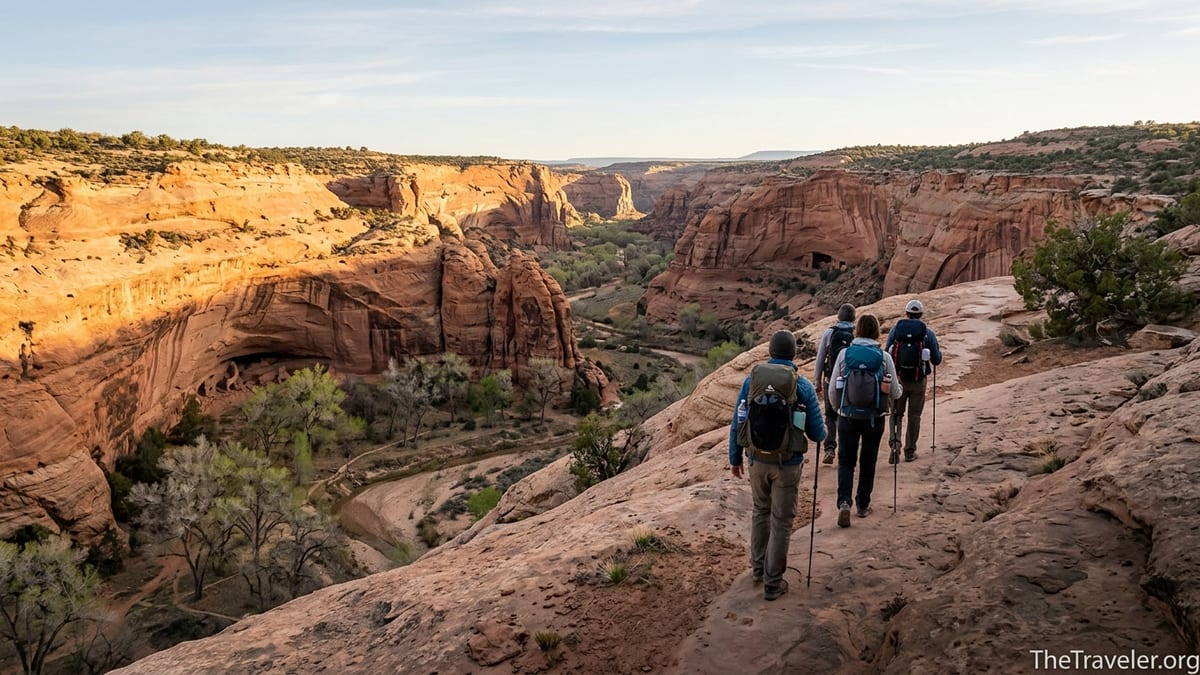
Grand Gulch cuts deep into Cedar Mesa in Bears Ears National Monument, roughly between the towns of Blanding and Mexican Hat in southeastern Utah. Managed by the Bureau of Land Management as a wilderness study area, it is known for dense concentrations of cliff dwellings, granaries, kivas, and rock art left by Ancestral Puebloan peoples. The canyon system feels wild and undeveloped, with no constructed trails once you drop off the mesa, just braided footpaths, cairns, and sandy washes to follow.
Most hikers access Grand Gulch from Utah Highways 95 and 261. The main backcountry hub is the Kane Gulch Ranger Station, about 4 miles south of the UT‑95 and UT‑261 junction. From here, a paved lot leads to the Kane Gulch trailhead, one of the most popular gateways into Grand Gulch. Other key access points include Bullet Canyon, Todie Canyon, Government Trail, and Collins Canyon, all reached via graded or rough dirt roads that may require high-clearance vehicles in wet weather.
Because the area is both culturally and ecologically sensitive, visitor numbers are controlled. The BLM manages Grand Gulch and its tributaries through a permit system that covers both day use and overnight backpacking. This helps keep campsites from getting overcrowded, protects archaeological sites from overuse, and preserves the canyon’s signature sense of solitude. Before you start planning routes, it is worth understanding how these permits work and how they shape what you can realistically hike in a day or on a multi-day trip.
Most visitors base themselves in either Blanding or Bluff, roughly 60 to 90 minutes’ drive from major trailheads, or camp closer to the mesa at basic dispersed sites along Comb Wash or established campgrounds in the broader Bears Ears region. Guided backpacking trips and university field courses often stage at Comb Wash or along UT‑261 before shuttling to trailheads such as Kane Gulch or Collins Canyon for multi-day traverses.
Permits, Seasons, and Safety in a Remote Desert Canyon
Every trip into Grand Gulch starts with permits. Day-use permits are required year-round for the canyons of Cedar Mesa, including Grand Gulch, and can typically be purchased at self-serve kiosks at major trailheads or at Kane Gulch Ranger Station. Overnight backpacking permits use an allocation and reservation system managed through Recreation.gov for Cedar Mesa and Grand Gulch. The overnight permit covers main canyons such as Grand Gulch and its tributaries like Kane, Bullet, Government, and Collins, as well as other nearby canyon systems.
As of 2026, most overnight permits for peak months are reserved in advance online, and popular spring and fall dates often book out weeks or months ahead. A limited number of “day of” overnight permits can sometimes be obtained in person at Kane Gulch Ranger Station during its operating season, but you should not rely on walk-ins if your schedule is tight. Permit fees are modest compared with national parks and usually run in the tens of dollars per person per night rather than hundreds, but you should check the latest pricing when you book since fee structures can change.
The prime hiking seasons are spring and fall, roughly March through May and late September through early November, when daytime highs are milder and water sources are somewhat more reliable. Summer temperatures can soar above 90 degrees Fahrenheit on the mesa and feel even hotter in reflecting sandstone alcoves. Winter can bring snow and icy ledges on the mesa top, even while the canyon floor remains relatively dry. Recent trip reports describe successful five- to seven-day traverses in April and May, with backpackers carefully timing water carries between springs and potholes.
Safety in Grand Gulch is largely about water and navigation. There are no reliable, treated water sources, and springs can change from year to year or even month to month. Hikers commonly report drawing water from seeps in side canyons like Sheiks or Green House, and from pools beneath pour-offs, but what was flowing one season may be dry the next. Calling the Monticello BLM office or Kane Gulch Ranger Station shortly before your trip for current water conditions is standard practice. Navigation-wise, expect unmarked junctions, braided cattle and game trails, and occasional scrambling. A detailed topographic map, downloadable GPS track, and comfort with off-trail route-finding are essential, especially for backpackers linking multiple canyons.
Classic Day Hikes: Kane Gulch, Junction Ruin, and Beyond
Many travelers first sample Grand Gulch on a long day hike from Kane Gulch Ranger Station. From the trailhead, you descend gently into Kane Gulch and follow the sandy wash downstream toward its confluence with Grand Gulch. Fit hikers commonly reach the junction in a half-day and continue to highlights such as Junction Ruin and Turkey Pen Ruin before turning around. Depending on how far you go, this can be a strenuous 8- to 12-mile out-and-back day in rough desert terrain.
Junction Ruin, a large, easily visible cliff dwelling complex perched above the canyon floor, is often the turnaround point for day hikers. Turkey Pen Ruin, a short distance farther, features well-preserved granaries and characteristic stacked log “turkey pens” that give the site its name. The appeal of this route lies in the density of cultural sites: you will pass multiple alcoves with masonry walls, scatterings of ancient pottery sherds, and pictograph panels, all in under a day’s walk from the paved parking area.
Those with extra stamina can push farther down Grand Gulch, but you must watch the clock and your water reserves. Many visitors treat this day hike as reconnaissance for a future backpacking trip, noting side canyons like Todie or Sheiks that they might want to explore on a longer itinerary. During shoulder seasons, hikers often leave near sunrise to beat the heat and give themselves plenty of time for photo stops and quiet contemplation at the ruins.
Guided day hikes are another accessible way to see Grand Gulch without committing to a heavy pack. Outfitters based in Moab, Bluff, and Blanding run full-day private trips to Bears Ears and Cedar Mesa, including routes into Grand Gulch when conditions and permits allow. A typical guided day hike might include hotel pickup in Moab, a 2 to 2.5 hour drive to Cedar Mesa, a 6- to 8-mile hike to ruins and rock art, a picnic lunch in a shaded alcove, and natural history and archaeology interpretation throughout the day.
Signature Backpacking Routes: From Overnight Loops to Week-Long Traverses
For many experienced hikers, Grand Gulch is best experienced on a multi-day backpacking trip that lets you camp beneath alcoves and watch the canyon change color with the light. A classic three- to four-day itinerary links Kane Gulch and Bullet Canyon in a roughly 20- to 25-mile semi-loop. Backpackers typically descend from Kane Gulch Ranger Station, explore Junction Ruin and nearby sites on day one, spend one or two nights camped on benches above the wash, then exit via Bullet Canyon, where a vehicle shuttle or pre-arranged pickup returns them to the starting point.
Recent trip reports describe longer traverses, such as a five-day, roughly 40-mile route connecting Collins Canyon to Kane Gulch. In that itinerary, hikers descend Collins Canyon to the San Juan River, then follow Grand Gulch upstream, visiting remote rock art panels and cliff dwellings before climbing out via Kane Gulch. University outdoor programs and conservation organizations occasionally run week-long expeditions of this style, using one-way shuttles and staged vehicles at Collins and Kane trailheads.
Backpacking routes can be customized based on water conditions and your group’s fitness. Some parties prefer shorter, 2- or 3-night out-and-back trips from a single trailhead like Kane or Bullet, allowing more time for side canyon exploration to places like Sheiks Canyon’s Green Mask site or Green House Canyon. Others aim for point-to-point trips that cover 30 to 50 miles in 4 to 7 days, carrying heavier food loads but seeing a broader cross-section of the canyon system. Many hikers report planning daily mileage in the 7- to 10-mile range to account for soft sand, creek crossings, and photo or exploration stops.
Terrain along these backpacking routes includes stretches of firm canyon bottom, sections of deep sand, occasional slickrock and short scrambles, and muddy or wet crossings after storms. Campsites are informal but well-established in many zones, typically on durable sandy benches above the wash. Regulations usually require camping at least a certain distance from archaeological sites and water sources, so expect to walk on a bit after visiting a ruin before pitching your tent. Pack animals and large groups may face additional restrictions, so it is important to read the current trip planner materials from the BLM when choosing routes.
Guided Backpacking and Educational Trips in Grand Gulch
Because Grand Gulch is both remote and archaeologically complex, guided backpacking trips have become a popular way for travelers to experience the area with expert support. Several Utah-based outfitters offer 3- to 5-day backpacking expeditions that focus on the central portion of Grand Gulch, often marketing these as Bears Ears backpacking or Cedar Mesa canyon trips. A typical package includes professional guides, backcountry permits, group gear such as tents and cooking equipment, most meals, and transportation from a base town like Moab or Bluff to and from trailheads such as Kane Gulch or Bullet Canyon.
On a representative four-day guided itinerary, guests might meet in Moab the evening before departure for a gear check, then drive to Cedar Mesa early the next morning. The group descends into Grand Gulch from a trailhead like Government Trail or Kane Gulch, spends days exploring cliff dwellings and rock art panels, and camps on canyon benches near reliable water sources. The final day often involves exiting via a different trailhead such as Bullet Canyon, where a shuttle vehicle is waiting. Guests carry their own backpacks, but guides handle navigation, water-finding, and Leave No Trace compliance, as well as interpretation of archaeology and desert ecology.
Prices for these guided backpacking experiences commonly fall in the mid to high three-figure or low four-figure range per person for multi-day trips, depending on the length of the trip, group size, and whether gear rental and hotel nights are included. For example, a four-day guided backpacking trip in Bears Ears and Grand Gulch might be priced in the ballpark of 1,200 to 1,800 US dollars per person, inclusive of permits, meals in the field, and specialty gear like trekking poles and sleeping pads. Shorter, two- or three-day itineraries often cost less but cover fewer canyon miles.
Educational organizations, from conservation nonprofits to university study abroad programs, also run Grand Gulch trips that blend backpacking with field learning. A typical seven-day program might spend the first day traveling to a campground near Cedar Mesa, followed by five days backpacking through sections of Grand Gulch, and a final day traveling back to campus. Students carry full packs, participate in map reading and archaeological site etiquette training, and keep field journals. For many participants, these guided or semi-guided programs provide a safer introduction to remote desert backpacking than an entirely self-planned trip.
Respecting Archaeology and Practicing Low-Impact Travel
What sets Grand Gulch apart from many other canyon systems is not just its beauty but its density of intact archaeological sites. Visitors encounter cliff dwellings with standing walls, kivas, granaries tucked under overhangs, and rock art panels that may have remained undisturbed for centuries. This richness is exactly why rules and etiquette are stricter here than in many other desert backpacking destinations.
The core principle is to look, not touch. You are expected to stay on existing paths and social trails around ruins, avoid entering rooms or kivas, and never sit, climb, or lean on ancient walls. Collecting artifacts such as pottery sherds, stone tools, or corn cobs is illegal. Even seemingly harmless actions like rearranging stones for camp furniture or stepping on midden slopes below sites can damage fragile deposits that hold critical information for archaeologists and descendant communities.
Photography is welcomed, but some visitors choose not to post geotagged images of sensitive sites on social media to reduce the risk of vandalism and overcrowding. Guides routinely discuss why some locations, such as rock art panels in small alcoves or unusually intact dwellings, are kept vague in public trip descriptions. On guided trips, you can expect daily briefings on how to move through sites, where to sit during lunch, and how far away to camp to avoid trampling archaeological features.
General Leave No Trace practices are also essential in Grand Gulch. Human waste should be buried in catholes where regulations allow, or packed out if required. Campers should cook on stoves rather than relying on campfires, which are often restricted or prohibited in backcountry canyons. Packing out all trash, including food scraps and micro-litter like foil and twist ties, is non-negotiable. Because desert cryptobiotic soils along the canyon rims are extremely fragile, you should confine travel to washes, slickrock, and well-used paths rather than walking on undisturbed biological crusts.
Planning Logistics: Shuttles, Gear, and Where to Stay
Planning a Grand Gulch trip involves more than just permits and route lines on a map. Transportation logistics can be surprisingly complex, especially for point-to-point backpacking routes that start and finish at different trailheads. Many independent groups solve this by staging two vehicles, leaving one at their exit trailhead, such as Bullet Canyon or Collins Canyon, and driving the other to their starting point, such as Kane Gulch or Government Trail. Others arrange informal shuttle swaps with groups they meet at trailheads or in nearby campgrounds.
Some commercial outfitters and local guiding services offer formal shuttle services for a fee, dropping you at one trailhead and picking you up at another at a prearranged date and time. This can be particularly attractive if you are flying into the region and renting only one vehicle. A typical scenario might involve being picked up in Bluff or Blanding early on day one, dropped at Kane Gulch to start your backpack, then retrieved at Collins Canyon five days later and returned to town for a hot shower and a restaurant meal.
Gear-wise, desert backpacking in Grand Gulch calls for lightweight but robust equipment. A 40- to 60-liter backpack, 3-season tent or tarp, warm-but-compact sleeping bag, and closed-cell or inflatable pad are standard. Because you may carry several liters of water between springs, many backpackers bring a combination of hydration hoses, bottles, and a robust water treatment system, such as a gravity filter paired with chemical backup. Footwear choices vary, but many hikers favor breathable trail runners over heavy boots, emphasizing quick drying over waterproofing, since shallow creek crossings and wet sand are common.
For lodging before and after your trip, small hotels and motels in Blanding, Bluff, and Mexican Hat offer convenient bases, with nightly rates often in the mid-range category rather than luxury pricing. Budget-conscious travelers sometimes camp at developed campgrounds or dispersed sites along Comb Wash Road, which runs roughly parallel to Cedar Mesa below the western escarpment. Guided trip providers frequently include pre-trip lodging recommendations in their materials, steering guests toward properties that understand early-morning departures and late-evening returns from the backcountry.
The Takeaway
Grand Gulch offers a rare combination of remote desert wilderness and world-class archaeological resources, all within a canyon system that can be explored on anything from a single long day hike to a week-long backpacking traverse. Whether you hike independently or join a guided trip, the key ingredients for a successful experience are realistic route planning, early permit reservations, solid desert travel skills, and a deep commitment to protecting the cultural sites that make this place unique.
For new visitors, a guided day hike or 3-day backpacking tour can be an ideal introduction, providing expert navigation and interpretation while you learn how the canyon works: where water hides, how side canyons connect, and what respectful visitation looks like in practice. Experienced desert backpackers may prefer to design their own traverses, connecting trailheads like Kane Gulch, Bullet Canyon, Government Trail, and Collins Canyon into creative loops and one-way routes.
Whichever approach you choose, Grand Gulch rewards those who move slowly, look closely, and treat each alcove and panel as a living story rather than a photo backdrop. With thoughtful preparation and low-impact habits, you can enjoy one of the Southwest’s finest hiking and backpacking destinations while helping ensure that its ruins, rock art, and desert ecosystems endure for future generations.
FAQ
Q1. Do I need a permit to hike in Grand Gulch?
Yes. Day-use permits are required year-round for Grand Gulch and other Cedar Mesa canyons, and separate overnight permits are mandatory for backpacking. Day permits are often available at trailhead kiosks or the Kane Gulch Ranger Station, while overnight permits are typically reserved in advance through the official Cedar Mesa and Grand Gulch listing on Recreation.gov.
Q2. What is the best time of year to hike or backpack Grand Gulch?
Most hikers aim for spring and fall, roughly March through May and late September through early November. These seasons usually offer milder temperatures and somewhat more reliable water sources than summer, when heat can be intense, or winter, when snow and ice can complicate access and travel.
Q3. How difficult are the main Grand Gulch routes?
Difficulty varies by route and length, but most hikes involve uneven terrain, deep sand, and occasional short scrambles. Day hikes from Kane Gulch to Junction Ruin are challenging but manageable for fit hikers, while multi-day traverses from Collins Canyon to Kane Gulch require solid fitness, route-finding skills, and comfort carrying a multi-day pack with significant water weight.
Q4. Are there guided tours available in Grand Gulch?
Yes. Several Utah-based outfitters offer guided day hikes and multi-day backpacking trips in Bears Ears and Cedar Mesa, including sections of Grand Gulch when conditions and permits allow. These trips typically include permits, group gear, meals in the field, and transportation from towns like Moab or Bluff, and can be a good option for travelers new to desert backpacking.
Q5. How reliable is water in Grand Gulch?
Water availability changes seasonally and year to year. Some springs and seeps in side canyons, such as those in Sheiks or Green House canyons, are often used by backpackers, but they can still run low or dry. Always carry substantial water capacity, bring a reliable treatment system, and contact the BLM or Kane Gulch Ranger Station shortly before your trip for current information.
Q6. Can beginners backpack in Grand Gulch?
Beginners with good fitness can backpack in Grand Gulch if they prepare carefully, travel with more experienced partners, or join a guided trip. The main challenges are navigation, water logistics, and the need for strict Leave No Trace and archaeological site etiquette, so first-timers should avoid overly ambitious itineraries and consider shorter 2- or 3-night routes.
Q7. How do I arrange a vehicle shuttle for point-to-point hikes?
Most independent groups use two vehicles, staging one at their exit trailhead and driving the other to their starting point. Some local guides and outfitters offer paid shuttle services, picking you up in a nearby town or at one trailhead and dropping you at another. It is important to arrange shuttles well in advance, especially in peak seasons.
Q8. What special rules apply to archaeological sites in Grand Gulch?
Visitors must not enter rooms or kivas, climb on walls, or touch rock art. Artifacts such as pottery sherds, stone tools, and corn cobs must be left where they are. Camping is typically prohibited close to archaeological sites, and hikers are expected to stay on existing paths around ruins to avoid damaging fragile slopes and cultural deposits.
Q9. Is Grand Gulch suitable for children or families?
Older children and teens with hiking experience can enjoy Grand Gulch, especially on shorter day hikes from Kane Gulch to Junction Ruin or other nearby sites. Families should be realistic about heat, distance, and water needs, and should closely supervise children around cliff edges and archaeological features. For many families, a guided day hike is the most comfortable introduction.
Q10. How far in advance should I book permits and guided trips?
For popular spring and fall dates, it is wise to book overnight permits as soon as they open on Recreation.gov, often several months in advance. Guided backpacking trips and private day hikes in Bears Ears and Cedar Mesa can also fill early, particularly around school holidays and long weekends, so contacting outfitters a few months ahead usually provides the best selection of dates.