


The Navajo Loop Trail in Bryce Canyon National Park is one of the most famous short hikes in the American Southwest. Dropping from the rim at Sunset Point and winding between towering hoodoos, it is often the very first time visitors step below the rim and into the orange amphitheater they have seen in photographs for years. Whether you want the peace of a self-guided walk or the insight of a certified local guide, a little planning and realistic expectations can turn this 1 to 2 hour hike into the highlight of your Utah trip.
Get the latest updates straight to your inbox!
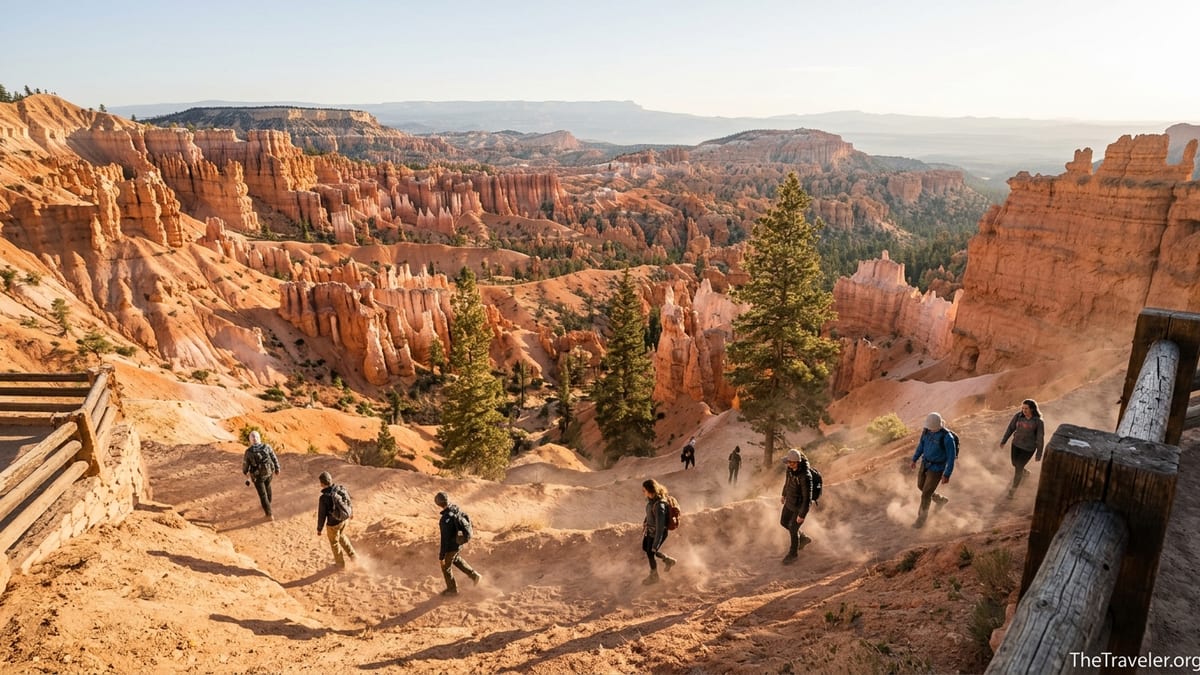
Why the Navajo Loop Trail Belongs on Your Bucket List
The Navajo Loop is popular for a reason. Official National Park Service information describes it as a 1.3 mile loop beginning and ending at Sunset Point, with about 515 feet of elevation gain and a moderate rating that most reasonably fit visitors can handle in 1 to 2 hours. What makes it special is not the distance, but the experience of dropping from a broad overlook into a maze of hoodoos, narrow corridors and sandy switchbacks, then emerging back at the rim with a completely new sense of scale.
On a typical summer morning, you might start at Sunset Point just after sunrise, looking down into the main Bryce Amphitheater as light catches formations like Thor’s Hammer and the Silent City. Within minutes of stepping onto the trail, the world changes from a drive-up viewpoint with crowds and camera tripods to a quieter canyon where the smell of pine needles and the sound of gravel under your boots replaces the chatter of the parking lot.
The loop has two distinct sides: Wall Street, a famously steep set of tight switchbacks in a slot-like canyon, and Two Bridges, a slightly more open section that passes its namesake rock bridges. In summer, you can hike the full loop, often recommended in a counterclockwise direction. In winter or during rockfall closures, the park may close the Wall Street side and convert Navajo into an out-and-back on Two Bridges or a connector to Queen’s Garden instead, which is one reason keeping current with conditions is crucial.
Because the trail is short, many visitors pair Navajo Loop with the 0.8 mile Queen’s Garden Trail to create a roughly 2.9 mile “figure eight” that the park and many guide companies consider the signature hike of Bryce Canyon. If you have half a day, it is worth considering a guided version of this extended route to understand more of what you are seeing than you might from the trail signs alone.
Choosing a Guided Hike: When a Local Expert Makes Sense
Guided hiking on the Navajo Loop is tightly regulated inside the park. Only companies with a current Commercial Use Authorization from Bryce Canyon National Park are permitted to lead groups on frontcountry hiking routes above and below the rim. The park maintains an updated list of these vendors on its official website, categorized under Hiking and Walking Frontcountry and similar services, so that visitors can verify that an operator is authorized before booking.
In practice, booking a guided Navajo Loop hike usually means connecting with a local outfitter based in Bryce Canyon City or nearby towns such as Tropic or Panguitch. For example, small companies like Get Lost Tour Co. advertise private or small-group “Hike the Hoodoos” style trips that include the Navajo Loop and often link it with Queen’s Garden or Peekaboo Loop. Prices for a half-day private hike for a couple or family typically fall somewhere between about 350 and 700 US dollars depending on group size and inclusions, which might range from simple guiding and interpretation to hotel pickup, lunch and photography support.
For some travelers, that cost is justified by the added context. A good Bryce Canyon guide will not only keep you on the best line down the switchbacks, but will explain how the hoodoos form, point out safe and legal photo spots, and adjust pace for altitude and heat. Families with kids, first-time desert hikers, and visitors traveling in shoulder seasons when ice and mud affect footing often appreciate the security of an experienced leader who walks these trails hundreds of times each year.
If you prefer a more budget-conscious approach, look for shared hikes run by outfitters that group several parties together on a morning or afternoon departure. These often cost closer to 100 to 175 US dollars per person for a 2 to 3 hour hike, and may focus specifically on the Navajo plus Queen’s Garden combo. Because group sizes and exact routes vary, always confirm details in advance, including whether your tour includes transport from your lodging or meets at the park shuttle station or Sunset Point.
Planning Around Seasons, Closures, and Crowds
Trail conditions on the Navajo Loop can change significantly with the seasons, and even from week to week. The National Park Service notes that the Wall Street side of the loop typically closes in winter due to falling rock and icy switchbacks, leaving only the Two Bridges side open. In recent years, intense summer thunderstorms and late winter storms have also triggered temporary mudslide or rockfall closures that have affected much or all of the loop until crews could safely clear it.
Because conditions evolve, your best planning tool is to check Bryce Canyon’s official alerts and trail status page in the week before you arrive and again on the morning of your hike. Rangers post updates about partial closures, alternate routes, and any new safety advisories. If you have booked a guided hike, reputable outfitters monitor the same information and will proactively adjust the route or timing; for instance, they might shift from a full Navajo Loop to a Sunrise Point to Queen’s Garden out-and-back if the lower section is closed.
Timing your hike can also greatly affect your experience. In peak summer months, parking at Sunset Point fills early, and the park shuttle becomes the best way to access the trailhead. Many guides and experienced hikers aim to start between sunrise and about 8:30 a.m. to enjoy cooler temperatures and softer light on the hoodoos. In shoulder seasons like April, May, late September, and October, frost and ice can linger in the shaded canyon through the morning, so microspikes or at least high-traction soles become more important than mid-day comfort.
Crowd levels along Navajo Loop can be intense in the middle of the day. If you prefer a quieter atmosphere and are comfortable with variable light for photography, consider an early afternoon shoulder season hike or a late-day start in summer that brings you back to the rim as the sun drops. Night hikes led by authorized guides, including occasional full-moon experiences, can give you a completely different vibe, but be aware that low light increases the consequences of missteps on steep switchbacks. Only join night tours run by companies with clear safety protocols and appropriate gear requirements.
Essential Gear and Safety Tips for the Navajo Loop
Compared with all-day backcountry trips, Navajo Loop is short, but it still demands respect. The trail drops quickly from roughly 8,000 feet of elevation, and many visitors arriving from low-altitude cities underestimate how wind, sun, and thin air amplify exertion. Rangers frequently remind hikers to be honest about their fitness, start slowly, and remember that the steepest part of the climb is at the end of the loop as you return to Sunset Point.
Footwear is one of the most important practical decisions you will make. Sturdy walking shoes or light hiking boots with good tread are usually sufficient in dry summer conditions, while trail runners with aggressive lugs can help you feel more secure on loose switchback gravel. In late fall, winter, and early spring, the shaded walls of Wall Street and Two Bridges can hold ice, and many guided groups require or strongly recommend traction devices that slip over your footwear. Sandals, smooth-soled sneakers, or fashion boots are a common sight near the trailhead but are far less common among locals and professional guides who know how quickly conditions can deteriorate.
Water and sun protection are equally critical. Even for a short hike, park guidance often suggests at least one liter of water per person, more on hot days, along with sunscreen, a brimmed hat, and sunglasses. Because there is limited shade once you leave the canyon floor and begin climbing back to the rim, many guides encourage hikers to carry a light long-sleeve shirt they can throw on for the ascent. For families, consider packing salty snacks and giving children their own small hydration bladder or bottle so they develop good desert hiking habits early.
Finally, follow Leave No Trace principles. Staying on the designated trail protects fragile desert soil and vegetation that can take decades to recover from a single off-trail shortcut. Do not climb on hoodoos or carve names into the rock, and pack out all trash, including orange peels and tissues. Guides licensed by the park are trained to model and enforce these practices, but self-guided visitors share the same responsibility to help keep the trail pristine for the next wave of hikers.
How Guided Hikes Work: Booking, Pricing, and What to Expect
Booking a guided Navajo Loop experience typically starts online or by phone once you know your travel dates. Many Bryce Canyon outfitters cap group sizes at around 8 to 12 participants for group hikes and will run private hikes for as few as two people. Popular morning slots during holiday weekends and in June through September can sell out weeks in advance, especially for sunrise departures, so reserving early is wise if your itinerary is fixed.
Pricing varies widely based on group size and level of service. As a baseline, you might find a 2 to 3 hour small-group guided hike that includes Navajo Loop and Queen’s Garden priced around 120 to 180 dollars per adult, with reduced rates for children. Private half-day hikes that customize the route to your fitness and interests, perhaps combining Navajo Loop with the longer Peekaboo Loop or sections of the Rim Trail, often start around 450 to 500 dollars for two hikers and increase with additional participants. Some luxury tour operators fold a guided hike into broader multi-day Utah itineraries that include Zion and Capitol Reef, with per-day costs in a very different bracket.
Most guided hikes include interpretive storytelling, trailhead logistics, and safety gear such as trekking poles or microspikes when conditions require them. Some include snacks, water refills, or photography coaching. Clear communication beforehand matters: ask whether the company enters the park in a commercial vehicle or expects you to meet them inside the park at a shuttle stop, and confirm entrance fees are your responsibility. Reputable operators will be transparent about what is and is not included so you can compare them fairly.
During the hike, expect your guide to set a moderate pace with frequent stops at natural “story points” like Thor’s Hammer, the base of Wall Street, or the junction with Queen’s Garden. Many guides also use radio communication and clear regroup points to keep parties together on busy days when the trail can feel congested. If you have any concerns about heights, knees, or heat, mention them early; experienced guides generally have alternate lines and rest strategies to keep the experience positive.
Self-Guided Navajo Loop: Route Ideas and Realistic Timelines
If you prefer to hike without a guide, Navajo Loop is very manageable for most independent travelers with a bit of preparation. The simplest circuit in summer is the full loop from Sunset Point down Wall Street, across the canyon floor, and back up via Two Bridges. Most reasonably fit hikers complete this in 60 to 90 minutes, not counting extended photography stops. If you start close to sunrise, you can often enjoy softer light in Wall Street and avoid the densest crowds on the climb back out.
To extend the experience without committing to a long day, consider the popular Queen’s Garden and Navajo combination. Many visitors begin at Sunrise Point, descend the Queen’s Garden Trail past formations that resemble statues in a queen’s court, then connect to the Navajo Loop and climb out at Sunset Point. You can then walk the relatively flat Rim Trail back to your starting point in about 10 to 15 minutes. Allow 2 to 3 hours total, more if you like to linger at viewpoints or photograph every turn of the canyon.
For strong hikers looking for a more demanding outing, the so-called Figure 8 combination links Queen’s Garden, Navajo Loop, and the 5.5 mile Peekaboo Loop into a continuous circuit that showcases a broad cross-section of the Bryce Amphitheater. Many experienced visitors and some guiding companies call this their favorite way to experience the park’s core trails in a single day. Plan for 4 to 6 hours, depending on pace, and carry significantly more water and food than you would for Navajo alone.
Whatever route you choose, remember that all of these hikes start at high elevation. A routine 1.3 mile walk at sea level can feel surprisingly taxing under the Utah sun. Build in extra time, set conservative turnaround plans if members of your group are struggling, and resist the temptation to sprint the final switchbacks just because the viewpoint is in sight. Many rescues in Bryce Canyon involve visitors who simply pushed a bit too hard on the climb out.
The Takeaway
Navajo Loop has earned its reputation as Bryce Canyon’s “must hike” trail, but the most rewarding experiences come to those who treat it as more than a quick detour from the parking lot. Whether you opt for a self-guided ramble or invest in a half-day with a licensed local guide, thoughtful planning around season, route, and timing will pay off in quieter moments, safer footing, and better photographs.
Start by checking official park conditions, then decide whether you want the added insight and structure of a guided hike or the flexibility of exploring on your own. Pack as if you are heading out on a much longer walk than the mileage suggests, with solid footwear, ample water, and layers for changing canyon temperatures. Above all, give yourself permission to slow down. Pause in the shade of a Douglas fir, listen to the echoes off the hoodoos, and look back up at the rim to appreciate how far you have come.
By approaching the Navajo Loop Trail with respect for the environment, an honest assessment of your own abilities, and an openness to learning, you can turn a relatively short hike into an experience that stays with you long after the red dust has washed from your boots.
FAQ
Q1. How long does it take to hike the Navajo Loop Trail?
The National Park Service suggests 1 to 2 hours for the 1.3 mile Navajo Loop, though many visitors take closer to 90 minutes with photos and rest stops.
Q2. Do I need a guide to hike the Navajo Loop?
No. The trail is well marked and many visitors hike it independently, but guided hikes can add safety, context, and logistics help, especially in winter or for first-time desert hikers.
Q3. What is the difficulty level of the Navajo Loop?
The trail is rated moderate. The distance is short, but the steep switchbacks and elevation of around 8,000 feet can feel strenuous for those not used to climbing or to higher altitude.
Q4. Is the Wall Street section always open?
No. Wall Street typically closes in winter due to ice and rockfall, and it can also close temporarily after storms. Always check current park alerts before planning your route.
Q5. Can children hike the Navajo Loop safely?
Yes, many families hike Navajo Loop, but close supervision is essential on steep switchbacks and near drop-offs, and kids need proper footwear, water, and sun protection.
Q6. Are trekking poles necessary on the trail?
They are not required, but many hikers and guides find trekking poles very helpful on the steep, sometimes loose switchbacks, particularly for knees, balance, and on icy days.
Q7. Can I hike Navajo Loop in winter?
Yes, parts of the trail usually remain open, but expect snow and ice, colder temperatures, and potential partial closures. Traction devices and warm layers are strongly recommended.
Q8. How much water should I bring?
Plan for at least one liter per person for the basic loop, more in hot weather or if you are combining Navajo with Queen’s Garden or Peekaboo. There is no water on the trail itself.
Q9. Do guided hikes include park entrance fees?
Usually not. Most outfitters require guests to pay their own Bryce Canyon National Park entrance fee or present a valid national park pass in addition to the tour cost.
Q10. Is the Navajo Loop Trail suitable for strollers or wheelchairs?
No. The steep grade, switchbacks, and uneven surface make Navajo Loop unsuitable for strollers, wheelchairs, and mobility scooters. Wheelchair-accessible viewpoints are available along the rim instead.