


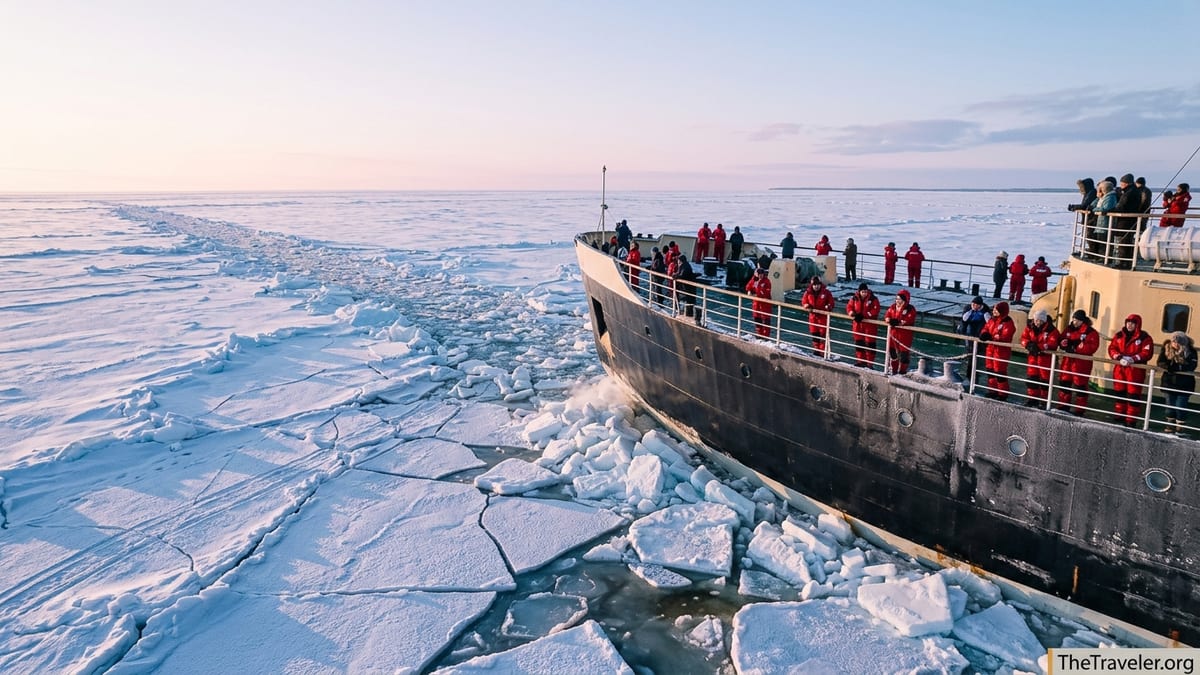
Few travel experiences feel as quintessentially Arctic as standing on the deck of an icebreaker, watching a steel hull crack through meters of sea ice before you climb down to walk on the frozen Gulf of Bothnia. In Finnish Lapland, the legendary Icebreaker Sampo in Kemi has turned this once industrial operation into a bucket list winter excursion, often paired with Santa Claus Village in Rovaniemi, glass igloos and Northern Lights safaris. This guide breaks down the best Sampo cruises and Arctic packages to book now, with practical examples of timings, prices and what to expect so you can make the most of a short Lapland stay.
Get the latest updates straight to your inbox!
Why the Sampo Icebreaker Belongs on Your Lapland Itinerary
The Sampo is a Finnish icebreaker built in 1960 that once kept winter shipping lanes open in the Gulf of Bothnia. Today it is stationed in Kemi, on Finland’s Sea Lapland coast, and operates winter tourism cruises from roughly mid December to early April, when the sea is reliably frozen. Rather than feeling like a theme park ride, the experience still carries the atmosphere of a working ship: heavy machinery, functional interiors and a strong sense of place out on the ice of the Bothnian Bay.
Most travelers combine the Sampo with a broader Lapland trip built around Rovaniemi or Kemi. A typical five to seven day winter itinerary might include two or three nights around Rovaniemi for Santa Claus Village and reindeer experiences, one day trip or overnight in Kemi for the icebreaker, and then a night or two in a glass igloo or remote lodge for Northern Lights viewing. Because winter days are short and conditions can be harsh, pre-arranged packages and transfers remove much of the stress.
The Sampo stands out because it is one of the few historic icebreakers in the world open to regular tourist cruises that actually takes passengers out onto a frozen sea. The cruise includes walking on the ice field beside the ship and, for those who wish, floating between the ice floes in buoyant red survival suits. For many visitors, that surreal sensation of bobbing in black Arctic water, insulated from the cold, is the highlight of a Lapland holiday.
Availability is limited by season and by the number of departures, so spaces sell out early for peak weeks around Christmas and New Year, as well as school holidays in February and March. If your entire Lapland trip is three or four days, advance planning is essential to fit the Sampo into your schedule without exhausting same-day travel connections.
Core Sampo Cruise Options: What You Actually Book
The Icebreaking Company, which runs the Sampo, typically offers a few core cruise formats that repeat through the winter season. The classic afternoon cruise lasts around four hours and includes icebreaking out on the frozen sea, a guided tour of the vessel, time to walk on the ice and the signature floating session in survival suits. Onboard, passengers are organized into waves so that some visit the engine room and bridge while others go for their ice walk or float, helping crowds move smoothly even on sold-out days.
On many dates, the afternoon cruise includes a lunch buffet served in the ship’s restaurant plus a welcome drink and a participation diploma, a detail families with children often appreciate. Travelers who prefer a lighter schedule sometimes choose a shorter morning or evening departure where meals are taken before or after the cruise in Kemi rather than on board. Exact offerings shift slightly by season, but the essential elements of icebreaking, ship tour and floating remain consistent.
As a rough indication, independent tickets for the cruise alone, without transfers, generally sit in the low to mid hundreds of euros per adult, with child discounts. Operators based in Rovaniemi and Kemi often bundle this same core cruise with transport and extra activities, which is usually the most efficient choice for visitors who do not want to hire a car or navigate winter driving conditions.
When comparing cruise times, remember that in midwinter in Kemi daylight can be limited to about four or five hours. An early afternoon sailing often offers the best visibility to appreciate the white sea and blue twilight, while an early morning cruise in January may still begin in semi-darkness. For photographers, choosing a schedule that keeps you on the ice during the brightest part of the day can be worth adjusting your other activities.
Best Day Trips and Packages from Rovaniemi
Rovaniemi, about 115 to 150 kilometers from Kemi depending on the route, is the main tourist hub of Finnish Lapland and the closest city with a large choice of hotels and flights. Many visitors stay in Rovaniemi for Santa Claus Village and Northern Lights excursions and visit the Sampo as a full-day side trip. Several local tour companies offer ready-made “Rovaniemi to Kemi and Sampo Icebreaker” packages that include hotel pickup in the morning, road transfer of around 1.5 to 2 hours each way, the cruise itself, and then drop-off back at your accommodation in the evening.
These day trips typically cost in the high hundreds of euros per adult once the cruise ticket, transfers and guiding are bundled together, with reduced rates for children and occasional family pricing. Some itineraries add extra stops such as a visit to the SnowCastle area in Kemi, a seaside snow and ice attraction that often operates during the same winter months, or a brief city tour. Others emphasize a simple, efficient logistics package with minimal additional sightseeing, ideal for visitors who have only one spare day in Rovaniemi.
For example, a common schedule might see a coach departing Rovaniemi around 8:00 in the morning, reaching the Port of Ajos near Kemi before noon for check-in, then boarding the icebreaker early afternoon for a four-hour cruise. After disembarkation, passengers reboard the coach for the return to Rovaniemi, arriving back in town in the early evening in time for a casual dinner. Because winter roads can be snowy or icy, traveling with an experienced Lapland driver and a vehicle equipped for local conditions can be a significant comfort factor for first-time Arctic travelers.
Travelers who prefer a more flexible pace sometimes create a semi-independent package: overnighting in Kemi or nearby Sea Lapland villages, booking the Sampo cruise directly, and then adding separate Rovaniemi-based excursions on other days. This approach can work well for those traveling by train on Finland’s VR network, which connects Helsinki with both Kemi and Rovaniemi, and who want to experience both the coastal and inland sides of Lapland without renting a car.
Staying in Kemi: Icebreaker, SnowCastle and Sea Lapland
While many visitors treat the Sampo as a day trip from Rovaniemi, Kemi and the surrounding Sea Lapland area are worth at least a night in their own right. Kemi is a small coastal city with its own airport, a railway station on the main north-south line, and easy road links west to the Swedish border and north to Rovaniemi. For those who prefer shorter daily transfers, basing yourself in Kemi for the night before or after your Sampo cruise keeps logistics simple and allows some flexibility if winter weather delays trains or flights.
Several regional operators offer short Arctic packages based in Kemi that combine the Sampo with entry to the local SnowCastle attractions, accommodation in standard hotels or snow and glass accommodation, and optional add-ons such as husky safaris, snowmobile tours or visits to nearby towns like Tornio and Haparanda on the Finnish-Swedish border. These two to three night breaks are particularly appealing to European travelers arriving on direct winter flights into Kemi or Oulu who want a compact Lapland experience without long road journeys.
Typical packages might include airport or train station transfers, two nights in Kemi, breakfast, the Sampo cruise with floating session, and an evening activity such as an Aurora hunt or snowshoe walk. Pricing varies widely depending on the quality of accommodation and inclusions, but many mid-range options fall in the several hundred to low four figures of euros per person for a long weekend. While that is a substantial spend, it effectively wraps together the logistics that visitors would otherwise need to arrange piecemeal in a remote winter environment.
If you choose a Kemi-based package, confirm whether shuttle transport to the Port of Ajos and back is included, and whether you receive reserved times for activities like the survival suit floating. Families with younger children often appreciate having a centrally located hotel nearby where they can return for an afternoon rest or warm swim after a cold day on the ice.
Multi-Day Lapland Itineraries that Feature the Sampo
Beyond simple day trips or weekend breaks, a growing number of tour operators now offer multi-day Lapland itineraries that place the Sampo at the center of a week-long Arctic holiday. A common format aimed at international visitors might start with one night in Helsinki, continue with an overnight train or short flight to Rovaniemi, and then spend several days combining Santa-themed activities, reindeer and husky experiences with the icebreaker cruise and a stay in specialty accommodation like glass igloos or Aurora cabins.
For example, a seven-night “best of Lapland” style package could include two nights in Rovaniemi with visits to Santa Claus Village and a reindeer farm, a full day trip to Kemi for the Sampo cruise, one or two nights at a glass-roofed resort near Rovaniemi, and a final night in Helsinki before flying home. Pricing for such comprehensive packages typically ranges into the low thousands of euros per person, depending on room category and whether meals and premium activities are included, but the trade-off is a highly curated experience where transfers and clothing are provided.
Some adventure-focused itineraries pivot away from Santa experiences toward more active Arctic days. In these cases, the Sampo may sit alongside snowmobile safaris into the wilderness, ice fishing, winter fat biking or cross-country skiing. Because the icebreaker cruise provides a very controlled but still dramatic brush with Arctic conditions, it often appeals both to older travelers seeking a once-in-a-lifetime journey and to younger adventure travelers who want a mix of comfort and excitement.
When evaluating such trips, look closely at the timing of the Sampo day within the overall program. Many travelers prefer to schedule the icebreaker for the middle of the week rather than the first or last day, giving some buffer in case of winter travel disruptions and ensuring they are rested and acclimatized before spending hours out on the ice and in survival gear.
Practical Planning: Getting There, Timing and What It Feels Like
Most international visitors reach Lapland by first flying into Helsinki and then continuing north by plane or overnight train. Flights from Helsinki to Rovaniemi take around one and a half hours, while the night train journey can take eight to twelve hours depending on route and stops. From Rovaniemi, tour coaches or regional trains connect to Kemi, and many Sampo packages include direct coach transfer so you do not need to book public transport separately or drive in winter conditions.
Those who prefer to base in Kemi can take a night train from Helsinki directly to Kemi’s central station or fly into Kemi-Tornio or Oulu airports and continue by road. From Kemi city center, shuttle buses often run to the Port of Ajos on cruise days, timed to match the ship’s check-in schedule. Because Lapland transport and accommodation fill early for December and February holidays, it is wise to finalize your core travel framework and Sampo date as soon as you commit to the trip, then layer in additional excursions later.
On board the Sampo itself, expect a distinctly practical, even slightly vintage atmosphere rather than modern cruise ship luxury. Passengers are issued warm overalls or survival suits for the floating session and receive instructions on how to move on the ice and in the water. The floating area is roped off beside the hull where crew members supervise, and participants bob on the surface fully supported by the suit. Many visitors who are hesitant at first describe the actual experience as strangely relaxing rather than frightening.
Temperatures out on the ice can be far below freezing, and coastal winds can make the apparent chill even sharper. Dressing in thermal layers, wearing insulated boots and mittens, and protecting cameras and phones from battery drain are important practical steps. After the outdoor segments, many passengers appreciate warming up over a hot drink in the ship’s interior lounges while listening to commentary about the history of icebreaking and life in Sea Lapland.
How to Choose the Right Sampo or Arctic Package for You
Choosing between the different Sampo-related cruises and packages largely comes down to three factors: where you want to base yourself, how confident you feel with independent Arctic logistics, and whether you are traveling with children or older family members. Those who value simplicity above all else usually gravitate toward full-service day trips from Rovaniemi or all-inclusive three to seven night Lapland itineraries that wrap the Sampo into a broader experience. Independent travelers, by contrast, often book the cruise directly, organize their own train tickets and rentals, and piece together activities around the fixed icebreaker date.
If your primary reason for coming to Lapland is to visit Santa Claus Village with young children, then a Rovaniemi-based stay with one long day allocated to the Sampo may make the most sense. Look for packages that include thermal clothing, meals and hotel pickup, and that keep the overall day length reasonable so children are not overwhelmed. Families may also value flexible cancellation or rescheduling terms, given how winter illnesses and weather disruptions can affect travel with kids.
Couples and solo travelers focused on photography or the Northern Lights might instead prioritize small-group packages that pair the icebreaker with Aurora hunting, snowshoeing or snowmobile sessions. Some operators limit group sizes, provide tripods and camera support, and schedule cruises to align with the best odds of a clear-sky night before or after the Sampo sailing. While more specialized, these trips can provide a richer sense of Lapland’s varied landscapes, from frozen sea to forest fells.
Budget-conscious travelers should remember that while the Sampo itself is a premium experience, there are ways to control costs around it. Staying in simpler accommodation in Kemi, traveling by night train instead of flying, and limiting high-priced add-ons such as private husky safaris can keep the overall spend closer to the lower end of the typical Lapland range. Booking shoulder-season dates in December before Christmas week or in late March can also sometimes yield slightly lower prices while still providing solid ice conditions for the cruise.
The Takeaway
Including the Sampo icebreaker in your Arctic travel plans is one of the most powerful ways to feel the scale and reality of winter in Finnish Lapland. Whether you stand on the bow as the ship grinds through dense pack ice, step down onto the frozen Gulf of Bothnia to photograph the hull against a pale pink horizon, or float quietly in a survival suit between ice floes, the experience is likely to stay with you long after snow and darkness have faded into memory.
With a little planning, the Sampo can anchor anything from a simple long weekend in Kemi to a complex week-long journey that includes Rovaniemi, Santa Claus Village, glass igloos and wilderness nights under the Aurora. The key is to decide early how central the icebreaker is to your trip, fix your cruise date, and then build travel and activities around that cornerstone. However you structure it, an icebreaker cruise on the frozen sea of Sea Lapland remains one of the most distinctive winter adventures Europe currently offers.
FAQ
Q1. When is the best time of year to book a Sampo icebreaker cruise?
The Sampo typically operates from around mid December to early April, when the Gulf of Bothnia is reliably frozen. January and February usually offer the most dramatic ice conditions and deepest winter atmosphere, while late March may provide slightly milder temperatures and longer days.
Q2. How far in advance should I reserve my Sampo cruise or package?
For peak weeks such as Christmas, New Year and school holidays in February, it is wise to book several months in advance. If you are traveling in quieter periods in December or late March, you may find more flexibility, but availability can still be tight for popular departures and day trips from Rovaniemi.
Q3. Do I need to know how to swim to join the survival suit floating?
Swimming ability is not required for the floating segment because the survival suits are fully buoyant and keep you on the surface. Crew members supervise the activity closely, and participation is optional, so you can skip it and simply walk on the ice if you prefer.
Q4. Is it better to stay in Rovaniemi or Kemi for the Sampo experience?
Rovaniemi offers more hotels, restaurants and attractions such as Santa Claus Village, making it ideal for families and first-time visitors. Kemi is closer to the port and suits those who want shorter transfers and a quieter base. Many travelers combine both, staying in Rovaniemi but spending a night in Kemi around their cruise date.
Q5. What should I wear on an icebreaker cruise in Lapland?
Dress in warm layers, including a thermal base layer, insulating mid-layer, and windproof outer layer. Insulated boots, wool socks, a warm hat and thick mittens are essential. For the floating, you will be given a special survival suit to wear over your clothes that protects you from the cold water.
Q6. Are Sampo icebreaker cruises suitable for children?
Yes, many families bring children, and operators usually offer reduced child pricing. That said, very young children may find the long day, cold temperatures and survival suits tiring. It is important to consider your child’s age, stamina and comfort level with cold before booking.
Q7. Can I see the Northern Lights during a Sampo cruise?
The cruises mainly take place during daytime or early evening to take advantage of light on the ice, so the Northern Lights are not a core part of the onboard experience. However, if you stay in Lapland for several nights before or after your cruise and the sky is clear, you may be able to join an Aurora tour or see the lights from your hotel.
Q8. How do I get to Kemi without renting a car?
You can reach Kemi by night train from Helsinki, by regional train from Rovaniemi, or by flying into nearby airports such as Kemi-Tornio or Oulu and continuing by road. Many Sampo-focused day trips and packages include transfers by coach from Rovaniemi or from Kemi city center to the port.
Q9. What happens if the weather is very bad on the day of my cruise?
The Sampo is built to operate in harsh winter conditions, and normal snow or cold temperatures do not stop sailings. In case of severe storms or safety concerns, the operator will provide instructions, which may include delays, itinerary changes or, in rare cases, cancellations with options to reschedule according to their terms.
Q10. Is an icebreaker cruise worth the cost compared to other Lapland activities?
Many travelers consider the Sampo a once-in-a-lifetime experience that complements more common Lapland activities like husky safaris, reindeer visits and Aurora tours. While it is a premium-priced outing, the combination of ship history, icebreaking spectacle and the chance to walk and float on a frozen sea makes it a highlight for a large share of visitors.