


More news on this day
From Barcelona’s modernist skyline to the volcanic cliffs of Santorini, the Mediterranean is surging back as one of the world’s busiest cruise regions, with new itineraries and evolving port policies reshaping how travelers experience its historic coastlines in 2026.
Get the latest news straight to your inbox!
Why the Mediterranean Is Back on Top for Global Cruisers
Industry data shows the Mediterranean firmly restored as a marquee region, with trade reports indicating that roughly one in six cruise passengers worldwide chose Mediterranean itineraries in 2024 and capacity in the basin trending toward about 6 million passengers in 2026. That recovery, after years of disruption, reflects renewed demand from North American, European and Asian travelers seeking dense clusters of ports, shorter sailing distances and a mix of iconic cities and smaller coastal towns.
Analysts describe the Western Mediterranean as the strongest subregion by volume, driven by the appeal of Spain, France and Italy for first-time visitors and repeat cruisers. Travel outlooks for 2026 also highlight the Mediterranean alongside Northern Europe and Alaska as areas of notable year-on-year growth, with booking windows lengthening as travelers lock in complex itineraries that combine culture, food and warm-weather beaches.
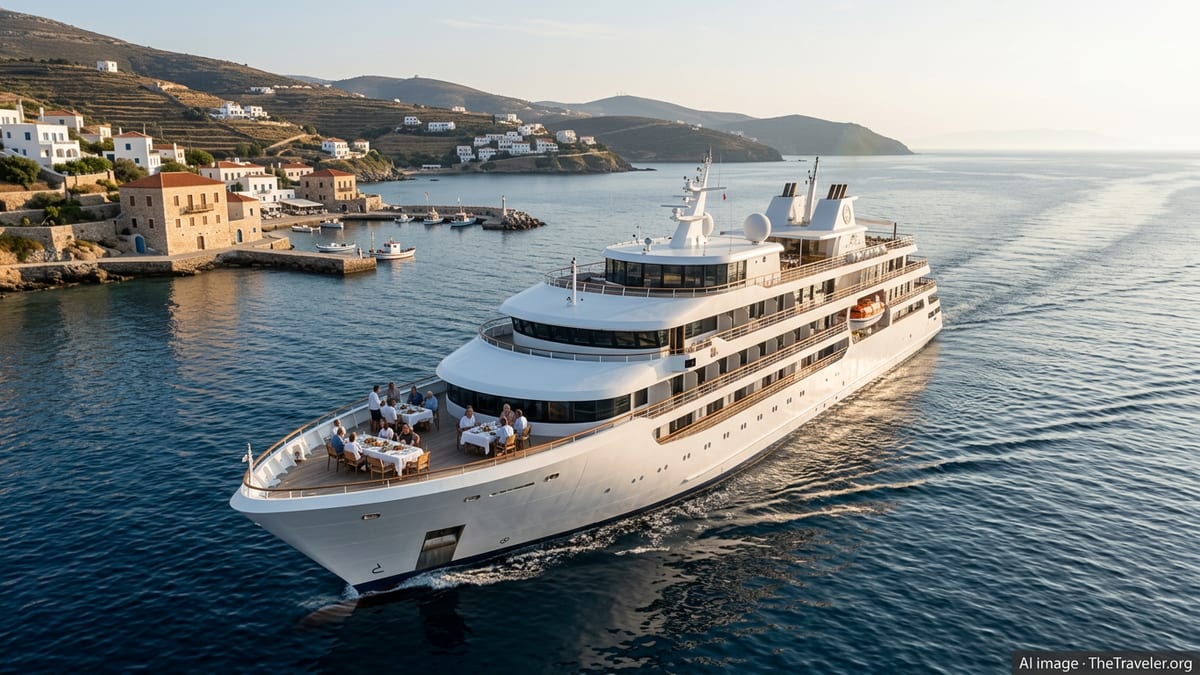
At the same time, cruise lines are adjusting ship deployments and ship sizes in response to evolving port restrictions and community pressures. Specialist guides note that large vessels are being concentrated on major hubs, while small-ship operators expand into coves and harbors that mega-ships cannot reach. For travelers, this shift translates into a wider spread of options, from mass-market circuits linking the biggest attractions to niche voyages that prioritize lesser-known islands and heritage sites.
Western Icons: Barcelona, Rome and the Riviera
For many global travelers, a Mediterranean cruise still begins in the Western basin, with Barcelona consistently cited in cruise planning guides as one of the region’s premier embarkation ports. Publicly available information highlights the Catalan capital’s combination of efficient cruise terminals, proximity to the city center and an urban landscape shaped by Gaudí architecture, beaches and dense neighborhoods that can be explored in a single pre- or post-cruise night.
Rome’s gateway of Civitavecchia remains another cornerstone, though planners stress its logistical complexity. Port guides emphasize that the harbor lies roughly an hour from central Rome by road or rail, making it more of a staging point than a destination. For passengers on tight schedules, that distance requires careful planning to fit in marquee sites from the Colosseum to the Vatican while still returning to the ship in time for departure.
Along the French and Italian Rivieras, long-running favorites such as Marseille, Cannes, Nice, Genoa and Livorno anchor itineraries that blend city touring with access to resort towns and wine regions. Recent itinerary announcements for 2026 from major cruise brands point to the continued importance of these ports, with some lines adding calls at smaller harbors like Santa Margherita and Portofino to diversify the experience. Travel coverage indicates that these stops, often reached by tender from offshore anchorages, deliver classic postcard views but require passengers to be comfortable with variable sea and crowd conditions.
Eastern and Adriatic Routes: Greek Isles, Croatia and Montenegro
In the Eastern Mediterranean and Adriatic, cruise guides for 2026 repeatedly spotlight Greece and the Balkans as areas where demand and capacity are growing together. Santorini and Mykonos remain among the most recognizable names, with planning articles describing them as visually dramatic yet operationally challenging, especially on days when ferries, land-based tourists and multiple cruise ships converge. Advisers often recommend early-morning shore excursions to stay ahead of the heaviest crowds on the caldera cliffs and narrow island lanes.
Further north, the Adriatic coast has emerged as a highlight for many itineraries. Travel features describe Dubrovnik in Croatia as a crown jewel port, where medieval walls meet a steep, rocky shoreline, while Kotor in neighboring Montenegro is frequently characterized as one of the most photogenic cruise calls in Europe. Ships tracing the Bay of Kotor navigate a fjord-like inlet before docking near a compact old town, allowing passengers to step directly into streets framed by mountains and fortifications.
Itinerary trackers for 2026 show a greater number of voyages that connect Greek islands, the Turkish coast and Adriatic cities in a single route, often over 10 to 12 nights. These sailings appeal to long-haul travelers wanting to justify intercontinental flights with deeper regional coverage. They also reflect a broader trend identified by travel analysts: distributing cruise traffic across more ports, in part to ease pressure on the busiest destinations and in part to showcase a wider cross-section of cultures and landscapes.
Hidden Harbors and Small-Ship Discoveries
Alongside the signature names, growing attention is turning to smaller harbors that are beginning to feature on 2026 cruise maps. Specialist small-ship operators highlight places such as lesser-known Greek islands, coastal communities in Montenegro and Albania, and compact capitals like Valletta in Malta as examples of ports where ships can dock close to historic centers and where day-trippers have a more visible economic impact.
Reports focused on small-ship cruising in the Mediterranean suggest these itineraries are benefiting from stricter rules on large vessels in certain heritage areas. As port access conditions tighten for the biggest ships, smaller vessels can continue to call on historic waterfronts and fragile ecosystems while marketing the experience as both more intimate and more sustainable. For passengers, this can mean walking off the gangway directly into a medieval street grid rather than spending long periods in buses or shuttle transfers.
Some eastern ports outside the traditional cruise circuit are also moving to capture more traffic tied to the broader Mediterranean and Red Sea corridors. Infrastructure updates at regional gateways and container ports that can accommodate large vessels are indirectly shaping future cruise possibilities, even where dedicated cruise terminals are still limited. Industry observers note that as shipping investments expand, tourism planners often follow with feasibility studies and pilot berths for seasonal cruise calls.
Sustainability, Seasonality and Practical Planning for 2026
Environmental scrutiny is now a defining factor in Mediterranean cruise planning. Policy papers and industry briefings describe the region as a testbed for new regulations on air emissions, fuel use and shoreside power connections. Several high-profile destinations have already restricted the size or number of ships in sensitive areas, encouraging lines to adjust schedules, spread calls across more ports and promote excursions that emphasize local culture rather than high-impact mass tourism.
For travelers, these policy shifts translate into fuller ships and higher demand on the dates and routes that remain available, especially in peak summer. Travel advisers increasingly recommend shoulder-season departures in late spring and early autumn, when temperatures are milder, crowds are thinner and port authorities are under less pressure. Recent booking data gathered by travel platforms during the 2026 wave season indicates strong interest in May, September and October sailings as passengers look to balance weather, price and comfort.
Practical planning guidance published for 2026 stresses that choosing a Mediterranean cruise now involves more than just picking a ship. Prospective passengers are urged to scrutinize embarkation ports, distances between harbors and major cities, expected crowd levels at headline attractions and the mix between marquee and secondary ports on any itinerary. With capacity rising and port rules evolving, experts say the most rewarding journeys will be those that treat the Mediterranean not as a checklist of famous capitals but as a mosaic of coastlines, cultures and communities connected by a shared sea.