


Lisbon’s Humberto Delgado Airport is the main gateway to Portugal, and for many travelers it is also a last chance to enjoy local flavors before boarding. The good news is that the airport has steadily improved its food options in recent years, especially in Terminal 1, where most international flights depart. Whether you want a quick espresso and custard tart, a relaxed glass of vinho verde with petiscos, or a reliable burger before a long-haul flight, you will find plenty of choices if you know where to look and how much time you really have.
Get the latest updates straight to your inbox!
Understanding Lisbon Airport’s Layout and Dining Zones
Lisbon Airport has two terminals, but most visitors will only ever see Terminal 1. This is where the bulk of international flights depart, including services operated by TAP Air Portugal, major European carriers and many long-haul airlines. Terminal 2 handles most low-cost carriers and is connected to Terminal 1 by a shuttle bus. When it comes to food, Terminal 1 has the widest range of restaurants, cafés and bars, both before and after security. If you are flying from T2 and care about eating well, it is usually worth arriving early, checking in, and then eating in T1 before you transfer across.
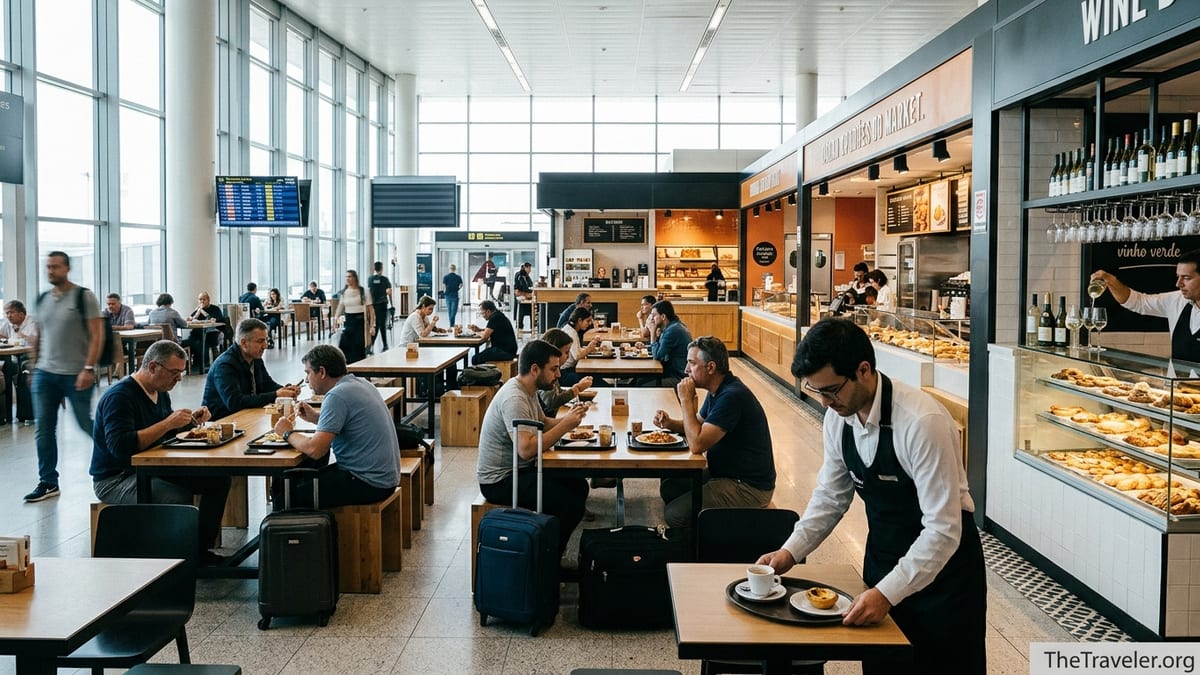
The main concentration of dining options sits airside in Terminal 1, after security, on the upper level around the central food court. This is where you will find O Mercado, a market-inspired space anchored by several Portuguese brands, as well as well-known international chains. There are also smaller cafés and grab-and-go counters dotted along the Schengen and non-Schengen gate areas, so you can pick up a snack closer to boarding if the main hall is crowded. Landside, in the public departures hall, you will find a handful of cafés and fast-food outlets suitable for a quick coffee with someone who is not flying.
For planning purposes, assume that security at Lisbon Airport can be unpredictable. In off-peak hours, you may clear in 15 to 20 minutes, but at busy times queues can stretch beyond 45 minutes. If you want a relaxed meal, aim to be airside at least 90 minutes before departure, especially during summer. If you are tight on time, prioritize grab-and-go options near your gate over a sit-down restaurant in the main food court. Signs inside the terminal are reasonably clear, but keep an eye on gate changes, which are not uncommon and can affect how far you need to walk after eating.
Prices inside Lisbon Airport are generally higher than in the city, but they are not outrageous by Western European hub standards. Expect to pay around 1.50 to 2.00 euros for an espresso, 1.50 to 2.50 euros for a custard tart, 4 to 6 euros for a glass of house wine, and 10 to 18 euros for a main course at a mid-range sit-down spot. Tipping is not expected in the airport environment, though rounding up the bill or leaving small change for friendly table service is appreciated.
O Mercado: A Taste of Lisbon in the Heart of Terminal 1
O Mercado is the flagship food area in Lisbon Airport’s Terminal 1, located after security in the central food court zone. Conceptually, it takes inspiration from Portuguese city markets, with a cluster of counters dedicated to pastries, coffee, beer, and hot dishes built around communal seating. You order from individual vendors and either take your tray back to a shared table or choose a high-top counter spot if you are traveling solo. The space opens early in the morning, typically around 05:30, and runs until late evening, making it a dependable option for most departures.
One of O Mercado’s biggest draws is the chance to enjoy classic Lisbon treats without leaving the terminal. You can pick up freshly baked pastéis de nata, codfish cakes, or simple daily specials such as grilled chicken, rice and salad. A typical plate of traditional Portuguese food might cost in the range of 10 to 14 euros, while a snack of two codfish cakes with a small beer will often come in under 8 euros. Travelers who have spent days exploring Lisbon often use this stop to grab a last box of custard tarts to take on the plane or to share with family at home, so it is common to see people walking away with neatly packed pastry boxes tucked under their arms.
Atmosphere-wise, O Mercado feels busy and functional rather than leisurely. At peak times, particularly early morning bank departures to European cities and late afternoon long-haul waves, it can be challenging to find a free seat. If you are traveling with children or bulky hand luggage, send one member of your party to claim a table while the others queue. Service is usually straightforward and efficient, but lines can form at popular counters such as those serving pastries and sandwiches, so factor in at least 20 minutes from joining a queue to sitting down with food when the terminal is crowded.
Because O Mercado is one of the few places in the airport that tries to showcase Portuguese flavors, it is worth being a bit selective. If you have not yet tried pastel de nata, order it here with a bica, the local short espresso. If you are already familiar with Lisbon’s pastry scene and want something more substantial, lean toward dishes based on bacalhau, grilled meats or hearty soups, which tend to travel better and feel more satisfying ahead of a long flight.
Cafés and Bakeries: Espresso, Pastéis de Nata and Sweet Goodbyes
No departure from Lisbon feels complete without one last coffee and pastel de nata. Lisbon Airport obliges with multiple cafés and bakery counters sprinkled through Terminal 1. While product lineups and branding can shift as concessions are renewed, the pattern is consistent: you will find at least one full-service café landside and several airside, including at least one near the main duty-free and others close to popular Schengen gates. Many of these serve typical Portuguese pastries alongside sandwiches, salads and fresh juices.
If you are catching an early flight, these cafés are often the first food outlets to open, with some starting service around 04:30 or 05:00. A standard espresso will usually cost around 1.30 to 1.80 euros, and a pastel de nata roughly 1.40 to 2.20 euros, depending on the brand. It is normal to drink your coffee standing at the counter; if you sit at a table, there may be a small surcharge baked into menu prices. Travelers who spent their Lisbon stay frequenting iconic pastry shops in the city might not find airport tarts quite as transcendent, but they are typically fresh enough and far superior to what you would get at many international airports.
Most airport cafés also sell packaged pastries and biscuits that make easy souvenirs. You can expect to see gift boxes of custard tarts, almond cookies and regional sweets from around Portugal, often in the 8 to 15 euro range for a small box. These packages are designed for carry-on and usually come with simple storage instructions. If you have a tight connection or are worried about carrying fragile pastries through a long trip, consider choosing sturdier items like traditional almond cookies or chocolate-covered treats, which are more forgiving than delicate custard tarts.
For travelers who need to stay productive, cafés are often the most comfortable places to set up a laptop for a short stretch. While you should not expect the cozy atmosphere of a city coffeehouse, it is usually possible to find a relatively quiet corner table between waves of departures. Order at the counter, then ask staff if it is acceptable to stay for a while; in most cases, as long as you buy a drink or snack, no one will hurry you along. Just keep your belongings close, as in any busy public space.
Fast Food and International Chains: Familiar Comfort Before Flying
Alongside the more local options, Lisbon Airport hosts a predictable lineup of international fast-food and casual dining chains. You are likely to find at least one major burger chain, a sandwich-focused brand or two, and a coffee chain recognizable from airports across Europe. These outlets cater mostly to travelers who want something familiar and quick, or families with picky eaters who may not be excited about salted cod or caldo verde right before a flight.
From a practical point of view, the international chains have a few advantages. Their menus are standardized, so if you know what you like in one city, you can order the same item here without surprises. Many offer value meals in the 8 to 12 euro range, including a main, fries and a soft drink, which can be good value compared with some of the trendier concessions. These spots also tend to be relatively fast: even at busy times, the wait from placing an order to receiving your tray is often under 10 minutes, making them ideal if you have just 30 minutes before boarding and do not want to rely solely on airplane food.
On the downside, eating at an international chain inside Lisbon Airport means missing a final chance to enjoy Portuguese flavors. If you have already spent a week sampling local cuisine in the city, that may be a reasonable trade-off for speed and predictability. But if Lisbon Airport is your only taste of Portugal, try to include at least one nod to local food, such as ordering a pastel de nata from a nearby bakery counter or choosing a Portuguese beer instead of an imported brand when you sit down for your burger.
International outlets can also be useful if you are traveling with dietary restrictions or small children. Many publish allergen information clearly and offer simple, customizable items: plain grilled chicken, salads without dressings, or kids’ menus with smaller portions. If you are dealing with jet lag and language fatigue, ordering familiar food through a counter staff member who is used to English-speaking passengers can also be a relief.
Bars, Wine Spots and Relaxed Sit-Down Meals
For travelers with more time before boarding, Lisbon Airport’s Terminal 1 offers a handful of bars and sit-down restaurants where you can enjoy a glass of wine or a proper meal at a slower pace. These are scattered around the airside area and often positioned near panoramic windows overlooking the apron, so you can watch aircraft movement while you dine. Menus typically blend casual international dishes with Portuguese influences, such as grilled fish, rice dishes, charcuterie boards, and petiscos like pimentos padrón or chouriço.
A glass of Portuguese house wine at an airport bar generally costs between 4 and 6 euros, while more premium regional bottles and port wines climb from there. Beer is often around 4 to 5 euros for a draft lager. If you want to make the most of your final minutes in Portugal, consider ordering a small tasting: perhaps a glass of vinho verde with a plate of local cheese and cured meats, or a tawny port paired with a slice of chocolate cake or almond tart. These pairings give you a graceful farewell to Portuguese flavors without committing to a full, heavy meal.
When you opt for a sit-down restaurant, factor in service time. Even in the airport context, typical European pacing can feel slower than in American airports. Leave at least an hour between sitting down and boarding time if you plan to order a starter and main course. Most venues are used to passengers watching the clock, and servers will usually respond courteously if you explain that you are in a hurry when you are seated. Keep your boarding pass visible and be prepared to ask for the bill as soon as you receive your main course if your gate is a long walk away.
Travelers who value quiet over variety should consider venues at the far ends of the concourses rather than in the central food court. Farther-flung bars and cafés often see less transient traffic and can feel more relaxed, especially mid-morning or mid-afternoon between departure peaks. If you are a nervous flyer, choosing a calm bar stool with a view of the runway can make the pre-boarding period feel less stressful than standing in a crowded food court with your luggage.
Eating on a Tight Schedule: Grab-and-Go Strategies
Not every connection through Lisbon allows for a leisurely meal. If your itinerary leaves you with 30 minutes or less before boarding, focus on grab-and-go options. Terminal 1 is lined with convenience-style outlets and smaller bakery counters that sell pre-made sandwiches, salads, fruit cups, yogurts and snack boxes. You can typically pick up a ham-and-cheese sandwich, a vegetarian baguette or a tuna wrap for between 4 and 7 euros, and many come packaged in a way that makes them easy to eat discreetly at the gate or on board.
For early flights, breakfast boxes that include juice, yogurt, a pastry and sometimes fresh fruit can be especially useful. These bundles often cost around 6 to 9 euros and are designed to be eaten quickly at the gate or taken onto the plane. If you know you will be connecting through another airport with fewer food options, consider buying two smaller items rather than one large meal, so you can spread them out over several hours of travel. Many outlets also sell small packs of nuts, dried fruit and chocolate that pack easily into a carry-on and help avoid unnecessary impulse purchases later.
To minimize stress, decide what you want before you reach the counter. Most grab-and-go spots display items clearly in refrigerated cases or on open shelves. Scan the options while you are still a few people away in the queue, then step forward with a clear order and contactless payment ready. If you are flying long-haul, think about food that will still taste reasonable after sitting for a while, such as simple sandwiches, cold pasta salads, or basic pastries, rather than fries or items that go soggy quickly.
Water is another key consideration. Airport security rules mean you cannot bring full bottles through screening, but you can buy still or sparkling water from any kiosk. Prices tend to run around 1.50 to 3 euros for a standard bottle. On hot days or if you are prone to dehydration on flights, it may be cheaper to purchase a larger bottle and refill it from fountains where available, rather than buying multiple small bottles during a long travel day.
Dietary Needs and Healthier Choices at Lisbon Airport
While Portuguese cuisine is famously rich in seafood, meat and pastries, travelers with specific dietary needs can still eat reasonably well at Lisbon Airport if they choose carefully. Most modern concessions display basic allergen information and are familiar with common requests, such as gluten-free or dairy-free options. Grab-and-go fridges often include at least one salad with no obvious animal products, simple fruit cups, hummus with vegetable sticks, and plain yogurts or plant-based alternatives.
Vegetarians will usually find it easiest to rely on pasta, pizza slices without meat, cheese sandwiches, or salads with eggs and cheese. Many cafés can make toast or a sandwich with just cheese and tomato on request. Vegans may have a tougher time with hot food, especially at peak hours when kitchens are busy and less able to customize. In that case, focus on cold items such as grain salads, fruit, nuts and packaged snacks clearly labeled as plant-based. It is always wise to check ingredients visually and ask staff if you are uncertain, as recipes and offerings can change when contracts are renewed.
For travelers trying to eat more healthily, the airport environment can be challenging but not hopeless. Look for grilled items rather than fried, choose salads with olive oil and vinegar instead of creamy dressings, and consider a bowl of soup with bread instead of a heavy burger. Portuguese-style vegetable soups, often based on potatoes, greens and carrots, can be surprisingly satisfying and usually come in at lower prices than full main courses. Many coffee bars also sell freshly squeezed orange juice, which is a simple way to get some vitamin C during a long travel day.
If you have a serious food allergy or a medical condition such as celiac disease, the safest strategy is to travel with some sealed snacks that you know are safe and use the airport only to supplement with packaged items that clearly list ingredients. While Lisbon Airport is improving, it is not yet at the level of some North American or Northern European hubs when it comes to clearly labeled specialty diets across the board.
The Takeaway
Lisbon Airport may not rival the city’s best food neighborhoods, but it has evolved into a place where you can eat reasonably well before your flight, especially in Terminal 1. The key is to match your choice of venue to your schedule, appetite and travel style. If you have time to spare, O Mercado and the sit-down restaurants offer a final opportunity to enjoy Portuguese flavors, from codfish dishes and hearty soups to local cheeses and wines, in a setting that hints at Lisbon’s market culture.
For those in more of a hurry, the network of cafés, bakeries and grab-and-go outlets provides dependable fuel: strong espresso, still-warm pastéis de nata, simple sandwiches and salads that travel well. International chains add an extra layer of predictability for families and cautious eaters, even if they are less memorable than a traditional pastry or a glass of vinho verde. Whatever you choose, keep an eye on boarding times, allow for security and queuing, and remember that a relaxed meal or even a quick coffee can make the transition from city break to departure gate feel far more pleasant.
FAQ
Q1. What time do restaurants and cafés at Lisbon Airport usually open?
Most food outlets in Terminal 1 start opening between 04:30 and 05:30, aligning with the first morning departures. The main food court and O Mercado typically run through the day until late evening, though individual counters may close earlier based on demand and airline schedules.
Q2. Is there good Portuguese food inside Lisbon Airport, or is it all international chains?
Yes, you can find distinctly Portuguese options, especially in O Mercado and several cafés that serve local pastries, codfish dishes, grilled meats and regional wines. At the same time, there are also international fast-food and coffee chains for travelers who prefer familiar brands.
Q3. Can I get a proper sit-down meal before a long-haul flight?
Terminal 1 has a few sit-down restaurants and bar-restaurants where you can order starters, mains and drinks and be served at the table. To avoid unnecessary stress, plan to sit down at least an hour before boarding, or longer if you intend to have multiple courses or if the airport feels especially busy.
Q4. Are there vegetarian or vegan options at Lisbon Airport?
Vegetarian options are reasonably common, including cheese-based sandwiches, salads, vegetable soups and some pasta dishes. Vegan choices are more limited but can usually be found among salads, fruit cups, hummus plates and clearly labeled packaged snacks. It is helpful to double-check ingredients with staff if your requirements are strict.
Q5. How expensive is food at Lisbon Airport compared with the city?
Prices in the airport are higher than in neighborhood cafés or tascas in central Lisbon but comparable to many European airports. Expect to pay roughly 1.50 to 2.00 euros for an espresso, 1.50 to 2.50 euros for a custard tart, and 10 to 18 euros for a main course at a mid-range spot, depending on the venue and dish.
Q6. Are there good options for an early breakfast before security?
Landside in Terminal 1 you will usually find at least one café open early, serving coffee, pastries and simple breakfast items. If you are meeting someone who is not flying, this can be a convenient place for a quick breakfast together before you head through security to the larger range of airside options.
Q7. Is it possible to take Portuguese pastries onto the plane?
Yes, many airport bakeries sell boxed pastries such as pastéis de nata that are specifically designed for take-away. As long as you respect liquid and gel restrictions for any accompanying creams or sauces, you can usually carry these boxes onto the plane as part of your hand luggage.
Q8. What should I do if I have only 20 to 30 minutes before boarding?
Head for the nearest grab-and-go outlet or bakery counter rather than the central food court. Pick up pre-packaged sandwiches, salads or snack boxes that you can eat at the gate or on board. Avoid hot, freshly cooked items that require longer preparation times and are harder to eat while standing in a queue.
Q9. Are there child-friendly food options at Lisbon Airport?
Yes, families will find plenty of child-friendly choices, including simple pasta dishes, burgers, fries, sandwiches, fruit cups and yogurts. Many international chains and some local outlets offer smaller portions or kids’ menus, and high chairs are usually available in the main food court and larger restaurants.
Q10. Can I rely on Lisbon Airport for special diets like gluten-free or nut-free?
While some outlets can accommodate special diets and many packaged items are labeled with allergens, the overall offer is still patchy compared with leading hubs. If you have a serious allergy or strict dietary requirement, it is safer to travel with some pre-packed items that you know are suitable and then supplement with clearly labeled products from the airport.