


High in the cool central mountains of Puerto Rico, the municipality of Adjuntas has become one of the island’s most recognizable coffee-growing destinations. For travelers, that reputation is no longer just about what ends up in the cup: several working farms now open their gates for tours that range from traditional plantation walks to highly technical origin and sensory experiences. Choosing between Hacienda Tres Ángeles, Sandra Farms, Hacienda Jácana and newer projects like Forgotten Forest can shape your entire day in the mountains, especially once you factor in driving times, harvest season and how deep into the coffee-making process you want to go.
Get the latest updates straight to your inbox!
Why Adjuntas Is Puerto Rico’s Classic Coffee Country
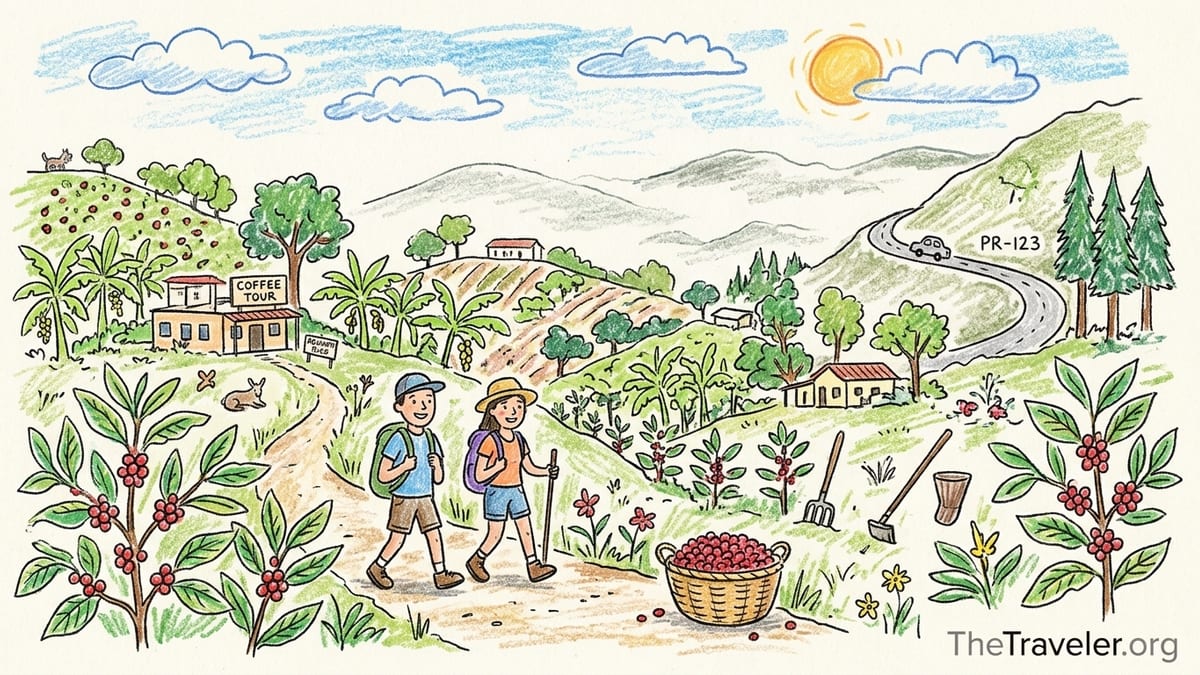
Adjuntas sits in the Cordillera Central, roughly 2,000 to 3,000 feet above sea level, with a cooler climate and misty hillsides that have favored coffee since the nineteenth century. It is one of the core coffee municipalities on the island, and you feel that history as soon as you leave the coastal highways for the mountain road PR-123, originally designed to connect these farms with the port city of Ponce. The result today is a compact region where you can visit multiple estates in a single day, each with a distinctive approach to growing, processing and presenting coffee to visitors.
On a practical level, Adjuntas works well as a bookable experience hub because its most visitor-friendly farms sit within a 20 to 30 minute drive of the small town center and about 1 hour 15 minutes by car from Ponce in normal traffic. From San Juan, the drive is longer, typically around 2 hours and 15 to 2 hours and 30 minutes depending on route and congestion on PR-52 and the mountain segments. That makes it realistic to plan an early departure from the capital, spend several hours on a farm tour, add a lunch stop or second visit, and still return to San Juan the same evening if you are comfortable with mountain driving.
Within this compact geography, what really differentiates the Adjuntas farms is not just scenery but the style of experience. Hacienda Tres Ángeles leans into an accessible, traditional plantation tour at a price that works for most travelers. Sandra Farms emphasizes sustainable agriculture alongside coffee and chocolate, with bilingual hosts and a slightly more in-depth look at environmental practices. Hacienda Jácana uses its tour as a kid-friendly agricultural classroom that mixes coffee with animals and hands-on learning. Forgotten Forest, meanwhile, sits at the specialty-coffee end of the spectrum, with experiences tailored to guests who already know the difference between washed, natural and anaerobic processes and want to dive deeper into origin and sensory analysis.
Understanding those differences, and how they intersect with harvest season, walking difficulty, bathroom access and whether you can get lunch on site, will help you decide which experience to prioritize or how to combine two in a single day.
Hacienda Tres Ángeles: Classic Plantation Tour At A Manageable Price
Hacienda Tres Ángeles, just north of downtown Adjuntas, is the strongest starting point if you want an affordable, traditional coffee plantation tour that still feels polished. The family-run estate cultivates around 100 cuerdas of coffee and has become a reference point for “from farm to cup” visits in the region. Tours are structured, usually on weekends, and are designed to walk small groups through the full cycle from seedling to roasting, with a cup of the estate’s own coffee included.
As of late 2026, third-party agrotourism brochures and local coverage describe the primary tour as lasting about two to two and a half hours, with prices commonly quoted in the range of roughly 25 to 35 US dollars per adult, and lower prices for children. The hacienda manages bookings directly by phone or online request rather than functioning as a casual walk-in destination. Groups are typically modest in size, often under 20 participants, which helps keep the experience conversational and allows time for questions about cultivation and processing.
The visit itself usually begins with a short introduction on a terrace before moving into the fields. Walking is moderate rather than strenuous: you will follow dirt paths through sloping coffee rows, but staff pace the tour to accommodate a variety of ages, and the route can often be adjusted somewhat in wet weather. Bathrooms are available at the main building, and you return there for a demonstration of how cherries are depulped, fermented and dried, followed by a look at the roasting equipment. For many visitors, this is their first time seeing parchment coffee, husk and green beans laid out side by side.
From San Juan, plan about two and a half hours to reach Hacienda Tres Ángeles by car, exiting PR-52 near Ponce and then following the mountain roads toward Adjuntas. From Ponce itself, the drive is shorter, around 1 hour and 15 minutes through the hills, but still involves narrow curves and occasional slow-moving trucks. From the plaza in downtown Adjuntas you can often reach the hacienda in 20 to 25 minutes depending on traffic and road conditions. In all cases, build in extra time for rain, fog and the possibility of road work after storms, and avoid planning a tour that starts less than three hours after you expect to leave San Juan.
Sandra Farms: Sustainable Coffee, Cacao And Mountain Views
Southwest of Adjuntas town, Sandra Farms offers a different flavor of experience that blends sustainable coffee production, dark chocolate and sweeping mountain vistas. The centuries-old farm has focused on ecological practices and reforestation, and its “Coffee Tour” is structured around that story as much as around pure production numbers. Visitors are welcomed on a terrace that overlooks the valley before heading into the fields and processing areas.
As of late 2026, Sandra Farms lists its Coffee Tour at around 40 to 50 US dollars per adult depending on season and inclusions, with children often welcomed when accompanied by adults. Tours generally run Tuesday to Sunday with two daily time slots, typically late morning and mid-afternoon, each lasting about two hours. Reservations are strongly recommended because space is limited and the farm does not operate as a high-volume attraction; you book directly with the farm online. Group sizes tend to be intimate, often closer to 10 than 20 people, which gives the hosts time to tailor explanations and switch between English and Spanish as needed.
The content of the tour emphasizes a complete narrative from seedling to cup and bar. You walk through coffee and cacao trees, learn about how hurricanes have affected the farm and how they have redesigned shade cover and soil management to adapt. This is a good place to understand what “sustainable” means in practice: you might see composting areas, rainwater management or discussion of how organic matter is returned to the soil. Processing demonstrations cover washing, drying and roasting, and visits commonly end with a tasting of farm-grown coffee and samples from their line of dark chocolates infused with coffee, turmeric or other ingredients.
In terms of access, walking at Sandra Farms is moderate, with some uneven ground and occasional steeper slopes. The team is used to hosting a range of ages and notes that they can adapt the route for visitors with limited mobility, keeping more of the explanation on flat or terrace areas. Bathrooms are available in the main facilities. There is no full restaurant, but you can usually purchase snacks, chocolate bars and bags of coffee to take home. From downtown Adjuntas, driving time is usually 20 to 30 minutes along winding rural roads. From Ponce, expect about 1 hour 20 minutes; from San Juan, plan around 2 hours 30 minutes plus extra buffer in case of rainfall, which is frequent in the cloud-forest microclimate that makes the coffee so good.
Hacienda Jácana: Kid-Friendly Farm Learning In The Coffee Hills
Hacienda Jácana, marketed together with its Latitude 18 Coffee brand, positions itself as an agro-cultural experience designed for families and groups who want to combine coffee with a broader introduction to farm life. Located near Adjuntas at roughly 2,500 feet elevation, it is a working coffee estate that still harvests cherries by hand, but the on-site experience goes beyond coffee rows and processing machinery.
Booking information as of late 2026 shows that Hacienda Jácana sells admission tickets for its hacienda tour directly through its website, usually priced in the approximate range of 20 to 30 US dollars per person, with discounts for children or larger groups depending on the day. Tours typically run on selected weekdays and weekends with set start times, and private groups can sometimes arrange custom schedules by contacting the farm. The standard visit lasts about two hours and is guided from start to finish, with explanations available in Spanish and often in English depending on staff on duty.
The experience generally begins with a welcome at the main house, followed by an educational walk through the coffee fields where guides explain the different growth stages, how elevation and shade influence flavor and what it means to handpick only ripe cherries. Children are encouraged to ask questions and may have the chance to touch or smell cherries, mucilage and dried parchment. Hacienda Jácana also includes interaction with farm animals and other crops so the visit feels like a general agricultural introduction rather than a narrow technical seminar.
Facilities are designed with families in mind: there are bathrooms at the main area, shaded spaces for breaks and a slower walking pace than you may encounter on more technical tours. Paths can still be uneven and sometimes muddy after rain, so sturdy shoes are important, but the overall walking difficulty is light to moderate. From downtown Adjuntas, driving time is usually under 30 minutes. From Ponce, estimate around 1 hour 15 minutes, and from San Juan, approximately 2 hours 20 to 2 hours 40 minutes depending on traffic. Because tours begin at set times, allow at least 30 minutes of extra buffer beyond what your map application suggests so that an unexpected delay on a mountain road does not cause you to miss your slot.
Forgotten Forest: Origin, Processing And Sensory Depth For Enthusiasts
Forgotten Forest, based in the Tanamá area of Adjuntas, has built its reputation primarily among baristas and specialty-coffee buyers rather than casual tourists. The project focuses on single-estate and community lots, often using innovative processing methods like anaerobic fermentation and natural drying, and pays participating farmers a premium over the regulated price. For visitors, this translates into origin experiences that are less about a scenic stroll and more about understanding how processing choices shape cup profiles and how traceability functions in a modern specialty supply chain.
Unlike the other farms, Forgotten Forest does not currently promote casual daily walk-in tours. Instead, it offers what it calls “origin tours” or custom visits, typically arranged by request. These experiences can include visits to partner farms, time at the processing center where lots are depulped, fermented and dried, and guided tastings of different lots or processes. Pricing is customized according to group size and content, but travelers can expect it to land above a standard two-hour plantation tour, often closer to what you would pay for a private wine estate visit or barista-level workshop.
Group sizes are usually small, sometimes just a handful of guests, and the language of explanation can be either Spanish or English. Hosts are comfortable talking about scoring, varietals and experimental processes, including competition-level coffees. Bathrooms and sheltered areas are typically concentrated at the processing center rather than throughout the fields. Walking can involve moderate slopes and longer stretches across farm terrain, and some portions of the day may take place inside drying or processing facilities rather than in the open air.
Because these tours are customized, they can be particularly rewarding for serious coffee enthusiasts, professional baristas, roasters and travelers interested in the economics of sustainable agriculture. A typical day might include a farm walk where you compare different tree varieties, a visit to a fermentation tank where an anaerobic lot is in progress and a cupping session where you taste how that choice affects aroma and acidity compared with a washed lot from the same region. Given the bespoke nature of the experience, you should plan travel with extra care, confirming meeting points and drive times with the organizers in advance.
Harvest Versus Off-Season: What You Actually See On Tour
Coffee in Adjuntas follows a harvest cycle that usually peaks between late summer and early spring, with the most intense cherry picking often taking place from around October through February, although exact timing varies with altitude, weather and variety. Visiting during that primary harvest window gives you the highest chance of seeing ripe red cherries on the trees, workers handpicking them into baskets and fresh deliveries arriving at the wet mill. At Hacienda Tres Ángeles and Sandra Farms, for example, harvest-season tours frequently include the chance to see depulpers in action, observe fermentation tanks and walk past raised drying beds covered with current lots.
Outside the main harvest period, you will still see coffee trees, shade species and the permanent infrastructure of pulpers, tanks and dryers, but much of the processing equipment will be idle or undergoing maintenance. Guides compensate by focusing more on agronomy, pruning, soil management and the economics of coffee, often bringing out preserved samples of cherries, parchment and green beans to illustrate the processes. At Hacienda Jácana, off-season visits may lean even more heavily into general farm life and family-friendly education, while Forgotten Forest may structure non-harvest experiences around warehouse tours, cupping sessions and discussions of how previous harvests performed.
Weather is another key difference. The harvest window overlaps with the wetter months in the central mountains, so you should be prepared for showers during your tour, muddy paths and cooler temperatures than on the coast. This can make walking slightly more challenging, especially for visitors with limited mobility or families with small children, but it also contributes to the lush green landscapes that many travelers come to see. In the drier months, paths are easier underfoot and skies are often clearer, which can make Sandra Farms’ balcony views or Hacienda Tres Ángeles’ hillside panoramas particularly striking.
If you are deciding between seasons, think about what you most want to experience. If seeing live processing is your priority, target dates from late fall to mid-winter and confirm likely harvest status with the farm a few weeks before your trip. If you prefer comfortable walking conditions, fewer crowds and a stronger emphasis on tasting and theory, off-season visits can be equally rewarding. In all cases, wear shoes that can handle mud, carry lightweight rain protection and avoid scheduling back-to-back tours with tight gaps, since a rainstorm can slow both walking and driving on mountain roads.
Practicalities: Prices, Reservations, Driving Times And Accessibility
Budget-wise, most structured coffee farm tours in Adjuntas cluster in a band between roughly 20 and 50 US dollars per adult as of late 2026. Hacienda Tres Ángeles usually anchors the lower to mid part of that range for its classic two to two-and-a-half-hour plantation tour. Hacienda Jácana’s family-focused farm tour typically sits in a similar band, with possible discounts for children. Sandra Farms comes in slightly higher, reflecting its longer or more specialized sustainable coffee and chocolate experiences. Custom origin programs with Forgotten Forest, designed for small groups or professionals, generally cost more than any of the standard public tours and should be treated as premium, appointment-only experiences.
Reservations are essential across the board. Hacienda Tres Ángeles and Hacienda Jácana both work with fixed time slots and need to know how many visitors to expect for staffing and safety reasons, especially on weekends and during harvest. Sandra Farms runs two daily tours on most operating days and accepts bookings in advance online. Forgotten Forest requests that interested visitors contact them directly to build a tailored itinerary; this is not a site where you should simply arrive unannounced. Aim to reserve at least a week in advance in peak season and a few days ahead even in slower months, particularly if you are planning a same-day drive from San Juan.
Driving times vary by starting point but share a common characteristic: the last segment always involves narrow, curvy mountain roads where local drivers mix with heavy trucks and farm equipment. From San Juan to the Adjuntas area, expect a minimum of 2 hours 15 minutes in good conditions, and plan for 2 hours 30 minutes or more if rain is forecast. From Ponce, plan on at least 1 hour 15 minutes, and from downtown Adjuntas to each farm, slot in 20 to 30 minutes. Travel in daylight whenever possible, especially if you are not used to rural mountain driving, and avoid planning a morning tour that begins less than three hours after a scheduled arrival at San Juan airport.
Accessibility and comfort vary but share some common themes. All four experiences offer bathroom facilities at their main buildings or processing centers. None, however, should be considered flat or fully step-free: they are working farms in hilly terrain. For visitors with limited mobility, Sandra Farms and Hacienda Tres Ángeles tend to be the most flexible in adapting routes to focus on terraces and accessible viewpoints, while Hacienda Jácana’s slower pace and family orientation can also work well if everyone is comfortable with short walks on uneven ground. Forgotten Forest’s more technical focus often means more time in processing areas and potentially longer walks; be sure to discuss any mobility concerns when arranging a custom tour.
Designing Your Coffee Day: Single-Farm Focus Or Two-Farm Combo
If you are staying in San Juan and driving up and back the same day, the most realistic plan is to focus on one main farm experience and leave time for lunch and a short stop in downtown Adjuntas. For example, you might depart San Juan around 7:30 a.m., arrive at Hacienda Tres Ángeles by 10:00 a.m. for an 10:30 a.m. tour, finish shortly after noon, then drive 20 to 25 minutes into town for lunch and coffee at a local café before starting back toward the coast by mid-afternoon. With tour prices around 25 to 35 US dollars per adult plus fuel and lunch, a couple can expect to spend around 120 to 150 US dollars in total for that day, excluding car rental.
Travelers based in Ponce or staying overnight in or near Adjuntas have more flexibility to combine two farms in a single day without feeling rushed. A realistic combination from town might pair a late-morning tour at Hacienda Jácana, finished by early afternoon, with a mid-afternoon sustainable coffee and chocolate tour at Sandra Farms. Driving between the two would likely take under 40 minutes if conditions are good. In direct costs, two paid tours in one day for two adults could total in the vicinity of 90 to 150 US dollars depending on exact pricing, plus meals, snacks and any bags of beans or chocolate you decide to purchase.
Combining a structured plantation tour with a more technical origin experience is also possible for serious enthusiasts. One scenario for travelers already in the mountains might involve a morning at Hacienda Tres Ángeles to revisit the basics of cultivation and processing, followed by an afternoon cupping or processing-focused session with Forgotten Forest. With both experiences booked privately and enough time reserved between them, you would gain a full-spectrum view of Puerto Rican coffee from traditional hillside rows to experimental anaerobic tanks and competition-level lots. Expect higher overall costs in this case, similar to booking two in-depth wine estate visits.
Whichever plan you choose, anchor your schedule on confirmed tour start times and work backward to build in generous driving buffers. Weather-related delays, scenic photo stops and simply slowing down on sharp curves all eat into the margin, and farm staff may not be able to extend or repeat tours if you arrive late, especially in harvest season when their own workdays are long.
Cafés, Food, And Buying Beans To Take Home
Eating well is an important part of any coffee-focused day in Adjuntas. None of the four experiences described here is a full-service restaurant, but all interface with food and drink in some way. Hacienda Tres Ángeles and Hacienda Jácana both serve their own coffee on-site and may offer simple pastries or snacks, but you should not count on a complete lunch at the farm itself. Sandra Farms often has light bites available and, thanks to its chocolate line, is an especially good stop if you want to pair coffee tasting with something sweet made just a few steps away from the cacao trees.
For more substantial meals, many visitors pair their farm visit with lunch or an early dinner in downtown Adjuntas or at countryside restaurants along the approach roads. The town offers several small eateries, bakeries and cafés where you can sit down for traditional Puerto Rican dishes and order more local coffee, often from brands that source beans from neighboring municipalities. Planning a sit-down meal either between or after tours makes it easier to manage blood sugar and energy levels, especially if you are also driving mountain roads and dealing with caffeine intake.
Opportunities to buy beans are plentiful and represent one of the most tangible souvenirs from an Adjuntas coffee tour. Hacienda Tres Ángeles, Sandra Farms and Hacienda Jácana all sell their own branded coffee on-site, typically as whole beans or ground to order. Sandra Farms and Forgotten Forest also offer chocolate or cacao products that can be purchased after tastings. Prices depend on roast style, processing method and lot rarity, but you should expect to pay more than supermarket rates, reflecting the scale and quality of production. For many travelers, spending an additional 20 to 60 US dollars on beans and bars feels like a reasonable extension of the experience, especially when you consider how often you will revisit your time in Adjuntas each time you brew a cup back home.
If you fly out of San Juan, whole-bean coffee travels easily in checked luggage or carry-on bags as long as it is sealed. Just remember that freshly roasted coffee releases gas, so producers typically package their beans in vented bags designed for travel. Cacao and chocolate are more sensitive to heat, so keep them in a cool part of your car during the drive back from the mountains and avoid leaving them in direct sun while you make other stops.
Matching Each Experience To Your Traveler Type
For couples looking for a romantic or quietly immersive day, Hacienda Tres Ángeles and Sandra Farms are often the best fit. Hacienda Tres Ángeles pairs hillside walks and a clear narrative of farm-to-cup production with a price and duration that leave time for a leisurely meal and perhaps a short stroll in town afterward. Sandra Farms adds mountain views, a strong sustainability story and chocolate tastings, which can feel particularly special for couples who enjoy slow travel and local food. Booking one of these tours and giving yourselves space to linger over coffee on a terrace often creates more memorable moments than trying to cram multiple experiences into a single tight schedule.
Families, especially those with school-age children, tend to get the most value from Hacienda Jácana. Its emphasis on education, interaction with farm animals and broader agricultural context keeps younger visitors engaged even during explanations of coffee stages. Walking distances are manageable, bathrooms and shaded rest spots make the day more comfortable, and prices are aligned with family budgets. If you have older teens who are especially interested in sustainability and flavor, you might combine Hacienda Jácana with a Sandra Farms visit over two days, but for most families, one well-chosen tour with plenty of time for questions is sufficient.
Serious coffee enthusiasts, home baristas and professionals will probably gravitate toward Sandra Farms and Forgotten Forest. Sandra Farms strikes a good balance between field time, processing explanations and tasting, including conversation about how environmental factors and farming choices affect flavor. Forgotten Forest offers the deepest dive into origin, processing innovation and sensory evaluation, especially when you arrange a custom tour or cupping focused on specific lots. Combining a structured farm overview at Hacienda Tres Ángeles with a more technical session through Forgotten Forest can deliver an unusually complete view of the Adjuntas coffee ecosystem.
Travelers whose primary interest is sustainable agriculture, not just coffee, should consider Sandra Farms as their top choice, with Hacienda Tres Ángeles and Hacienda Jácana also offering meaningful insights into how small farms in Puerto Rico manage climate risks, labor and soil health. Sandra Farms’ long-standing reforestation and adaptation work in the wake of major hurricanes, plus its integration of cacao, make it particularly rich for conversations about resilience. Choosing to buy beans from these farms, or from specialty projects like Forgotten Forest that pay farmers a premium, is one more way to align your spending with your values while enjoying a highly place-specific travel experience.
FAQ
Q1. How far in advance should I book coffee farm tours in Adjuntas?
For weekend and harvest-season visits, try to book at least one to two weeks in advance for Hacienda Tres Ángeles, Sandra Farms and Hacienda Jácana. Custom origin experiences with Forgotten Forest should be arranged even earlier, especially if you have specific dates or technical content in mind.
Q2. Can I visit two coffee farms in Adjuntas on the same day?
Yes, combining two farms is realistic if you are based in or near Adjuntas or Ponce. A common pairing is a morning at Hacienda Jácana followed by an afternoon tour at Sandra Farms. From San Juan, most travelers are more comfortable focusing on a single farm and adding a meal in town.
Q3. Are the tours suitable for young children?
Hacienda Jácana is the most child-friendly option, with a strong educational focus and interaction with farm animals. Hacienda Tres Ángeles and Sandra Farms also welcome families but may be better for older children who can handle two hours of walking and explanations. Forgotten Forest’s technical experiences suit enthusiastic teens and adults more than small kids.
Q4. Do I need a 4x4 vehicle to reach the farms?
You do not usually need a 4x4, but you should have a reliable car with good brakes and be comfortable driving on narrow, winding mountain roads. In very heavy rain, conditions can be more challenging, so check with the farm on the morning of your visit if weather looks severe.
Q5. What should I wear for a coffee farm tour in Adjuntas?
Wear closed-toe shoes with good grip, lightweight long pants if you prefer extra protection from mud and vegetation, and bring a light rain jacket or poncho. A hat and sunscreen are useful even on cloudy days, and consider a spare pair of socks if you expect heavy rain.
Q6. Can I visit during the coffee harvest and see picking in action?
Yes, if you visit between roughly October and February, you have a good chance of seeing ripe cherries and sometimes active picking or processing. Exact timing varies by year and elevation, so confirm with your chosen farm when you book.
Q7. Are tours offered in English as well as Spanish?
All four operations can usually accommodate English-speaking visitors, especially Hacienda Tres Ángeles and Sandra Farms, which regularly host travelers from the mainland United States. When you reserve, mention your language needs so the farm can assign an appropriate guide.
Q8. How much does a typical coffee tour cost in Adjuntas?
Most standard tours at Hacienda Tres Ángeles, Sandra Farms and Hacienda Jácana fall in the range of about 20 to 50 US dollars per adult as of late 2026. Custom specialist experiences with Forgotten Forest cost more and are priced individually.
Q9. Will I be able to buy coffee beans directly from the farms?
Yes, Hacienda Tres Ángeles, Sandra Farms and Hacienda Jácana all sell their own beans on-site, and Sandra Farms and Forgotten Forest also offer chocolate or cacao products. Buying at the farm is one of the best ways to support local producers and take a piece of Adjuntas home.
Q10. Is it safe to drive back to San Juan after an afternoon tour?
Many travelers do drive back to San Juan after afternoon visits, but it means navigating mountain roads and highways after a full day. If you are uncomfortable driving at night or in rain, consider booking a morning tour or planning an overnight stay in or near Adjuntas instead.