


Solo travel by women is growing fast, and 2027 is shaping up to be a standout year to plan a first or next trip alone. The best destinations combine everyday safety, straightforward transport, affordable accommodation, and natural ways to meet other travelers and locals. Drawing on recent safety indexes, female travel reports for 2026, and current transport and city pass prices, this guide highlights destinations that work especially well for solo women and explains how to move around, where to stay, what things cost, and how to connect with others once you arrive.
Get the latest updates straight to your inbox!
How to Choose a Solo Destination in 2027
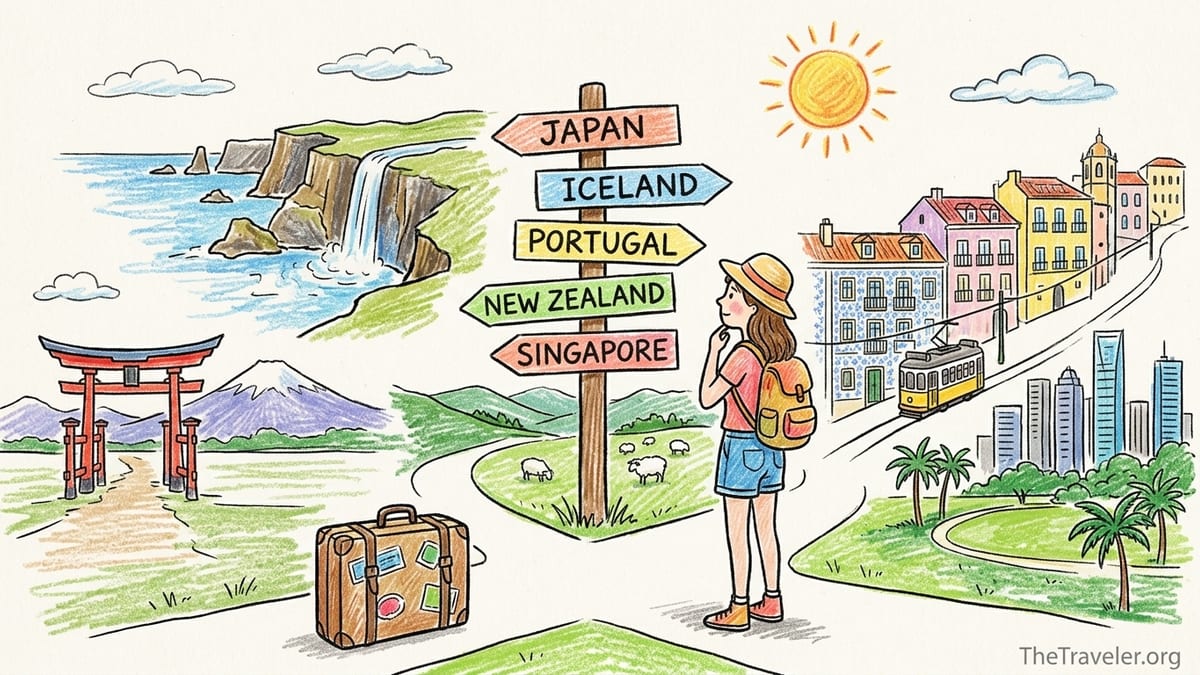
For women traveling alone, the choice of destination sets the tone of the whole trip. Recent solo female safety indexes for 2026 highlight factors such as low street harassment, reliable policing, safe night transport, and good healthcare access. Countries like Japan, Iceland, Portugal, New Zealand, and Slovenia consistently appear near the top of these rankings, along with cities such as Singapore, Prague, Copenhagen, and Reykjavik. These places are not risk free, but their everyday conditions tend to support women moving through streets, transit hubs, and nightlife on their own without attracting unwanted attention.
Beyond safety, solo travelers need destinations where logistics do not become a daily struggle. In practical terms, that means airports with clear English signage, integrated public transport systems that use contactless cards, and tourist information offices that are visibly staffed. Tokyo’s major stations now have multilingual ticket machines that can dispense nationwide rail passes, while cities such as Lisbon and Prague offer simple 24 hour tickets that cover metro, trams, and buses. These kinds of systems reduce the need to negotiate taxis or ride hailing after dark and help keep daily costs predictable.
Social ease also matters. Destinations with a visible hostel culture, walking tours that run year round, and organized day trips make it far simpler to meet people. Reykjavik, for example, has hostels that organize shared excursions to the Golden Circle, while in Lisbon and Porto, many hostels coordinate communal dinners and fado nights. When you are choosing where to go in 2027, looking for this kind of infrastructure can matter as much as scrolling through a safety index, because it changes how a trip feels on the ground.
Japan: Safe, Structured and Surprisingly Social
Japan remains one of the most recommended countries for solo female travelers, partly because everyday solo movement is so normalized. Women riding late night trains alone in Tokyo or Osaka are a common sight, and local etiquette discourages overt harassment in most settings. Japanese cities score very low on global crime indexes and have orderly, well lit streets, which many solo travelers say makes walking back from a restaurant or bar before the last train more comfortable than in many Western cities.
Transport in 2027 will be even more streamlined for visitors. Nationwide rail passes continue to be available, and from 2026 Japan Rail introduced updated ticket machines that allow travelers to pick up reserved passes at major stations such as Tokyo, Shinjuku, Shinagawa, and Narita Airport. In the Tokyo metropolitan area, tourists can use dedicated subway tickets or IC cards like Suica and Pasmo; a new tourism focused Pasmo card for visitors launched in 2026 and allows tap in payments on most trains and buses, as well as small purchases in convenience stores, which reduces the need to handle cash on crowded platforms.
Daily costs in Japan are manageable if you plan. Capsule hotels in central Tokyo or Osaka often start around the equivalent of 40 to 70 US dollars per night for women only floors, while beds in mixed hostels may be cheaper. A simple meal such as a bowl of ramen might cost between 7 and 12 dollars in local chains, and city subway fares usually fall between 1.50 and 3 dollars per ride, depending on distance. Compared with other high income countries, healthcare is relatively affordable for minor issues, especially in big cities where some clinics have English speaking staff, though travel insurance is still essential.
Social opportunities are wider than the country’s reserved reputation suggests. In Kyoto and Tokyo, English language walking tours and small group food tours attract other solo visitors. Hostels in neighborhoods like Asakusa, Shinjuku, and Namba organize bar hopping nights or themed events, and there are apps and communities specifically for women travelers that list meetups in cities across Japan. Language can still be a barrier in rural regions, but major urban centers are well prepared for independent visitors and have tourist information counters in key stations where you can get English maps, safety advice, and help with bookings.
Iceland and Scandinavia: High Safety and Big Nature
Iceland frequently appears at the top of solo female safety rankings, and women who travel alone there often note how unremarkable their solo status feels. Reykjavik is compact, walkable, and usually feels calm even late in the evening, with local women out in groups or alone. The broader country offers dramatic landscapes, from waterfalls to black sand beaches, and most of it is accessed via organized tours or self drive itineraries that start and end in the capital, which keeps logistics simple for a solo visitor.
Transport passes can help with budgeting city days. The Reykjavik City Card, for example, offers unlimited bus travel in the capital region plus entry to several museums and thermal pools for a set period. As of late 2026, a 24 hour card is priced in the low thousands of Icelandic krona, which usually converts to a few dozen US dollars. Organized day tours to popular routes like the Golden Circle or the South Coast often start around 90 to 150 dollars, including transport and guiding, and they tend to draw a mix of small groups and solo travelers, creating easy conversation on buses and at stops.
Elsewhere in Scandinavia, cities such as Copenhagen, Stockholm, and Oslo are regular favorites among solo women due to strong public transit, widespread English, and relatively low street crime. Copenhagen’s metro runs frequently through the night on weekends, with clear signage and platform screens, and contactless bank cards can be used directly at gates, eliminating the need to buy paper tickets. Hostel chains across the region, including those near central stations in each city, usually offer female only dorms and modern common areas that act as social hubs.
The major trade off in Iceland and Scandinavia is cost. Dorm beds in central Reykjavik or Copenhagen can easily sit in the 40 to 70 dollar range per night, and a simple restaurant meal may run 20 to 30 dollars. Supermarkets and hostel kitchens are important for keeping budgets under control. In return, solo women gain an environment where local norms around gender equality, drinking culture, and public behavior tend to support independent movement, and where emergency services and health systems are robust if something does go wrong.
Portugal and Central Europe: Good Value and Built for Walking
For 2027, Portugal and several Central European cities stand out as destinations that balance safety, charm, and value. Travel reports and indexes for 2026 repeatedly highlight Portugal as a top choice for solo women, with Lisbon, Porto, and smaller cities like Coimbra combining welcoming street life with relatively low violent crime compared with many peer destinations. Side streets can be quiet at night, so the same common sense precautions apply as anywhere, but during daylight and early evenings many solo travelers report feeling relaxed walking through central districts.
Lisbon’s integrated transport network makes it easy to navigate without taxis. A 24 hour ticket that covers metro, city buses, trams, and some suburban trains is priced at just over 11 euros in 2026, keeping daily transit costs predictable. The card can be bought at metro stations and allows unlimited travel during its validity, which helps when you are crisscrossing between viewpoints, historic neighborhoods, and the riverside. Similar deals exist in Porto, and regional trains link major cities for modest fares, putting day trips to towns like Sintra or Cascais within reach for solo visitors.
Central Europe offers comparable advantages. Prague was rated as one of the world’s best cities for solo women in a 2026 study that weighed safety, affordability, and walkability. The historic center is compact, and its trams and metro are straightforward to use, with clear ticket validation systems and frequent services. Cities such as Vienna, Ljubljana, and Budapest combine grand architecture with efficient public transport and plentiful mid range accommodation. Hostel and guesthouse beds in many parts of Central Europe commonly fall in the 20 to 40 dollar range, and casual meals in local cafes are often cheaper than in Western Europe’s largest capitals.
Socially, these destinations are well suited to women who want a mix of independent time and low pressure interaction. Free or tip based walking tours operate in most big cities and are heavily attended by solo travelers. Many hostels in Lisbon, Prague, and Ljubljana offer family style dinners, pub nights, or cultural outings, which make it easy to meet people without committing to large group tours. At the same time, the cities are safe enough in daylight that spending a full day alone in museums, parks, and side streets feels comfortable for many visitors.
New Zealand: Road Trip Friendly and Outdoors Focused
New Zealand consistently ranks as one of the world’s safer countries and offers a relaxed environment where solo women are common on hiking trails, buses, and intercity flights. The main appeal is access to nature. Both the North and South Islands are filled with national parks, lakes, and coastal walks, and many are reachable via public buses or small group tours originating from hubs like Auckland, Wellington, Queenstown, and Christchurch. English is the main language, which removes one major barrier for many first time solo travelers.
Transport logistics vary by region but are generally manageable without a car. Intercity bus companies link towns and cities, with flexible passes that allow hop on, hop off travel along popular routes. Domestic flights between cities such as Auckland and Queenstown shorten long distances and are sometimes competitively priced if booked in advance. For women who want full control over their schedule, campervan rentals are widely available, although driving on the left and managing rural roads requires confidence. Many solo travelers choose to mix buses and occasional short term car rentals for specific areas instead.
Accommodation options range from hostels to holiday parks and small hotels. Dorm beds in major tourist centers often cost around 25 to 40 US dollars a night, while private rooms are higher. Self catering kitchens are standard in hostels, which helps keep food budgets reasonable. Groceries from major supermarket chains are generally more cost effective than eating out for every meal, as restaurant prices in popular spots can approach those in Western Europe or North America. Campsites and holiday parks allow those in campervans to access showers and laundry, and many have shared lounges that become social spaces in the evenings.
New Zealand is particularly good for women who want structured social contact. Hut to hut hikes, group kayaking, and adventure activities such as rafting or guided glacier walks typically run in small groups, which creates repeated chances to talk with others. At the same time, safety briefings are taken seriously, emergency services are reliable, and there is a strong culture of outdoor responsibility, which can be reassuring when you are far from cities. As with any rural destination, planning around weather and daylight is important, but overall the country is well adapted to independent female travelers.
Singapore and Southeast Asia: Easy Landing, Gradual Adventure
Singapore regularly appears among the safest cities in the world for women, with very low reported violent crime, strict law enforcement, and one of the world’s most modern public transport systems. For a solo woman arriving from a long haul flight, it can be an ideal first stop in Asia. The metro connects Changi Airport to central neighborhoods, and trains and buses are clean, air conditioned, and clearly signed in English. Contactless payment using bank cards is widely accepted on public transport, and neighborhoods such as Tiong Bahru, Kampong Glam, and Chinatown host boutique hostels and mid range hotels with strong security.
Costs in Singapore can be higher than in neighboring countries but are predictable. Dorm beds in centrally located hostels often start in the 25 to 40 US dollar range, and simple meals in hawker centers can be as low as 4 to 8 dollars, making it possible to keep daily food spending relatively modest even in a wealthy city. Because public transport fares are priced by distance but generally fall under a few dollars per journey, it is feasible to explore several districts in a single day without worrying about taxi costs. The city’s strict laws around harassment, littering, and public disorder create a highly controlled environment, which many solo visitors find reassuring when moving around at night.
From Singapore, solo women often branch out into nearby parts of Southeast Asia with more relaxed atmospheres and lower costs, such as Thailand, Vietnam, or Malaysia. In these countries, organized tours and backpacker routes create a ready made social scene. Night trains and buses can be crowded and variable in quality, so women may prefer higher class compartments, reputable bus companies, or internal flights on well established airlines. In popular destinations such as Chiang Mai or Hoi An, guesthouses and hostels frequently offer airport or station pickups, cooking classes, and group excursions that help solo travelers connect and reduce the need to negotiate rides on arrival.
While parts of Southeast Asia still require careful attention to scams and petty crime, there is a long established trail of solo female travelers who share up to date information through blogs, forums, and social media groups. Choosing well known hubs as bases, booking at least the first couple of nights in advance, and using ride hailing apps where available can significantly improve comfort and safety, especially on a first trip to the region. For many women, starting in controlled, high safety Singapore before moving into more free flowing neighboring countries offers a good balance between security and adventure.
Practical Safety, Budgeting and Social Tips for 2027
Regardless of destination, a consistent safety routine matters more than any ranking. In practice, that means sharing itineraries with someone at home, using app based location sharing, and having copies of passports and insurance documents stored securely online. On the ground, many solo women find it helpful to arrive in new cities during daylight, pre book at least the first night’s accommodation, and use official airport trains or buses rather than ad hoc taxis whenever possible. In places like Tokyo, Lisbon, or Prague, airport rail links and metro lines take you directly to central stations, minimizing exposure to unregulated drivers after a long flight.
Budgeting is easier if you anchor your planning around real local prices. In Lisbon, a 24 hour public transport ticket just over 11 euros gives you unlimited metro, bus, and tram travel for a day, so you can plan museum visits and viewpoints accordingly rather than paying per ride. In Reykjavik, a city card that costs the equivalent of a few dozen dollars may bundle buses and entry to thermal pools and museums, which can be worthwhile if you are staying in the city between day tours. Understanding hostel price ranges in each region, from roughly 20 dollar beds in parts of Central Europe to 50 dollar beds in Nordic capitals, helps set daily spending expectations before you go.
Socially, picking the right style of accommodation often matters more than destination. Large, well reviewed hostels with women only dorms and organized events tend to attract other solo travelers and make it simple to find dinner companions or day trip partners. Smaller guesthouses or family run pensions can offer deeper local contact, especially in places like Portugal, Slovenia, or New Zealand, where hosts sometimes organize vineyard visits, hikes, or coastal walks. Free city walking tours, language exchanges, and meetup style events provide low stakes ways to talk to people without heavy commitment or cost.
Finally, remember that your comfort level and identity shape what will feel right in 2027. A city at the top of a safety index might still feel intense if you are not used to crowds or night life, while a more relaxed coastal town could be perfect for a first solo trip. Use current reports, recent traveler accounts, and official tourism information to cross check what you read, and be honest with yourself about how much structure you want. With realistic budgeting, solid research into transport and accommodation, and a routine that keeps you aware of your surroundings, the destinations highlighted here can offer deeply rewarding solo journeys for women in 2027.
Conclusion: Building the Right Solo Journey for You
In 2027, women have more information and choice than ever when planning solo travel. Countries such as Japan, Iceland, Portugal, New Zealand, and regions from Scandinavia to Southeast Asia all offer different balances of safety, cost, structure, and spontaneity. The common thread is that they provide clear ways to move around without a car, a range of accommodations that welcome solo guests, and social ecosystems where traveling alone is normal rather than exceptional.
By focusing on destinations with strong public transport, transparent pricing, and visible communities of other independent travelers, you can spend less energy managing risk and more time engaging with the places you visit. Whether your ideal 2027 trip is a week of urban exploration in Prague or Lisbon, a nature focused journey through Iceland or New Zealand, or a circuit that starts in ultra organized Singapore and expands into neighboring countries, the key is to choose places whose on the ground realities support the way you want to travel.
With thoughtful planning, realistic expectations, and a willingness to adjust plans as you learn more on the road, solo travel as a woman can be not only safe but deeply empowering. The destinations in this guide are a strong starting point, but the most important factor is how prepared and confident you feel. Combine up to date safety and cost information with your own instincts, and 2027 can be the year you design a solo journey that fits you perfectly.