


Most visitors treat Pisa as a quick photo stop with the Leaning Tower in the background. Stay a little longer, however, and a very different city appears: a lived-in university town of riverfront churches, contemporary art, market squares and easy escapes into the Tuscan countryside. Here is how to experience the best of Pisa beyond the Leaning Tower, with concrete ideas you can put straight into your itinerary.
Get the latest updates straight to your inbox!
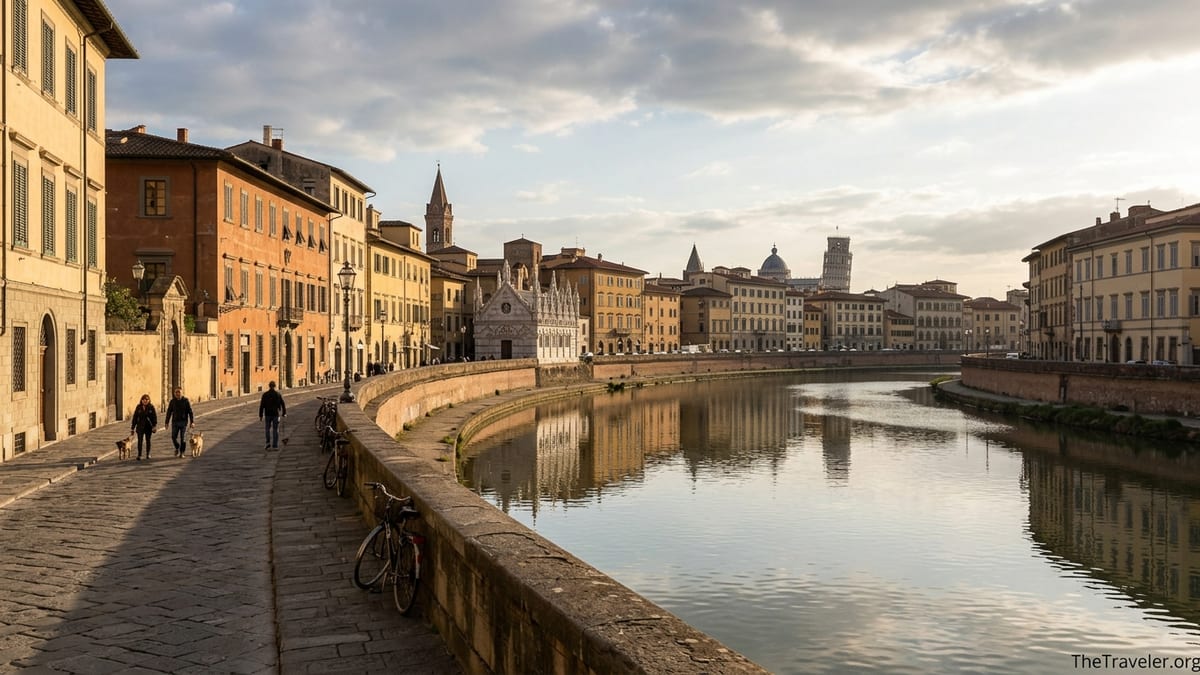
Stroll the Arno and Discover Pisa’s Riverside Soul
Move away from the crowds around Piazza dei Miracoli and head to the Arno River, where Pisa reveals its quieter side. The Lungarni, the streets running along both banks, are lined with ochre palazzi, student bars and small shops. In the late afternoon locals stroll here with gelato, dogs and bicycles, and the atmosphere feels more like a small Tuscan city than a tourist hotspot. It is an easy 10 to 15 minute walk from the tower area down Via Santa Maria to reach the river.
One of the highlights along the Arno is the tiny Gothic church of Santa Maria della Spina, perched almost at water level. Despite its modest size, its exterior bristles with pinnacles, statues and delicate carvings that rival much larger churches in the region. Step inside if it is open to admire the simple, quiet interior, a sharp contrast to the exuberant facade. Because it stands slightly apart from the main sightseeing circuit, you are likely to find it calm, even in high summer.
As you continue along the river, look out for Palazzo Blu, a restored noble residence whose bright blue facade is hard to miss. It regularly hosts temporary art exhibitions and photography shows, and its permanent collection touches on Pisan and Tuscan art from the Middle Ages to the 20th century. Typical exhibition tickets cost in the region of 10 to 15 euros, and you can often buy a combined ticket that includes access to the historic rooms. The palazzo’s riverside café is a handy stop for a mid-morning espresso.
Even without entering any specific sight, walking both banks of the Arno is worthwhile in itself. Cross over on one bridge, such as Ponte di Mezzo, and loop back along the opposite side to appreciate the different perspectives on the city. In the golden light just before sunset, the reflections of pastel facades in the water make this one of Pisa’s most photogenic spots and a satisfying alternative to the crowded lawns around the tower.
Explore Hidden Piazzas, Medieval Streets and Student Life
Beyond the riverside, Pisa rewards wanderers who head into its tangle of medieval streets. Start from Piazza delle Vettovaglie, a compact square ringed by arcades that hosts a daily market in the mornings. Here you can see local life in action: fruit and vegetable stalls, cheesemongers selling pecorino from the countryside, and counters stacked with Tuscan salumi. If you are self-catering, this is a practical place to pick up picnic supplies; if not, it still makes a vivid introduction to the flavors of the region.
From the market, it is a short walk to Borgo Stretto, one of Pisa’s most atmospheric shopping streets. Porticoed arcades shelter small boutiques, bookstores and cafés, many of them catering to the sizeable student population. Instead of relying on chain coffee shops, try a local specialty café or pasticceria: a cappuccino and a pastry typically cost around 3 to 4 euros at the counter. Sitting at a table will add a modest service surcharge, but can be worth it for people-watching beneath the medieval arches.
Piazza dei Cavalieri offers a different kind of charm. Once the political center of the Pisan Republic, it is now dominated by the Palazzo della Carovana, headquarters of the prestigious Scuola Normale Superiore. The square’s elegant symmetry and sgraffito-decorated facades make it one of the city’s most impressive open spaces. Because it hosts academic buildings rather than major ticketed attractions, you can often enjoy it without crowds, listening to the murmur of students instead of tour groups.
To appreciate how compact Pisa is, link these spots into a gentle walking loop. You might start at Piazza dei Miracoli, then cut down Via Santa Maria, turn into Borgo Stretto, swing through Piazza delle Vettovaglie and Piazza dei Cavalieri, and return to the river along Via Ulisse Dini. With pauses for photos and a coffee, the circuit fills a relaxed half-day and gives a rounded sense of Pisa as a living town rather than an open-air museum.
Seek Out Art and Culture: From Gothic Churches to Keith Haring
Art lovers will find Pisa more varied than its single iconic monument suggests. Beyond Santa Maria della Spina and the cathedral complex, the city hides smaller churches and museums that reward a slower pace. The National Museum of San Matteo, set in a former convent on the river’s north bank, is a good example. It holds medieval wooden crucifixes, painted panels and sculptures from churches all over Pisa and the surrounding countryside, including works by major Tuscan artists. Expect to pay roughly 8 to 10 euros for admission, with discounts often available for young people and EU residents.
On the contemporary side, Keith Haring’s mural Tuttomondo has become one of Pisa’s most distinctive sights. Painted in 1989 on the rear wall of the convent next to the Church of Sant’Antonio Abate, this large outdoor work is alive with interlocking human figures and animals. The artist created it as a celebration of peace and harmony, and it is often described as one of his last major public pieces. You will find it a few minutes’ walk from Pisa Centrale train station, which makes it an easy stop either on arrival or before departure.
The best way to appreciate Tuttomondo is simply to stand in the small piazza below it and let your eye wander across the figures. There is no ticket office, opening time or security line here: it is a piece of art embedded in the everyday city. Nearby bars and gelaterias have adapted to its presence, with some offering Haring-themed drinks or pastries, but the site still feels like a local hangout. Bring a camera, but also allow a few unhurried minutes just to look; the mural’s vivid colors and playful shapes reveal new details the longer you study them.
For travelers with more time and a strong interest in art history, a visit to the Museo delle Sinopie next to the cathedral complex can be worthwhile. This museum displays preparatory drawings for medieval frescoes that once adorned the Camposanto cemetery. While it is physically close to the Leaning Tower, it offers a very different experience: quiet halls, dim lighting to protect the delicate works, and clear explanations of the fresco technique. Pairing an hour here with a later stroll to the Haring mural provides an intriguing overview of how public art in Pisa has evolved across the centuries.
Eat Like a Local: Cecina, Zuppa alla Pisana and Rivers of Wine
Staying in Pisa for more than a few hours gives you the chance to taste its distinct food culture, which leans heavily on rustic soups, chickpeas, bread and olive oil. A good starting point is cecina, a thin, savory flatbread made from chickpea flour, water, salt and oil, baked in a wood-fired oven. In Pisa it is often sold by the slice in simple pizzerias and takeaway counters; you will see whole metal trays being slid in and out of the oven. A generous slice usually costs around 3 to 4 euros, and locals often eat it folded into focaccia as a quick, filling street snack.
Another local staple is zuppa alla Pisana, a hearty vegetable and bean soup thickened with day-old bread. In colder months, many trattorias around Borgo Stretto and the side streets off Corso Italia feature it on their daily menus alongside other Tuscan soups like ribollita and pappa al pomodoro. Expect to pay about 9 to 12 euros for a soup course in a sit-down restaurant, sometimes less at lunchtime. These dishes are not glamorous, but they are deeply rooted in the countryside surrounding the city and make a satisfying meal after a day on your feet.
To explore Pisa’s food scene efficiently, look for small osterie and trattorie in neighborhoods just outside the immediate tourist zone. Streets such as Via del Borghetto or the lanes around Piazza delle Vettovaglie hide family-run spots where dinner for two, including a carafe of house wine and two or three dishes to share, can stay under 50 euros. Typical menus feature grilled meats, simple fish dishes from the nearby coast, and vegetable contorni like sautéed spinach or roasted potatoes with rosemary.
Wine lovers should pay attention to the lists even in modest restaurants, as many stock affordable bottles from nearby appellations. White Vermentino from the Tuscan coast pairs well with fish and cecina, while reds from the hills around Pisa and Chianti country accompany meat and hearty soups. Ordering by the glass, which often runs 4 to 6 euros, is a practical way to sample several styles over the course of a stay. If you are particularly interested in wine, consider asking your server about locally produced options, as many places are happy to recommend bottles from small estates.
Green Spaces, Bikes and the San Rossore Park
Despite its compact urban core, Pisa offers easy access to greenery and nature. Within the city limits, the Orto e Museo Botanico di Pisa, a botanical garden near the university, provides a peaceful respite from traffic and tour groups. Founded in the 16th century, it is one of the oldest botanical gardens in Europe, and today its shaded paths and greenhouses showcase plants from different climates. Entry fees are typically modest, often below 10 euros, and the garden is a pleasant place for an hour’s walk or a quiet bench break with a book.
For a deeper immersion in nature, many travelers head to the Migliarino San Rossore Massaciuccoli Regional Park, usually shortened to San Rossore. This protected area stretches between Pisa and the sea, combining pine forests, dunes and wetlands. Parts of the park can be reached by local bus or bicycle from central Pisa in roughly 30 to 45 minutes, depending on your starting point. Once inside, you will find a network of trails as well as options for guided walks, horseback riding and occasional wildlife-spotting excursions.
Cycling is a practical way to connect Pisa with nearby countryside. Several rental outfits in town offer city bikes or basic trekking bikes for day rates in the region of 15 to 25 euros. A popular route follows quiet roads and paths toward the coast at Marina di Pisa, around 13 kilometers away, where you can reward yourself with a swim in season or a seafood lunch overlooking the water. Alternatively, routes that skirt the edge of San Rossore allow you to combine forest tracks with stretches along the Arno.
If you are traveling with children or simply prefer low-key activities, consider scheduling a half-day devoted to these green spaces rather than trying to fit them in around more formal sightseeing. A morning in the botanical garden followed by a casual lunch, or a slow afternoon cycle ending with sunset on the beach, can balance out the intensity of museum visits and give you a more rounded appreciation of Pisa’s setting in the wider Tuscan landscape.
Easy Day Trips: Hilltowns, Wine Villages and the Coast
One of Pisa’s biggest advantages is its position on Tuscany’s transport network, which makes it a convenient base for short excursions. Florence and Lucca naturally attract attention, but if you are specifically looking beyond the Leaning Tower, smaller destinations are appealing too. Many can be reached in under an hour by regional train or bus from Pisa Centrale, keeping costs low and logistics manageable.
San Miniato, a hilltop town roughly halfway between Pisa and Florence, is a good example. Known for truffles and its tower-topped skyline, it sits above a patchwork of vineyards and fields. From Pisa, regional trains take about 30 minutes to the San Miniato-Fucecchio station, with typical one-way fares around 4 to 6 euros. From there, local buses or taxis tackle the hill into the historic center, where you can spend a few hours exploring narrow streets, churches and panoramic viewpoints. In autumn, truffle-themed menus and events add an extra draw.
Another option is to follow locals toward the coast. Marina di Pisa and the neighboring resort of Tirrenia offer beaches and a different atmosphere from the city, especially in the hot months. Buses depart from near Pisa Centrale and reach Marina di Pisa in roughly 25 to 35 minutes, with tickets generally costing just a few euros. Even in winter, a walk along the seafront promenade, followed by coffee or gelato, can make a refreshing contrast to time spent in the historic center.
Travelers with a car, or those comfortable with slightly longer public transport journeys, can push a bit farther to villages such as Lari, known for its hilltop castle and artisan pasta producers, or to the monumental Certosa di Calci, a former Carthusian monastery set in a valley east of Pisa. Visiting these spots gives a feel for everyday rural Tuscany, with low-key bars, small but serious bakeries and quiet main squares where older residents gather in the evening. Even a single outing like this can shift your impression of Pisa from a one-sight stop into a flexible hub for exploring a broad swath of the region.
The Takeaway
Spending more than a rushed hour in Pisa reveals a destination that extends well beyond its famous leaning bell tower. Between the Arno riverfront, student-filled streets, small but focused museums and the eye-catching Keith Haring mural, the city offers a layered mix of medieval and modern culture. Food, from simple cecina to rich peasant soups, anchors the experience in local tradition, while green spaces and nearby villages open easy doors to the Tuscan landscape.
By mixing classic sights with riverside strolls, market visits, slow meals and at least one excursion into the countryside or to the coast, you can turn Pisa from a checkbox on an itinerary into a rewarding base in its own right. The key is to look beyond the postcard view of the tower and let the rest of the city, and its surroundings, invite you to stay a little longer.
FAQ
Q1. How many days should I spend in Pisa if I want to see more than the Leaning Tower?
Most travelers who want to look beyond the Leaning Tower find that one full day and one night in Pisa is the minimum, while two or three nights allow time for riverside walks, museums and a short day trip.
Q2. Is Pisa worth visiting if I have already seen the Leaning Tower on a quick stop before?
Yes, returning for an overnight stay lets you experience the Arno riverfront, local food, markets and quieter neighborhoods that are easy to miss on a rushed group tour or half-day visit.
Q3. Can I explore Pisa without renting a car?
Absolutely. Pisa’s historic center is compact and walkable, and regional trains and buses connect it efficiently with nearby towns, beaches and countryside areas, so a car is optional rather than essential.
Q4. What are some good neighborhoods to stay in for a visit beyond the Leaning Tower?
Areas around Borgo Stretto, the streets between the Arno River and Piazza dei Miracoli, and the neighborhoods just north of the river offer a good mix of walkability, restaurants and everyday local life.
Q5. Are there interesting things to do in Pisa in the evening?
In the evening you can stroll the Lungarni, have aperitivo in student-focused bars, enjoy a relaxed dinner in a trattoria and, in warmer months, look for outdoor concerts or events in local squares.
Q6. Is Pisa a good base for exploring other parts of Tuscany?
Yes, its rail and bus connections make it a practical base for day trips to places like Lucca, San Miniato, coastal towns and smaller wine villages, especially if you prefer not to change hotels frequently.
Q7. What local foods should I try in Pisa besides typical Tuscan dishes?
Look for cecina, a thin chickpea flatbread sold by the slice, as well as zuppa alla Pisana, simple grilled meats, coastal fish dishes and rustic vegetable side dishes.
Q8. Is Pisa family friendly for travelers with children?
Pisa works well for families thanks to its small size, pedestrian-friendly streets, parks, the riverside promenades, easy bus rides to the beach and casual eateries where children are welcomed.
Q9. When is the best time of year to enjoy Pisa beyond the main tourist sights?
Spring and autumn are ideal, with comfortable temperatures for walking, lighter crowds at museums and better conditions for cycling or day trips into the nearby countryside and coastal areas.
Q10. Do I need to book tickets in advance for museums and lesser-known attractions in Pisa?
For smaller museums, churches and the Keith Haring mural, advance booking is usually not necessary, and you can normally decide on the day depending on the weather and your energy levels.