


Pisa is one of Italy’s most recognizable names, thanks to that famously tilted bell tower. Yet many travelers still wonder if the city is worth carving time out of a tight Tuscany itinerary. The answer depends less on Pisa itself and more on what you expect from the stop: a quick bucket-list selfie, a half-day of architecture and history, or a relaxed base for exploring western Tuscany. Here is what to know before you decide.
Get the latest updates straight to your inbox!
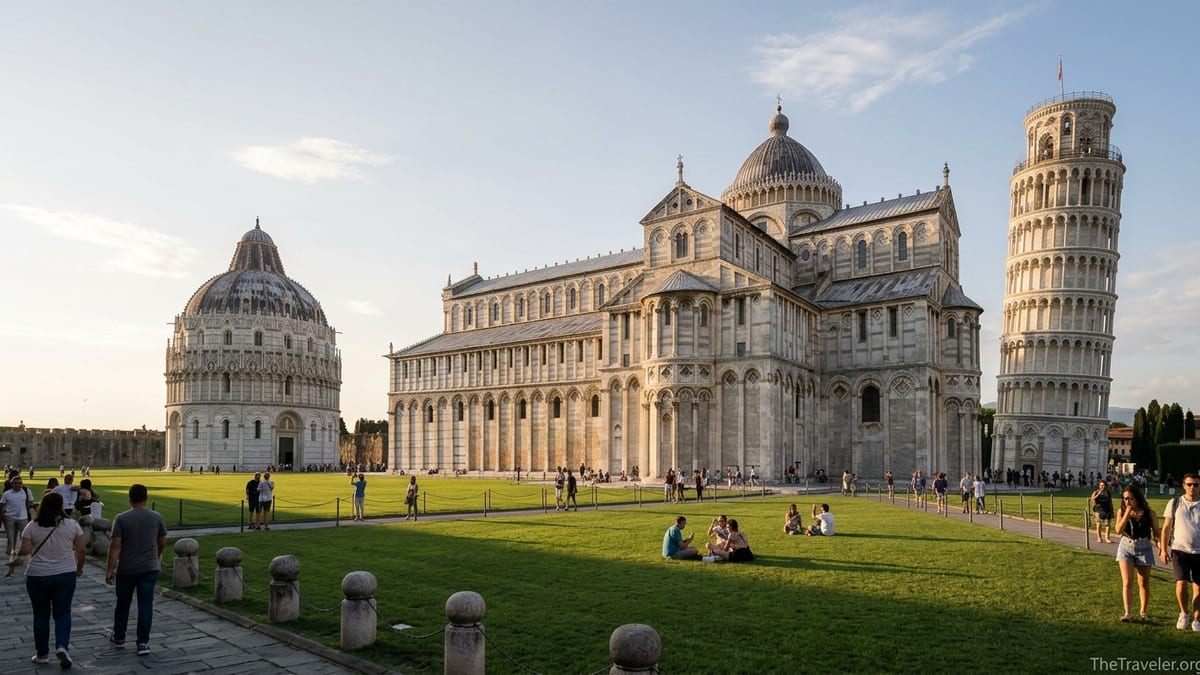
Is Pisa Really Worth Visiting?
Whether Pisa is worth visiting comes down to your priorities, your route through Italy, and how much time you have. For many travelers, Pisa works best as a focused half-day stop centered on the Leaning Tower and the surrounding Piazza dei Miracoli, rather than a full city-break destination. The compact historic core means you can see the headline sights on foot in a few hours. That makes Pisa ideal if you are already passing through on the rail line between Florence and the Ligurian coast, or flying in or out of Pisa’s Galileo Galilei Airport.
If you are dreaming of wandering medieval lanes with relatively fewer crowds, climbing a world-famous tower, and lingering over aperitivo on the banks of the Arno, Pisa can deliver, especially outside peak summer. Many visitors pair a morning in Pisa with an afternoon in Lucca, just 25–30 minutes away by regional train, turning it into a well-rounded Tuscan day that mixes must-see icons with a quieter walled town.
On the other hand, if you have only two or three days in all of Tuscany, you may get more out of devoting that limited time to Florence, Siena, or the Chianti countryside. Pisa is visually striking but comparatively small; once you have explored Piazza dei Miracoli and had a stroll through the center, the list of headline attractions quickly shortens compared with larger cities.
A useful way to decide is to ask what would disappoint you more: leaving Italy without ever seeing the Leaning Tower in person, or losing half a day you could have spent browsing the Uffizi in Florence or hiking another coastal trail. Your answer to that question is a good guide to whether Pisa is “worth it” for you.
What Pisa Actually Feels Like On The Ground
First-time visitors are often surprised by how compact Pisa feels. The airport lies only about 2 kilometers from the city center. A dedicated automated people mover, the PisaMover, connects the airport and Pisa Centrale station in roughly 5 minutes, with services running from early morning to around midnight and tickets in the mid-single-digit euro range for a one-way trip, usually payable with contactless cards. This short hop makes Pisa one of the easiest Italian cities to access on arrival.
From Pisa Centrale, it is a flat 20–25 minute walk to Piazza dei Miracoli through everyday streets: small supermarkets, neighborhood bars serving morning cappuccino, and student-filled squares. The University of Pisa creates a noticeable student presence. In the evenings, you will see groups of locals and students gathering around Piazza Garibaldi and along the riverside Lungarni for drinks and cheap slices of pizza. If you stay overnight, this is the side of Pisa you are more likely to experience, rather than just the touristy lawns around the tower.
Crowds, however, concentrate intensely in one place. By late morning in high season, Piazza dei Miracoli is packed with tour groups, day-trippers from Florence, and cruise passengers from Livorno. You will see the classic “holding up the tower” photo poses everywhere. If you dislike dense crowds, plan your tower area visit for early morning (the first entry slots to climb the tower start around 8:30 am in many seasons) or later afternoon after most tours have gone.
The atmosphere shifts again at night. Once the day-trippers leave, streets near the tower quiet noticeably. The illuminated silhouette of the Leaning Tower, the Cathedral, and the Baptistery against a dark sky can feel almost serene in shoulder seasons. Staying in a small guesthouse within a 10-minute walk of Piazza dei Miracoli lets you enjoy that calmer side of the city, something day-trippers rarely see.
The Leaning Tower & Piazza dei Miracoli: What To Expect
The Leaning Tower is the main reason most people come to Pisa, and its tilt is more dramatic in person than in photos. The structure is about 56 meters tall, and the visible lean has been partially stabilized over the past decades, but the angle remains very evident. Entry is controlled with timed tickets. Recent guides list a standard adult ticket to climb the tower at around 20 euros in 2025–2026, with fixed entry times at 15 or 30-minute intervals and quotas of visitors per slot. Advance booking is strongly recommended, especially from late spring to early autumn, because same-day tickets in popular time slots often sell out.
Climbing the tower involves about 250–300 narrow, worn marble steps that spiral to the top. The tilt is clearly felt underfoot. Some travelers report a mild sense of vertigo or imbalance, particularly on the leaning side of the staircase. If you have knee problems, serious fear of heights, or trouble with balance, it may be wiser to admire the tower from the outside and focus on the Cathedral and Baptistery instead. Children under a certain age are not allowed to climb, so families should check age rules when booking.
The surrounding Piazza dei Miracoli is more than just a backdrop. The Cathedral of Santa Maria Assunta, with its Pisan Romanesque façade, is beautiful inside, with intricate marble, a carved pulpit, and glimpses of centuries of history. The Baptistery, the largest in Italy, is famous for its acoustics; staff often demonstrate the echo effect with a short chant. Combined tickets, valid for various monuments on the square, are usually available at a modest surcharge compared with the tower-only ticket, making it sensible to set aside at least two to three hours to enjoy the entire complex rather than rushing in and out.
Realistically, many visitors allocate half a day to Piazza dei Miracoli. A common pattern is to arrive on a mid-morning train from Florence, drop bags in a station locker, walk to the square, climb the tower at a pre-booked time, tour the Cathedral and Baptistery, then sit on the grassy lawns with a takeaway panino before heading back to catch an afternoon train onward. If crowds or summer heat are a concern, reversing the pattern by arriving early for the first tower slot and moving on by lunchtime can make the experience more pleasant.
Beyond the Tower: Other Reasons To Stop In Pisa
If you only see the Leaning Tower and rush out, Pisa can feel like a one-sight town. Spend a bit longer and other aspects emerge. The riverside Lungarni, the embankments along the Arno River, are lovely for evening walks. Historic palazzi line the water, their warm-toned façades reflected in the river at sunset. In good weather, locals gather along the bridges and sit on the low walls, sipping drinks from nearby bars and gelaterie. It is not as dramatic as Florence’s riverfront, but it feels more lived-in and less curated for tourists.
Pisa’s student culture also gives it a different energy from many Tuscan hill towns. Neighborhoods around Piazza delle Vettovaglie and Borgo Stretto buzz with cafes, bookshops, and inexpensive trattorie serving lunch menus aimed at students rather than tour groups. You are more likely to find a 6 to 10 euro plate of pasta or a reasonably priced apericena buffet here than in the heavily touristed core of Florence. For budget-conscious travelers, that keeps daily costs down compared with staying in some nearby cities.
For architecture enthusiasts, there are quieter gems scattered around town. The small riverside church of Santa Maria della Spina, with its ornate Gothic spires, is a striking contrast to the broad Arno beside it. The botanical garden, one of the oldest university gardens in the world, offers a shaded break from summer heat for a few euros. The medieval city walls, reachable from close to Piazza dei Miracoli, can often be walked along in certain sections, giving a different perspective on the tower and rooftops.
As a base, Pisa also works well for day trips by train. Lucca, with its intact Renaissance walls and cycle paths on top, is a short hop away. Coastal towns like Viareggio and some smaller resorts along the Tuscan coast can be reached in under an hour, making Pisa a practical hub for travelers who want a mix of city, countryside, and beach without changing hotels constantly.
Practicalities: Costs, Transport, and Crowds
In practical terms, Pisa is relatively straightforward and budget friendly by Italian city standards. Flights into Pisa’s Galileo Galilei Airport can be significantly cheaper than into Florence, especially from other European cities on low-cost carriers. From the airport, the PisaMover connects directly to Pisa Centrale for a single-digit euro fare, typically around 5 to 7 euros one way depending on current tariffs. The ride is automated, takes only a few minutes, and usually allows payment by card or mobile wallet at the turnstiles. For late-night arrivals after the PisaMover stops, taxis are available outside the terminal, with fares to central hotels that are higher but still moderate due to the short distance.
Within the city, you are unlikely to need public transport unless you have mobility issues or are staying far from the center. Most key sights in Pisa can be reached on foot within 15 to 25 minutes from the main station. That reduces costs compared with larger cities where bus or tram tickets quickly add up. Food prices also skew slightly lower in local neighborhoods: it is still common to find an espresso for around 1.20 to 1.50 euros at a standing bar, and a glass of house wine for 3 to 5 euros in many simple trattorie.
The main downside is crowd concentration. Visitor numbers to the Leaning Tower and Piazza dei Miracoli remain high, especially from late May through September and during Easter and other holiday periods. Midday in peak season frequently involves queuing for security checks, jostling for photo angles, and navigating souvenir stalls around the square. If you are sensitive to this, consider visiting in shoulder months such as March, April, October, or early November, when the weather is usually still pleasant but the density of tour groups is lower. Arriving early in the day or later in the afternoon is another simple but effective strategy.
Another factor to weigh is opportunity cost. From Florence, it takes roughly one hour by regional train to reach Pisa. A classic day-trip combination is Florence to Pisa early, a few hours at the tower, then onward to Lucca for an afternoon of cycling the walls before returning to Florence in the evening. This makes the train time more efficient. If instead you would be traveling several hours solely to see Pisa for an hour or two, it may feel less “worth it” compared with alternative destinations in the same radius.
Safety, Scams, and Areas To Avoid
Pisa is generally considered safe for tourists, on par with other mid-sized Italian cities, but visitors should still use standard urban common sense. Petty theft such as pickpocketing and bag snatching can occur, especially in and around Piazza dei Miracoli, at Pisa Centrale station, and on busy buses or trains used by tourists. Keeping valuables in a money belt or zipped inner pocket, avoiding leaving phones on café tables, and being wary of anyone creating a distraction near you are sensible precautions.
Common low-level scams in the tower area include overly friendly “official-looking” individuals offering unsolicited help with photos or trying to hand you bracelets or trinkets and then demanding money. Street vendors may sometimes place small items in your hand or on your arm as a “gift,” then insist on payment. A firm but polite “no, grazie” and walking on is usually enough. Official staff for the monuments wear identifiable uniforms and do not approach to sell you anything.
At night, some streets around the main station and certain peripheral areas can feel less comfortable, especially for solo travelers. Locals often suggest staying on the better-lit main routes between Pisa Centrale and the center and avoiding lingering in poorly lit side streets after midnight. The presence of university students and residents in many central areas, however, means you will rarely find yourself completely alone in the early evening.
In case of any problem, police and tourist assistance offices are usually located near central squares and transport hubs. It is useful to know that emergency numbers in Italy include 112 for general emergencies. Keeping digital copies of your passport and key documents in secure cloud storage adds an extra layer of peace of mind when exploring busy tourist zones like Pisa’s main square.
When Pisa May Not Be Worth Your Time
For all its charms, there are situations where Pisa may not be the best use of your travel time. If your entire Italy trip is under a week and you are already trying to fit in Rome, Florence, and Venice, squeezing in Pisa could leave every destination feeling rushed. In that scenario, you might be better off adding an extra museum, a slow afternoon in a Florentine neighborhood market, or a countryside wine tasting instead.
Pisa also might not suit travelers who strongly prefer lesser-known places over icons. The Leaning Tower is one of the most photographed tourist sites on earth and it feels like it. If standing among large tour groups and selfie sticks is something you go out of your way to avoid, you may find more satisfaction exploring a Tuscan hill town like Volterra or Montepulciano, or coastal villages that see far fewer large-group visits.
Budget travelers racing through Europe might also think twice if climbing the tower is not a must for them. By the time you add up a return train ticket from Florence, a timed tower ticket at around 20 euros, and incidental costs like lockers and snacks, a short Pisa stop can add a noticeable extra line to your budget. If you are content just seeing the tower from the outside, it becomes more affordable, but some feel the experience is incomplete without the climb.
Season and time of day matter too. Visiting Pisa for a few hours during the hottest part of an August weekend, when both temperatures and crowds peak, may leave a less favorable impression than a calm October morning with soft light, cool air, and fewer people on the lawns. If your schedule forces you into the most crowded and uncomfortable windows, consider whether postponing Pisa for a future trip might make more sense.
The Takeaway
Pisa is worth visiting for many travelers, but not for everyone, and that nuance is important. If seeing the Leaning Tower in person is on your lifelong list, if you are flying in or out of Galileo Galilei Airport, or if you enjoy historic architecture and want a gentle, walkable city that can be combined with nearby Lucca or the Tuscan coast, Pisa is an easy and rewarding stop. The compact layout, relatively low day-to-day costs, and straightforward transport links make it especially attractive for first-time visitors to Italy.
On the other hand, if your time in Italy is very limited, if you are indifferent to ticking off world-famous landmarks, or if large crowds around a single sight are likely to diminish your enjoyment, you may decide that your hours are better spent elsewhere in Tuscany. Pisa excels as a half-day highlight or an overnight base, rather than the centerpiece of an itinerary.
Ultimately, the question “Is Pisa worth visiting?” is really “Is Pisa worth visiting for you, on this specific trip?” With realistic expectations, smart timing, and an understanding of what the city offers beyond its tilting tower, you can make a clear-eyed decision that fits your style of travel and walk away satisfied, whether you choose to visit now or leave it for another journey.
FAQ
Q1. Is Pisa worth visiting as a day trip from Florence?
Yes, Pisa works well as a half-day or day trip from Florence if seeing the Leaning Tower matters to you. Trains between Florence and Pisa typically take about an hour each way, so many travelers spend a morning in Pisa for the tower and Cathedral, then continue to Lucca for the afternoon before returning to Florence in the evening.
Q2. How much time do I really need in Pisa?
If your focus is only the Leaning Tower and Piazza dei Miracoli, 3 to 4 hours is usually enough, assuming you have a pre-booked tower ticket. To also stroll the historic center, walk along the Arno, and enjoy a relaxed meal, plan on a full day or one overnight stay.
Q3. Is it necessary to climb the Leaning Tower of Pisa?
No, it is not strictly necessary, but climbing gives a distinctive experience and panoramic views of the city. If you have issues with heights, balance, or steep staircases, you can still have a satisfying visit by exploring the Cathedral, Baptistery, and grounds without going up the tower.
Q4. How far is Pisa’s airport from the city center?
Pisa’s Galileo Galilei Airport is very close to the city center, roughly 2 kilometers away. The automated PisaMover train links the airport to Pisa Centrale station in about 5 minutes, making arrivals and departures particularly convenient compared with many other Italian cities.
Q5. Is Pisa safe for solo travelers?
Pisa is generally safe for solo travelers, including at night, if you follow normal urban precautions. Stay aware of your belongings in crowded areas like the tower and the main station, avoid poorly lit side streets late at night, and use official taxis or well-reviewed accommodation for added peace of mind.
Q6. When is the best time of year to visit Pisa?
The most pleasant times to visit Pisa are usually spring and autumn, particularly April, May, September, and October, when temperatures are comfortable and crowds are lighter than in the peak summer months. Early mornings and late afternoons are also good times of day to avoid the largest tour groups.
Q7. Can I see Pisa and Cinque Terre in the same day?
It is technically possible but usually rushed. Some travelers travel by early train to Pisa, spend a few hours at the tower, then continue to the Ligurian coast. However, you will spend substantial time in transit, and delays or crowds can compress your sightseeing. If you value a more relaxed pace, give each area its own full day when possible.
Q8. Is Pisa cheaper than Florence for accommodation and food?
On average, Pisa often offers slightly lower accommodation and dining prices than Florence, especially in student-oriented neighborhoods away from the main square. You may find more budget guesthouses and inexpensive trattorie, making Pisa a cost-effective base if you are comfortable commuting by train for day trips.
Q9. Do I need to book Leaning Tower tickets in advance?
Advance booking is strongly recommended, especially from late spring through early autumn and on weekends. Timed entry slots for climbing the tower can sell out, and booking ahead allows you to choose a convenient time, such as early morning, to avoid the heaviest crowds and midday heat.
Q10. Is Pisa a good base for exploring other parts of Tuscany?
Yes, Pisa’s rail connections make it a solid base for exploring western Tuscany. You can reach Lucca, Florence, coastal towns like Viareggio, and even some smaller inland destinations by frequent regional trains, all while returning to the same hotel each night. This suits travelers who prefer unpacking once and taking multiple day trips.