


Cradled at the foot of the Greater Caucasus mountains in northwestern Azerbaijan, Sheki is one of the country’s most atmospheric small cities. With its UNESCO‑listed historic center, stained‑glass palaces, Silk Road caravanserais, and easy access to green valleys and mountain villages, it rewards travelers who slow down for a day or two. For a first visit, it helps to know what is truly unmissable and how to experience it without rushing. This guide focuses on the best things to do in Sheki for first‑time visitors, with concrete examples and on‑the‑ground details to make planning easier.
Get the latest updates straight to your inbox!
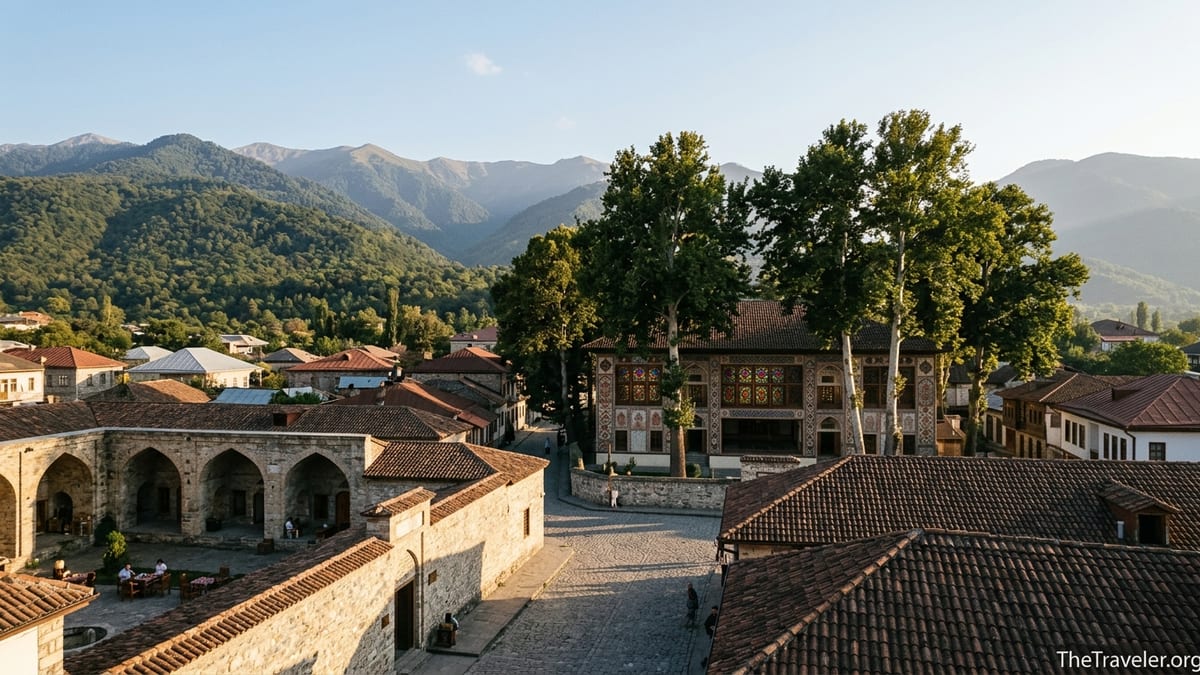
Explore the Historic Center and Sheki Khan’s Palace
If you do only one thing in Sheki, make it the historic center and the Sheki Khan’s Palace. The palace, completed in the 18th century, is part of a UNESCO‑listed ensemble and is famous for its shebeke windows: thousands of tiny pieces of hand‑cut colored glass fitted into wooden lattices without nails or glue. Inside, every room is covered with frescoes, floral motifs, and mirrored details that change with the light. Entry fees are modest by European standards and usually include access to several rooms, but photography inside is often restricted, so plan to simply look and absorb.
Most first‑time visitors plan around an hour inside the palace complex, but you will want extra time to wander the fortress grounds and nearby streets. The palace is set slightly above the newer town, and walking up from the main road gives you a sense of how the old khanate capital once dominated the valley. In peak season, group tours from Baku tend to arrive mid‑morning, so if you stay overnight in Sheki you can aim for opening time or late afternoon when things are quieter.
Guides are typically available at the entrance, sometimes organized through a small kiosk or by independent guides who wait near the gate. Expect to pay the equivalent of a few US dollars for a short English‑language explanation that brings the symbolism of the murals and the history of the Sheki khans to life. It is worth asking in advance how long the tour will last; a focused 20‑minute overview is usually enough on a first visit, leaving you time to explore at your own pace.
After your palace visit, follow the cobbled streets down through Yukhari Bash, the upper historical neighborhood, where old stone houses with wooden balconies overlook gardens and orchards. Even a short stroll around here offers a feel for everyday life: children playing in lanes, older residents chatting on benches, and small family‑run workshops selling local sweets and souvenirs.
Step Back in Time at the Caravanserai and Old Bazaar
To understand Sheki’s role on the Silk Road, spend time in the historic caravanserai complex. The Upper Caravanserai, whose thick stone walls enclose a leafy courtyard, once housed caravans of merchants who traded silk, spices, and textiles between Persia, Central Asia, and the Black Sea. Today, parts of the complex are used as a hotel and restaurant, while public areas are generally open for visitors to wander, sit with tea under the arches, and imagine the bustle of laden pack animals arriving at dusk.
Even if you are not staying in the caravanserai hotel, you can usually walk into the central courtyard during the day. This makes a wonderful break in summer: the stone arcades and central pool create cool air even on hot afternoons. Prices in the on‑site teahouse are typically similar to other places in town, so you might pay the equivalent of a couple of US dollars for a pot of black tea and a plate of pakhlava or Sheki halva. It is a simple, atmospheric way to experience the building beyond just snapping a photo at the gate.
From the caravanserai, it is a short walk to Sheki’s old bazaar streets, where low‑rise shopfronts sell everything from enamel kitchenware and plastic sandals to seasonal fruit, nuts, and fresh herbs. Mornings are busiest, especially around the covered produce market where farmers from nearby villages bring in crates of tomatoes, cucumbers, and bunches of tarragon and basil. For a first‑time visitor, this is an easy place to see how locals shop and to pick up bus snacks or picnic supplies for day trips.
In the streets just off the main market, look for small workshops producing copperware, carved wooden items, and simple textiles. These are not heavily commercialized souvenir strips; prices tend to be lower than in Baku, and bargaining is more relaxed. Buying something small here, even if it is just a handmade wooden spoon or a packet of local tea, helps support family businesses that keep Sheki’s trading traditions alive.
Visit Kish Village and the Ancient Albanian Church
Just a short drive or taxi ride north of Sheki, Kish village offers a change of scale and pace. The village is set against a backdrop of forested hills, and its narrow lanes lead to one of the region’s oldest Christian monuments: the Church of Kish, often described as an Albanian or Caucasian Albanian church, reflecting the early Christian heritage of the South Caucasus. The church has been carefully restored and now functions as a small museum, with exhibits explaining its layered history and excavated burials visible beneath sections of glass floor.
For first‑time visitors, the easiest way to reach Kish is by local taxi from Sheki. Drivers usually know the standard rate and the journey takes around 15 to 20 minutes, depending on traffic and roadworks. Some travelers also combine Kish with other countryside stops on a half‑day private tour arranged through their guesthouse. However you travel, it is best to bring small cash for the modest entrance fee at the church and for village cafes, where card payments are not always accepted.
Allow at least an hour in Kish to explore more than just the church. From the churchyard, marked footpaths lead to viewpoints looking back over the red‑roofed village and the forested slopes of the Greater Caucasus. On clear days, the light can be beautiful in late afternoon, when the stone walls of the church glow warm against the green hillsides. Locals often sell jars of honey, homemade jams, and dried fruits at informal stalls along the main lane; these make easy, lightweight souvenirs for travelers continuing by bus or train.
If you are visiting in cooler months, bring a light jacket. Even when Sheki itself feels mild, Kish can be noticeably fresher thanks to its higher elevation and shade from surrounding mountains. Footwear with reasonable grip is also helpful, as village paths can be uneven or muddy after rain.
Taste Sheki’s Distinctive Cuisine and Sweets
Sheki’s food culture is one of the main reasons many Azerbaijanis themselves come here for holidays. The city is especially known for Sheki halva, a layered pastry soaked in syrup and scented with spices and nuts. Unlike the drier, crumbly baklava styles you may know from Turkey or Greece, Sheki halva is sticky, dense, and best enjoyed in small pieces with a glass of strong black tea. You will find it in specialty halva shops near the bazaar and in the streets leading up to the palace, where trays of diamond‑cut slices are displayed in front windows.
Beyond sweets, several traditional dishes are worth seeking out in local restaurants. Piti, a slow‑cooked lamb and chickpea stew, is a classic. It is typically served in individual clay pots; you first pour the broth over torn pieces of bread in a separate bowl, then eat the softened bread and soup before tackling the tender meat and chickpeas. Portions are usually generous, and in many mid‑range places a serving can cost under the equivalent of 10 US dollars, including bread and tea. Ask staff to show you the traditional way of eating it if you are unsure, as locals are often proud to demonstrate.
Another regional specialty is qutab, thin griddled flatbreads stuffed with herbs or minced meat. These are popular at casual cafes and roadside stops between Baku and Sheki, and they make an easy lunch if you are on the move. In town, look for small eateries with simple interiors and handwritten menus; these places tend to serve the most authentic versions of everyday dishes at local prices. Vegetarian travelers will find options such as lobya (beans), salads, and herb‑filled qutab, though it helps to learn and use a few phrases in Azerbaijani or Turkish to explain preferences.
Sheki’s role in recent gastronomy festivals means more attention is being paid to local ingredients and recipes. You may find restaurants highlighting products such as mountain honey, walnuts from nearby orchards, or cheeses from upland villages. Do not hesitate to ask what is seasonal when you visit; staff might suggest grilled river fish in summer or hearty stews and pilafs in colder months. Cafes in and around the caravanserai courtyard, as well as in newer parts of town, increasingly offer espresso drinks alongside traditional tea for travelers who want a familiar coffee fix.
Discover Crafts, Shebeke Workshops, and Local Culture
Sheki has a long tradition of craftsmanship, from silk weaving to ceramics and woodwork. For first‑time visitors, one of the most engaging experiences is to visit a shebeke workshop. These are small studios, often within walking distance of the Khan’s Palace, where artisans assemble the same intricate stained‑glass windows seen in the palace using traditional techniques. Watching a craftsperson patiently fit slivers of colored glass into a wooden lattice without using nails or glue gives you a new appreciation for the windows that have become a symbol of the city.
Workshops sometimes offer small decorative panels, mirrors, or boxes in shebeke style for sale. Prices vary depending on size and complexity, but even a modest piece represents many hours of work. Since this type of craft has been recognized and supported by cultural organizations, buying directly from a workshop is a meaningful way to contribute to its preservation. If you are concerned about transporting glass, ask whether the artisan can pack your purchase securely for bus or flight travel.
In addition to shebeke, look out for ceramic and textile studios supported by local initiatives that promote traditional skills. Some centers organize demonstrations where visitors can see potters at the wheel or weavers working on simple looms. While the scale is smaller than craft districts in larger cities, the atmosphere is personal: you may find yourself being offered tea while browsing, or invited to see family photo albums showing how techniques were passed down.
Evening cultural life in Sheki tends to be low‑key but pleasant. On warm nights, families stroll the main streets and parks, stopping at ice cream stands or casual outdoor cafes. If you are staying near the historic center, a simple after‑dinner walk gives you a sense of how locals use public space. Depending on timing, you may also encounter small music events or performances, especially around local holidays or during regional festivals focusing on gastronomy and crafts.
Enjoy Nature, Views, and Mountain Resorts Around Sheki
While Sheki itself is compact, it is surrounded by green hills, forests, and river valleys that appeal to travelers who want to mix light outdoor activity with culture. One popular choice for first‑time visitors is to spend a few hours at a nearby mountain resort or picnic area, where you can walk short trails, breathe cooler air, and enjoy wide views back toward the city. Larger resorts on the outskirts of Sheki often welcome daytime visitors to their cafes and viewpoints, even if you are not a hotel guest.
If you prefer something less structured, ask your guesthouse or hotel about short hikes accessible from town. Options might include walking up small side roads towards higher villages, exploring footpaths along streams, or heading to simple viewpoints marked by local families who set up tea stalls during busy weekends. Surfaces can be uneven, so closed shoes are recommended, but you will not need technical hiking gear for most beginner‑friendly walks.
Families and less active travelers may appreciate that many countryside restaurants near Sheki are built in garden settings with pavilions over streams or among trees. These venues are popular with local groups on weekends, who come to grill kebabs, drink tea, and spend long afternoons in nature. Expect menus that focus on grilled meats, salads, and fresh bread, with prices slightly higher than in town due to the setting. Arriving earlier in the day on Saturdays and Sundays improves your chances of finding a good riverside table without a long wait.
If you are visiting in winter, check locally which rural roads are clear and whether higher‑elevation spots are accessible. Snow can transform the hills around Sheki into a quiet, picturesque landscape, but conditions vary year to year and public transport schedules may be reduced on certain routes. When in doubt, your accommodation or a local tourism office can advise on currently recommended outings and whether a private driver is advisable.
Plan Your Practicalities: Transport, Timing, and Where to Stay
Most first‑time visitors reach Sheki from Baku, around 4 to 5 hours away by road depending on traffic and rest stops. There are regular intercity buses and minibuses from Baku’s main terminals, with tickets generally priced affordably by European standards. A newer option that travelers increasingly mention is the train service on the Baku–Sheki line, which offers a more relaxed journey if you prefer to avoid road travel. Tickets for both buses and trains are best secured a day or two in advance in peak season, either online where available or at stations using your passport.
Within Sheki, the town is compact enough that many key sights can be reached on foot from central accommodations. Taxis are widely available for trips to places like Kish village, rural restaurants, or bus and train stations. Unlike in larger cities, rideshare apps may not always function perfectly, so it is common to arrange rides through your hotel or by speaking directly with drivers at informal taxi stands. Fares are usually negotiated before departure and remain modest over short distances.
First‑time visitors often underestimate how pleasant it is to stay overnight rather than visit on a rush‑through day trip from Baku. Spending at least one night allows you to see the historic center in softer early‑morning and evening light, avoid peak tour‑bus hours at the palace, and enjoy dinner without watching the clock. Accommodation ranges from simple guesthouses and family‑run B&Bs to mid‑range hotels, some located inside or near the historic caravanserai, others in modern buildings along the main road.
In terms of timing, late spring and early autumn are particularly comfortable, with mild temperatures and generally clear views of the surrounding mountains. July and August can be hot in the middle of the day, making siesta breaks appealing, while winter brings a quieter mood and the possibility of snow at higher elevations. Whenever you visit, it is wise to carry some cash in Azerbaijani manat, since smaller shops, markets, and rural cafes often do not accept cards even if some town restaurants and larger hotels do.
FAQ
Q1. How many days should I spend in Sheki on a first visit?
Most travelers find that one overnight stay, giving roughly two full days, is ideal to see the palace, explore the historic center, visit Kish village, and enjoy a relaxed meal without rushing. If you enjoy slow travel or want additional countryside trips, two nights work even better.
Q2. What is the easiest way to get to Sheki from Baku?
The most common options are intercity buses and the train. Buses and minibuses leave from Baku’s main terminals several times a day, while the train offers a smoother ride with fixed schedules. Travel time by road is usually around 4 to 5 hours; the train can take a bit longer but is more comfortable for some travelers.
Q3. Is Sheki safe for solo travelers?
Sheki is generally considered a calm, safe small city, and many solo travelers report feeling comfortable walking around the historic center by day and early evening. As in any destination, it is wise to keep valuables secure, avoid very dark or isolated areas at night, and follow standard precautions, but major safety issues are uncommon.
Q4. Can I visit Sheki as a day trip from Baku?
It is technically possible but not ideal. The round‑trip travel time from Baku can exceed 8 hours, leaving only a short window for sightseeing. Staying at least one night in Sheki gives you a much better experience, with time to visit the Khan’s Palace, wander the bazaar and caravanserai, and make a short trip to Kish village.
Q5. Do I need to book a tour to see the main sights?
No, you do not need an organized tour to enjoy Sheki. The palace, caravanserai, bazaar, and many craft workshops are easily reached on foot or by short taxi rides. However, some visitors choose local tours or drivers for day trips to villages and countryside areas, as this simplifies logistics and can provide extra context.
Q6. What should I wear when visiting Sheki Khan’s Palace and Kish Church?
There is no strict dress code for the palace or church, but respectful, modest clothing is recommended: shoulders and knees loosely covered for both men and women. Comfortable footwear is important, as surfaces are often cobbled, and a light layer is useful in cooler seasons or in shade.
Q7. Is vegetarian food easy to find in Sheki?
While menus are meat‑focused, vegetarians can usually find options such as salads, bean dishes, herb‑filled qutab, rice pilafs, bread, and dairy products. It helps to clearly explain your preferences to staff, possibly using translation apps or simple phrases in Azerbaijani or Turkish, and to be flexible about repetitive but filling choices.
Q8. When is the best time of year to visit Sheki?
Late April to June and September to early October are often the most comfortable periods, with pleasant temperatures and green scenery. Summer can be hot at midday but still manageable with breaks, while winter offers a quieter atmosphere and, in some years, snow on surrounding hills, though days are shorter and some rural routes may be less accessible.
Q9. Are credit cards widely accepted in Sheki?
Credit and debit cards are usually accepted in larger hotels and some mid‑range restaurants, but many small shops, market stalls, and village cafes remain cash‑only. It is sensible to carry enough Azerbaijani manat for entrance fees, taxis, and simple meals, especially when heading outside the town center.
Q10. What are the absolute must‑see places for a first‑time visitor?
For a first visit, prioritize the Sheki Khan’s Palace and surrounding historic center, the caravanserai and old bazaar area, and a short trip to Kish village and its ancient church. Adding a meal of local dishes such as piti and a tasting of Sheki halva will round out a well‑balanced introduction to the city.