


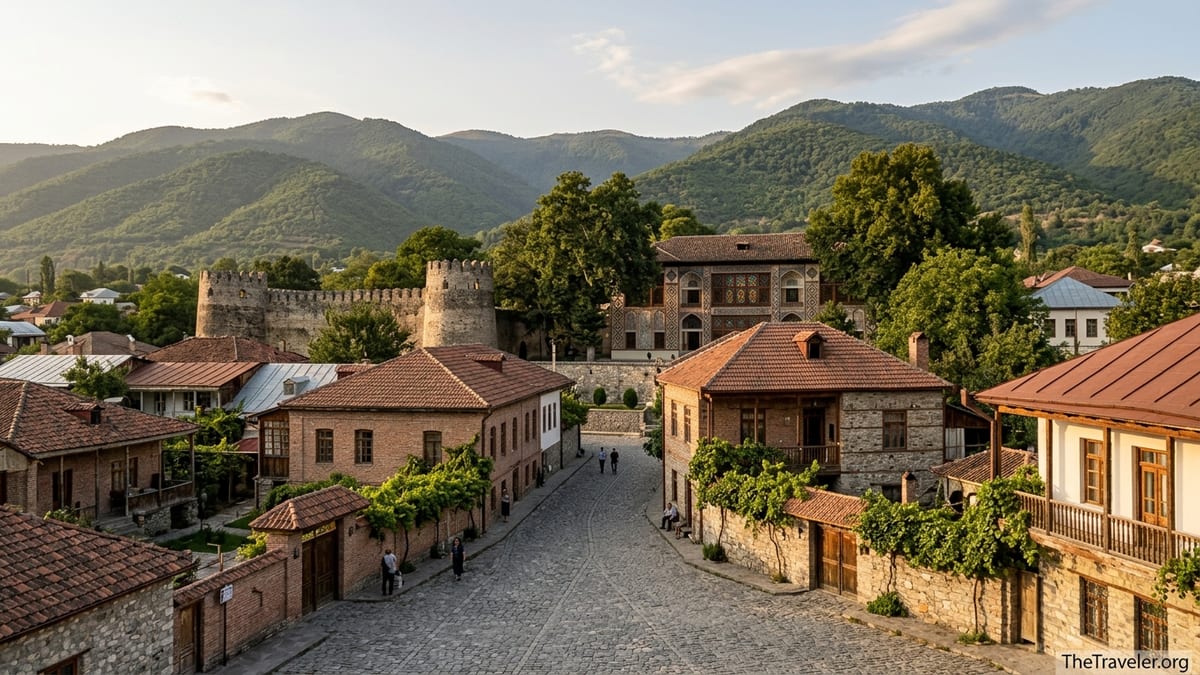
Sheki is one of Azerbaijan’s most atmospheric small cities, tucked against the forested slopes of the Greater Caucasus with a UNESCO-listed historic center, caravanserais, and painted palaces. It is compact enough to feel relaxed yet rich enough in history, food, and scenery that a poorly planned visit can mean rushing past its best corners. With transport schedules that do not always appear in English and local attractions that keep specific visiting hours, a bit of advance planning goes a long way to ensure you experience Sheki properly instead of just passing through.
Get the latest updates straight to your inbox!
Deciding When to Go and How Long to Stay
Sheki has a humid temperate climate, with warm summers and cool, occasionally snowy winters. For most travelers, the best balance of pleasant temperatures and green mountain scenery is from late April to June and from September to mid-October. In these shoulder seasons you can wander the cobbled streets around the fortress, hike to nearby villages like Kish, and sit in outdoor teahouses without the high summer heat and humidity that can make midday sightseeing tiring.
July and August bring longer days and a lively atmosphere, but also higher temperatures and more local visitors from Baku using the city as a summer escape. If you plan a high-season visit, booking accommodation near the historic center a few weeks ahead is wise, especially around popular cultural events such as the Silk Road Music Festival in early July or food-focused gatherings like the Terra Madre gastronomy festival that periodically take over the Yukhari Bash reserve. These events add a lot of character but can push up room demand.
In practical terms, first-time visitors should plan at least two full days in Sheki, not counting travel time from Baku or Georgia. One full day lets you tour the Khan’s Palace and fortress, explore the historic caravanserais, and sample Sheki’s signature dishes. Adding a second day gives you space for Kish village, a gentle half-day hike, or simply unhurried wandering in the old quarters at different times of day when the light and atmosphere change. Travelers who enjoy slow travel and mountain walks can comfortably stretch a stay to three or four nights.
Because buses and trains connecting Baku and Sheki often depart late at night or early in the morning, factor the schedules into your planning. Many travelers choose to arrive on a morning bus, spend two nights, and then return to Baku on the night train. This pattern minimizes backtracking and ensures you are in town during daytime hours when the main sights are open.
Choosing the Best Route: From Baku and Beyond
Most visitors reach Sheki from Baku, roughly 300 to 350 kilometers to the east. The most common option is the intercity bus from Baku International Bus Terminal, reached by metro to Avtovagzal station. As of mid-2026, direct buses to Sheki typically take around 5 to 6 hours depending on traffic and road conditions and cost in the region of 10 US dollars or slightly less when paid in local currency. Travelers who have recently used the route describe mostly smooth paved highways, with some bumpier stretches closer to Sheki, so it makes sense to bring water, snacks, and something to read.
Another popular option is the night train between Baku and Sheki. A daily service normally leaves Baku’s central rail station around late evening and arrives at Sheki’s railway station in the early morning hours. Tickets are usually modestly priced by European standards, with basic sleeper berths often starting around the equivalent of 8 to 15 US dollars depending on class. The main advantage is that you save a night’s accommodation and arrive with a full sightseeing day ahead, though you should be prepared for simple facilities rather than luxury sleepers.
Sheki’s railway station sits several kilometers outside the town center, so you will need a short taxi or local bus transfer on arrival. In practice, many travelers step off the train and find several taxis waiting, with the ride into the historic area typically taking 10 to 15 minutes. Having a rough idea of the going rate before you arrive, and confirming it with the driver before you get in, helps avoid misunderstandings. In recent years, app-based services like Bolt or Yango have become more common in Azerbaijan, but coverage can fluctuate outside Baku, so downloading the apps in advance is sensible while still being ready to rely on regular cabs.
If you are combining Sheki with other Caucasus destinations, it can be folded neatly into a wider route. From the resort town of Gabala, minibuses and shared taxis run toward Sheki in roughly 2 to 3 hours, and from Sheki it is possible to continue toward Zagatala and Balakan, closer to the Georgian border. These regional connections are usually organized informally: you might arrange a shared taxi by asking your guesthouse host or speaking directly with drivers near the local bus station. Allow plenty of buffer time if you need to make onward connections or border crossings later in the day, as departure times can be influenced by how quickly vehicles fill up.
Understanding Costs and Setting a Realistic Budget
Compared with Western Europe, Sheki is generally very affordable, though prices can feel slightly higher than smaller Azerbaijani towns because of its popularity with visitors. Accommodation in a restored caravanserai or a well-located small hotel in the historic center commonly starts around 25 to 40 US dollars per night for a double room outside peak festival periods. Simpler family guesthouses and homestays can cost less, while modern resort-style properties in the surrounding hills may charge significantly more, especially on summer weekends when Baku residents escape the city.
Daily food costs remain manageable if you eat where locals do. A typical breakfast of bread, fresh cheese, olives, eggs, and tea in a small café might run the equivalent of 3 to 6 US dollars. Lunch or dinner at a mid-range restaurant, with a main such as piti stew or grilled kebabs, salad, and non-alcoholic drinks, often lands between 8 and 15 dollars per person. Street snacks or quick bites, like fresh pastries or local sweets, rarely cost more than a couple of dollars. Alcohol is available in many establishments, with local wine and beer usually cheaper than imported labels.
Entry fees for cultural sites are modest but should be factored into your daily budget. The Sheki Khan’s Palace, the city’s star attraction, charges a small entrance fee and may have a separate charge if you choose to join a guided tour in English. Other sites such as museums in the fortress area or the ancient church in nearby Kish also charge symbolic amounts for foreign visitors. Even if each fee is small, visiting several places in a single day can add up to the equivalent of another simple meal.
Local transport within Sheki is inexpensive. Short taxi rides around town might range from a couple of US dollars upward, depending on distance and how well you negotiate or use ride-hailing apps. Local buses linking the town center to the bus station or nearby villages are cheaper still, though they often require knowing the route number or reading destination signs in Azerbaijani. Overall, a realistic mid-range daily budget for Sheki, including a comfortable room, meals at decent restaurants, entrance fees, and local transport, often falls somewhere in the 50 to 90 US dollars range per person, excluding long-distance travel to and from the city.
Not-to-Miss Highlights in and Around Sheki
The single most important sight not to miss is the Sheki Khan’s Palace, a jewel-like 18th-century residence with a richly painted façade and intricate shebeke stained-glass windows. The palace stands inside the historic fortress walls and is part of a UNESCO-listed ensemble that also encompasses the surrounding Yukhari Bash neighborhood. Visiting with a guide, either arranged on the spot or in advance through a local agency, deepens your understanding of the palace’s history and symbolism in a way that is hard to glean from signage alone.
Just outside the palace complex, it is worth spending unhurried time in the cobbled streets of the old town. You can walk through stone archways, past workshops where artisans still produce shebeke windows and copperware, and into small courtyards where cats sleep under grapevines. The atmosphere changes throughout the day. Early mornings are quiet and cool, while late afternoons bring more locals out for strolls and tea. Photographers may want to plan multiple passes through the area to catch different light and activity.
Sheki’s caravanserais, former roadside inns for Silk Road traders, now house atmospheric guesthouses and restaurants. Even if you do not stay overnight in one, step inside one of the large courtyards to see the arched galleries and stone vaulting. In the evening, dining at a restaurant set in a caravanserai courtyard, with lanterns reflecting off stone walls, adds a memorable sense of place. Ask your accommodation or a local guide which options are currently operating and well regarded, as openings can shift over time.
Beyond the city center, the village of Kish is a classic half-day excursion. About 7 kilometers north of Sheki, Kish is reached by taxi or local minibus in around 20 minutes. The main attraction is its stone church, associated with the ancient Christian kingdom of Caucasian Albania, set above the village with mountain views. A typical visit involves wandering through the narrow lanes, visiting the church and small on-site exhibition, and then stopping at a simple café for tea before returning to Sheki. Hikers may choose to extend the trip by following marked trails that lead further into the forested hills above the village.
Crafting a Smart Itinerary: From One Night to Three
If your schedule only permits one night in Sheki, arrange your trip to maximize the single full day. For example, arrive on a morning bus from Baku, check into a guesthouse near the fortress, and head straight for the Khan’s Palace to beat any midday crowds and heat. After touring the palace and fortress walls, you can linger in the old town, have a long lunch featuring local dishes, and then spend the afternoon visiting a caravanserai and a small museum or handicraft workshop. As evening approaches, stroll again through the historic center, when its lanes often feel particularly atmospheric under softer light.
With two nights, you can slow the pace and fit in Kish without rushing. A common pattern is to devote the first day to central Sheki and its historic sights, then spend the second morning or afternoon in Kish. Many travelers enjoy combining the village visit with a light walk into the surrounding hills, returning to town in time for a leisurely dinner. This extra day also creates breathing room in case of rain or fatigue, giving you flexibility to linger in teahouses or let children nap between excursions.
Three-night stays work well for travelers who see Sheki as both a cultural destination and a base for nature. You might dedicate one day to the city, one to Kish and short hikes, and one to a resort complex or forest picnic area in the nearby mountains, such as the wooded valley around modern resorts to the south of town. On your final day, you could time your departure to take the evening bus or night train back to Baku, leaving most of the day free for last-minute shopping and photo walks.
Whichever length of stay you choose, using a map app downloaded for offline use is practical, since data coverage can vary when you move into the hills. Mark your accommodation, bus station, railway station, and key sights before arrival. This makes it easier to improvise during your stay, whether that means detouring down an inviting side street or spontaneously hopping a local bus when you see one headed to a neighborhood you have not yet explored.
Food, Culture, and Everyday Life in Sheki
Sheki has a strong culinary reputation inside Azerbaijan, and tasting its specialties is a highlight in itself. The most famous local sweet is Sheki halva, a thin layered pastry soaked in syrup and cut into geometric shapes. You will see it displayed in traditional confectionery shops near the bazaar and in the old town. Buying a small box to share over tea in a park or guesthouse courtyard is a simple pleasure that fits naturally into your sightseeing day.
Another local specialty to seek out is piti, a slow-cooked stew of lamb and chickpeas served in individual clay pots. The traditional way to eat it involves mashing the broth-soaked bread in one bowl and then mixing the meat and chickpeas in another. Watching how locals do it and following their lead is part of the fun. Many restaurants in Sheki include piti on their menus, but the most memorable experiences often come from smaller, family-run spots slightly away from the busiest tourist streets.
Depending on your timing, you may encounter cultural festivals that give extra context to Sheki’s reputation as a “city of festivals.” Music events along the Silk Road theme and food festivals focusing on local ingredients have become more frequent in recent years. These can bring folk music performances, craft demonstrations, and regional producers into the streets of the historic center. For planning purposes, it is worth checking recent news or asking your accommodation by email a few weeks before your trip whether any notable events are scheduled during your dates, as they may influence both atmosphere and availability of rooms.
Outside special events, everyday life in Sheki is unhurried. Markets sell seasonal produce from nearby villages, including nuts, fruits, and herbs. Elderly men gather in teahouses to play backgammon, and families stroll in the evenings when the heat recedes. Taking time to observe and participate in this rhythm, by stopping for tea, buying walnuts from a market stall, or greeting neighbors with a simple “salam,” rounds out the experience beyond ticking off a list of monuments.
Practical Tips for Moving Around and Staying Comfortable
Once you arrive, Sheki is compact enough that you can walk between many central sights, but the terrain is hilly and cobbled in places. Comfortable, closed-toe shoes with a good grip are more practical than sandals, especially if you plan to explore the fortress area or village paths around Kish. In spring and autumn, layering is important; mornings and evenings can feel cool while midday sun is warm. A light rain jacket or compact umbrella is also useful, as showers can move quickly through the mountains.
Language is another aspect to prepare for. Azerbaijani is the main language, and many residents also understand some Russian. English is increasingly common in tourism-related businesses, especially hotels, popular restaurants, and among younger people, but it is not universal. Having key phrases saved on your phone or written down can smooth interactions when buying bus tickets or negotiating taxi fares. When in doubt, simple gestures and pointing at maps usually work, and people are often patient and helpful.
Cash remains important for small purchases, local buses, and some guesthouses, although card payments are gradually spreading. It is sensible to arrive in Sheki with enough local currency for your first day or two, especially if you plan to head straight to a guesthouse or onward to Kish where card terminals are rarer. ATMs are present in the town center, but not all international cards work perfectly, so keeping a reserve of cash from Baku can prevent stressful moments.
Finally, consider travel insurance and basic health precautions. Sheki itself is not a high-risk destination, but hiking on uneven surfaces, riding in older vehicles, and eating in unfamiliar restaurants all carry the usual travel risks. Bringing a small kit with pain relievers, basic bandages, and any personal medications you need is wise, as local pharmacies may not always stock the exact brands you are used to. Tap water quality can vary, so most visitors rely on bottled or filtered water, which is widely available in shops.
The Takeaway
Planning a trip to Sheki without missing the highlights is less about building a packed checklist and more about getting a few key decisions right: when to go, how long to stay, how you will arrive, and where you will base yourself. Once those elements are in place, Sheki’s painted palaces, caravanserais, village churches, and forested valleys are easy to weave into a rewarding two or three days. Leaving a margin in your schedule for slow walks, extra tea breaks, or an impromptu ride out to Kish often yields some of the most memorable moments.
By understanding transport options from Baku and neighboring towns, budgeting realistically for accommodation and meals, and prioritizing essential sights like the Khan’s Palace and Kish, you give yourself the freedom to relax into the city’s gentle rhythm. Whether you are weaving Sheki into a longer Caucasus journey or making it the centerpiece of a short escape from Baku, a bit of thoughtful planning turns a simple stopover into a textured experience of Azerbaijan’s northwest.
FAQ
Q1. How many days do I really need in Sheki?
Most first-time visitors find that two full days is the sweet spot, allowing enough time for the Khan’s Palace, the historic center, and a half-day trip to nearby Kish without rushing.
Q2. Is it better to travel from Baku to Sheki by bus or by train?
The bus is straightforward and frequent, taking about 5 to 6 hours, while the night train lets you save a hotel night and arrive early; many travelers combine both, going one way by bus and returning the other way by train.
Q3. Do I need to book transport to Sheki in advance?
Booking a few days ahead is wise in busy seasons or around holidays, especially for the night train, but outside peak dates you can often secure bus tickets on the day of travel at Baku’s main bus terminal.
Q4. Where should I stay to be close to the main sights?
Look for a guesthouse or small hotel in or near the historic center around the fortress and caravanserais; this area puts you within walking distance of the Khan’s Palace, traditional restaurants, and evening strolls.
Q5. Is Sheki suitable for budget travelers?
Yes, Sheki is relatively affordable, with guesthouses, inexpensive local cafés, and low-cost public transport, making it easy for backpackers and independent travelers to keep daily costs modest.
Q6. Can I visit Sheki as a day trip from Baku?
Technically it is possible with very long hours on the road, but it is not recommended; an overnight or, better yet, a two-night stay gives you far more time to enjoy the city and surrounding countryside.
Q7. How easy is it to visit Kish village from Sheki?
It is simple to arrange a taxi or catch a local minibus, with the ride taking about 20 minutes each way; most visitors spend a few relaxed hours there before returning to Sheki.
Q8. What should I wear when visiting Sheki and its sights?
Comfortable walking shoes are important on cobbled streets and hilly paths, and modest, layered clothing works best for visiting religious or historical sites and adapting to changing mountain weather.
Q9. Is English widely spoken in Sheki?
English is spoken in many hotels and some restaurants, especially those used to foreign guests, but less so elsewhere, so learning a few basic Azerbaijani phrases or having a translation app is helpful.
Q10. Are there any local foods I should not miss in Sheki?
Be sure to try Sheki halva, the city’s famous layered sweet pastry, and piti, a slow-cooked lamb and chickpea stew served in clay pots, both of which are widely available in local eateries.