


Southern Italy is where dramatic coastlines, ancient cities and slow village life all share the same sun. From the vertiginous cliffs of the Amalfi Coast to the cave dwellings of Matera and the whitewashed towns of Puglia, this region rewards travelers who are willing to mix headline sights with quieter corners. With fast trains linking major hubs, seasonal ferries to island archipelagos and a growing choice of small hotels and agriturismi, it has never been easier to design a trip that combines coast, countryside and historic cities in one itinerary.
Get the latest updates straight to your inbox!
Planning Your Southern Italy Route
Most travelers start a Southern Italy trip in Naples, Bari or Palermo, depending on whether they are focusing on the Amalfi Coast and Campania, the heel of Puglia, or Sicily and the Aeolian Islands. Naples has frequent high speed rail connections with Rome and Florence, and from Napoli Centrale you can connect to Salerno in as little as 40 minutes on fast trains or about an hour on cheaper regional services, with advance fares on some high speed trains starting at under 10 euros in second class. From Salerno it is straightforward to continue along the Amalfi Coast by bus, private transfer or seasonal ferry.
Those drawn to whitewashed hill towns and olive groves often fly directly into Bari or Brindisi in Puglia. From Bari Centrale, regional trains fan out to coastal towns such as Polignano a Mare and Monopoli, and inland to Alberobello, although connections can be slow and schedules patchy on Sundays. Travelers who want to combine Puglia with Matera typically take a bus or local train from Bari to Matera in about 90 minutes, then continue south or back toward Naples.
If island-hopping is the priority, look at arrivals into Catania or Palermo in Sicily and then onward travel to Milazzo, the main jumping-off port for the Aeolian Islands. In high season from around June to early September, multiple hydrofoils and ferries link Milazzo with Lipari, Salina, Stromboli and the smaller islands during the day, though crossings can sell out around August holidays so advance booking is sensible. With travel times of roughly one to two hours to the closer islands, it is realistic to combine several islands across three or four days.
For a balanced first-time itinerary of 10 to 14 days, many visitors now combine three bases: a few nights around the Amalfi Coast or Sorrento, two nights in Matera and three or four nights in Puglia near Alberobello or the Adriatic coast. This structure keeps hotel changes manageable while still allowing day trips to Pompeii, small fishing towns, vineyards and beaches without spending most of the day in transit.
Coastal Icons: Amalfi, Capri and the Cilento
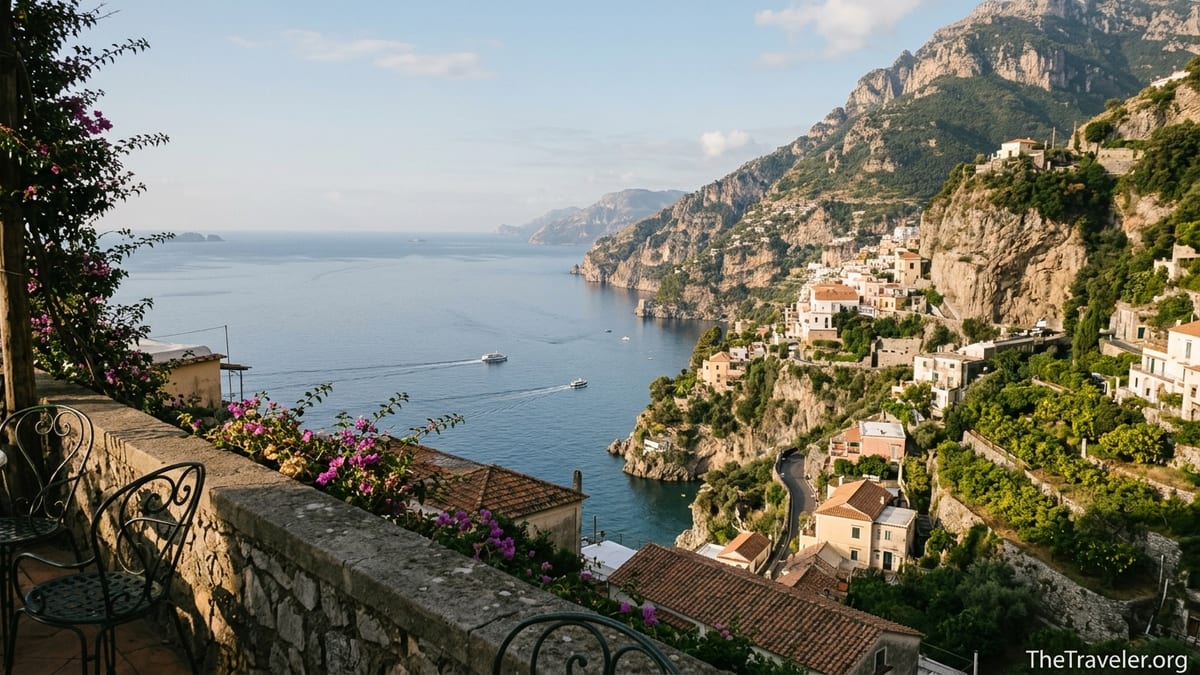
The Amalfi Coast remains Southern Italy’s most famous shoreline, and for good reason. Towns like Positano, Amalfi and Ravello cling to steep cliffs, with pastel houses stepping down toward narrow beaches and small marinas. Between roughly April and October, ferries and smaller coastal boats link Salerno, Amalfi and Positano, with one-way tickets on local operators typically starting in the range of 10 to 25 euros depending on distance and season. Compared with hairpin road traffic, ferries are usually the most pleasant way to move between towns on clear days.
Capri is an easy day trip from both Naples and Sorrento, with fast ferries often taking under an hour. Once on the island, many visitors take the chairlift from Anacapri up to Monte Solaro for views back toward the Sorrento Peninsula and the Faraglioni sea stacks. Ticket prices for the chairlift are moderate, and there are simple cafés at the top serving espresso and light lunches with panoramic terraces. Away from the central Piazzetta, quieter paths lead past stone-walled gardens and villas, giving a sense of everyday life beyond the luxury boutiques.
Travelers seeking fewer crowds and wider beaches increasingly look south to the Cilento Coast, reachable by regional trains from Naples or Salerno to towns such as Agropoli or Pisciotta. From there, short taxi rides or local buses connect to small resorts and fishing villages where sandy coves replace the pebbly strips common on the Amalfi Coast. In summer, simple beach clubs rent a pair of loungers and an umbrella for a typical day rate, and waterfront trattorias serve grilled fish, local mozzarella and house wine at prices that are often lower than on the Amalfi Coast’s marquee squares.
Because coastal infrastructure is seasonal, it is worth checking local ferry timetables a few weeks before travel, particularly for April and October shoulder-season trips when some services run with reduced frequency. In these months you can still enjoy bright days on cliff paths and terraces, but you may rely more on buses and private drivers than on boats if the sea is rough.
Ancient Worlds: Pompeii, Paestum and Matera
Visiting Pompeii is one of the most vivid ways to understand daily life in the Roman world. Trains on the Circumvesuviana line run from Naples to Pompeii in around 35 minutes, with tickets priced for commuters and tourists alike, making it a feasible half-day trip. Inside the archaeological park, you will walk past bakeries with flour mills still in place, frescoed villas, bathhouses and paved streets rutted by carts that once carried goods through the city, all set against the backdrop of Mount Vesuvius.
Further south near the Cilento, Paestum offers a quieter archaeological experience, with three remarkably well-preserved Greek temples set in fields of wildflowers in spring. The nearest train station, also called Paestum, lies within walking distance of the site, and a combined day of temple visits and a stop at a nearby buffalo mozzarella farm has become a popular excursion for travelers based between Salerno and the Cilento Coast. Many farms open small tasting rooms where you can sample fresh mozzarella, yogurt and gelato made on site.
Inland, Matera in Basilicata is one of Southern Italy’s most striking cities. Its Sassi districts, composed of cave dwellings carved into limestone ravines, are now protected as a UNESCO World Heritage site. Small cave hotels and guesthouses have been restored with underfloor heating, rain showers and minimalist furniture while retaining original rock walls and vaulted ceilings. Average nightly rates vary widely by season, but simple cave rooms can still be found at competitive prices if you book outside peak summer weekends.
Exploring Matera involves climbing stone staircases and weaving through alleys that often double back on themselves. Guided walking tours, which usually last two to three hours, help visitors understand how families once shared single-room cave homes with animals, before large-scale relocations took place in the mid-20th century. In the evening, as lights come on across the ravine and church towers glow above the Sassi, the city takes on a theatrical quality that rewards those who stay at least one night rather than visiting only on a day trip.
Puglia’s Trulli Towns and Whitewashed Villages
The heel of Italy, Puglia, has become one of Europe’s most sought-after summer regions, yet large areas still feel agricultural and unhurried. Alberobello, about an hour and a half by train or car from Bari, is famous for its clusters of trulli: whitewashed stone houses topped with conical roofs. Many visitors spend a few hours wandering the main districts, Rione Monti and Aia Piccola, ducking into small shops, wine bars and family-run restaurants serving regional staples like orecchiette pasta with turnip tops.
For a more slow-paced experience, consider staying overnight in a trullo that has been converted into a guest suite. Properties range from simple one-room houses with small kitchen corners to multi-bedroom compounds with private pools. Nightly rates in high summer can be comparable to a mid-range hotel in a city, but off-season you may find better value and the chance to sit under fig trees with a glass of local Primitivo while the crowds thin out by late afternoon.
Along the Adriatic coast, towns such as Polignano a Mare and Monopoli offer atmospheric old centers built directly above the sea. In Polignano, narrow alleys open onto viewing terraces that look down to a pebble cove framed by cliffs, where locals and visitors swim from late spring into early autumn. Monopoli, slightly larger and more lived-in, has a working harbor where fishing boats unload in the mornings and casual wine bars spill into the piazzas in the evenings.
Farther south, white towns like Ostuni sit on hills above olive groves that extend toward the sea. Many travelers now split their Puglia stay between an inland base around Alberobello or Ostuni and a second base near the coast. Short drives of 20 to 40 minutes connect these towns, but you can also join small-group day tours from Bari or Lecce that handle transfers, tastings at olive farms or wineries, and guided walks through historic centers.
Island Escapes: Aeolian Islands and Beyond
Off the northeastern coast of Sicily, the Aeolian Islands offer volcanic landscapes, warm seas and a relaxed rhythm that appeals to travelers willing to add one or two travel legs to their itinerary. Milazzo, on Sicily’s northern shore, functions as the main departure port, with hydrofoils operated by companies such as Liberty Lines and ferries by Siremar typically running year-round to Lipari and Vulcano, and more frequently to the other islands from spring through early autumn. Crossing times vary from about an hour to more than two hours depending on route and vessel type.
Lipari, the largest island, makes a practical base with a concentration of hotels, apartment rentals, scooter hire shops and waterfront restaurants. From here, day excursions visit neighboring islands like Salina, known for its caper fields and malvasia dessert wine, or Vulcano, whose black-sand beaches and sulphuric fumaroles highlight the archipelago’s volcanic character. Organized boat trips often include time to swim off the boat, simple on-board lunches and stops in village harbors, with per-person prices that are typically lower in shoulder seasons than in August.
Stromboli, famous for its active volcano, draws visitors interested in evening boat tours that watch small eruptions from a safe distance on the sea. Weather and safety conditions dictate whether these excursions operate, and operators may cancel departures at short notice if visibility or sea conditions are poor. It is therefore wise to allow an extra night on the island or in Lipari to provide flexibility instead of planning a single specific evening.
Beyond the Aeolians, other southern island options include Procida and Ischia in the Bay of Naples, reachable by frequent ferries from Naples and Pozzuoli. Procida’s pastel harbor and quieter residential streets make it an appealing day trip or overnight escape from the city, while Ischia’s thermal parks and gardens cater to travelers looking to combine sea swimming with spa-style afternoons soaking in mineral pools.
Food, Wine and Everyday Pleasures
One of the lasting pleasures of Southern Italy is that many of the highlights are everyday moments rather than fixed attractions. In Naples, grabbing a slice of pizza margherita at a standing counter for just a few euros can be as memorable as a museum visit. In small towns across Campania and Puglia, evening passeggiata sees locals strolling the main street, eating gelato and greeting neighbors, and visitors are welcome to simply join the flow.
Food is deeply regional, and menus in coastal areas tend to emphasize seafood: grilled sardines in Amalfi, octopus salads in Monopoli, and simple spaghetti alle vongole along harborside promenades. Inland, you are more likely to find dishes centered on pulses, wild greens, lamb and rustic breads baked in wood-fired ovens. Many agriturismi, or working farms that offer accommodations and meals, serve fixed-price dinners that showcase their own olive oil, vegetables and sometimes wine, often representing good value compared with restaurant menus in major tourist centers.
Wine regions are scattered throughout the south, from Taurasi in inland Campania to Primitivo and Negroamaro in Puglia and Nerello Mascalese on the slopes of Mount Etna in Sicily. Small family-run wineries frequently offer tastings by appointment, pairing flights of red and white wines with plates of local cheeses, salumi and bread. Tour companies based in Naples, Bari and Palermo now organize half-day and full-day wine tours that include transportation, making it possible to enjoy tastings without needing to navigate rural roads yourself.
Cafés and bars in Southern Italy are also social hubs. Ordering coffee is inexpensive compared with many northern European cities, particularly if you stand at the counter rather than sit at a table with table service charges. In coastal towns and cities alike, it is common to see locals taking an espresso in the late afternoon before meeting friends for aperitivo, when bars set out small plates of snacks alongside glasses of wine or spritzes.
Practical Tips for Moving Around
Getting around Southern Italy involves a mix of trains, buses, boats and, in some rural areas, rental cars. High speed trains operated by Trenitalia and Italo connect Naples and Salerno with Rome and northern cities, and advance-purchase tickets can offer significant savings over last-minute fares. For shorter stretches, such as from Naples to Salerno or from Bari to smaller cities, regional trains and buses are the backbone of public transport and are usually inexpensive, although they can be crowded at rush hour and subject to occasional delays.
On the Amalfi Coast and in parts of Puglia’s countryside, many visitors choose to hire a car for a few days to reach remote beaches, hilltop towns and agriturismi. Rental prices fluctuate by season, with July and August the most expensive months, and manual transmission vehicles remain more common than automatics. Driving along cliff roads demands confidence and patience, especially when meeting tour buses on narrow curves, so some travelers instead opt for private drivers for specific days, sharing costs among a small group.
Boat travel to islands and between coastal towns is highly seasonal. Ferries to Capri, Ischia and Procida operate year-round from Naples, but run far more frequently in summer. Services along the Amalfi Coast, and between Sicily and the Aeolian Islands, increase from around April and taper off by October. In peak weeks, especially in early to mid-August when Italian holidays peak, it is prudent to buy ferry and hydrofoil tickets a few days ahead and to arrive at ports well before departure times.
For city transportation, Naples, Bari and Palermo all have urban bus networks and, in Naples, metro and funicular lines that link hillside neighborhoods with the center. Tickets are usually sold at newsstands, tobacco shops and sometimes via mobile apps rather than directly on board, and they must be validated in machines on buses or at station entrances. Keeping small change handy and learning basic ticket phrases in Italian can smooth everyday journeys and reduce minor frustrations.
The Takeaway
Southern Italy rewards travelers who slow down enough to balance its famous coastlines with its quieter inland towns. A first trip might link Naples and the Amalfi Coast with Matera and a few nights among Puglia’s trulli, or combine Sicily’s cities with a ferry ride out to the Aeolian Islands. Whatever the exact route, planning around the realities of seasonal ferries, train timetables and summer crowds helps transform a beautiful but busy region into a journey that feels relaxed and personal.
With thoughtful pacing, you can spend a morning walking ancient streets in Pompeii or Matera, an afternoon lingering over seafood by the water and an evening listening to conversations drift across a piazza as church bells ring. These small, layered experiences are what keep travelers returning to Southern Italy, discovering new villages, beaches and viewpoints each time while still revisiting favorite bar counters and harbor walls.
FAQ
Q1. How many days do I need to see the main highlights of Southern Italy?
Most travelers find that 10 to 14 days allows enough time to combine Naples and the Amalfi Coast with Matera and a few towns in Puglia without rushing.
Q2. When is the best time of year to visit Southern Italy?
Late April to early June and September to early October usually offer warm weather, open ferry routes and fewer crowds than the peak August holiday period.
Q3. Do I need a car to explore Southern Italy?
You can reach major cities, Pompeii and many coastal towns by train and bus, but a car is helpful for rural Puglia, smaller beaches and scattered hilltop villages.
Q4. Is the Amalfi Coast very expensive compared with other areas?
The Amalfi Coast is generally one of the pricier parts of Southern Italy for hotels and restaurants, while inland areas and smaller coastal towns often offer better value.
Q5. Can I visit Pompeii and the Amalfi Coast in one day from Naples?
It is possible but tiring. Many visitors prefer one full day for Pompeii and a separate day for the coast or stay overnight in Sorrento or along the Amalfi Coast.
Q6. Are the Aeolian Islands suitable for a short trip?
Yes, if you are already in Sicily or near Naples, two to four nights on one or two islands such as Lipari, Salina or Stromboli can make a rewarding side trip.
Q7. Is Matera safe and practical to visit if I have limited mobility?
Matera is generally safe, but its historic Sassi districts involve many steps and uneven paths, so travelers with limited mobility should choose accommodations in flatter areas.
Q8. How far in advance should I book trains and ferries?
For high speed trains in summer, booking a few weeks ahead helps secure better fares and times, while popular ferries in August often sell out a few days in advance.
Q9. What is typical daily food spending in Southern Italy?
A budget traveler might spend around 25 to 40 euros per day on food, while those dining in mid-range restaurants with wine most evenings should plan for a higher daily amount.
Q10. Is tap water safe to drink in Southern Italy?
Tap water is generally considered safe in cities and towns, though some visitors prefer bottled water in more rural areas or where the taste is heavily mineralized.