


Southern Italy has a way of getting under travelers’ skin. It is louder, more chaotic, more sunburned and less polished than the north, yet many visitors leave saying it was the most memorable part of their Italian journey. If you are weighing whether to swap a few days in Florence or Venice for Naples, Puglia, Sicily, or Calabria, it helps to understand what this part of the country is really like in 2026, what it does brilliantly, and where it can be challenging. Here is a clear-eyed look at whether southern Italy is worth visiting and what you should know before booking a trip.
Get the latest updates straight to your inbox!
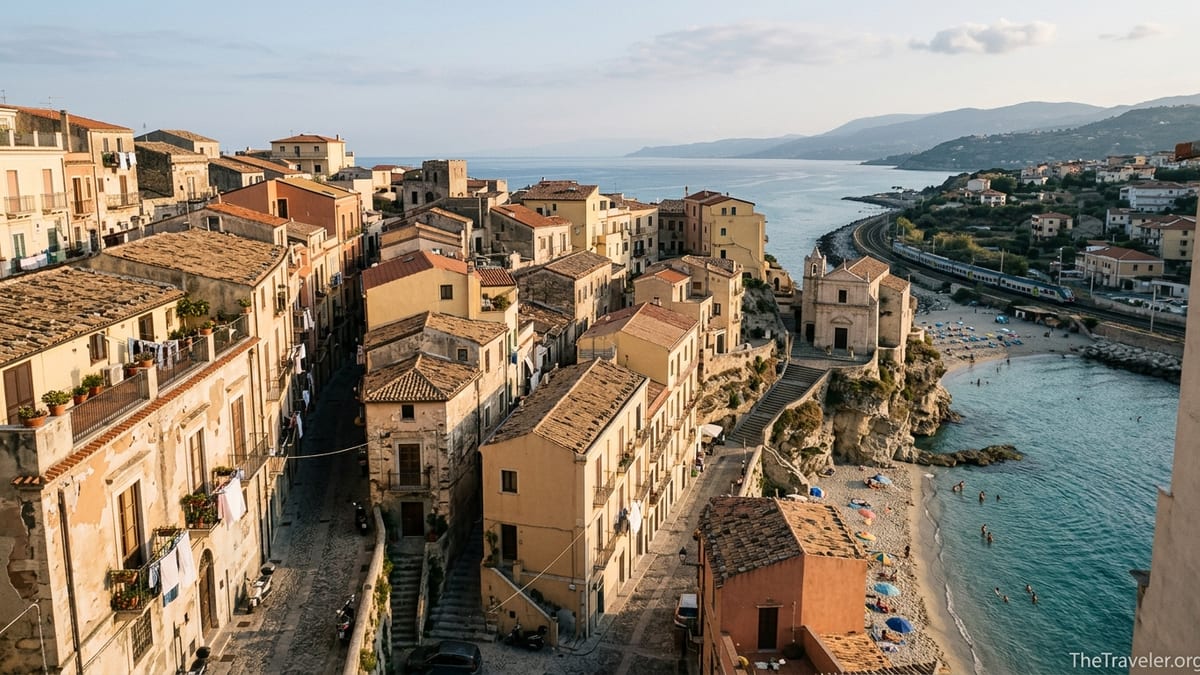
Is Southern Italy Worth Visiting Right Now?
Tourism in Italy has fully rebounded and passed pre-pandemic levels, with 2024 and early 2025 setting new records for arrivals nationwide. Southern regions such as Campania, Puglia, Sicily and parts of Basilicata and Calabria are sharing more of that growth as visitors search for alternatives to crowded northern cities and high prices on the usual Rome–Florence–Venice route. That alone suggests southern Italy is firmly on the travel map, but numbers do not tell the whole story.
What makes the south compelling is the combination of coastline, historic towns and lived-in authenticity. In one trip you might eat pizza on a noisy street in Naples, hike above pastel villages on the Amalfi Coast, sleep in a cave hotel in Matera, and swim at a wild cove near Otranto or Tropea. Compared with many other parts of Western Europe, you can still find a seaside espresso for around 1.20 euro, a wood-fired pizza in Naples for 5 to 8 euro, and a good regional wine by the glass for 4 to 6 euro in non-touristy neighborhoods.
At the same time, southern Italy is not for every traveler. Infrastructure can be patchier than in the north, public transport is less punctual, and summer heat increasingly shapes the experience. Cities such as Naples or Palermo can feel intense if you are used to orderly central European capitals. Rather than asking if the region is “good” or “bad,” it is more useful to ask whether it matches your travel style, expectations and tolerance for a little chaos.
If you value polished museums, easy train connections and cooler weather, you might lean toward central or northern Italy outside a short southern add-on. If you are willing to trade a degree of comfort and predictability for warmer seas, raw energy and smaller coastal towns that still feel Italian first and tourist destination second, southern Italy is absolutely worth the journey.
How Southern Italy Differs From the North
Many first-time visitors are surprised by how different southern Italy feels compared with Milan, Turin or the lakes. Economically, the south is less affluent and this shows up in everything from average building maintenance to train frequency. You will notice more graffiti, older buses and a less regimented approach to rules. For example, in Naples it is not unusual to see cars double-parked or scooters weaving between lanes, something that would attract more enforcement in northern cities.
On the other hand, the cost difference remains real once you step outside the most famous luxury zones. A mid-range hotel in central Naples or Bari in shoulder season can often be found around 100 to 150 euro per night, where a similar standard in central Florence might be closer to 180 to 250 euro at the same time of year. In smaller coastal towns like Vieste in northern Puglia or Scilla in Calabria, local guesthouses and agriturismi can still offer double rooms from roughly 70 to 120 euro in spring and autumn.
Culturally, the south leans more informal and family-focused. Restaurants may stay open later, and staff can sometimes appear brusque compared with the polished service found in heavily touristed Tuscan towns. That does not usually signal hostility; it is more a reflection of busy dining rooms where locals, not tourists, are the priority. Learning a handful of Italian phrases and greeting people politely on entry goes a long way. In smaller inland towns in Basilicata or Calabria you may still be the only foreigner in the bar, which many travelers find refreshing.
Regionally, the scenery is far more varied than many people expect. Campania offers volcanic landscapes and islands such as Ischia and Procida, Puglia stretches out with whitewashed hill towns and the trulli of the Valle d’Itria, Basilicata is defined by the ravine city of Matera, Calabria fronts both the Tyrrhenian and Ionian seas with rugged coastlines, and Sicily is almost a country within a country, with active Mount Etna, Baroque cities like Noto, and wine regions on the slopes of extinct volcanoes.
Safety, Scams and Common Concerns
Safety is one of the first questions many travelers ask about southern Italy, especially Naples, Palermo and certain parts of Sicily or Calabria with long-standing reputations in foreign media. For most visitors, the primary risk is petty theft rather than violent crime. Think of it as similar to other major Mediterranean destinations: pickpockets on busy buses, bag snatching around stations, and occasional scams around taxis or unmetered rides.
Naples is a good example. The city has seen increasing international tourism and investment in its historic center, but also remains a busy working port city with visible inequality. Most current travel advisories categorize Italy overall as a place where you should exercise increased caution, especially in crowded tourist zones and on public transport. Around Naples’ central station and the Circumvesuviana train line to Pompeii and Sorrento, visitors periodically report phone and wallet thefts. Practical habits help: wear a cross-body bag, keep phones zipped away on platforms, and avoid counting cash in the open.
Elsewhere, perceived risks often feel higher than actual risks. Many travelers report feeling very safe walking at night in compact historic centers such as Lecce, Bari Vecchia, Matera, or Salerno, where families are out late and streets are well lit. In smaller coastal towns like Polignano a Mare, Maratea or Cefalù, crime against tourists is relatively rare compared with the volume of visitors in high season. That said, car break-ins can occur at beach parking lots, so it is wise not to leave suitcases or electronics visible in rental cars, particularly at isolated coves.
Scams are more likely to involve overcharging than elaborate cons. Common examples include taxi drivers quoting flat fares well above the meter rate from airports or ports, unrequested “services” on beaches such as unsolicited sunbed upgrades added to your bill, or restaurants in very touristy spots adding extra items or covert “service” charges. To avoid this, ask the price before accepting a taxi ride if there is no official rate table displayed, glance over a printed menu rather than relying on verbal suggestions, and read the bill line by line before paying. These small checks are usually enough to keep you from being taken advantage of.
Costs, Crowds and When to Go
Southern Italy used to be considered the inexpensive alternative to the north, and in many ways it still is, but prices in the most famous hotspots have risen quickly with demand. In places like Positano on the Amalfi Coast or Capri in July and August, it is common to see simple sea-view rooms starting well above 300 euro per night and sunbed rentals at private lidos pushing 30 to 40 euro per person on peak days. By contrast, if you stay in a less internationally famous area such as Cilento south of Salerno, the Gargano Peninsula in northern Puglia, or the Ionian coast of Calabria near towns like Soverato, you may still find beachfront rooms at under half that price outside of August.
Meal costs vary by location and style. In working neighborhoods of Naples, you can still find a classic margherita pizza from iconic pizzerias for around 5 to 7 euro. In smaller towns, a full seafood lunch with pasta, grilled fish, house wine and coffee might run 25 to 35 euro per person at a family-run trattoria. By contrast, dining on the seafront in Taormina or in the heart of Positano may easily double those figures, particularly if you choose restaurants oriented toward international visitors ordering multiple courses and cocktails.
Crowds have become a defining issue. The Amalfi Coast road can gridlock from late May through September, and queues for buses in Sorrento or Amalfi can stretch long in the midday heat. Day-trippers to Capri and the blue grotto, as well as cruise ship arrivals in ports like Naples or Messina, all concentrate traffic into narrow windows. Inland and lesser-known coastal areas remain significantly quieter. For example, hilltop villages in Basilicata or the Baroque towns of southern Sicily like Modica and Ragusa can feel uncrowded outside festival weekends, even in June.
For most travelers, the sweet spots are late April to early June and late September through October. Sea temperatures are pleasant enough for swimming from around May onward in many southern regions, yet accommodation prices and crowds are more manageable than in peak summer. July and especially August bring intense heat waves that make midday sightseeing uncomfortable, and also coincide with Italian school holidays when locals flock to the beaches and prices spike. If you must travel in midsummer, plan long siestas, book your key transport and accommodation well ahead, and focus on coastal stays where you can cool off easily.
Getting Around: Trains, Buses and Driving
Southern Italy’s transport network is a mix of modern high-speed lines and slower, more fragile regional services. High-speed trains comfortably connect Rome to Naples and Salerno in Campania and to Bari in Puglia, with journeys from Rome to Naples taking as little as 1 hour 10 minutes on the fastest services. From those hubs, travel becomes more local: narrow-gauge lines, regional trains and a web of buses link coastal and inland towns. Schedules can be sparse on Sundays and in low season, and delays are not uncommon, so it is wise to avoid tight same-day connections to flights or cruises.
For example, to reach Matera, many visitors travel by train to Bari then transfer to a regional line or bus east into Basilicata. The journey is straightforward but slower than equivalent distances in northern Italy, and services in the evening are limited. On the Amalfi Coast, the famous clifftop road between Sorrento and Salerno is served by buses that can be crowded and affected by traffic; in peak periods some sections become one-way or require permits for private cars, so checking current regulations before driving is important.
Renting a car offers much more flexibility, particularly for Puglia’s countryside, Calabria’s less-visited beaches, and the interior of Sicily. Daily rental rates fluctuate widely by season but in shoulder months you may find compact cars starting around 40 to 60 euro per day booked in advance from major agencies. Fuel is expensive by North American standards, and parking in historic centers is often restricted to residents, so many travelers park on the edge of town and walk in. Traffic in big cities such as Naples or Palermo can be intimidating for inexperienced drivers; some visitors choose to avoid driving in cities altogether and rent cars only for rural segments from smaller airports like Bari, Brindisi or Catania.
Island hopping and coastal travel also involve ferries and hydrofoils. Routes like Naples to Ischia or Procida, or Milazzo to the Aeolian Islands, run frequently in summer but may scale back in winter, so checking timetables close to your travel date is essential. Seas can be rough on windy days and services cancelled. When planning, build in some slack so a missed ferry or delayed bus does not cause a cascade of problems.
Where Southern Italy Really Shines
Despite logistical quirks, southern Italy excels in several areas where even seasoned travelers are often surprised. Food is one. This is the homeland of pizza, many tomato-based pastas, and intensely fresh seafood. Simple, ingredient-driven dishes dominate, and you do not need to seek out fine dining to eat well. In Bari Vecchia, nonnas still roll orecchiette by hand in alleyways and sell it to locals by weight; in Trapani, couscous with fish reflects centuries of Mediterranean exchange; on the Amalfi Coast, lemons show up in everything from granita to limoncello.
Landscape variety is another strength. Puglia’s white towns like Ostuni and Locorotondo sit amid olive groves and vineyards that stretch down to clear Adriatic waters. Basilicata offers the cinematic stone city of Matera perched over a ravine, with walking trails across to the opposite plateau for sunrise views. Calabria’s Tyrrhenian coast around Tropea combines dramatic cliffs, sandy beaches and views to the Aeolian Islands on clear days. Sicily adds active volcanoes like Etna and Stromboli, expansive archaeological sites in the Valley of the Temples near Agrigento, and a mix of Norman, Arab and Baroque architecture in cities such as Palermo and Siracusa.
For many visitors, value for money is a final, convincing argument. While luxury resorts in places like Capri or Taormina command international prices, mid-range and budget-conscious travelers can still enjoy a long stay by mixing lesser-known destinations. Two weeks split between Naples, the Cilento coast, Matera and Puglia’s Gargano Peninsula, for example, can be done more cheaply than a week in Rome and Florence once you factor in accommodation, meals and local transport. Self-catering apartments, local markets, and casual street food such as panzerotti in Puglia or arancini in Sicily make it easier to keep daily spending predictable.
Perhaps the most intangible highlight is the sense of everyday life continuing around tourism rather than being entirely shaped by it. In many southern towns, you will see schoolchildren walking home for lunch, grandparents playing cards in piazzas, and weekly markets where locals greet one another by name. That feeling of entering a place that exists for itself, not only for visitors, is part of what makes people fall for the region and often return.
Trip-Planning Tips for First-Time Visitors
When planning a first trip to southern Italy, it is tempting to try to “do it all” in one go. Distances are larger than they look on the map and travel between regions can be slow, especially if you are relying on public transport. For a 7 to 10 day visit, it usually works best to focus on one major area and its surroundings rather than attempting, for example, Naples, Amalfi Coast, Puglia and Sicily in a single itinerary.
A classic first-time itinerary might be three nights in Naples, two or three nights on the Amalfi or Cilento coast, and two nights in Matera, using trains and regional buses with perhaps one private transfer for convenience. Another popular combination is Puglia alone: fly into Bari or Brindisi, rent a car, and spend time between Polignano a Mare, the trulli area around Alberobello and Locorotondo, and the Baroque city of Lecce, with a day trip to coastal spots like Otranto or Gallipoli.
Booking ahead is increasingly important for peak season. Popular cave hotels in Matera, well-reviewed agriturismi in Puglia, and seafront rooms in small Amalfi Coast villages can sell out months in advance for June through September. Outside those months, you can often be more spontaneous, though it is still wise to reserve your first and last nights near major transit hubs like Naples, Bari or Catania so you are not scrambling on arrival or departure.
Finally, set expectations with your travel companions. Explain that trains may run late, that a restaurant might open 30 minutes after its posted time because lunch ran long, and that bureaucracy at car-rental desks can be slow. Building some flexibility into your schedule, keeping days focused on one or two main activities, and approaching delays with a degree of humor will make the south’s charms far easier to appreciate.
The Takeaway
Southern Italy is not a polished, stress-free resort destination, and that is precisely why so many travelers love it. Its appeal lies in noisy markets, long dinners that start late, families filling the streets for evening passeggiata, and landscapes that range from volcanic islands to cliff-hugging fishing villages. It demands some patience with infrastructure and a willingness to navigate crowds in the most famous places, but it rewards that effort with experiences that feel less interchangeable than another old town square or another international chain hotel.
If your ideal trip is air-conditioned museums, designer shopping and rigid punctuality, you might prefer to keep the south as a short side trip. If you want sunshine, sea, food that tastes of the place it was grown, and towns where Italian remains the dominant language even in high season, southern Italy is very much worth visiting in the coming years. With clear expectations, basic safety awareness and realistic planning, it can become the highlight of your time in the country.
FAQ
Q1. Is southern Italy safe for solo travelers, including women?
Yes, most of southern Italy is safe for solo travelers who use common big-city precautions: stay in central areas, avoid unlit streets late at night, watch your belongings on public transport, and choose reputable accommodation with recent reviews.
Q2. Which southern Italy destinations are best for a first visit?
For a first trip, many travelers combine Naples and the Amalfi or Cilento coast with a stop in Matera, or focus on Puglia with bases in Bari or Polignano a Mare, the trulli area near Alberobello, and the Baroque city of Lecce.
Q3. Is it cheaper to travel in southern Italy than in the north?
Generally yes, especially outside the most famous luxury spots. Everyday costs such as coffee, pizza and mid-range hotels are often lower than in cities like Venice or Florence, although high-end resorts in places like Capri or Taormina can be very expensive.
Q4. Do I need to rent a car in southern Italy?
No, but a car can be very helpful in Puglia, rural Basilicata, Calabria and parts of Sicily where public transport is limited. For urban-focused trips to Naples and the Amalfi Coast, you can rely mainly on trains, buses and ferries.
Q5. When is the best time of year to visit southern Italy?
The most comfortable periods are late April to early June and late September through October, when temperatures are milder, the sea is swimmable in many areas, and crowds and prices are more manageable than in July and August.
Q6. How many days do I need in southern Italy?
With 7 to 10 days you can explore one region well, such as Campania or Puglia. Two weeks allows you to combine two areas, for example Naples and the Amalfi Coast with Puglia or Sicily, without rushing too much.
Q7. Is tap water safe to drink in southern Italy?
In most cities and towns, tap water is considered safe to drink, though it can have a stronger mineral taste in some areas. Many locals still prefer bottled water, which is inexpensive and widely available.
Q8. What should I budget per day in southern Italy?
Budgets vary, but a mid-range traveler might plan roughly 120 to 200 euro per person per day for accommodation, meals, local transport and modest activities, less if staying in smaller towns and self-catering for some meals.
Q9. Are there any special customs or etiquette I should know?
Basic politeness matters: greet shopkeepers and staff with a “buongiorno” or “buonasera,” dress modestly in churches, avoid loud conversations on public transport, and be prepared that dinner often starts later than in many countries.
Q10. Can I rely on English, or should I learn Italian?
In major tourist areas and larger cities, many people working in hospitality speak at least basic English. In smaller inland towns and neighborhoods, English is less common, so learning simple Italian phrases will make interactions smoother and more enjoyable.