


For many travelers, Vatican City begins and ends with the view of St Peter’s Basilica from the square. Yet this tiny walled state, covering less than half a square kilometer, holds layers of art, history and daily ritual that most visitors never see. With a bit of planning, you can turn a quick photo stop into a full day of memorable experiences that go far beyond the basilica’s famous dome.
Get the latest updates straight to your inbox!
Explore the Vast Vatican Museums Beyond the Crowds
The Vatican Museums are often treated as a rushed corridor on the way to the Sistine Chapel, but they are in fact a vast network of galleries that can easily fill half a day. Standard adult tickets in 2026 cost around 20 euros at the door or about 25 euros with the official online booking fee, which also lets you skip the longest entrance lines. Morning entries between 8:30 and 9:30 a.m. tend to be calmer, while late evening openings on Fridays and Saturdays (often until about 10:30 p.m. in high season) offer a cooler, slightly less crowded atmosphere.
Once inside, slow your pace and focus on a few sections rather than trying to see everything. Many visitors hurry past the Pio-Clementino Museum, but this area holds some of the most famous classical sculptures in Europe, including the Laocoön Group and the Apollo Belvedere. Spend time here and in the Octagonal Courtyard to appreciate how these ancient works influenced Renaissance artists whose paintings you will see later. Benches around the courtyard’s perimeter offer rare chances to sit, study the details and catch your breath.
Further along, watch for the Gallery of Maps, a long corridor lined with richly colored frescoed maps of the Italian peninsula. Here you can match the paintings to places you might be visiting on your trip, from Sicily’s coastlines to the lakes of Lombardy. Near the end of a typical visitor route, the Raphael Rooms reward those who have resisted museum fatigue. Take a moment in the Room of the Segnatura, where the School of Athens stretches from wall to wall, and try spotting portraits of Renaissance figures like Leonardo da Vinci woven into the crowd of philosophers.
Consider a small-group guided tour if you want structure and context. Many reputable operators limit groups to 10–15 guests and include headsets so you can hear your guide even in busy galleries. Tours of around 2.5 to 3 hours generally cover museum highlights plus the Sistine Chapel, leaving you free afterward to revisit sections independently or simply find a quiet courtyard café inside the complex for a coffee and pastry before heading back into Rome.
Experience the Sistine Chapel with Realistic Expectations
For most travelers, the Sistine Chapel is the emotional climax of a Vatican visit, but the experience can be overwhelming if you do not know what to expect. The chapel sits at the end of the Vatican Museums’ main visitor route; there is no separate ticket. By the time you arrive, you may have walked several kilometers through galleries and corridors, so planning breaks along the way is essential if you want to arrive with enough energy to appreciate Michelangelo’s ceiling and the Last Judgment.
Inside, photography is strictly prohibited and guards enforce silence. This is partly for conservation, but it also preserves a sense of reverence in a space that still hosts papal ceremonies and conclaves. Expect to spend 15 to 30 minutes in the chapel, depending on the crowd level and how long you feel comfortable standing. Benches line some of the walls, but they fill quickly. If seeing details is a priority, consider bringing a compact pair of travel binoculars; they are allowed and make it easier to study panels like the Creation of Adam without craning your neck for too long.
To avoid the densest crowds, book one of the earliest museum entry times and move steadily through the galleries, or opt for an after-hours tour when available. These premium experiences are more expensive than a standard ticket but often limit visitor numbers, which means more breathing room and a better chance to hear any commentary from your guide. Whichever time you choose, dress with the chapel’s rules in mind: shoulders and knees must be covered, and beachwear, low-cut tops and overly short shorts can lead to being turned away at the museum entrance.
After leaving the Sistine Chapel, some museum routes allow an exit that connects toward St Peter’s Basilica, while others direct you back toward the main exit by the museums’ entrance. Staff may close the shortcut exit during quieter periods or special events, so follow on-site signs rather than relying on older guidebook instructions. If you must walk the long way around, factor in at least 20 extra minutes to return to St Peter’s Square.
Go Underground on the Scavi Tour and Vatican Necropolis
One of Vatican City’s most memorable experiences takes place far below the marble floors of St Peter’s: the Scavi Tour through the ancient necropolis. This archaeological zone lies several meters under the basilica and contains Roman-era tombs and structures believed to include the burial place of Saint Peter. Because of fragile conditions and narrow passageways, daily visitor numbers are strictly limited, often to just a few hundred people spread across small groups.
Booking is not done through standard ticket platforms. Instead, you apply directly to the Vatican Excavations Office, usually by email or an online request form, with your preferred dates and languages. Requests submitted two to three months in advance have a better chance of success, especially in peak seasons like April to June and September to October. If accepted, you receive a confirmation with your tour time, instructions and payment information; expect a fee per person that is broadly comparable to a mid-range guided museum visit in Rome.
On the day, arrive at St Peter’s Square at least 20–30 minutes before your designated time. Access is usually through a security checkpoint on the side of the square, after which Swiss Guards or staff will direct you to the excavations office entrance. The tour itself lasts around 90 minutes and involves walking on uneven surfaces in warm, sometimes slightly humid air, so comfortable shoes and light clothing are essential. Bags remain small: large backpacks and bulky items are not allowed, and photography is usually restricted or completely forbidden underground.
For travelers who cannot secure a Scavi slot, an alternative glimpse beneath Vatican City is the necropolis of the Via Triumphalis, another archaeological area occasionally open through special tours organized by the museums. Availability varies year by year, but when offered, these visits focus more on the everyday burials and street layouts of ancient Rome rather than on papal history. Checking schedules a few months ahead of your trip and remaining flexible with dates will increase your chances of finding a spot on at least one underground experience.
Find Peace in the Vatican Gardens and Hidden Corners
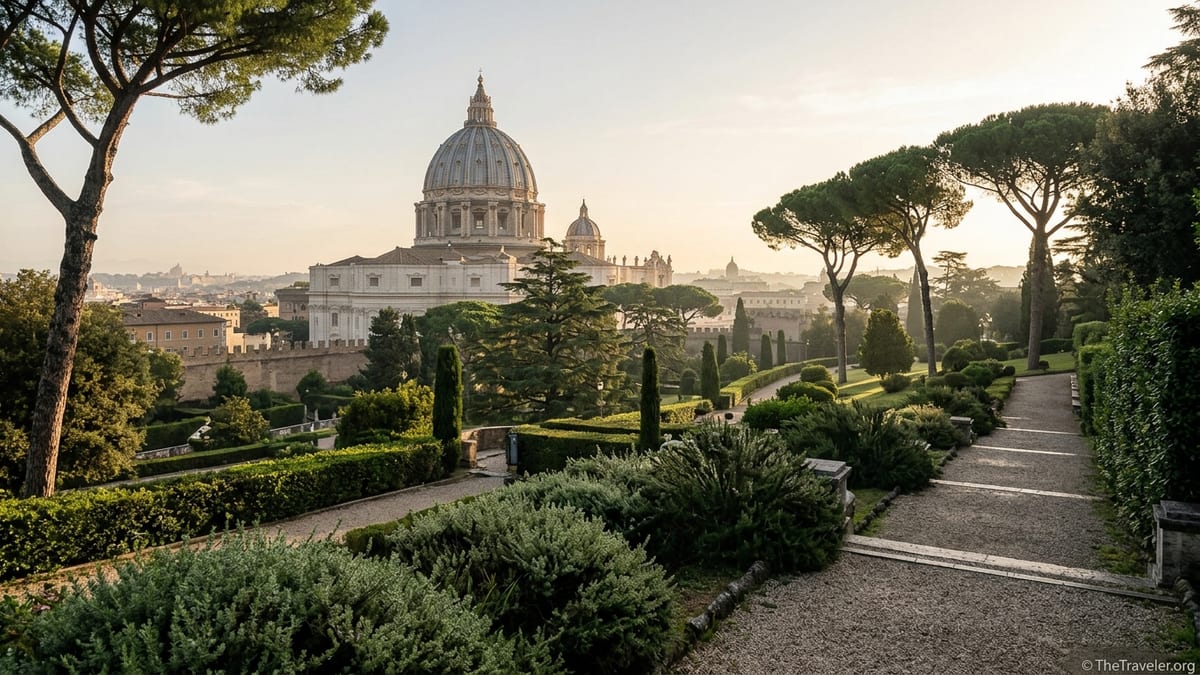
Few visitors realize that roughly half of Vatican City’s territory is taken up by gardens, orchards and quiet paths tucked behind high walls. The Vatican Gardens are only accessible through official guided visits, often combined with museum entry or offered as part of a longer “Vatican by train” package that includes onward travel to the papal villas at Castel Gandolfo. Garden tours are more expensive than a standard museum ticket, but in exchange you gain access to areas that feel far removed from the crowds of St Peter’s Square.
A typical garden tour lasts about two hours and may be on foot or by open minibus, depending on the option you choose. As you wind through manicured lawns, shaded groves and sculpture-dotted paths, you will see views of the basilica and the Vatican walls that are otherwise impossible to access. Guides often point out details like a section of the original Vatican railway line, modern artworks gifted by Catholic communities around the world and the small Vatican Radio transmission towers peeking above the trees.
If your schedule or budget does not allow for a formal garden tour, you can still find pockets of quiet in more accessible parts of Vatican City. Early morning in St Peter’s Square, before the main security lines open, often feels surprisingly serene. The fountain’s steady splash, the play of light on the colonnades and the distant sound of bells create a very different atmosphere from the midday crush. Later in the day, look for quieter spots along the far sides of the square, away from the main central axis where most tour groups gather.
Inside the Vatican Museums, small courtyards like the Pinecone Courtyard can also offer a breather if you visit at the right time. Buying a coffee or gelato from the museums’ internal cafés might cost a euro or two more than in a typical Roman bar, but the chance to sit under an umbrella and stare up at the papal apartments for 15 minutes is often worth the premium.
Attend Papal Events and Angelus Without a Pilgrim’s Schedule
Beyond its treasures, Vatican City is the living center of the Roman Catholic Church, and many travelers appreciate the chance to see the Pope in person, even briefly. The two most accessible opportunities are the weekly General Audience, usually held on Wednesday mornings, and the Angelus prayer at noon most Sundays. The format can vary if the Pope is traveling or during major holidays, so it is crucial to check the official Vatican calendar for the exact schedule in the weeks before your visit.
The General Audience often requires a free ticket, which is distributed through church offices and online request forms, but security procedures and crowd management mean you should still treat it like a major event. Arrive well ahead of time, expect airport-style security screening and plan for periods of standing in the sun. Seats closer to the central aisle offer the best chance of seeing the Pope pass by in the popemobile; if you are content with a distant view, arriving later and sitting farther back can be less intense.
The Sunday Angelus is generally simpler. No ticket is needed for the noon prayer. Crowds gather in St Peter’s Square to watch the Pope appear at a window of the Apostolic Palace, delivering a short address and blessing in multiple languages. You can often arrive 30 to 45 minutes beforehand and still find a reasonable spot, though major feast days can draw much larger numbers. For many travelers, this brief moment, framed by Bernini’s colonnades and the obelisk in the square, is a highlight that costs nothing except a slice of their Sunday.
If you are not religious but curious about the cultural impact of the papacy, consider timing your visit on a non-event day and exploring the square’s symbolism with a local guide. Many walking tours of the Vatican area focus on how the layout of the colonnades, the positioning of statues and even the choice of pavement stones communicate messages of welcome and authority. These tours typically last two to three hours and may cost roughly the same as a mid-priced museum tour elsewhere in Rome.
Plan Your Visit: Timings, Tickets and Dress Code
Thoughtful planning can transform your Vatican day from rushed to rewarding. In 2026 the Vatican Museums generally open around 8:30 a.m. and close at 6:30 p.m. on most weekdays, with last entry mid-afternoon. On many Fridays and Saturdays, extended hours keep the museums open into the evening. The complex is usually closed on Sundays and certain religious holidays, apart from special openings. St Peter’s Basilica and the square remain accessible on a broader schedule, but queues for security can be lengthy from late morning through mid-afternoon, especially between March and October.
Buying museum tickets in advance is strongly recommended. During busy months, walk-up visitors regularly report waiting two to three hours in line for same-day entry. Online timed tickets through the official system cost slightly more but can save you a significant portion of the day. If you are traveling with children or someone who tires easily, the reduction in standing time alone usually justifies the advance purchase. For travelers who have left things late, some reputable agencies offer last-minute guided tour slots that include skip-the-line access at a higher price; this can still be worthwhile if your time in Rome is short.
Dress code is a common source of confusion. Throughout the museums, Sistine Chapel and St Peter’s Basilica, shoulders and knees must be covered for all visitors, regardless of gender. This means no sleeveless tops, short skirts or shorts that ride significantly above the knee. Transparent fabrics, offensive slogans and beachwear are also likely to cause issues at the security checkpoint. A practical approach in Rome’s summer heat is to wear lightweight trousers or a midi skirt, plus a breathable T-shirt, and carry a thin scarf or shawl in your bag to cover your shoulders as needed.
Security procedures are similar to those at a major airport, with metal detectors and bag scanners. Small backpacks and daypacks are generally allowed, but large suitcases or bulky luggage can be refused, so avoid planning a Vatican stop en route to or from the airport with all your bags. Inside the complex, ATMs, restrooms, cafés and drinking fountains are available, but lines for toilets can build around peak visiting times, so take advantage of less busy facilities when you come across them.
The Takeaway
Vatican City rewards visitors who look beyond the postcard view of St Peter’s Basilica. By giving yourself a full day and planning around museum hours, papal events and ticket availability, you can experience highlights like the Vatican Museums and Sistine Chapel without feeling rushed. Adding an underground Scavi tour or a stroll through the Vatican Gardens will reveal very different sides of this tiny state, from ancient tombs to quiet, tree-lined paths.
Whether you come for faith, art, history or simple curiosity, the key is to balance ambition with realism. Accept that you cannot see everything, choose a handful of experiences that matter most to you and leave room for pauses in courtyards, cafés and the edges of St Peter’s Square. In doing so, you will come away with more than just a set of photos: you will have a deeper sense of how this small, densely layered place functions as both a spiritual center and a living city.
FAQ
Q1. Do I need separate tickets for the Vatican Museums and the Sistine Chapel?
The Sistine Chapel is inside the Vatican Museums, so one museum ticket covers both. There is no separate Sistine Chapel ticket.
Q2. How far in advance should I book the Vatican Museums?
In busy months it is wise to book at least 2 to 4 weeks ahead, especially if you want specific morning or evening time slots or a guided tour.
Q3. Can I visit the Vatican Museums and St Peter’s Basilica on the same day?
Yes, many travelers do both in one day. Plan an early museum visit followed by the basilica in the late afternoon when lines sometimes shorten.
Q4. How do I book the Scavi Tour under St Peter’s?
You must apply directly through the Vatican Excavations Office, usually several weeks or months in advance, listing your dates, language and number of visitors.
Q5. Is there a dress code for all of Vatican City or just the churches?
Strict dress rules apply inside the museums, Sistine Chapel and St Peter’s Basilica. In the open square they are more relaxed, but modest clothing is still advisable.
Q6. Are the Vatican Gardens worth the extra cost?
If you value quiet spaces and unique viewpoints, the gardens are a highlight. They are especially worthwhile during warm months when the museums feel crowded.
Q7. Can I see the Pope without attending a full Mass?
Yes. The Wednesday General Audience and the Sunday Angelus are the most common ways to see the Pope, even briefly, without joining a full liturgy.
Q8. What is the best time of day to avoid crowds in the Vatican Museums?
First entry in the morning and late evening openings on Fridays or Saturdays often feel less crowded than mid-morning and early afternoon slots.
Q9. Is photography allowed inside the Vatican Museums?
Photography is allowed in most museum galleries without flash, but it is strictly prohibited inside the Sistine Chapel, where guards enforce the rule.
Q10. Can I bring luggage or a large backpack into the Vatican?
Small daypacks are usually fine, but large suitcases and bulky bags are not allowed through security. Use luggage storage in Rome rather than bringing big bags.