


Few places in the world pack as much art, history and spiritual significance into such a small area as Vatican City. Yet many travelers leave frustrated after shuffling through overcrowded corridors, missing key masterpieces or wasting precious hours in security lines. With a little planning, you can turn the Vatican from a stressful obligation into one of the most memorable days of your trip to Rome.
Get the latest updates straight to your inbox!
Understand the Core Highlights You Really Should Not Miss
Planning a Vatican visit starts with knowing what actually counts as a must-see. For most travelers, the essential trio is the Vatican Museums (including the Sistine Chapel), St Peter’s Basilica and, if you can handle heights, the dome climb above the basilica. Everything else, such as the Vatican Gardens or the necropolis under St Peter’s, is a bonus for those with extra time or a special interest.
Inside the Vatican Museums, many visitors rush straight to the Sistine Chapel and overlook extraordinary galleries on the way. At a minimum, plan time for the Pinecone Courtyard, the Gallery of the Candelabra, the Gallery of Tapestries, the Gallery of Maps and the Raphael Rooms, which hold frescoes by Raphael and his workshop. The Sistine Chapel itself, with Michelangelo’s ceiling and Last Judgment, comes at the very end of the standard museum circuit, so you cannot simply dip in and out.
St Peter’s Basilica is separate from the museums and has its own security line. It is one of the largest churches in the world and a masterpiece of Renaissance and Baroque architecture, with works attributed to Michelangelo, Bernini and others visible in a single sweep of the nave. The free entry often surprises visitors coming from the ticketed museums, but do not underestimate the time required for security and for exploring the interior at a relaxed pace.
The dome climb at St Peter’s is optional but unforgettable for many travelers. A separate paid ticket grants access via elevator plus stairs or stairs only. From the top, you look down into the basilica from the inner gallery, then out across St Peter’s Square and the rooftops of Rome. If you are planning only one high viewpoint during your stay in the city, many repeat visitors say this is the one they would choose again.
Choose the Right Day and Time to Visit
Vatican timing matters more than many first-time visitors realize. The Vatican Museums, which welcomed roughly several million visitors in recent years, are open Monday to Saturday from about 8:00 to early evening, with last entry mid to late afternoon depending on the current schedule. They are usually closed on most Sundays, except for the last Sunday of the month when entry is free for a few morning hours and crowds can be extreme.
If you want to avoid missing highlights, aim for a day that is not a major Catholic feast or Vatican public holiday. Dates such as January 1, January 6, Easter Monday, June 29, August 15 and December 25 typically see closures or heavy crowds. In practical terms, a Tuesday or Thursday outside peak summer and Easter weeks often combines lighter traffic with full opening hours. Travelers who visited on shoulder-season weekdays in April and October frequently report significantly easier movement in the galleries compared with midsummer Saturdays.
Time of day is just as important. For the museums, the first two hours after opening are often described by guides as a “golden window.” Independent travelers who arrive at the entrance by about 7:30 for an 8:00 opening often move through the early galleries, such as the Gallery of Maps, before the big tour groups catch up. Alternatively, early afternoon entry around 13:00–14:00 can be calmer than the late morning peak, especially outside July and August.
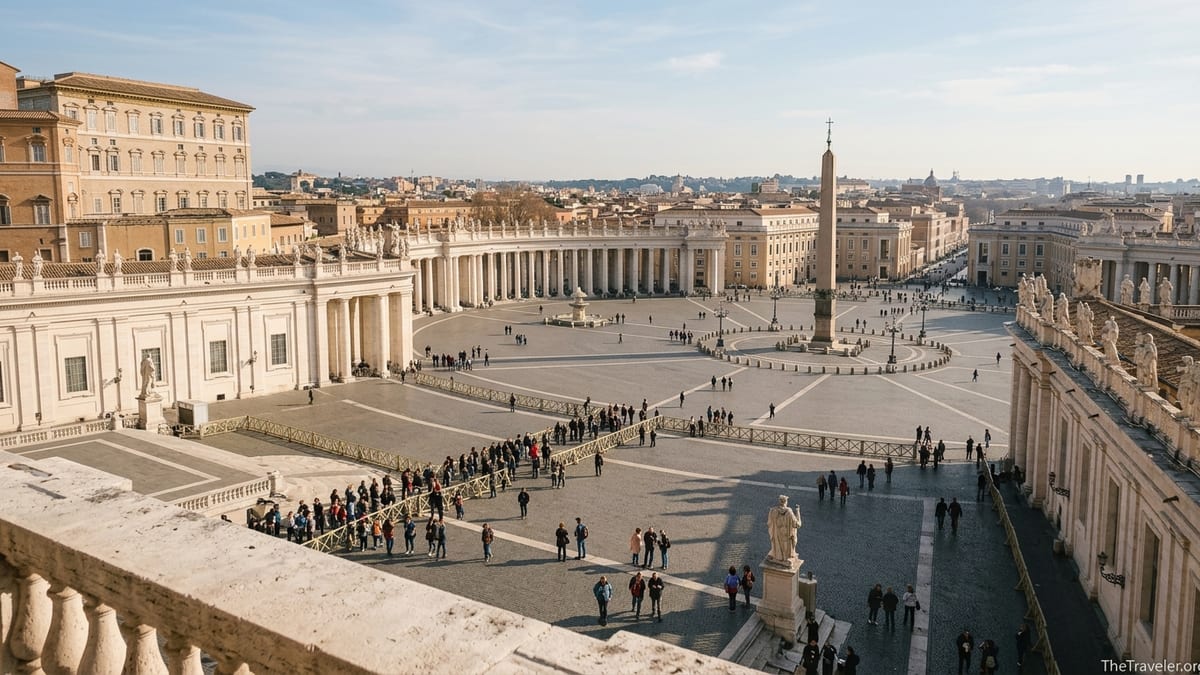
For St Peter’s Basilica, early morning typically offers the shortest security lines. Many visitors who arrived around 7:00–7:30 in high season describe entering quickly and experiencing a quieter interior, sometimes with locals attending morning Mass. By late morning and early afternoon, queues in St Peter’s Square can stretch across the piazza, and on busy days it is not unusual to hear of travelers waiting 60 to 90 minutes for the free basilica entry.
Tickets, Reservations and Smart Budget Choices
The Vatican Museums are ticketed and, for most visitors, advance booking is no longer optional. Official standard tickets for adults are typically priced in the high teens in euros, with a small additional online booking fee. Reduced tickets are available for children and students with valid identification, while children under a certain age, commonly under six, usually enter free. While you can theoretically buy tickets at the door, recent seasons have shown morning walk-up lines stretching for hours, especially on Fridays and Saturdays in spring and autumn.
Skip-the-line or timed-entry tickets sold through authorized partners can add 10 to 20 euros or more per person over the official base price, but they also save time. During peak months, travelers frequently report saving one to three hours of standing in line by booking a skip-the-line option. For a family of four visiting in July, that extra cost can feel steep, but it may be the difference between reaching the Sistine Chapel refreshed or exhausted. A balanced choice is often an official ticket reserved on the Vatican booking platform or a basic “escorted entry” product with minimal extras.
Guided tours are another layer to consider. Group tours that focus on museum highlights and the Sistine Chapel generally start around 40 to 60 euros per adult, including entry. Small-group or semi-private tours cost more but can move more quickly through the crowds and personalize the route to include specific rooms like the Cabinet of Masks or the modern religious art collection. Travelers particularly short on time, such as cruise passengers with only one day in Rome, often find these tours worthwhile because they are structured to ensure they see Raphael, Michelangelo and the Sistine Chapel in a predictable time window.
St Peter’s Basilica itself remains free to enter, but in recent years an optional booking service has emerged that allows visitors to pay a modest fee, often around 6 to 7 euros, to reserve a timed security slot and bypass the general queue. Many recent visitors report using a 7 euro timed entry that functioned much like a fast track into the basilica. For the dome climb, expect to pay somewhere around 8 euros for the stairs-only option and a few euros more if you prefer to take the elevator partway. Since prices and booking systems can change, it is wise to check current details a few weeks before you travel, rather than relying on information from older guidebooks.
Sequencing Your Day: Sample Itineraries That Actually Work
Once you understand timing and tickets, the biggest question becomes: in what order should you see everything? A classic “highlights in one day” route for first-timers is to start at St Peter’s Basilica, then climb the dome, have an early lunch and finish with a timed-entry visit to the Vatican Museums and Sistine Chapel.
For example, on a Tuesday in May, you might enter St Peter’s Square by 7:00, pass security soon after opening and spend a quiet hour inside the basilica, taking time at the Pietà, Bernini’s baldachin and the papal tombs. At around 8:15, you move to the dome ticket desk inside the basilica and begin the climb. Even with photo stops and rest breaks, many reasonably fit visitors complete the climb, enjoy the rooftop terrace and return to ground level by 9:30–10:00. From there, an early coffee and snack at a nearby café gives you a short rest before you walk around the Vatican walls toward the museum entrance.
With a 11:30 or 12:00 timed-entry ticket for the museums, you can then follow a structured route: Pinecone Courtyard and Belvedere Courtyard, Pio-Clementine sculptures, the long gallery axis with tapestries and maps, the Raphael Rooms and finally the Sistine Chapel. On a typical visit, this sequence takes about three to four hours at a moderate pace, placing you outside again by mid to late afternoon with daylight left to rest back at your accommodation or explore another neighborhood like Trastevere.
Alternatively, travelers who prefer to avoid early wake-ups can reverse the order. You might book an 8:00 or 8:30 guided tour of the Vatican Museums that includes the Sistine Chapel, finishing around midday, then walk or take a taxi to St Peter’s Square for a later-afternoon basilica visit. In this case, consider purchasing the timed security slot for the basilica to avoid long mid-afternoon queues. Many visitors who used such a reserved slot around 15:00–16:00 describe waiting only a few minutes instead of an hour or more.
Whatever order you choose, the key to not missing major highlights is to leave buffer time between each element. Many travelers underestimate how long it takes to walk from the Vatican Museums exit around the walls back to St Peter’s Square. Building in a 30- to 45-minute cushion allows you to grab a snack, find a restroom and still arrive relaxed for your next timed entry.
Dress Code, Security and Practical Logistics
Dress code surprises are among the most avoidable reasons travelers miss the Sistine Chapel or get turned away from St Peter’s. The Vatican applies a conservative standard at religious sites like the basilica, the Sistine Chapel and the Vatican Museums. Shoulders must be covered, and skirts, dresses or shorts should reach at least to the knee. Low-cut or see-through clothing is discouraged, and hats should be removed inside the basilica for men. Security staff and Swiss Guards have full authority to deny entry to anyone not meeting these guidelines, even if they have a valid ticket.
A practical solution is to dress modestly from the start of the day. Light cotton trousers or midi skirts, closed-toe or sturdy sandals suitable for stair climbing, and a T-shirt or blouse with sleeves work well even in summer. If you prefer to wear shorts on most days, pack a foldable scarf or light travel shawl in your daypack to cover your knees and shoulders when required. Travelers who ignored the dress code and arrived in tank tops or short shorts often find themselves buying emergency scarves from vendors near St Peter’s Square at inflated prices.
Security checks for both the basilica and the museums are similar to airport screening, with metal detectors and X-ray belts for bags. Large backpacks, tripods and bulky umbrellas may be refused or sent to a cloakroom, which adds time to your visit. Aim to carry a compact daypack with essentials only: water in a resealable bottle, a small camera or smartphone, a light layer for air-conditioned galleries and any personal medications. Pocketable snacks such as granola bars can be useful while you move through the museums, although eating is restricted to designated areas like the cafeteria and outdoor courtyards.
Finally, consider your physical comfort. The Vatican Museums route covers several kilometers of walking on hard floors, often in warm and crowded conditions. Comfortable walking shoes with good cushioning make a huge difference by the time you reach the Sistine Chapel. If you plan to climb the dome, remember that the upper stair sections are narrow and steep, with occasional leaning walls. Visitors with severe claustrophobia, heart conditions or significant mobility issues may prefer to enjoy the basilica interior and views from St Peter’s Square instead.
How to See More, Not Less, By Being Selective
One paradox of Vatican planning is that the more you try to see, the more you risk missing what matters. The Vatican Museums contain dozens of galleries and vast collections, from Etruscan artifacts to contemporary religious art. Attempting to methodically walk through every room in a single visit commonly leads to “museum fatigue,” where travelers reach the Sistine Chapel too tired to fully appreciate it.
Instead, choose a clear focus. First-time visitors usually prioritize the classical sculptures in the Pio-Clementine Museum, the decorative galleries with tapestries and maps, the Raphael Rooms and the Sistine Chapel. You can decide in advance to pass more quickly through other sections, such as some of the lesser-known missionary ethnological collections or certain minor picture galleries, saving them for a hypothetical second visit. If a particular area interests you deeply, for example the modern religious art wing with works by Matisse and Dalí, allow yourself time there and accept that you will skim elsewhere.
St Peter’s Basilica also rewards selective attention. Many visitors spend a long time in the nave but rush past chapels that may resonate with them. If you arrive with even a short priority list such as “Pietà, St Peter’s tomb, Bernini’s baldachin, and the view back down the nave from the apse,” you will be less likely to drift aimlessly. Some travelers bring a printed floor plan or simple basilica app to orient themselves; others join a short, 60- to 90-minute guided visit focused on art and architecture rather than devotional elements.
If your schedule allows two partial days in the Vatican area, splitting the experience can greatly reduce fatigue. For instance, you might visit only St Peter’s Basilica and dome on a Monday morning, then return for the Museums and Sistine Chapel on Wednesday afternoon. Several hotels and guesthouses in the nearby Prati district, a 10 to 15-minute walk from both entrances, make it easy to come and go without long cross-city transfers.
The Takeaway
A rewarding Vatican visit is less about cramming in every possible sight and more about pacing, priority and preparation. By understanding the layout of Vatican City, respecting opening hours and dress codes, and booking key tickets ahead, you can shift your day from stressful line management to meaningful time with some of the world’s greatest art and architecture.
Think in terms of a few big anchors: the Vatican Museums with the Sistine Chapel, St Peter’s Basilica, and the dome climb if it suits your energy level. Build the rest of your schedule, meals and transport around these pillars rather than improvising on the day. Travelers who do so consistently report leaving the Vatican tired but satisfied, with memories of the Sistine ceiling or the view across Rome from the dome staying with them for years afterward.
Finally, remain flexible. Crowds, weather and occasional religious events can disrupt even the best-laid plans. Arriving early, allowing generous buffers and being willing to adjust your route are the best insurance policies against disappointment. With this approach, your day in Vatican City is far more likely to become a highlight of your time in Rome instead of an exhausting box-ticking exercise.
FAQ
Q1. How far in advance should I book Vatican Museums tickets?
For popular months like April, May, September and October, aim to book Vatican Museums tickets several weeks in advance, especially for early morning or evening time slots. In quieter months, you may find availability a few days ahead, but last-minute walk-up entry often involves long queues.
Q2. Can I visit the Sistine Chapel without touring the entire Vatican Museums?
No. The Sistine Chapel can only be accessed through the Vatican Museums route, which leads you through a sequence of galleries before reaching the chapel near the end of the visit. There is no separate street entrance just for the Sistine Chapel.
Q3. Is there a direct passage from the Sistine Chapel to St Peter’s Basilica?
There is a side exit from the Sistine Chapel that sometimes allows guided tour groups to walk directly toward St Peter’s Basilica. However, this passage is not always open and is typically reserved for organized tours, so independent visitors should assume they will exit via the regular museum route and walk around the Vatican walls to reach the basilica.
Q4. Do I need separate tickets for St Peter’s Basilica and the dome?
Entry to St Peter’s Basilica is free, but the dome requires a separate paid ticket. You can usually choose between a stairs-only ticket and a slightly more expensive option that includes an elevator ride part of the way, followed by stairs to the top.
Q5. What happens if I arrive late for my timed-entry slot at the Vatican Museums?
Policies can vary, but staff generally have discretion. If you arrive only slightly late, you may still be admitted, though possibly after some waiting. If you are very late, you might be refused entry and need to purchase a new ticket, so it is best to arrive at least 20 to 30 minutes before your scheduled time.
Q6. Are children welcome, and is the Vatican suitable for strollers?
Children are welcome in both the museums and the basilica, and many families visit every year. However, the long walking distances, crowds and occasional stairs make lightweight, easily foldable strollers much more practical than heavy models. Be prepared to fold the stroller at security checks or in tighter stairwells.
Q7. Can I take photos inside the Sistine Chapel and the basilica?
Photography is strictly prohibited inside the Sistine Chapel, and staff enforce this rule. In St Peter’s Basilica, non-flash photography for personal use is generally allowed, but tripods and large camera setups are usually not permitted. Always follow onsite signs and staff instructions.
Q8. Is there a dress code for children visiting the Vatican?
Yes. The same modest dress standards apply to children as to adults at religious sites. Shoulders and knees should be covered, and clothing should not be see-through. In practice, security staff may be a bit more flexible with very young children, but it is safer to dress the whole family appropriately.
Q9. Are there places to eat inside Vatican City during my visit?
The Vatican Museums have cafeteria-style restaurants and snack bars offering sandwiches, pizza slices, salads and drinks, usually at prices a bit higher than in surrounding Roman neighborhoods. Around St Peter’s Square and in the nearby Prati district, you will find numerous cafés, bakeries and trattorie where you can have a sit-down meal before or after your visit.
Q10. Is Vatican City safe for tourists, especially around St Peter’s Square?
Vatican City is generally considered safe, with a visible security presence and frequent patrols. However, like other major European landmarks, the area around St Peter’s Square can attract pickpockets, particularly in dense security queues. Keep valuables secured in a money belt or zipped bag, avoid leaving phones or wallets in back pockets and remain aware of your surroundings while you wait in line.