


Plages du Midi stretch west from Cannes’ Old Port in a long curve of pale sand facing the Lérins Islands, and they are where locals actually go when they want a relaxed day by the sea. Less flashy than La Croisette but just as scenic, this strip along Boulevard du Midi combines mostly public sand with a string of casual beach restaurants and a few smart private clubs. Knowing how the area works before you arrive will save you money, stress and time under the midday sun, and help you make the most of a precious beach day on the French Riviera.
Get the latest updates straight to your inbox!
Understanding the Layout of Plages du Midi
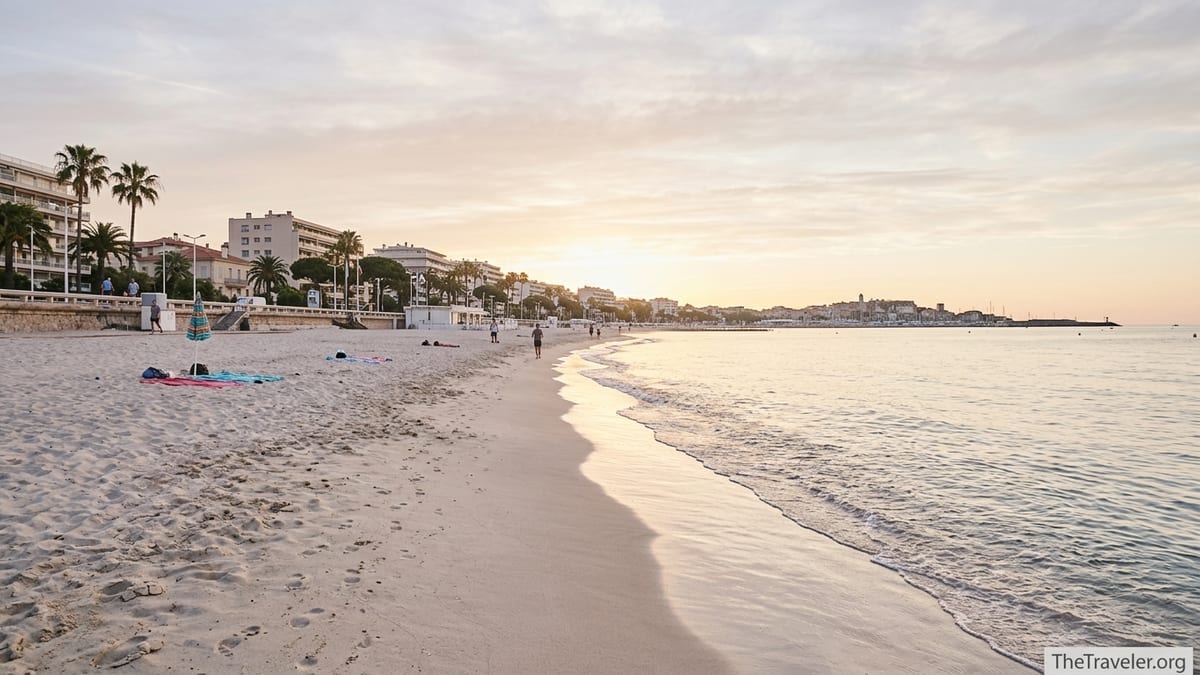
Plages du Midi are not a single beach but a chain of sandy stretches running west from the Vieux Port along Boulevard du Midi Jean Hibert towards Cannes-la-Bocca. You will see different names such as Plage de l’Abreuvoir, Belle Plage or La Petite Cannoise on signs and restaurant awnings, but they all share the same continuous sweep of sand. The eastern end, closest to the Old Port and the historic Le Suquet district, feels more urban, while the further west you walk, the more the scene turns residential and relaxed.
The first section near the Old Port is a mix of public sand and private beach restaurants with wooden decks and neat rows of sun loungers. Families and budget travelers tend to drift a little farther west, where long public stretches offer space to spread out, informal volleyball courts and easier access to free spots on the sand. A rocky point at the curve of Plage de l’Abreuvoir also helps calm the water, which makes it a popular choice for less confident swimmers.
The backdrop of Plages du Midi is the busy boulevard itself, with a low wall, promenade, and a line of small hotels, apartment blocks, snack kiosks and simple cafés. You do not get the glamorous hotel facades of La Croisette here, but the atmosphere is more everyday Riviera: joggers in the morning, local kids on bikes in late afternoon, and residents walking home from work with towels over their shoulders on hot evenings.
Because the shoreline is long and fairly uniform, first-time visitors sometimes underestimate distances. Walking from the Old Port area to the far western end near Cannes-la-Bocca can easily take 25 to 30 minutes in the heat. If you are planning to settle at a specific private beach club or want to be close to a certain bus stop, check the name of the nearest cross street or hotel before you set off so you do not spend valuable beach time backtracking.
How to Get There and Navigate Like a Local
If you are staying in central Cannes, reaching Plages du Midi is straightforward on foot. From the train station, it is roughly a 10 to 15 minute walk: head downhill toward the Old Port, then follow the curve of the harbor to Boulevard du Midi. This is often quicker in peak season than trying to drive and search for parking, especially on weekends or during major events such as the Cannes Film Festival or summer fireworks competitions.
Public buses provide an easy option if you are coming from farther afield or from accommodation in Cannes-la-Bocca. Local services such as bus 22 run along Boulevard du Midi, stopping at points behind the beach. Tickets are inexpensive and can usually be bought on board for a few euros. In practice, many visitors take the bus to a western stop like “Cannes Midi” or near the Radisson Blu hotel, then stroll back toward the Old Port along the sand, choosing a spot as they go.
Arriving by car is possible but requires a bit of planning. There is a paid car park near the Old Port at Quai Laubeuf and additional parking at Parc Picaud a few hundred meters from the beach, but these fill quickly on sunny days. Further west, there are free on-street spaces along Boulevard du Midi and nearby residential roads such as Rue de la Verrerie, though in July and August you may circle for some time before finding a spot. Aim to arrive before 10 am if you want a realistic chance of easy parking in high season.
Once on the seafront, navigation is simple: the beach is on one side, the boulevard on the other. Blue municipal signs and the names of private establishments help you identify where you are. If you are meeting friends, choose a fixed landmark such as a specific beach club name, the beach volleyball court, or the street workout park overlooking the sand instead of vague references like “near the middle of the beach.” Wind and waves can sometimes make phone calls hard to hear, so knowing the exact meeting point is useful.
Facilities, Safety, and Accessibility on the Beach
Plages du Midi are designed to be practical for everyday use, with a mix of public and private facilities. Public sections typically offer beach showers and a few basic foot washes along the promenade, so you can rinse off sand and salt before heading back into town. Toilets are mainly found at private beach clubs, some municipal points, and in nearby bars or cafés. In peak season it is worth planning a coffee or cold drink at a beachfront café mid-day, both to cool down and to use restrooms.
Swimming areas along Plages du Midi are generally considered safe, especially near the lifeguard posts that operate in high season. The sand shelves gently into the sea, giving a long, shallow zone that is ideal for families with young children and for anyone uneasy in deep water. You will see designated bathing zones roped or buoyed off to keep swimmers away from boats and water-sports launching areas, and flags near the lifeguard towers indicate sea conditions. Respect these signals; strong winds can quickly change the character of the normally calm bay.
During the French summer season, which typically runs from mid-June through early September, lifeguards supervise key stretches of Plages du Midi. Exact dates and hours can vary year by year, but late morning to early evening coverage is common on the main supervised sections. If you are visiting in shoulder seasons like May or late September, do not assume there will be a lifeguard on duty, and take more personal responsibility for checking wave and wind conditions before swimming.
Accessibility has been improving along the Cannes coastline. On parts of Plages du Midi, ramps or gently sloping accesses make it easier to reach the sand from the promenade, and in summer the city often sets up at least one “handiplage” style point on the Midi or nearby with specialized equipment and staff to help visitors with reduced mobility into the water. Surfaces can still be uneven, and some stair-only accesses remain, so if you or your travel companion use a wheelchair, it is worth contacting the Cannes tourist office ahead of time to confirm the exact accessible entry points and available assistance for the period of your visit.
Public Sand vs Private Beach Clubs: What It Really Costs
Travellers are often surprised by how much a day at a private beach club can cost on the Riviera, and Plages du Midi is no exception, even if prices here are usually a little gentler than on La Croisette. On public sections of the beach, access to the sand is free, and you can bring your own towel, umbrella and picnic. This is what many locals and budget-conscious visitors do, especially families spending multiple days by the sea. Your only expenses might be a couple of bottles of water from a supermarket for a few euros, a scoop of ice cream, or a coffee at a café across the boulevard.
Private beach clubs lining parts of Plages du Midi offer a different experience: rows of sun loungers, waiter service at your bed, access to proper restrooms, often a full-service restaurant, and sometimes extras like stand-up paddle rentals or events at sunset. In recent seasons, a basic sunbed on the back rows at a Midi club has often started somewhere around 25 to 40 euros per person for a day, rising to 50 euros or more for front-row beds closest to the water. On peak August weekends or during big festivals, premium spots can be significantly higher, and many clubs apply separate charges for umbrellas.
New or particularly fashionable venues such as La Petite Cannoise on Boulevard du Midi position themselves as stylish destinations, with refined Mediterranean menus and a strong design identity. Here, expect restaurant mains in the 25 to 40 euro range, cocktails in the teens, and a bill for two that can easily approach 100 euros for lunch if you add drinks and dessert. For some visitors, this is a special “splurge day”; for others, it is a reason to mix public beach time with just one lunch or sunset drink at a club to enjoy the setting without committing to a full day package.
A practical compromise many travelers follow is to use the public sections of Plages du Midi for most of their beach time, then book loungers at a private club for a single day, ideally midweek when availability is better and prices sometimes slightly softer. If you are traveling in July or August and want front-row loungers at a specific establishment, especially one popular with locals, reserve at least a day ahead by phone or by visiting the desk late afternoon the day before. Walk-ins around noon on a hot Saturday are likely to be disappointed.
What to Bring and How to Time Your Beach Day
Because Plages du Midi are city beaches rather than remote coves, you can travel relatively light, but a few items will make your day smoother. A proper sun hat, high-SPF sunscreen and a light cover-up are indispensable, especially in July and August when the sun is intense from late morning to late afternoon. If you plan to use the public beach, a compact umbrella or light beach tent is worth the space in your luggage; local supermarkets and beach shops often sell basic umbrellas at modest prices, which can be cheaper than renting a parasol at a private club more than once.
Water shoes are not essential, since the seabed here is mostly sand, but a pair of flip-flops or sandals you do not mind getting wet is helpful for the hot promenade and for walking into nearby shops. Reusable water bottles are useful too, as you can refill them throughout the day, reducing plastic waste and spending. For families and groups, consider a soft cooler bag with simple picnic items from Forville Market or a neighborhood bakery and grocery in the morning. Many people eat simple salads, sandwiches and fruit on their towels while children play in the shallows.
Timing your arrival can change the entire character of your day. Early morning around 8 to 9 am, the beach is quiet, with joggers, dog walkers on the promenade and a few swimmers enjoying calm water. Late morning from 11 am to about 4 pm is the busiest period, especially in July and early August, when towels can end up nearly touching on popular sections. If you prefer more space and softer light, consider arriving mid-afternoon around 3 pm and staying until sunset, when the sky behind the Esterel hills turns pink and the heat finally eases.
Remember that the sun is strong even on hazy days. Locals often take a long lunch break in the shade and avoid lying out flat through the peak UV hours. You can copy this pattern by planning a midday walk into the old quarter of Le Suquet, or a shaded café lunch across the boulevard, then returning to the sand for a late-afternoon swim. This “split day” approach also works well with young children, giving them a rest indoors during the hottest hours.
Food, Drinks, and Nearby Amenities
One of the appeals of Plages du Midi is the easy access to food at different price levels. On the promenade and streets just behind the beach you will find snack kiosks selling crêpes, panini and ice cream, small pizzerias, and simple brasseries where a main dish like moules-frites or a salad niçoise might cost between 15 and 22 euros. These places are ideal for a quick, non-pretentious lunch in a T-shirt and flip-flops, and many offer kids’ menus or easily shareable portions.
The private beach restaurants along Plages du Midi cater to a slightly more polished crowd, though the vibe is still more relaxed than on La Croisette. Venues like Maema, Belle Plage, Waikiki or La Petite Cannoise typically feature Mediterranean menus heavy on grilled fish, risotto, pasta and seasonal vegetables, often with a sushi or ceviche section. Expect starters in the low teens, fish mains from around 28 euros upward, and desserts in the 10 to 15 euro range. A carafe of chilled rosé or a couple of spritzes can quickly add to the bill, so checking prices before you sit down is wise.
If you want to keep costs down, consider buying supplies at Forville Market in the morning. This covered market near the old quarter is known for its fresh produce, cheeses and olives, and you can easily assemble a picnic of tomatoes, cured ham, local goat cheese and a baguette for a fraction of restaurant prices. Just remember that glass is usually discouraged or banned on the sand for safety reasons, so decant wine into a reusable bottle or enjoy it with dinner later.
For non-food amenities, supermarkets and pharmacies along Boulevard du Midi and in the nearby streets sell beach essentials such as sunscreen, after-sun lotion, basic inflatables, and inexpensive kids’ toys like buckets and spades. If you need an ATM, you will find them at bank branches or near busier intersections inland rather than directly on the promenade. Mobile coverage is generally good, and many cafés now offer free Wi-Fi to paying customers, which can be helpful if you need to check transport apps or weather updates during the day.
Beach Etiquette, Activities, and Seasonal Events
Beach culture on Plages du Midi is friendly but relatively low-key. Topless sunbathing on public sections is legal in France and not unusual, though it is less common than it once was and tends to be practiced discreetly. Smoking is still allowed on many parts of the beach, but the city increasingly designates smoke-free zones and encourages visitors to use portable ashtrays. In general, locals appreciate a bit of space between towels, moderate noise levels, and a quick greeting or smile rather than total silence.
Sporty visitors will find plenty to do besides sunbathing. A public beach volleyball court on a central section of Plages du Midi can be used freely on a first-come basis, with informal games forming in late afternoon when the sun is lower. Just above the sand, a street workout park with pull-up bars and other equipment attracts both serious fitness enthusiasts and casual users who stop for a few exercises on their way back from a swim. In the water, rental points along the boulevard offer kayaks, paddleboards and pedal boats in high season, usually priced per hour.
Family-friendly activities are a strong point of this side of Cannes. The shallow water, lifeguarded zones in summer, and wide stretches of sand give children room to play, and some sections are close to Cannes Jeunesse’s nautical base, where local kids learn sailing and other water sports. On many summer evenings, families linger for picnics as the light softens, or head from the beach directly to ice cream parlors and pizzerias in the streets behind the boulevard, still in their swimsuits and cover-ups.
In July and August, the wider Cannes area hosts events such as the Festival of Pyrotechnic Art, where huge firework displays are launched over the bay. While the main focus is usually around La Croisette, the vantage from Plages du Midi can be excellent, with views across the water and fewer formal barriers than on the seafront in front of the big hotels. On those nights, expect crowds to stay late on the sand and traffic to be heavy afterward. If you can, walk back to your accommodation or plan to linger with a late drink at a café until the streets calm down.
The Takeaway
A day at Plages du Midi offers a more relaxed, local side of Cannes without sacrificing the Riviera essentials of soft sand, clear water and long sunsets. The mix of mostly public beach with pockets of private clubs gives you flexibility: you can choose a simple towel-on-the-sand day with a market picnic or splurge on lounger service and a refined lunch, all along the same shoreline.
To get the best from the experience, think through three main points before you go: how you will arrive and where you will park or which bus you will take, whether you want a free public spot or a reserved lounger at a club, and how you plan to handle food and shade during the peak sun hours. With those logistics set, you can spend your time actually swimming, reading and people-watching instead of searching for a place to sit.
For many visitors, the lasting memory of Plages du Midi is not a single spectacular moment but the cumulative effect of small, everyday pleasures: early morning light on the Lérins Islands, a baguette sandwich eaten with sandy fingers, children building castles at the water’s edge, or an evening stroll back to town with salt still on your skin. Knowing the essentials before you arrive simply clears the way for those unhurried, genuinely Riviera moments to unfold.
FAQ
Q1. Are Plages du Midi free to access?
Yes, most of Plages du Midi consists of public sand where access is free. You only pay if you rent loungers, umbrellas or use private beach club services.
Q2. Is the water at Plages du Midi safe for children?
The seabed slopes gently, creating shallow areas that are suitable for children, and key sections are supervised by lifeguards during the main summer season.
Q3. How crowded does it get in summer?
In July and August, late mornings and early afternoons can be very busy, especially near the Old Port. Arriving before 10 am or after 3 pm usually means more space.
Q4. Do I need to book a sun lounger in advance?
For private beach clubs, advance booking is strongly recommended in high season, particularly for weekends or front-row loungers closest to the water.
Q5. Can I bring my own food and drinks?
Yes, picnics are common on public sections. Glass bottles are discouraged or banned on the sand, so use reusable or plastic containers to avoid issues.
Q6. Is there shade on the public beach?
Natural shade is limited, so most people bring their own umbrellas or small beach tents. Local supermarkets and shops nearby sell inexpensive parasols in summer.
Q7. How do I reach Plages du Midi from central Cannes?
You can walk from the train station in about 10 to 15 minutes via the Old Port, or take a local bus along Boulevard du Midi and get off at one of the beachfront stops.
Q8. Are there showers and toilets on the beach?
Public sections have basic beach showers along the promenade. Toilets are available at some municipal points and in cafés or private beach clubs for customers.
Q9. Is Plages du Midi accessible for visitors with reduced mobility?
Some areas have ramps or gentle access from the promenade, and in summer the city typically sets up at least one adapted beach point. Check ahead for current details.
Q10. What should I wear at Plages du Midi?
Standard beachwear is fine on the sand. In beach restaurants, simple cover-ups or T-shirts and shorts are expected, with smart casual attire appreciated in the smarter clubs.