


More news on this day
Passengers at Edinburgh Airport are facing widespread disruption after a security alert prompted the evacuation of parts of the terminal, creating long queues, flight delays and diversions during an already busy summer travel weekend.
Get the latest news straight to your inbox!
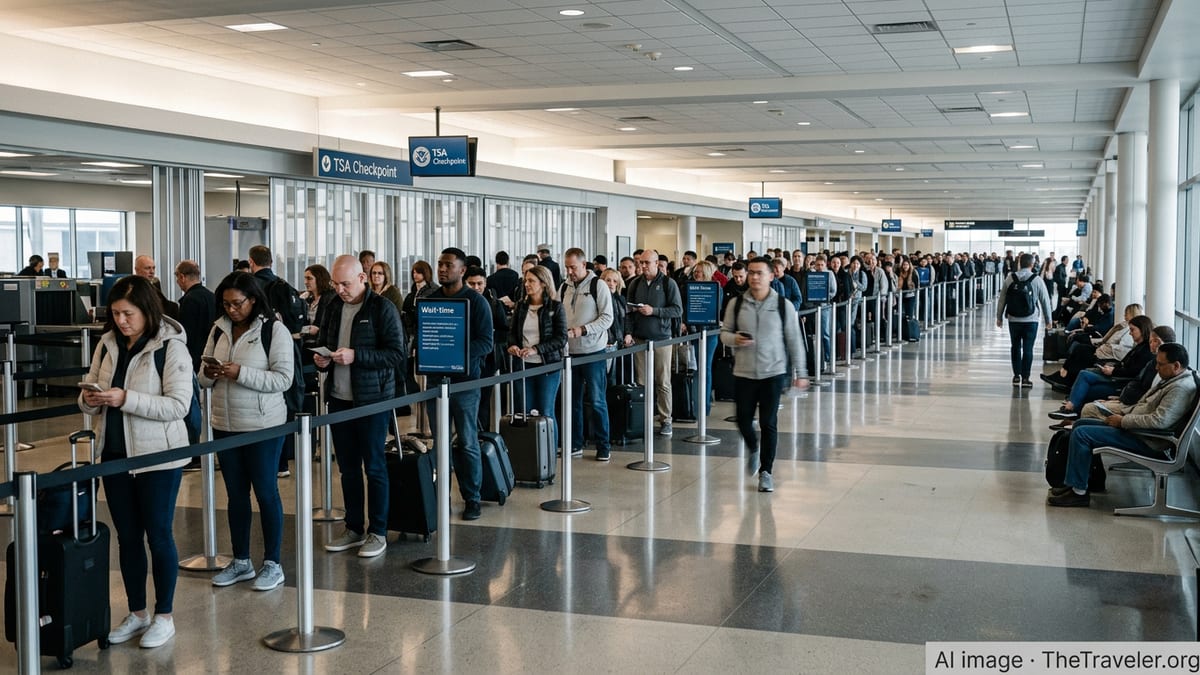
Evacuation follows report of suspicious items
According to early reports from local and national media, the incident began on Friday evening, 19 June 2026, when potentially suspicious items were identified during security screening in the departure area. Sections of the terminal were cleared as police and specialist teams attended, leading to a temporary halt in passenger processing.
Witness accounts shared on social media describe queues building rapidly as travelers were moved away from the main search lanes and instructed to wait outside or in overflow areas. Images posted online show crowded forecourts and departure halls as flights continued to show on information boards while access to security remained restricted.
Publicly available information indicates that the incident triggered a full security response, including a precautionary evacuation while checks were carried out. While no serious injuries have been reported, the result has been significant knock-on disruption to both departing and arriving services.
By Saturday morning, 20 June 2026, updates from passengers suggest that the immediate security concern had been contained, but residual delays were continuing as the airport worked through backlogs created during the closure period.
Flights delayed, diverted and cancelled across network
Flight-tracking data and airline updates show a mixed picture for services to and from Edinburgh in the hours after the security alert. Some aircraft were held on the ground awaiting departure slots, while others circled near the Scottish capital or diverted to alternative airports as the situation unfolded.
Passengers travelling late on Friday described departures that remained listed on screens without boarding calls, followed in some cases by cancellations once it became clear that aircraft or crews would be out of position. Travellers heading for Edinburgh from other UK airports also reported concerns that their flights might be turned back or delayed if the terminal remained closed on arrival.
Airlines have been advising customers to monitor their carrier’s app or text alerts closely, as schedules continue to adjust. For some short-haul European and domestic routes, same-day rebooking has been limited, with the next available seats pushed into later in the weekend. Longer-haul passengers connecting through Edinburgh have faced missed onward flights and the prospect of overnight accommodation.
While most services are now operating, industry data suggests that punctuality remains below normal, with rolling delays affecting departures as crews and aircraft are repositioned and security queues remain heavier than usual.
Security measures and capacity pressures under scrutiny
The incident has drawn renewed attention to security capacity and resilience at Scotland’s busiest airport. Planning documents for the current summer season show that Edinburgh operates close to its declared peak-hour security throughput, reflecting sustained growth in passenger numbers over recent years and tight scheduling of early-morning departures.
Previous analyses of the airport’s operations have highlighted a vulnerability to disruption when security screening is interrupted, even for a relatively short period. A temporary shutdown of search lanes, as seen during the latest alert, can rapidly create a backlog that takes hours to clear, particularly during peak travel waves.
Industry commentators note that similar incidents at other European airports have led to investment in more advanced scanning technology and redesigned queuing areas, aimed at keeping passengers moving while maintaining strict screening standards. At Edinburgh, recent upgrades have improved processing at normal times, but the latest disruption underlines how quickly an unexpected security event can overwhelm available capacity.
Travel analysts suggest that airports operating at or near their maximum planned security throughput may need more flexible contingency options, such as additional lanes that can be activated during an incident, or clearer protocols for staggering airline check-in to prevent overcrowding when screening is temporarily suspended.
Passenger experiences highlight communication challenges
Accounts shared by travellers caught up in the disruption point to communication as a key source of frustration. Many passengers reported receiving limited real-time information inside the terminal, relying instead on social media posts or airline apps to piece together what was happening beyond the security cordon.
Several described situations in which their flights were still marked as “on time” on departure boards while queues stretched across the concourse and police cordons remained in place. Others said they received gate numbers and boarding notifications on mobile apps even as airline websites showed their flights as cancelled or delayed.
Travel industry observers note that such discrepancies are common during fast-moving incidents, when airport operators, airlines and ground handlers are all updating systems at different speeds. However, the confusion can increase anxiety for passengers, particularly for those who are nervous flyers or who have tight onward connections.
Consumer groups typically advise affected travellers to document disruption with photos of information screens and retain receipts for any extra costs incurred, such as food, accommodation or alternative transport. Depending on the length of delay and the cause as eventually confirmed in official investigations, some passengers may later be eligible for compensation or refunds under airline and regulatory rules.
Advice for travellers heading to Edinburgh this weekend
With residual disruption expected to continue into the weekend, publicly available guidance from airlines and travel operators is urging passengers bound for Edinburgh to build in extra time and to stay flexible. Many carriers recommend arriving earlier than usual to allow for longer security queues as the airport works through remaining backlogs.
Travellers are being encouraged to complete as many formalities as possible before leaving for the airport, including checking in online, downloading boarding passes and confirming baggage allowances. Arriving with cabin bags that comply with airline rules and security restrictions can help reduce the risk of secondary screening and speed up processing at checkpoints.
For those with non-essential trips, some travel advisers note that rebooking to a later date or alternative Scottish airport may be worth considering if options are available at reasonable cost. Rail and coach links connect Edinburgh with Glasgow and other regional gateways, which could provide a fallback for travellers whose flights are significantly disrupted.
As investigations into the security alert continue, the incident is likely to feed into a wider debate about how UK airports balance tight security requirements with passenger experience, particularly during the peak summer season when terminals are already operating close to capacity.