


Baie des Anges, the long, gentle curve of coast running between Nice and Antibes on the French Riviera, has seduced painters, photographers and sunseekers for more than a century. Its appeal is constant, but the experience is not. The same bay feels very different in April’s silvery morning light than it does on a crowded August afternoon. If you are chasing beautiful light and smaller crowds rather than simply the hottest beach days, timing your visit is everything.
Get the latest updates straight to your inbox!
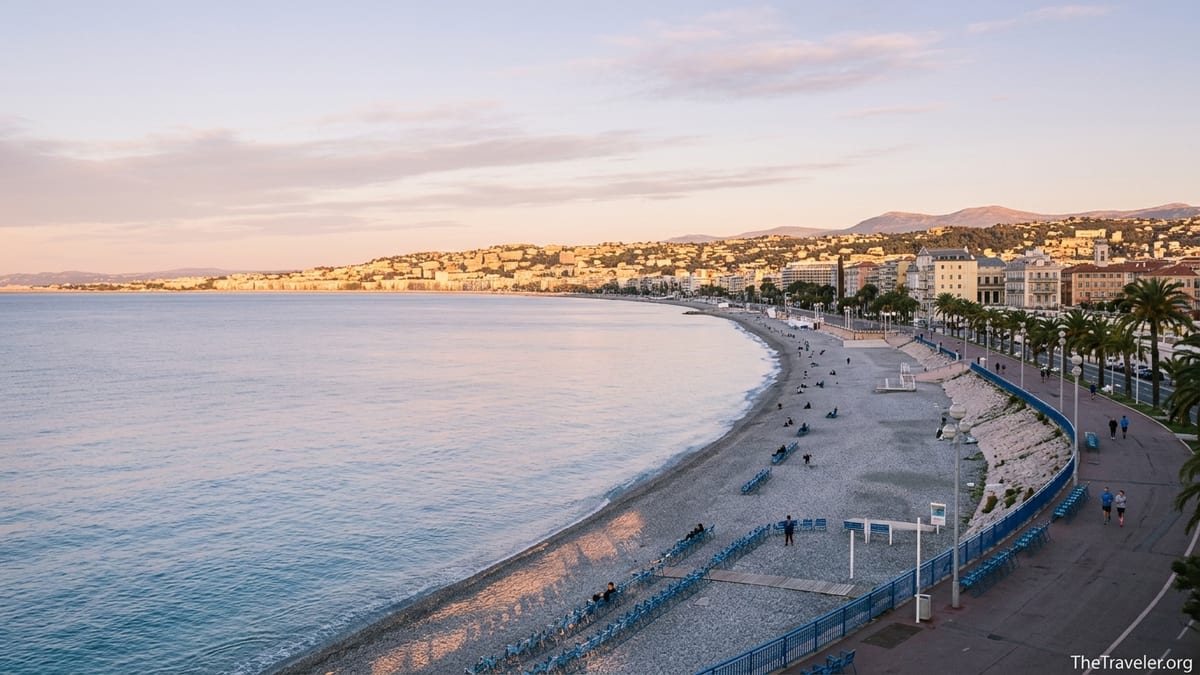
Understanding Baie des Anges: Light, Seasons and Crowds
Baie des Anges sits on the Mediterranean in southeastern France, framed by hills that rise quickly behind Nice and Antibes. That geography shapes the bay’s famous light. In high summer the sun arcs high and strong, giving long, bright days and harsh midday glare on the pale pebble beaches. In spring and autumn the sun sits lower, producing softer angles, gentler shadows and the golden tones that have attracted generations of artists to this coastline.
The climate is typically Mediterranean, with warm, dry summers and mild, wetter winters. Around Baie des Anges, sea temperatures become comfortable for most swimmers from roughly June through September, often hovering around the low 20s Celsius in mid-summer, while May and October feel ideal for walking the Promenade des Anglais or the seafront at Antibes in light layers. Winter days are frequently sunny but cooler and shorter, better for café terraces and coastal walks than long swims.
Tourist numbers follow a predictable curve. Visitor barometers from the Nice Côte d’Azur tourism office and major guidebooks describe a pronounced peak from June through August, with hotel occupancy and beach usage at their highest. May and September are classic shoulder months, offering nearly the same weather with noticeably fewer visitors. From November to March, the area slides into a softer, local rhythm. For anyone balancing light, atmosphere and crowd levels, those shoulder and low seasons are where you will find the sweet spot.
Think in terms of trade-offs. If you want to swim every day without thinking about water temperature, you will share the bay with more people and brighter, contrasty light. If you are happy with a bracing dip or simply paddling up to your knees, you can swap some heat for luminous skies, easier restaurant reservations and quiet corners on beaches that feel almost private.
Spring Shoulder Season: April to Early June
From early April to early June, Baie des Anges transitions from winter calm to summer buzz. Daytime highs in Nice and Antibes typically climb from the mid-teens Celsius in April into the low 20s by late May. You will often start the day with a light jacket and end it in shirtsleeves by the time the sun drops behind the hills. The sea is still cool in April, around the mid-teens, but many locals start quick dips by late May.
For light, this is one of the most rewarding times to visit. Sunrise in Nice shifts from around 7 am in early April to shortly after 6 am in late May, with sunset stretching out towards 9 pm by June. That creates long golden hours: soft morning light spilling across the bay, and evening light that flattens the sometimes harsh contrast between bright water and shaded old-town streets. Photographers staying near the Promenade des Anglais often plan dawn walks, catching empty blue chairs and a bay that looks glassy and pale blue before the first joggers appear.
Crowds are still manageable. Easter can bring a spike in visitors, and May weekends sometimes fill up with French holidaymakers and events, but outside those peaks you can expect to find mid-range seafront hotels in Nice such as simple two- and three-star properties along the promenade with more availability and noticeably lower rates than in July and August. In Antibes, securing a table with a sea view for a late lunch on a weekday in May is often as simple as walking up, rather than booking days in advance.
On the ground, that translates into a very livable rhythm. You might spend a morning exploring the Marché aux Fleurs at Cours Saleya in Nice or the market halls in Antibes under gentle light, then take the tram or train to a quieter stretch of the bay like Fabron or Carras for a picnic. Even on a sunny Saturday, you can usually find space between sunbeds on the public beach if you arrive before late morning. For those who like combining city strolling, photography and the occasional beach hour, spring is an excellent balance.
Late Summer and Early Autumn: September and October
For many seasoned Riviera travelers, early autumn is the single best time to experience Baie des Anges. September keeps much of summer’s warmth; daytime highs often sit in the mid-20s Celsius, and the sea, which has been warming since June, can feel at its most welcoming, frequently around the low 20s. Even in early October, you may find locals and visitors swimming comfortably in the afternoon, especially on still, sunny days.
Light in September and October has a different character from spring. The sun angle is lower, lending a richer, more golden cast to late afternoon scenes. The ochre and terracotta facades of Vieux Nice, the pastel houses above the port of Antibes and the white stone of the bay’s hotels and apartment blocks take on warm, honeyed tones. Sunrise shifts later, making dawn photography easier to catch without a pre-dawn alarm. Sunset comes earlier than in June but still gives you generous evenings, often around 7 to 8 pm in September and closer to 6 to 7 pm by late October.
Crowds thin significantly once French schools resume in early September. You will still see cruise ship excursions and conference groups, especially in Nice, but the spontaneous, shoulder-to-shoulder atmosphere of the August seafront eases. Mid-range hotels along the promenade often drop in price compared with August, and you are more likely to find last-minute availability in popular spots such as sea-view rooms or balcony studios in apartment hotels facing the bay.
In practical terms, this means more space and more breathing room. A late afternoon swim near the curved seafront of Nice might involve rolling your towel out with several meters of space on either side rather than negotiating for a patch of pebbles. In Antibes, you can walk the ramparts or the path along the Vauban harbor and watch the light fade over the bay without having to weave constantly through tour groups. For photographers and travelers who love that combination of mellow warmth, dynamic skies and calmer streets, September and early October are prime.
Winter and Early Spring: Quiet Days and Clear Light
From November through March, Baie des Anges enters its quietest period. Daytime highs in Nice and Antibes typically sit between 11 and 15 degrees Celsius, with cooler nights. The sea is at its coldest, often in the low teens, so swimming is mostly for the hardy or those in wetsuits. Yet many days are strikingly clear, with crisp blue skies after winter fronts pass through, and the Alps sometimes visible with snow on their peaks behind the bay.
Light in winter has a clarity that many photographers and painters prize. The low sun angle means extended soft light through much of the day. In December and January, sunrise in Nice occurs around 8 am and sunset around 5 pm, so you can experience both golden hours without early starts or late finishes. When the mistral-type north winds clean the air after a storm, views from Castle Hill in Nice or the old town ramparts in Antibes can be astonishingly sharp, with deep blue water and fine detail on the hills framing the bay.
Crowds are about as light as they ever get. While Nice still hosts events such as its famous February carnival that bring short bursts of visitors, the seafront and promenade are dominated by locals walking dogs, retirees on daily strolls and a few determined joggers. Many beach clubs dismantle their summer platforms, and you will see wide stretches of the pebble beaches completely unoccupied, especially on weekdays or cool mornings.
For travelers focused on atmosphere rather than sunbathing, this can be an ideal time. Hotel prices typically reach their lowest outside major holidays and event weeks. You might check into a seafront property with a balcony room overlooking Baie des Anges for a fraction of its August rate, spend mornings with coffee watching the changing light over the water, and then retreat into the museums of Nice or Antibes as the afternoon cools. Cafés on Place Garibaldi or in Antibes’ old town will be busy with locals, and you can slip into that rhythm in a way that is harder in peak season.
High Summer: When Light and Crowds Peak
June through August is when Baie des Anges feels most like the Riviera postcard: blazing sun, packed beaches, and a constant flow of visitors along the promenades. Daytime temperatures frequently reach the upper 20s Celsius and sometimes higher in heatwaves. The sea is warm, typically in the low to mid 20s by July and August, and many travelers can comfortably spend hours swimming or floating off the pebble beaches or the sandy stretches closer to Antibes.
For light, high summer is a mixed blessing. The days are long, with sunrise around 5:45 to 6 am in June and sunset near 9 pm. That gives ample time outdoors, but the overhead midday sun can be harsh. On the bright white pebbles of Nice’s central beaches or the pale concrete of the promenade, glare can be intense, flattening your photos and making sunglasses essential. Serious photographers and painters often retreat during these hours, using early morning and late evening for their best work and the middle of the day for café breaks or museum visits.
Crowds, however, are at their highest. The bay forms part of one of France’s busiest coastal tourism zones, and July and August are peak months for both international visitors and French vacationers. Public sections of the beach can feel shoulder-to-shoulder by mid-morning, especially near Nice’s Old Town. Private beach clubs set up loungers in dense rows, and you will often need to reserve in advance for front-row spots. Local trains between Nice, Antibes and neighboring towns can be standing room only at peak hours, and restaurant reservations in seafront districts are strongly recommended.
This does not mean high summer is to be avoided altogether, but it is less forgiving if you are sensitive to crowds. A practical compromise is to use Nice or Antibes as a base but schedule your beach time early or late in the day, and consider shorter trips inland during the afternoon to hill towns where the streets may be quieter. Another tactic is to shift your stay to late June or the final week of August, when conditions can still feel summery but the most intense holiday periods either have not yet started or are winding down.
Daily Rhythms: Best Hours for Light and Space
Whatever month you visit, the daily rhythm around Baie des Anges follows a pattern that you can use to your advantage. Early morning is consistently the quietest time on the promenade and the beaches. In summer, sunrise can be well before 6 am; even then, the first hour of daylight tends to belong to joggers, a few swimmers and photographers. By arriving on the beach with a coffee from a nearby bakery shortly after dawn, you can enjoy calm water, soft light and an almost empty shoreline, even in July.
Late morning through mid-afternoon is when both light and crowds peak. The sun is high, shadows are short and colors can feel washed out in photos, especially on cloudless days. This is when many visitors settle into sun loungers at private beach clubs, and public beaches like those near Nice’s central promenade or the popular coves near Antibes fill up. If you prioritize better light and a sense of space, this is your window for indoor activities such as the Matisse Museum in Nice, the Picasso Museum in Antibes, or leisurely lunches in shaded courtyards set a few blocks back from the seafront.
Late afternoon and early evening bring a second, more dramatic transformation. As the sun drops towards the southwest, the bay shifts from bright blue to deeper shades, and the buildings along the waterfront pick up warm reflections. In summer, evening golden hour often begins more than an hour before sunset, bathing the Promenade des Anglais, the palm trees and the bay’s curve in flattering light. Crowds are still present but more dispersed, with some people heading to dinner and others simply strolling. If you head slightly away from the busiest central stretches, such as towards the western part of Nice’s seafront or the quieter ends of Antibes’ beaches, you can often find enough space to enjoy the scene without feeling pressed in.
Night adds one more layer. After sunset, streetlights and hotel facades reflect in the water, and long-exposure photographers set up tripods along the promenade to capture car light trails and the soft glow over the bay. Even in summer, the densest daytime beach crowds vanish, replaced by couples, small groups of friends and the occasional night swimmer. For those who like to shoot or simply watch the bay under fewer eyes, a walk around 10 or 11 pm can feel surprisingly peaceful compared with the midday crush.
The Takeaway
If your main priorities in visiting Baie des Anges are beautiful light and smaller crowds, think beyond the classic July and August window. Spring from April to early June and autumn from early September into October offer some of the most rewarding combinations of long, soft-lit days, pleasant temperatures and manageable visitor numbers. Winter, though cooler, provides luminous clear light and a sense of having the bay almost to yourself, especially outside event weeks.
Within any season, how you structure your day matters as much as the month you choose. Early mornings and late afternoons consistently give you the best light and the most space on the promenade and beaches, while mid-day is best reserved for shade, museums and slow meals. By aligning your visit with these rhythms, you can experience the same Baie des Anges that artists and photographers have chased for generations: not just a busy Mediterranean resort, but a bay where the quality of light and the feel of the place change hour by hour.
Finally, stay flexible. The Riviera’s weather can shift quickly in shoulder seasons, with a run of perfect blue days followed by several grey, rainy ones. Building in at least a few days’ margin in your itinerary increases your chances of catching those luminous mornings when the bay is calm, the air is clear and the curve of Baie des Anges lives up fully to its name.
FAQ
Q1. What month has the best balance of light and fewer crowds on Baie des Anges?
September is often the best compromise, with warm sea temperatures, softer autumn light and noticeably fewer visitors than in July and August.
Q2. Is April too early to enjoy Baie des Anges?
April can be an excellent time if you value quiet streets and crisp light over swimming; the sea is cool, but promenades, markets and viewpoints are atmospheric and relatively uncrowded.
Q3. When is Baie des Anges most crowded?
From late June through August, especially around school holidays, beaches and promenades are at their busiest and hotel occupancy is at its highest.
Q4. Are winter visits to Baie des Anges worthwhile?
Yes, winter offers mild daytime temperatures for Europe, clear low-angle light, lower prices and a more local feel, though the sea is generally too cold for most swimmers.
Q5. What time of day has the best light for photography?
Early morning around sunrise and the hour before sunset provide the softest, most flattering light on the bay, with calmer water and fewer people in the frame.
Q6. Can I swim comfortably in May or October?
In May and October the sea is cooler than in high summer, but many visitors still swim on sunny days; it depends on your tolerance for fresher water rather than strict rules.
Q7. How far in advance should I book accommodation for a shoulder-season trip?
For April, May, September and October, booking several weeks ahead usually secures good options, though popular seafront hotels can still fill quickly over holiday weekends and major events.
Q8. Are beach clubs open outside the summer peak?
Many beach clubs operate from roughly May to late September, with exact dates varying each year; in early spring and late autumn you will rely more on public beach areas.
Q9. Does it rain a lot in the shoulder seasons?
Spring and autumn generally see more changeable weather than summer, with occasional rainy spells, but extended all-day downpours are less common than short, intense episodes.
Q10. Is it easy to find quiet spots on Baie des Anges even in summer?
Yes, if you go early in the morning or later in the evening and walk a little away from the central stretches near Old Nice, you can usually find pockets of relative calm.