

La Rambla is Barcelona’s most famous promenade and one of Europe’s most heavily visited streets. Walk it at the wrong time and it can feel like an overrun theme park. Time it well and you get something entirely different: a lively, characterful boulevard where you can actually see the architecture, hear the buskers, chat with flower sellers and slip into side streets that still feel local. Understanding when to go is the single most useful trick for experiencing La Rambla with a better atmosphere and smaller crowds.
Get the latest updates straight to your inbox!
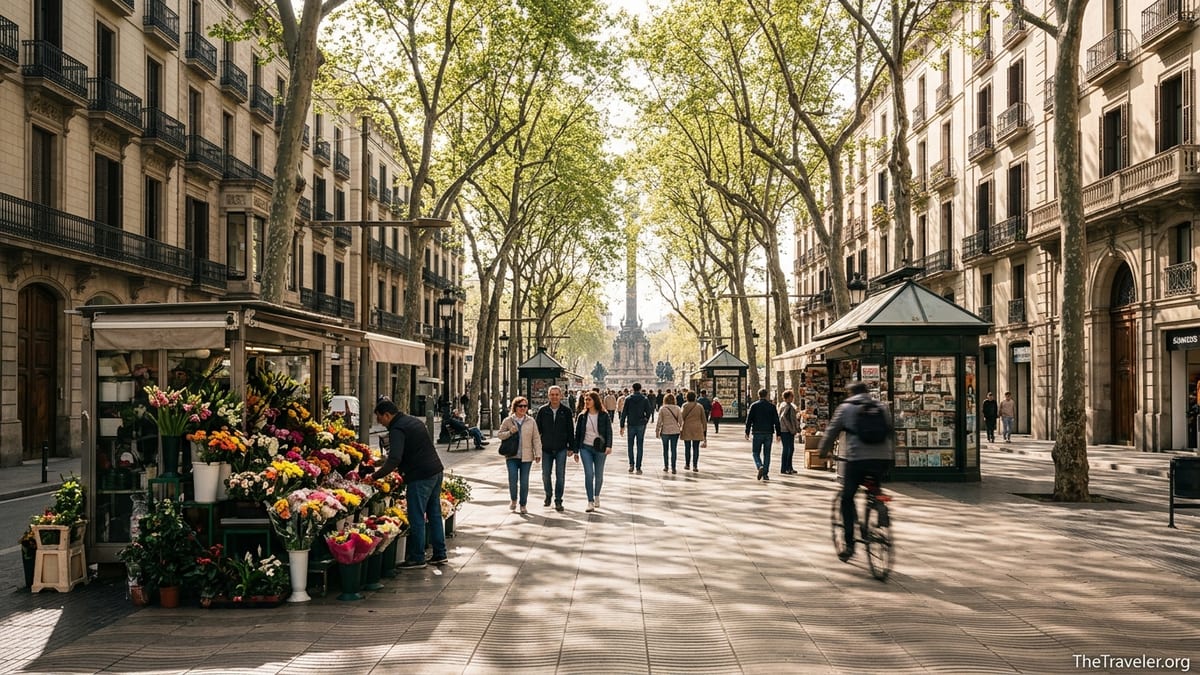
Understanding La Rambla’s Daily Rhythm
La Rambla stretches roughly 1.2 kilometers from Plaça de Catalunya down to the Columbus Monument at the old port, and the feel of the street changes dramatically from morning to night. Before about 9 am, it belongs mostly to delivery vans, joggers and commuters; by late morning the first tour groups and cruise passengers start to arrive, and from late morning through mid afternoon the promenade can feel like a moving wall of people, especially between the Liceu metro stop and Mercat de la Boqueria. By early evening, terraces fill with diners and theatergoers, and the crowd becomes denser but also more mixed, with more locals weaving through.
This rhythm matters if you are looking for atmosphere without being overwhelmed. For instance, a stroll at 8:30 am in May from Plaça de Catalunya toward the port lets you photograph the Canaletes fountain, the flower stalls and the mosaics by Joan Miró with only a handful of people in the frame. The same walk at 1 pm in July often means shuffling along behind tour groups, dodging selfie sticks and waiting just to reach a crossing. Planning your visit around these patterns is more effective than any list of generic “crowd avoidance tips.”
Another key dynamic is how different parts of La Rambla fill up. The top section near Plaça de Catalunya is usually the busiest because it catches people arriving from the Eixample and major metro lines. The middle section around La Boqueria and the Liceu opera house is where bus tours and walking tours converge. The lower section near the port can feel marginally less claustrophobic in peak hours, though it still gets steady flows of pedestrians from cruise shuttles.
The Best Seasons: When La Rambla Breathes
Barcelona’s main tourist season runs roughly from June to August, with a broad shoulder season from April to May and September to October. In peak months, citywide hotel occupancy soars and La Rambla often feels permanently busy in the central hours of the day. Shoulder season, on the other hand, usually delivers a better balance: warm enough for outdoor cafés but with noticeably fewer crowds than high summer.
If your priority is atmosphere plus space to move, the sweet spots are generally April, early May and late September into October. In a typical year, daytime temperatures then sit around the high teens to low 20s Celsius, pleasant for walking without the heavy humidity of July and August. On a Tuesday morning in late April, for example, you might find a steady but manageable flow of visitors past the Liceu, with empty tables still available on the side terraces and only small queues at the Boqueria entrances. By contrast, a Saturday in mid August can see the central stretch jammed, with coaches dropping cruise excursions at several points and guides holding flags every few meters.
Winter, from November through March, is Barcelona’s off season. La Rambla never feels empty, but weekday crowds thin noticeably, particularly in January and early February outside of the Christmas and New Year holidays. You might walk the entire length at 10 am on a Monday in January and count more locals walking purposefully to work than tourists stopping for photos. The trade off is cooler weather and the occasional grey, drizzly day, but hotel prices are often significantly lower and you gain back time otherwise lost to queues.
Weekdays vs Weekends: How Much Difference Does It Make?
Even within the same month, the day of the week can dramatically change your experience on La Rambla. Monday to Thursday mornings are generally the calmest, particularly outside major holiday periods. Many organized European city breaks run from Friday to Sunday, and short haul visitors often arrive in Barcelona on Friday evenings, which means La Rambla’s footfall typically climbs from Friday midday onward.
As a practical example, consider a long weekend in early October. On Friday at 9:30 am, you might find the Boqueria still workable, with space to approach a fruit stall and buy a cup of cut mango for around 3 euros without being jostled. By Saturday at the same hour, the number of people doubles, and by noon the surrounding section of La Rambla can feel packed, with lines forming just to get close to popular tapas stands inside the market. Sunday late morning often brings yet another wave of visitors, including domestic weekenders and those disembarking cruises.
If your itinerary is flexible, plan your La Rambla stroll for a weekday morning and save weekends for exploring neighborhoods where crowds disperse more, such as Gràcia or Poble Sec. For travelers on tight schedules, even shifting your main visit to La Rambla from Saturday midday to Sunday evening can help: many day trippers depart on Sunday afternoon, and the promenade can feel fractionally more relaxed by sunset.
Best Time of Day for Atmosphere and Smaller Crowds
Across most seasons, the single best window for a calmer yet atmospheric La Rambla is early morning, broadly between 8 am and 10 am. Cafés are opening, flower stalls are being arranged, and a light mix of commuters and early rising visitors flows along the central walkway. This is the time to grab a table at a café just off the main strip, order a cortado and a pastry for under 5 to 7 euros, and watch the city wake up without the aggressive hawking that becomes more common later.
Late evening is another strong option, especially on weekdays outside of peak summer. Around 9:30 pm in May or October, many day trippers have already left, and you get a softer, more local nightlife atmosphere: families heading home from dinner, older couples out for a stroll, and groups gathering near the Liceu for evening performances. Street musicians often set up near Plaça Reial’s entrances, and it can be pleasant to drift down La Rambla and then peel off into the square for a drink. Crowds will still be there, but you are less likely to feel shoulder to shoulder than at 6 pm.
The times to avoid, if smaller crowds are your goal, are roughly 11 am to 3 pm and 6 pm to 8 pm, especially in high season and on weekends. Those windows tend to capture the overlap of cruise excursions, coach tours and independent tourists all converging on the same stretch. In practice, that might mean needing 20 to 25 minutes to walk from Plaça de Catalunya to the Columbus Monument in July, compared with a relaxed 12 to 15 minutes in the early morning of April or November.
How Cruise Ships and Events Affect Crowds
One factor many visitors underestimate is the influence of cruise arrivals. Barcelona is one of the Mediterranean’s busiest cruise ports, and a significant share of passengers with only a day in the city head straight toward La Rambla and the Gothic Quarter. On days when several large ships dock, especially between May and October, late morning and early afternoon crowds on La Rambla can swell noticeably as organized groups are bussed to drop off points near the lower end of the boulevard.
You can feel the difference on the ground. Picture a June Tuesday when two big ships are in port: by 10:30 am, groups in matching lanyards cluster near the Columbus Monument, guides hold umbrellas aloft, and the flow of people heading up La Rambla becomes almost continuous. If you shift that visit to a Monday in March, with fewer ships and fewer land based tourists, you may still see a couple of guided groups, but there will be space between them and more gaps in the pedestrian traffic.
Local events also reshape crowd patterns. During popular festivals such as La Mercè in late September or citywide celebrations like Sant Jordi in April, visitors and residents pour into central Barcelona, and La Rambla becomes a key axis for parades, book stalls or floral decorations. The atmosphere is often wonderful and worth experiencing once, but this is not the time to seek quiet. If you prefer room to move, schedule your La Rambla stroll for early morning on festival days and spend the busiest hours in less central neighborhoods.
Micro-strategies: Where and How to Walk La Rambla
Timing is only part of the equation; how you use La Rambla matters just as much. One useful strategy is to treat the boulevard not as a destination to linger on, but as a scenic spine that connects to more characterful side streets. For instance, you can start at Plaça de Catalunya at 8:30 am, walk ten minutes down to the Boqueria while it is still manageable, then quickly step inside the market for a coffee and a pincho at a standing bar near the back where prices are closer to what locals pay.
From there, instead of continuing in the densest central strip, duck east into the Gothic Quarter along Carrer de la Boqueria or Portaferrissa. Within two or three minutes, the pace slows, and you can explore small bakeries and independent shops on narrow medieval streets that run roughly parallel to La Rambla. Later, when you are ready, you can rejoin the promenade near the Liceu or further down toward the port, effectively breaking your visit into calmer segments rather than one long push through the busiest section.
Another micro-strategy is to time your seated breaks just off La Rambla rather than directly on it. Terraces directly on the main strip often charge a premium for drinks and meals, and they are where hawkers and pickpockets concentrate. By walking a single block into El Raval or the Gothic Quarter, you can usually find a café where a coffee might cost 2 euros instead of closer to 4, and where you are surrounded by more residents than tour groups. You still enjoy the central location but avoid the densest, most commodified stretch.
Safety, Scams and Comfort at Quieter Times
La Rambla is generally safe, but as one of Barcelona’s top tourist zones it is also a hotspot for pickpocketing and minor scams. Visiting at less compressed times of day does more than reduce crowd stress; it also gives you better visibility of your surroundings. In tightly packed midday crowds, it is easier for someone to bump into you and lift a phone from a back pocket without being noticed. Walk the same section at 9 am and you have more personal space, fewer distractions and a clearer line of sight.
Common issues along La Rambla include distraction techniques like the “card trick” or street games that encourage you to gather around and watch, while accomplices circulate in the crowd. In the busiest hours, it is easy to drift toward these without meaning to. Early in the morning or later at night, there are fewer such setups, and you can usually spot them from a distance and detour around them. Keeping bags zipped and worn in front, avoiding leaving phones on café tables and ignoring overly friendly offers for “special deals” are basic precautions at any time, but they are also easier to maintain when you are not being jostled constantly.
Comfort also includes heat and fatigue. In July and August, the combination of direct sun, reflective paving stones and a lack of shade on some segments can make midday walks draining. Temperatures may not look extreme on a forecast, but humidity and crowd density magnify the effect. If you are visiting in high summer, planning your La Rambla stroll for early morning or after sunset reduces both the physical discomfort and the risk of short tempers in cramped spaces.
The Takeaway
Experiencing La Rambla at its best is less about luck and more about timing. Aim for shoulder seasons like April, early May, late September and October if you want a lively but not overwhelming atmosphere, and consider winter weekdays if your priority is space and value over guaranteed sunshine. Within any season, early morning between 8 am and 10 am is typically the most rewarding window, with late evening on weekdays also offering a pleasant compromise between buzz and breathing room.
Layer on a few smart tactics and the boulevard starts to work for you instead of against you. Use La Rambla as a spine, dipping in and out via side streets into the Gothic Quarter and El Raval. Plan Boqueria visits away from the late morning surge. Sit for coffee or lunch a block or two off the main strip. Pay attention to cruise ship days and festivals if you are highly crowd sensitive, and skew your strolls to days and times when fewer organized groups are likely to be present.
In the end, La Rambla is still one of Barcelona’s most touristy spaces, and you will not have it to yourself. But by choosing your season, day and hour thoughtfully, you transform it from an ordeal into a memorable walk: street musicians, newsstands, shaded plane trees and glimpses into centuries old alleys, all enjoyed at a pace where you can actually stop to take it in.
FAQ
Q1. What is the single best time of day to walk La Rambla with fewer crowds?
Early morning between about 8 am and 10 am is usually the best compromise, with open cafés, softer light for photos and noticeably thinner crowds than late morning.
Q2. Which month is best for La Rambla if I dislike heat and big crowds?
April, early May and October are often ideal, combining mild temperatures with fewer visitors than the summer peak, while still offering plenty of street life.
Q3. Is La Rambla less crowded in winter?
Yes, especially on weekdays from November to early March outside the Christmas and New Year holidays, though it never feels empty because it remains a central thoroughfare.
Q4. Are weekends always busier than weekdays on La Rambla?
Generally yes. Fridays to Sundays tend to draw more city breakers and domestic visitors, so if you can, plan your La Rambla stroll for Monday to Thursday mornings.
Q5. How much do cruise ships really affect crowds on La Rambla?
On busy cruise days from spring through autumn you will notice more guided groups and denser flows, especially late morning and early afternoon near the lower end toward the port.
Q6. Is it safe to walk La Rambla at night?
Early to mid evening is usually fine, but like any major nightlife area you should watch your belongings, avoid very late hours if alone and stick to well lit, busier sections.
Q7. Are prices higher on La Rambla than on nearby side streets?
Often yes. Drinks and meals on the main strip can cost significantly more, so many travelers step one or two blocks into El Raval or the Gothic Quarter for better value.
Q8. When is the best time to visit La Boqueria Market off La Rambla?
Arriving soon after opening, typically before 10 am on weekdays, helps you avoid the heaviest crowds and gives you more time to browse stalls comfortably.
Q9. Can I find a more local atmosphere near La Rambla?
Yes. Using La Rambla as a starting point and then turning into side streets toward Plaça Reial, El Raval or the Gothic Quarter quickly brings you to areas with more locals.
Q10. How long should I allow to walk La Rambla if I go at a quieter time?
At a relaxed pace with photo stops and a quick coffee, plan 45 to 60 minutes to stroll from Plaça de Catalunya to the Columbus Monument during early morning or off peak hours.