


Paraga Beach on Mykonos is often described as one of the island’s “party beaches,” largely because it shares a shoreline with heavyweight names like Scorpios and SantAnna. Yet walking onto the sand on a warm June morning, I found a place that felt far more balanced than the reputation suggests: traditional tavernas still grilling fish by the water, low-key swimmers gliding through calm turquoise sea, and the thrum of world-class DJs that only really takes over later in the day. It is this tension between relaxation and energy that makes Paraga one of the most interesting stretches of coast on Mykonos.
Get the latest updates straight to your inbox!
First Impressions: A Small Bay With Two Personalities
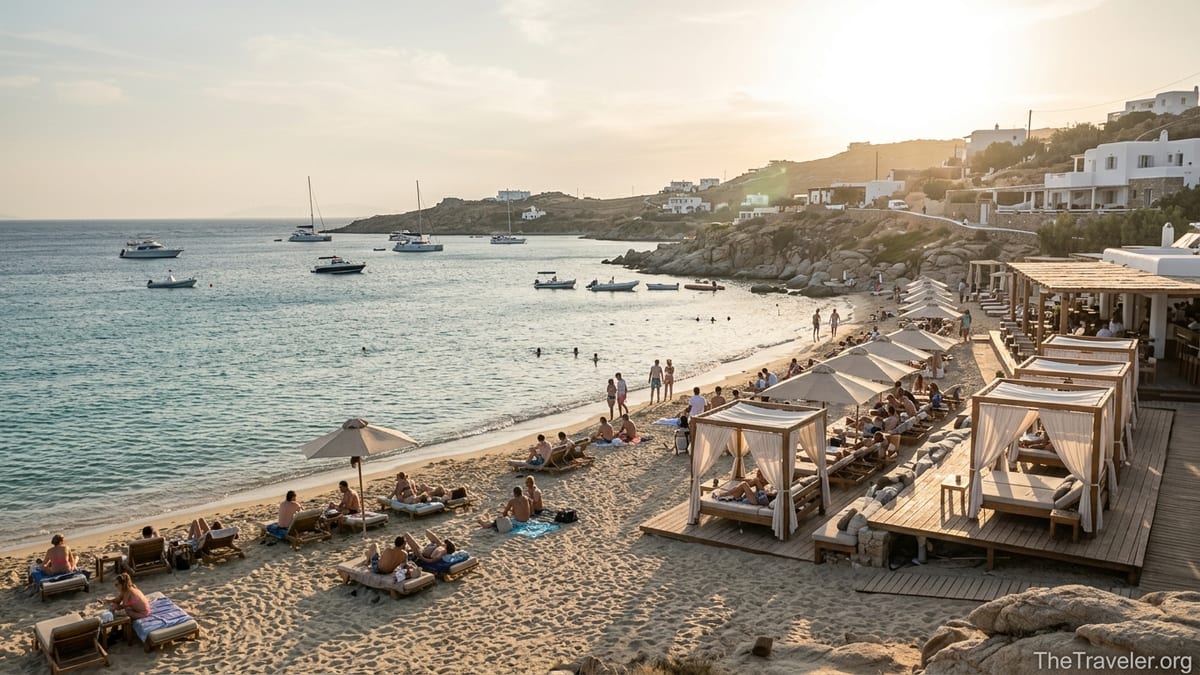
Paraga sits on Mykonos’s south coast, roughly 6 kilometers from Mykonos Town, in a compact double cove of honey-colored sand and clear, shallow water. Approach by the local bus from Fabrica Square and the first view is surprisingly gentle: a curving beach edged by tamarisk trees, a few rows of sunbeds, simple whitewashed buildings, and the island of Naxos hazy on the horizon. Away from the beach clubs, the soundscape is more about lapping waves and murmured conversations than pounding bass.
Walk a hundred meters, though, and the mood changes. At one end, wooden decks and linen-draped cabanas mark the territory of Scorpios, the globally known beach club that has turned this corner of Paraga into a destination in its own right. At the other, SantAnna spreads around a huge seawater pool with bars, boutiques, and cabanas orbiting the action. Because both venues are tucked slightly back or up from the sand rather than dominating every meter of shoreline, there is still space between them for older, humbler Paraga: the family-run tavernas, the public strip where you can throw down a towel for free, and small hotels perched above the bay.
This geography is what creates Paraga’s split personality. One zone feels almost like a quiet Greek beach of 20 years ago, especially before midday. Another is pure 2020s Mykonos, with curated playlists, bottle service, and the promise of sunset rituals. Spend a full day here and you can move between the two without ever leaving the bay.
Getting There and Getting Your Bearings
Paraga is one of the easiest southern beaches to reach without a car. In summer, frequent buses run from the main Fabrica terminal in Mykonos Town directly to the Paraga stop, with the ride taking around 10 minutes once you are on board. Tickets are typically just a few euros each way and can be bought at the kiosk before boarding. From the bus stop it is a short walk downhill to the sand. Many visitors time their arrival for late morning, around 10:30 or 11:00, when the sun is warm but the party venues are still firmly in daytime mode.
If you prefer to be independent, scooters and small cars can be rented in Mykonos Town or near the airport. Parking around Paraga is mixed. Scorpios operates managed parking for guests, while smaller tavernas and hotels have limited spaces for their customers. During peak July and August afternoons, drivers often end up along the access road and should be prepared for a short, dusty walk down to the sea.
Orientation on the beach itself is straightforward. Facing the water, the left-hand side feels more low-key, dotted with traditional spots like Tasos Taverna, where blue chairs and tables sit almost on the sand and grilled octopus often hangs to dry in the sun. This is also where you will find a wider stretch of public sand, with people spreading their own towels just behind the front lines of sunbeds. To the right and around the rocky headland the scene shifts to the sculpted wooden decks and cabanas of Scorpios and, beyond that, the sweeping compound of SantAnna wrapped around its enormous saltwater pool.
Paraga also connects by a rough coastal path to nearby Agia Anna and Platys Gialos, which means you can walk between these beaches in 15 to 20 minutes if you crave a change of scene. In practice, many people spend a full day circling between the sand, a taverna lunch, and late-afternoon drinks within Paraga’s own orbit.
Morning Calm: Swimming, Coffee, and Low-Key Beach Time
Arrive at Paraga before 11:00 and you might question its party reputation entirely. The water in the protected bay is typically calm, a gradient of pale turquoise near shore deepening to sapphire toward the rocky outcrops. Families with small children wade in the shallows, older couples swim steady laps parallel to the beach, and solo travelers read on their towels in the patchy shade of the trees. Music from the clubs is either absent or so soft it becomes part of the background.
This is the time to appreciate Paraga as a classic Cycladic beach. Sunbeds in front of the simpler tavernas are usually the most reasonably priced on Mykonos, with two beds and an umbrella often coming in well below the premium charged by the headline clubs. Exact figures change year to year, but it is fair to say you can still find sets that feel accessible compared with headline-grabbing fees elsewhere on the island. Alternatively, stake out a spot on the public stretch with your own mat and use a beach bag as a pillow. Showers and toilets at tavernas are usually accessible if you are eating or drinking there.
Breakfast here tends to be unfussy. You might order a Greek coffee and a slice of spinach pie at a taverna table a few steps from the sand, or share a simple omelet, yogurt with honey, and fresh orange juice with a view of anchored yachts. Prices for these basics are higher than on a mainland village square but still reasonable for Mykonos, especially compared with designer cafes in town. It is a good time to stock up on water, which at beach-bar prices can add up quickly once the day heats up.
For swimmers, the right-hand side of the bay near the rocks offers slightly deeper water sooner and small platforms from which braver souls take short jumps into the sea. Snorkelers sometimes trace the rocky edges, spotting small fish and sea urchins clinging to the submerged stones. Even in high season, mornings usually retain a sense of unrushed, local rhythm that can surprise visitors expecting nonstop clubbing.
Afternoons: When the Volume Rises and Paraga Starts to Pulse
By mid-afternoon, Paraga begins to lean into its livelier side. Around 3:00 or 4:00 p.m., sound systems at SantAnna and Scorpios gradually shift from ambient daytime playlists to more pronounced DJ sets, especially on weekends or on days when a big-name act is scheduled. You can feel the energy building subtly at first: more people standing to talk between sunbeds, waiters carrying chilled rosé by the magnum, couples moving to the rhythm while still ankle-deep in water.
At SantAnna, the focal point is the vast, free-form seawater pool, one of the largest of its kind in the Mediterranean. Guests cycle between the pool, beach loungers, shaded cabanas, and the bars and restaurants that ring the complex. Spending a day here can mean ordering sushi or mezze platters to your sunbed, booking a short massage at the on-site spa, and dipping in and out of the pool as the music grows louder. Prices reflect the scale and ambition of the place: cabanas and VIP areas are marketed to groups planning to spend hundreds of euros over the course of an afternoon, while regular sunbeds and bar seating offer a more moderate way to sample the atmosphere.
Scorpios, perched slightly above the beach on a peninsula, operates on its own rhythm. Days start with a languid beach-club feel, with guests relaxing on linen-covered loungers and sharing mezze-style dishes from a menu that highlights Mediterranean ingredients and fire-cooked flavors. As the sun drops, the pace quickens. Servers glide between tables balancing mezcal cocktails and sharing plates, and some zones transition naturally from dining room to dance floor as people stand up to sway or dance between courses. Many visitors schedule their entire day around this transition from soft afternoon to full sunset ritual.
Even if you stay on the more traditional side of Paraga, afternoons bring a shift. The general background volume increases, more small boats anchor offshore with music of their own, and the beach fills with day trippers from other parts of the island. Yet it rarely becomes as relentlessly loud as neighboring Paradise Beach, home to clubs that are famous purely for high-octane parties. At Paraga, you can still step a few meters back from the sunbed lines and find people napping under trees or kids playing quietly in the sand.
Dining: From Barefoot Tavernas to Statement Beach-Club Kitchens
One reason Paraga feels more balanced than expected is the food. Rather than being entirely dominated by club menus, the beach still hosts tavernas that look and feel like the Greece many travelers come hoping to find. At a place like Tasos Taverna, plastic or wooden tables sit right on the sand, and menus focus on grilled sardines, fried calamari, Greek salad piled with local tomatoes, and carafes of house wine. Portions are generally hearty, and while prices are higher than on less fashionable islands, a simple seafood lunch here can still feel like fair value, especially given the location.
In contrast, Scorpios and SantAnna treat dining as a central part of their proposition. Scorpios in particular has built a reputation for a “slow food” approach that emphasizes seasonal produce, seafood, and dishes cooked over open flame. Expect plates like charred octopus with fava, whole fish baked in salt, or colorful grain and vegetable salads aimed at guests who want to eat relatively healthily without sacrificing flavor. Reservation patterns change, but many travelers now book lunch or early dinner weeks in advance for peak dates, especially for sought-after sunset slots.
SantAnna’s multiple restaurants skew international, from sushi and raw bars to Mediterranean grills and more casual poolside bites. It is not unusual to see a group order a mix of Greek classics, ceviche, and shared platters of fries and sliders as the afternoon stretches into early evening. Prices at both major clubs can climb quickly once you add cocktails and bottles of wine, so it is wise to review a menu and agree on a rough budget with your group before settling into a cabana for the day.
For those seeking something in between, you can eat a simple taverna lunch, then drift over to the edges of the beach-club scene later without committing to a full package. A common pattern is to spend the cheaper, quieter part of the day under a modest umbrella, then walk over to the more polished decks in time for a sunset drink and DJ set.
Sunset and Night: Rituals, Regulations, and Knowing When to Leave
Sunset is when Paraga’s two sides visibly overlap. As the sun melts toward the line of neighboring islands, it casts a golden wash over the bay and the rocky peninsula in front of Scorpios. The club is famous for its sunset rituals, which often involve live performers, drummers, or DJs building a slow-burning set as the sky shifts from blue to tangerine to deep purple. Guests stand on the terraces and sandy dance areas, many barefoot, phones held high to catch the moment when the sun finally disappears.
Even if you are not inside Scorpios, you will hear the crescendo from the wider bay. People lean against the rocks or pause their swims to listen as beats echo across the water. At the same time, more modest spots along the beach often experience their own sunset peak, with tavern tables filling up, couples ordering last rounds of ouzo, and children begging for one more dip before dinner. This is Paraga at its most atmospheric, when the wild edges of the headland, the curated stage lighting of the club, and the simple beauty of the sea all converge.
Nightlife here is energetic but not entirely open-ended. Local regulations keep beach-club music within defined hours, which in practice means sets typically wind down around midnight or shortly after. That is still late enough to feel you have had a full night out, but it avoids the through-the-night intensity you might find in a dedicated club. Many younger visitors head on to Paradise Beach or Mykonos Town afterward if they want to keep dancing, using taxis or pre-arranged transfers rather than walking the unlit roads.
If you are staying in a hotel above the bay, it is worth checking how much of the sound reaches your room, especially on nights with major events. Some properties have excellent soundproofing and face away from the main speakers, while others are blessed with unobstructed sunset views that come hand-in-hand with more audible music. Earplugs can be useful if you prefer to be asleep by midnight during the busier weeks of summer.
Where to Stay Near Paraga if You Want Balance
Accommodation around Paraga reflects the bay’s dual identity. On the clifftops and hillsides above the water, you will find a mix of boutique hotels, simple studios, and high-end villas, many with shared pools and wide Aegean views. Some properties lean into the boho-chic aesthetic associated with the nearby clubs, with natural materials, earth-tone linens, and low-slung built-in sofas framing the views. Others feel more traditionally Cycladic, with blue shutters, potted geraniums, and families running the reception desk.
For travelers seeking a calm base within walking distance of the action, it makes sense to look slightly back from the shoreline. Studios or guesthouses a few minutes uphill typically enjoy quieter nights, especially outside the heart of July and August, while still being a short stroll from the sand. Many repeat visitors choose this arrangement: mornings on the balcony or at the hotel pool, afternoons at the beach, and one or two carefully chosen evenings at Scorpios or SantAnna rather than committing to a party every night.
Budget-conscious travelers should note that prices within easy walking distance of Paraga tend to be higher than in inland villages or in less famous parts of the island. One cost-saving strategy is to stay along the bus route closer to Mykonos Town or at Platys Gialos and use the frequent buses or coastal paths to access Paraga for day trips. This also gives you flexibility if you decide that, after one or two high-energy afternoons, you prefer quieter beaches elsewhere.
Wherever you stay, confirming how late reception operates, what the taxi options are after midnight, and whether there are steep paths involved in the walk back from the beach can make the difference between a magical night and a stressful one, especially if you are navigating in sandals after a long evening.
Practical Tips for Enjoying Both Relaxation and Energy
To experience Paraga’s balanced character, timing is everything. If you want the most tranquil version of the beach, aim to arrive early in the day, particularly outside high season months like July and August. Late May, June, and September often deliver warm sea temperatures and active but not overwhelming club schedules, so you can swim in relative peace and still enjoy a sunset ritual once or twice during your stay.
If your main goal is to tap into the party side, plan ahead. Reservations at Scorpios and SantAnna on peak days, especially weekends, can fill weeks in advance. Many visitors choose a specific day, often a Sunday or a day with a favorite DJ, and build their itinerary around that. It is wise to clarify minimum spends and time slots in advance so there are no surprises when the bill arrives. Those on a tighter budget sometimes opt for bar seating or later arrivals after peak dining hours for a taste of the atmosphere without committing to full table packages.
Cash is still useful for small purchases at kiosks or bus tickets, but nearly all beach venues, tavernas, and clubs accept major credit cards. Dress codes on the sand are relaxed, but beach clubs increasingly favor a polished version of bohemian style: light linens, sandals, and resort wear that transitions easily from sunbed to dinner table. A light layer is handy for after dark, when breezes can pick up even in the height of summer.
Finally, take care of the basics so you can enjoy the full arc of a Paraga day. The sun on Mykonos is strong, so high-SPF sunscreen, a hat, and regular dips in the sea or shade breaks are essential. Drink plenty of water between cocktails, especially if you are dancing or spending hours in the sun. And remember that it is entirely acceptable to duck back to your hotel for a short siesta between the quiet morning swim and the more energetic late afternoon, then return refreshed for sunset.
The Takeaway
Paraga Beach in Mykonos might be famous today for marquee names like Scorpios and SantAnna, yet on the ground it still feels more nuanced than a simple “party beach” label suggests. The bay’s small size, varied shoreline, and mix of old-school tavernas and high-design clubs create a place where you can start the day with a quiet swim in glass-clear water, linger over grilled fish at a table in the sand, and then, if you choose, climb a few steps into one of the most talked-about beach clubs in the world to watch the sun go down to a carefully curated soundtrack.
That inherent flexibility is what makes Paraga special. You do not have to pick a side between relaxation and energy here; you can move along the spectrum over the course of a single day or an entire week. Whether you are a couple seeking a few memorable sunset rituals, a group of friends planning one big afternoon of cabanas and DJs, or a solo traveler content with a cappuccino and a book under the trees, Paraga offers enough space and variety to accommodate you all without losing its essential Aegean charm.
FAQ
Q1. Is Paraga Beach suitable for families, or is it mainly a party spot?
Paraga works for both. Mornings and early afternoons, especially outside late July and August, are generally calm and family-friendly, with shallow water and quieter music, while the energy increases later in the day around the beach clubs.
Q2. How do I get from Mykonos Town to Paraga Beach without a car?
The most straightforward way is by local bus from the Fabrica station in Mykonos Town, which runs frequently in summer and takes around 10 minutes to reach the Paraga stop, followed by a short walk downhill to the beach.
Q3. Do I need a reservation for Scorpios or SantAnna at Paraga?
For peak summer days, especially weekends and sunset hours, reservations are strongly recommended at both Scorpios and SantAnna, particularly if you want a specific table, sunbed area, or cabana and to understand any minimum spend requirements in advance.
Q4. Can I still use Paraga Beach without paying for a sunbed?
Yes. While much of the front row is occupied by organized sunbeds belonging to tavernas and clubs, there are still stretches of public sand where you can lay down your own towel and swim without hiring a lounger, especially toward the more traditional side of the bay.
Q5. How expensive is it to spend a day at the big beach clubs on Paraga?
Costs vary widely depending on season, location, and what you order. Basic sunbeds are usually the most affordable option, while front-row beds, cabanas, and VIP areas often come with higher minimum spends that can reach several hundred euros for a group on peak dates.
Q6. What should I wear at Paraga Beach and its beach clubs?
On the sand, regular swimwear and cover-ups are fine. At Scorpios and SantAnna, guests tend to favor stylish resort wear and light linen outfits that transition easily from beach to bar or restaurant, with flat sandals or wedges rather than formal shoes.
Q7. Is the water at Paraga good for swimming and snorkeling?
Yes. The bay is relatively sheltered, with clear, usually calm water and a sandy bottom ideal for swimming. Around the rocky edges, light snorkeling can reveal small fish and marine life, though it is not a dedicated snorkeling destination.
Q8. Are there affordable food options at Paraga, or only upscale venues?
Alongside high-end beach-club restaurants, Paraga still has simpler tavernas where you can order Greek salads, grilled fish, and basic meze at more moderate prices, making it possible to eat well without committing to an expensive club meal every day.
Q9. Does the music at Paraga go late into the night?
Beach-club music typically builds through the afternoon and evening, then winds down around midnight or shortly after in line with local regulations. Those looking for late-night or early-morning parties usually continue on to clubs in Mykonos Town or at nearby Paradise Beach.
Q10. When is the best time of year to visit Paraga for a balance of calm and nightlife?
Late May, June, and September often offer the best balance, with warm weather and active but not overwhelming nightlife. July and August bring the liveliest parties and busiest crowds, while shoulder months feel more relaxed but still social.