


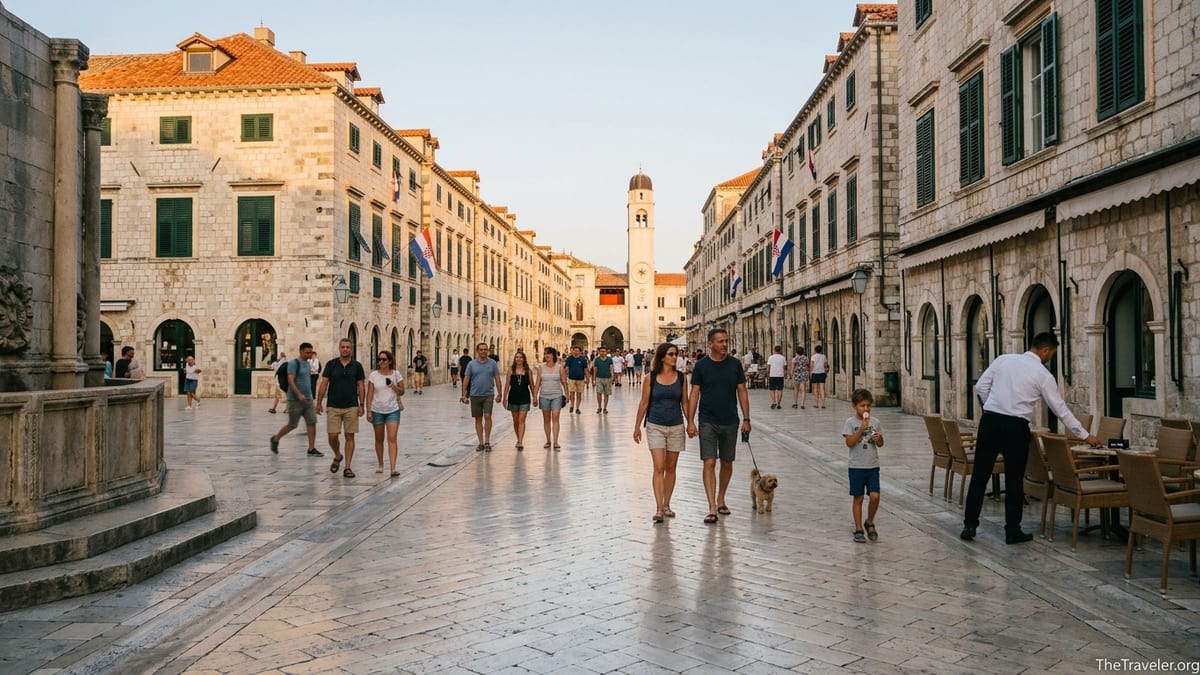
Stradun, the polished limestone spine of Dubrovnik’s Old Town, can feel like two different places depending entirely on when you visit. At peak midday in August, it becomes a slow-moving river of tour groups, cruise passengers and selfie sticks. At dawn on an April weekday, you might share the street only with café staff rolling out awnings and a local grandmother carrying bread from the bakery. Choosing the right season, day, and even hour can transform your experience here from frustratingly crowded to quietly enchanting.
Get the latest updates straight to your inbox!
Understanding Stradun’s Rhythm Through the Year
Stradun, also known as Placa, is the main pedestrian avenue that runs through the heart of Dubrovnik’s walled Old Town. It concentrates almost everything visitors want to see in a very short stretch: historic façades, baroque churches, side alleys leading to harbor views, souvenir shops, and terrace cafés. Because the Old Town is compact and car free, nearly every visitor passes along Stradun, which is why timing matters so much if your goal is atmosphere without the crush.
The heaviest crowd pressure corresponds to the broader tourist season in Dubrovnik. Summer school holidays in Europe and North America make July and August the busiest months, when average daytime highs are around the upper 80s Fahrenheit and humidity adds to the discomfort. Stradun in this period can feel packed from late morning until late evening, especially on days when multiple cruise ships are in port. Expect slow progress, frequent stops for guided groups, and waits for a table at any popular café.
Shoulder seasons in late spring and early autumn bring a very different feel. In May, June, September and early October, temperatures tend to be comfortably warm instead of oppressive, with more days in the low to mid 70s or low 80s Fahrenheit. Hotel prices are still higher than in winter, but the mix of independent travelers, small-group tours and weekend city-break visitors often creates a livelier but less overwhelming buzz on Stradun. You will still share the street with tour groups, yet there is more space to notice architectural details, pause for photos, and actually hear the church bells.
Winter and early spring, roughly November through March, are the quietest months and can be a rewarding time if you value breathing room over guaranteed sunshine. Many smaller souvenir shops may close for several weeks, and some restaurants take seasonal breaks, but a core of cafés and local services remains open. On a bright, cool day in February you might stroll Stradun and recognize more local faces than tourists, especially outside of weekend city-break peaks around Christmas markets and New Year celebrations.
High Season Realities: July and August on Stradun
Visiting Stradun in high summer is not automatically a bad idea, but it requires realistic expectations and good micro-timing. Between roughly early July and the end of August, Dubrovnik is at full capacity. Cruise ships are scheduled most days of the week, hotels and short-term rentals are near full occupancy, and day-trippers arrive by bus from nearby resorts. On a busy day, Stradun between Onofrio’s Fountain and Luža Square can feel continuously full from 9 in the morning to well after 10 at night.
One practical example: a couple arriving in mid-August around 11 a.m. from a cruise shuttle in Gruž port should anticipate a dense stream of passengers moving in the same direction. By the time they pass through Pile Gate and reach Stradun, they will likely be walking shoulder to shoulder, especially near ice cream stands, currency exchange kiosks and the entrances to popular side streets. Photographing the street without people in the frame is essentially impossible at this time of day.
Heat is another factor in high season. The pale limestone that makes Stradun so photogenic in golden-hour light also reflects and radiates heat after hours of direct sun. Between about 1 p.m. and 4 p.m., temperatures can feel considerably hotter at pavement level than what the weather forecast suggests, particularly for young children or older travelers. Visitors rushing from Stradun up the side staircases toward the city walls sometimes underestimate how strenuous the climb can feel under this combination of heat and crowding.
If you can only visit in July or August, aim your Stradun walks around the edges of the day. A family staying in Lapad, for instance, could take an early bus or taxi and be at Pile Gate by 7 a.m. At that hour, even at the height of summer, you might encounter just a handful of locals walking dogs, delivery workers pushing trolleys, and one or two photographers. The same street that felt chaotic at lunchtime becomes calm, with long shadows and space to appreciate details like the carved stone window frames above the shop fronts.
The Sweet Spot: Shoulder Seasons for the Best Atmosphere
For most travelers, the most rewarding mix of pleasant weather, manageable prices and tolerable crowds on Stradun falls in the shoulder seasons: late April to mid June and mid September to mid October. During these windows, daylight lasts well into the evening, the sea is warming up or still pleasantly swimmable, and many of the large package tours have not yet arrived in full force or are already tapering off.
Imagine a long weekend in late May. You arrive on a Thursday, when a few small cruise ships are in port but no mega liners. That evening, Stradun is lively but not jammed: local teenagers gather near the fountain, couples linger over aperitifs at outdoor tables, and there is space to stroll arm in arm without constantly sidestepping selfie sticks. Temperatures hover in the upper 60s or low 70s Fahrenheit at night, making it comfortable to sit outside with a glass of Dalmatian white wine or a scoop of hazelnut gelato and simply watch the stream of passersby.
Similarly, a visit in late September often delivers warm afternoons suitable for the beach combined with pleasantly cool mornings. You might start the day with coffee in a side-street café just off Stradun and watch tour groups start to form around 9 a.m., then wander the main street before it fills. By midday you could head to Lokrum Island or a nearby cove, returning after 5 p.m. when the light turns softer and many day-trippers are already on their way back to hotel coaches or cruise tenders.
Shoulder seasons also make it easier to experience popular activities connected to Stradun without the most severe crowding. For example, walking the city walls in early May at 8 a.m. or 5 p.m. gives you repeated overhead views of Stradun with enough people to add scale and life, but not so many that the street appears clogged. Photography enthusiasts prize this period, because the combination of golden light and moderate foot traffic creates dynamic but not chaotic images.
Month-by-Month Snapshot of Stradun Crowds
While exact conditions change year to year, you can use a rough month-by-month pattern to decide when to target your visit. In March and early April, Stradun slowly emerges from winter calm. You might find some construction work or façade cleaning underway as businesses prepare for the season, and a few early tour groups, especially around Easter. The atmosphere is subdued, with cool evenings and a noticeable local presence running errands or meeting friends for coffee.
By late April and throughout May, the rhythm picks up. Outdoor seating expands, shop displays become more elaborate, and you see a mix of school groups, cultural tours and independent travelers. Stradun at this time tends to be comfortable for strolling between about 8 a.m. and 10 a.m., slightly busy from late morning to mid-afternoon, and then pleasantly animated in the evening. Hotel and apartment rates usually start climbing around May, reflecting this rising demand.
June through August brings the year’s maximum density. June is often slightly more relaxed than July and August, but in all three months you should expect crowded conditions in the core hours from roughly 10 a.m. to 4 p.m. On certain weekdays, when two larger cruise ships are scheduled to be in port, the difference is very noticeable on Stradun: queues form at popular ice cream counters, and even buying a bottle of water in a convenience shop can involve waiting behind a line of day-trippers.
September and early October retain much of summer’s pleasant warmth with noticeably reduced crowd levels, especially in the second half of September. Stradun remains busy in the evenings, thanks to lingering sunshine, but daytime congestion eases. From late October into November, the pattern reverses again: some terraces close, evenings become quieter, and you are more likely to hear Croatian than foreign languages on the main street. December brings its own short, intense peak during Advent and New Year festivities, when seasonal decorations and stalls draw residents as well as visitors back to Stradun after dark.
Daily Timing: Best Hours on Stradun to Avoid the Crush
Whatever month you choose, your experience of Stradun will depend heavily on the time of day. Most visitors staying outside the Old Town arrive mid-morning and depart late afternoon, while cruise passengers typically funnel in large waves after breakfast and before all-aboard time. The result is a predictable crowd curve: quiet early mornings, rapidly building numbers from 9 a.m. onward, a plateau through the middle of the day, and a gradual easing from late afternoon into the evening.
If your priority is to feel Stradun as a lived-in local street, aim for the early hours between about 6:30 a.m. and 8:30 a.m. In May, for example, you could leave a nearby guesthouse just after sunrise, pick up a takeaway espresso from a café that opens early, and walk the length of Stradun while shopkeepers sweep stone thresholds and deliveries of fresh produce arrive at side entrances. There will be few, if any, guided groups at this time, and you are more likely to overhear casual conversations between residents than tour commentary.
Late afternoon and early evening, particularly in shoulder seasons, offer another sweet spot for atmosphere with relatively fewer crowds. Returning from a day at the beach or on a boat trip, you might re-enter the Old Town around 5 p.m. By then, cruise passengers are often starting to head back toward buses and tenders, and heat has begun to bleed from the stone. Stradun feels relaxed: families stroll with ice creams, musicians set up near Luža Square, and restaurant staff invite passersby to consider dinner menus without the hard sell that sometimes appears at peak pressure.
The most challenging window, if you wish to avoid dense crowds, is generally between 10 a.m. and 3 p.m. on days with significant cruise traffic, especially in July and August. If you find yourself on Stradun at this time, consider ducking into quieter side streets leading toward less-trafficked churches and small squares, or explore the back lanes on the harbor side of the city where the flow of people thins. Emerging back onto Stradun later, you will notice how the atmosphere shifts as group tours disperse.
Cruise Ship Schedules and Their Impact on Stradun
One of the strongest predictors of crowd intensity on Stradun is the day’s cruise ship schedule. Dubrovnik’s main cruise terminal at Gruž, a few kilometers from the Old Town, receives vessels of varying sizes. Even with limits on simultaneous arrivals, a single large ship can bring several thousand passengers, many of whom will head straight for Stradun within a short time frame. When two such ships overlap, the main street can feel saturated during the late morning and early afternoon.
Independent travelers increasingly plan their Old Town days around these patterns. A couple staying for a week in a nearby apartment, for instance, might check the port authority’s published cruise calendar the night before. Seeing that three midsize ships are due on Tuesday but only one small vessel on Wednesday, they could decide to explore Stradun early on Tuesday before 9 a.m., then spend midday on a boat trip or at a beach outside town. On Wednesday, with fewer scheduled arrivals, they might feel comfortable lingering on the main street around lunchtime.
Even on heavy cruise days, micro-timing helps. Many organized shore excursions begin with a panoramic bus or cable car ride to Mount Srđ or a coach trip to nearby villages before returning to the Old Town. This can create temporary lulls on Stradun in the late morning or mid-afternoon, even when overall numbers are high. Observant visitors sometimes notice these ebbs and flows and adjust accordingly, choosing to wander the back streets or visit a museum when a wave hits, and returning to the main street when a group disperses.
For day-trippers arriving by cruise ship themselves, the same logic can improve the experience. Rather than joining the general flow straight from the shuttle to Stradun at 10 a.m., some choose to spend their first couple of hours elsewhere, such as kayaking around the city walls or taking the cable car early, and only walking Stradun later in the afternoon when at least part of the shipboard crowd has already returned.
Experiencing Stradun Like a Local
To feel Stradun as more than a postcard backdrop, it helps to tune into how residents use the street at different times. For locals who still live inside or close to the Old Town, Stradun functions as a practical thoroughfare and social meeting point. Around 7 a.m. on a weekday in April, you might see office workers cutting across the street with takeaway coffees, a delivery van parked near the gate before the pedestrian zone fully wakes up, and schoolchildren in small groups heading toward nearby bus stops.
Late afternoon and early evening, especially outside the core of summer when temperatures are milder, Stradun often becomes an outdoor living room for locals. Families push strollers, grandparents walk slowly in pairs, and groups of friends stop to chat in front of familiar storefronts. A visitor staying within the walls for a few nights might pick a single café terrace slightly removed from the busiest central section and return there around 6 p.m. each day. Over several evenings, staff may begin to recognize you, turning the experience from purely transactional to something more personal.
Seasoned Dubrovnik residents often avoid Stradun in peak midday in high season, choosing instead to run errands early or late. Watching this pattern can be instructive: if you notice a sudden shift from mainly locals to mainly visitors around 9 a.m., it signals that organized tours have started. Conversely, when you see shop shutters rolling down and terraces gradually emptying around midnight in shoulder seasons, you are witnessing the street hand itself back to residents after a long day.
If you stay in a guesthouse or rental apartment within the Old Town itself, you gain additional flexibility to dip in and out of Stradun as conditions change. You could step out for a brief walk at sunrise, retreat to your room or a shady courtyard during the busiest hours, then re-emerge at twilight. This pattern often proves more pleasurable than trying to pack all your Stradun time into one long midday visit, especially in hotter months.
The Takeaway
Choosing when to visit Stradun can make the difference between a rushed, crowded box-ticking exercise and a genuinely memorable encounter with Dubrovnik’s historic heart. For most travelers who want a lively yet not overwhelming atmosphere, late April to mid June and mid September to mid October offer the best balance of weather, prices and crowd levels. Within those windows, early mornings and early evenings tend to provide the most rewarding experiences on the main street.
If your dates are fixed in peak summer, you can still enjoy Stradun by aligning your walks with the coolest and least crowded hours, and by paying attention to cruise schedules. Whenever possible, treat the street as something to revisit at different times of day rather than as a one-off attraction to be consumed in a single midday visit. The more you let Stradun reveal its changing moods, the more it will feel like a living city rather than a backdrop.
Ultimately, the “best” time to visit Stradun is the one that matches your priorities. Travelers who love energy and nightlife may enjoy the busy summer evenings, while photographers and quiet seekers will prefer off-season dawns. With a bit of planning and flexibility, you can claim your own ideal moment on this iconic strip of stone, whether that is a near-empty morning walk in January or a golden-hour promenade in late September.
FAQ
Q1. What is the single best month to visit Stradun for fewer crowds and good weather?
Many travelers find late May or late September ideal, when temperatures are mild, most services are open, and crowd levels are noticeably lower than in July and August.
Q2. At what time of day is Stradun usually least crowded?
Between roughly 6:30 a.m. and 8:30 a.m., especially outside peak summer, Stradun is often at its quietest, with mainly locals and service staff on the street.
Q3. How badly do cruise ships affect crowds on Stradun?
On days with multiple ship arrivals, thousands of passengers can reach the Old Town, creating very dense foot traffic on Stradun between about 10 a.m. and 3 p.m.
Q4. Is winter a good time to experience Stradun?
Yes, if you prioritize space and a more local feel over guaranteed sunshine. Expect some seasonal closures, shorter days, and a quieter, more subdued atmosphere.
Q5. Are evenings on Stradun always crowded in summer?
Summer evenings are lively, but they usually feel more relaxed than midday. Crowds thin somewhat after cruise passengers depart, though popular bars and gelato spots remain busy.
Q6. How many days in Dubrovnik do I need to experience Stradun at different times?
A stay of two or three nights lets you see Stradun at dawn, midday and after dark, and to adjust your plans according to weather and cruise traffic.
Q7. Is it worth staying inside the Old Town to be close to Stradun?
Staying within the walls gives you easy access at quieter hours, but accommodation can be more expensive and you will hear street noise. Many visitors consider the convenience worthwhile.
Q8. Can I avoid the crowds just by using side streets instead of Stradun?
Side streets are usually less crowded, especially during peak hours, and offer more shade. However, Stradun itself will still feel busy at midday in high season, even if you dip in only briefly.
Q9. Does day of the week change how crowded Stradun is?
The main driver is cruise and tour schedules rather than weekdays versus weekends, though Saturdays can feel busier due to changeover days for hotels and rentals.
Q10. Is early morning safe for walking Stradun when it is nearly empty?
Yes, early mornings are generally considered safe. You will usually see café workers, cleaners and a few locals, making it a calm and comfortable time to explore.