


Landing at Bogotá’s El Dorado International Airport can feel overwhelming: yellow taxis lining the curb, people offering rides, and a maze of buses heading into a city of more than seven million residents. Choosing the right transfer into the city center matters for both your budget and your safety. This guide breaks down the real options from El Dorado to Bogotá’s main hotel areas, with up to date prices, practical tips, and clear advice on what works best for different types of travelers.
Get the latest updates straight to your inbox!
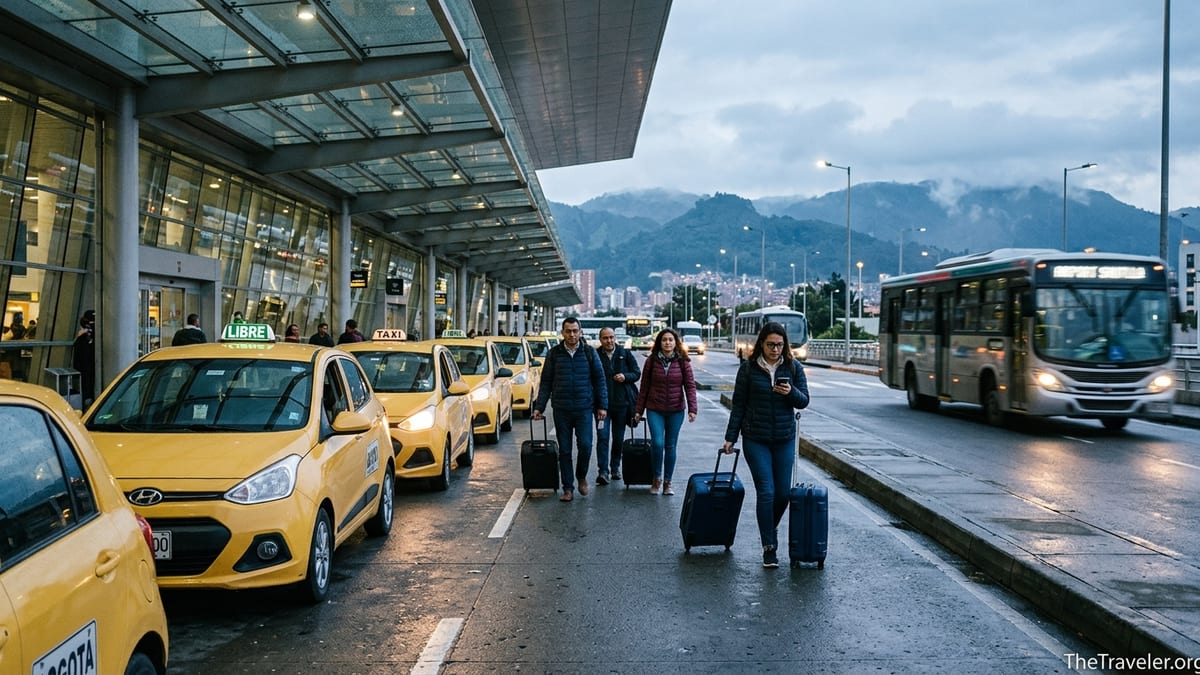
Understanding the Journey from El Dorado to Bogotá
El Dorado International Airport sits on the western edge of Bogotá, about 10 to 15 kilometers from many central neighborhoods such as La Candelaria, Chapinero, Zona Rosa and the financial district along Avenida Chile. Despite the relatively short distances, travel times can fluctuate widely. In light traffic late at night, a taxi to La Candelaria can take 25 to 30 minutes. In rush hour on a weekday morning, the same trip can stretch past 60 minutes as Avenida El Dorado and the central corridors fill with commuters.
Most foreign visitors stay in a handful of core areas: La Candelaria and Centro Internacional for historic sights and budget guesthouses, Chapinero and Zona G for design hotels and restaurants, Zona Rosa and Parque 93 for nightlife and upscale chains, and Usaquén further north for a quieter village feel. The best transfer option for you depends largely on where your hotel is, what time you land, how much luggage you are carrying, and your comfort level with Spanish and busy bus systems.
There is currently no metro line serving El Dorado, so all transfers rely on road or bus rapid transit. Your main options are official airport taxis, ride hailing apps such as Uber, DiDi and Cabify, the TransMilenio and SITP bus network, and prebooked private transfers. Many travelers combine options, for example taking the TransMilenio airport bus to a central station, then a short taxi or rideshare to their hotel.
Official Airport Taxis: Simple and Regulated
For most first time visitors arriving in regular daytime or evening hours, the official yellow airport taxi is the most straightforward option. Inside the arrivals hall of Terminal 1 you will find clearly marked taxi counters operated by authorized companies. Staff use a small screen or printed table to calculate your fare based on destination and the official city tariff, which currently includes a meter start, a per distance charge, and a fixed airport surcharge. As an example, in early 2026 many travelers report paying around 35,000 to 40,000 Colombian pesos for a taxi from El Dorado to La Candelaria or Chapinero in normal traffic, and a little more to Parque 93 or Usaquén.
Once you receive the printed slip or fare reference, you proceed to the clearly signed taxi line just outside the terminal. Only licensed yellow taxis with visible logos, license plates and meters are allowed to pick up here. You hand the driver your slip, confirm the destination, and the driver activates the meter. Payment is in cash Colombian pesos. Few drivers accept cards, so having some pesos from an ATM inside the terminal is highly recommended.
When it comes to safety, airport taxis are generally considered reliable as long as you use the official kiosk or stand and ignore anyone who walks up offering a ride inside the terminal or in the parking lot. At peak times there can be a queue, but vehicles arrive frequently. For solo travelers arriving around 06:00 or in the evening, this is usually the lowest stress solution. For late night or predawn arrivals between roughly 23:00 and 05:00, a night surcharge is added, and some visitors prefer to prebook a private transfer, but many still use official taxis without issues.
Uber, DiDi and Cabify: App Convenience with Caveats
Ride hailing apps operate in Bogotá and are widely used by locals, though their legal status has gone through periodic changes. As of mid 2026, travelers routinely report using Uber, DiDi and Cabify between the city and the airport. In practice, however, app pickups at the terminal exist in a gray area. Some drivers prefer to meet passengers at the upper departures level or in short term parking rather than at the official taxi rank to avoid potential fines during enforcement campaigns.
If you decide to use an app, you can compare prices from the arrivals hall using airport Wi Fi or a local SIM. In light traffic, an app trip from El Dorado to Chapinero or Zona Rosa can cost roughly similar to a taxi, sometimes slightly cheaper at off peak times. Surge pricing in heavy rain or at very busy hours can push the price above an official taxi fare. The big advantages are app based payment with your card, trip tracking, and being able to share your route with friends or family.
The main downside is uncertainty when you walk out of the terminal. On some days drivers accept rides to the airport curb without hesitation; on others they prefer not to risk a pickup where police are checking plates. Travelers sometimes report waiting 15 to 20 minutes for a driver who never arrives, then giving up and returning to the taxi line. If you land late at night, are tired from a long haul flight, or are traveling with children and luggage, the reliability of the official taxi queue or a prebooked private transfer tends to outweigh the potential savings of apps at the airport itself.
TransMilenio and Buses: Cheapest but Most Demanding
Bogotá’s TransMilenio bus rapid transit system runs along Avenida El Dorado into the city and offers an ultra budget way to reach the center from the airport. Outside Terminal 1, near Door 7, a dedicated feeder bus connects the terminal to Portal El Dorado, the western terminus station on the main El Dorado corridor. From there, express routes such as K86 or M86 and other services run along Calle 26 toward the city center, with stops that work well for visitors heading to La Candelaria, Centro Internacional and connecting corridors.
To use TransMilenio, you must purchase a reusable Tullave card from a kiosk at the airport or Portal El Dorado and load credit. A single ride on the main trunk line costs only a few thousand pesos, less than the price of a coffee, making this by far the cheapest transfer option. A common route for budget travelers is to take the airport feeder to Portal El Dorado, then an express bus toward Museo Nacional or Universidades stations. From Museo Nacional, many guesthouses in La Macarena and parts of Chapinero are a short taxi or app ride away, while Universidades is walking distance from many hostels in La Candelaria.
That low price comes with tradeoffs. TransMilenio can be very crowded at peak commuter times, especially 07:00 to 09:00 and 17:00 to 19:30 on weekdays. Stations are busy, you must watch your bags closely, and the system is not designed for large suitcases. If you have a backpack and a small carry on, are comfortable in Spanish, and arrive in the middle of the day, public transport can be a good cultural experience. With multiple large bags, children, or mobility concerns, a direct door to door option is strongly preferable.
Private Transfers: Door to Door Comfort
Prebooked private transfers have grown in popularity among visitors who prioritize simplicity and safety. Several companies based in Bogotá offer airport to hotel transfers in sedans, SUVs or minibuses. You typically book online in advance by providing your flight number, arrival time and hotel address. On landing, a driver waits in the arrivals hall with your name on a sign, helps with luggage, and escorts you directly to the vehicle parked in a designated area.
Costs are higher than official taxis but still modest by international standards. For example, a prearranged one way transfer from El Dorado to a hotel in Chapinero or Zona G might cost somewhere in the range of 80,000 to 120,000 pesos depending on vehicle size and time of day, with La Candelaria and Centro Internacional similar, and northern areas like Parque 93 or Usaquén sometimes a little more. Shared shuttle services, often coordinated by hostels or tour agencies, can reduce the cost per person if you are traveling solo and do not mind a few additional stops.
Private transfers are particularly attractive for very late or very early arrivals, families with small children, older travelers, or anyone carrying valuable equipment such as camera gear or laptops. They remove the stress of finding the right taxi counter or waiting in outdoor queues in the cool Bogotá night, and communication is usually easier as many companies assign English speaking drivers for prebooked airport runs. If your hotel is in a hilly or less central part of Chapinero Alto or in quiet streets of Usaquén, having a driver who knows exactly where to go is an added benefit.
Comparing Cost, Safety and Luggage Handling
From a pure price perspective, TransMilenio wins comfortably. A full journey from the airport to central Bogotá using the feeder and a main line route can cost under 5,000 pesos in total, even with a modest top up on a new Tullave card. That compares to roughly 35,000 to 50,000 pesos for most taxi rides into the popular hotel districts, and often a similar or slightly higher amount for Uber, DiDi or Cabify once surcharges are applied. Private transfers can cost two or three times an official taxi fare but offer a different level of service.
When you factor in safety and luggage, the picture changes. Official airport taxis and reputable private transfer companies provide the most predictable and controlled environment from baggage belt to hotel lobby. You load your bags into the trunk, ride directly to your destination, and unload at the door. With ride hailing apps, luggage handling depends on the individual driver and vehicle. Smaller sedans may struggle with two or three large suitcases, so it helps to select a larger category in the app if available and mention the number of bags in a message.
On TransMilenio and SITP buses, luggage is your responsibility at all times. Stations and buses can be crowded, and you may need to stand while holding both your bag and the overhead bar. Petty theft is more common in crowded public transport and in downtown transfers than inside authorized taxis, so you should keep valuables in a money belt or interior pocket and avoid using your phone near open doors. That said, hundreds of thousands of Bogotanos use the system daily, including many airport workers, and visitors who are alert and travel light often complete the journey without incident.
Best Transfer Options by Bogotá Hotel Area
Where you plan to sleep in Bogotá has a big impact on the smartest way to leave the airport. If you are staying in La Candelaria, home to popular hostels and small hotels near Plaza de Bolívar and the Gold Museum, your most straightforward options are an official taxi or a prebooked private transfer. The drive along Avenida El Dorado and into the colonial streets can take 30 to 50 minutes depending on traffic. Public transport is possible, for instance using the airport feeder plus an express route to Universidades or Museo del Oro stations and then walking or taking a short taxi, but the area sees fewer people on the streets at night, so door to door travel is usually safer after dark.
Chapinero and nearby Zona G offer a mix of midrange and upscale hotels along Carrera 7, Carrera 13 and Avenida Caracas. For these neighborhoods, taxis and ride hailing apps both work well. In lighter traffic, a taxi from El Dorado to a hotel near Avenida Chile or Avenida 72 might cost around the mid 30,000s in pesos and take about 30 minutes. Budget travelers staying in Chapinero with only a backpack can use TransMilenio to stations such as Calle 45 or Calle 57 along Avenida Caracas, then transfer to a local bus or walk, but the complexity is not worth it if you are arriving with heavy luggage or do not know the city layout.
Zona Rosa and Parque 93 in the north, where many international chains cluster and nightlife is concentrated, are slightly farther. Official taxis and prebooked transfers are the most common choices here. Trips in normal traffic often run to just under 40,000 or a little above 40,000 pesos from El Dorado. Travelers who book airport pickup through their hotel frequently find that the property either runs its own shuttle or partners with a trusted driver. In Usaquén, a charming northern district known for its Sunday market, costs and times are similar or a little higher again, and a prearranged ride is particularly convenient because some streets are narrow and one way.
Timing Your Arrival: Rush Hours, Late Nights and Early Mornings
Bogotá’s traffic patterns can dramatically change the feel of your airport transfer. Morning rush hour builds early, with heavy flows into the city from around 06:30 until 09:00 or later on weekdays, especially along Avenida El Dorado and the north south arteries. Evening peaks usually run from approximately 16:30 to 19:30. If your flight lands in the middle of these windows, both taxis and buses will be slower, and fares that depend partly on time as well as distance may rise slightly.
During rush hour, TransMilenio services along Calle 26 will be more frequent but also more crowded. Travelers willing to stand shoulder to shoulder and guard their bags closely may still find buses faster than sitting in gridlocked surface traffic, especially if there are dedicated bus lanes free of cars. For most visitors, however, the convenience and lower stress of sitting in the back of a taxi with luggage safely stowed offset the time advantage of the bus.
Off peak transfers are usually smoother. If you land late at night, around midnight, the city is quieter but official airport taxi queues can still move steadily. Night surcharges increase the fare slightly, but you benefit from much lighter traffic. In the opposite scenario, arriving very early around 04:00 or 05:00, some passengers choose to linger in the terminal for an hour, grab a coffee, and then head out once there are more people on the streets and the first waves of regular commuters appear. In these hours, many visitors find that an arranged private transfer waiting with a sign at arrivals provides extra peace of mind.
The Takeaway
There is no single best way for every traveler to get from El Dorado International Airport to Bogotá’s city center. Your ideal choice depends on your budget, arrival time, luggage, and hotel location. For many first time visitors, especially those staying in La Candelaria or central Chapinero, official airport taxis strike the best balance of cost, simplicity and safety. You follow clear signs, pay an officially regulated fare, and ride directly to your door.
Ride hailing apps such as Uber, DiDi and Cabify offer familiar interfaces and sometimes attractive prices but can be unpredictable for pickups right at the terminal. They make more sense for trips within the city after you are already settled in your hotel. TransMilenio and buses are the hands down winner for budget conscious backpackers with minimal luggage who arrive at off peak times and feel comfortable negotiating a busy Spanish language system. Private transfers, finally, deliver the smoothest option for very early or late arrivals, families, and anyone staying in less central neighborhoods or carrying valuable equipment.
Whatever you choose, a little advance planning goes a long way. Having some Colombian pesos ready for the taxi, noting your hotel address in Spanish, downloading key apps such as Tullave or TransMilenio maps in advance, and understanding Bogotá’s basic geography will make your first journey into the capital calmer and safer. From there, you can start enjoying the city’s museums, restaurants and mountain views knowing you have already navigated one of its trickiest first hurdles.
FAQ
Q1. How much does a taxi from El Dorado Airport to central Bogotá cost?
In typical traffic, most official taxis from the airport to areas like La Candelaria, Chapinero or Zona Rosa cost roughly between 35,000 and 50,000 Colombian pesos, with slightly higher fares late at night and to farther northern neighborhoods such as Usaquén.
Q2. Is it safe to take a taxi from Bogotá airport at night?
Using the official airport taxi kiosks and the marked taxi line is generally considered safe, even late at night. Avoid accepting rides from unlicensed drivers who approach you inside the terminal or in the parking areas, and make sure the driver starts the meter before leaving.
Q3. Can I use Uber, DiDi or Cabify directly from the airport?
Yes, many travelers successfully use ride hailing apps from El Dorado, but pickups operate in a gray area and can be inconsistent. Drivers may ask you to meet them at a specific point such as the departures level or a nearby parking zone, and at busy times it can take several attempts to find a driver willing to come to the terminal.
Q4. What is the cheapest way to reach downtown Bogotá from the airport?
The cheapest option is public transport using the airport feeder bus to Portal El Dorado and then a TransMilenio route along Calle 26 toward the center. The total cost for the journey is only a few thousand pesos, but it involves crowds, navigation in Spanish, and is not ideal if you have large luggage.
Q5. How long does it take to get from El Dorado to La Candelaria?
In light traffic, an official taxi or private transfer can reach La Candelaria in around 25 to 35 minutes. During weekday rush hours or heavy rain, the same trip can extend to 45 minutes or even an hour due to congestion along Avenida El Dorado and the central avenues.
Q6. Should I prebook a private transfer or just use a taxi on arrival?
If you are arriving in the middle of the day, are comfortable managing your luggage, and speak some Spanish, using an official taxi on arrival is usually sufficient. For very late night or early morning flights, for families with small children, or if you prefer a named driver waiting in the arrivals hall, prebooking a private transfer often feels more secure.
Q7. Is TransMilenio safe for tourists with luggage?
TransMilenio is widely used by locals and can be safe if you remain alert, avoid peak rush hours and keep valuables hidden. However, pickpocketing does occur, and the system is not designed for large suitcases, so it is better suited to backpack travelers with one or two small bags rather than those with heavy rolling luggage.
Q8. Which transfer option is best if my hotel is in Zona Rosa or Parque 93?
For Zona Rosa and Parque 93, official taxis and prebooked private transfers are the most practical choices. They provide direct, door to door service to hotel entrances that are sometimes far from main bus corridors, and the extra distance from the airport does not significantly increase the fare compared to central areas.
Q9. Can I pay for taxis and buses with a credit card?
Most airport and city taxis in Bogotá still operate on a cash basis, so you should withdraw or exchange some pesos at the airport. Some ride hailing apps let you pay by card within the app. For TransMilenio and SITP buses, you need a reloadable Tullave card loaded with cash credit; direct card payments at the turnstile are not common.
Q10. What is the safest option for a solo traveler arriving very early in the morning?
For a solo arrival around 04:00 or 05:00, the safest choices are a prebooked private transfer with a driver waiting in the arrivals hall or an official taxi booked through the airport kiosk. Both options provide controlled, door to door transport without the need to navigate dark streets, and you can head straight to your hotel or a nearby café as the city begins to wake up.