


The Travelex Money Card is one of the best known prepaid travel cards on the market, promising easy spending abroad, locked-in exchange rates and app-based control. But how does it actually work when you are standing at an ATM in Rome, tapping in Tokyo, or settling your hotel bill in New York? This guide walks through the mechanics of the card, typical fees and limits, and the small details that matter when you are far from home and relying on plastic instead of cash.
Get the latest updates straight to your inbox!
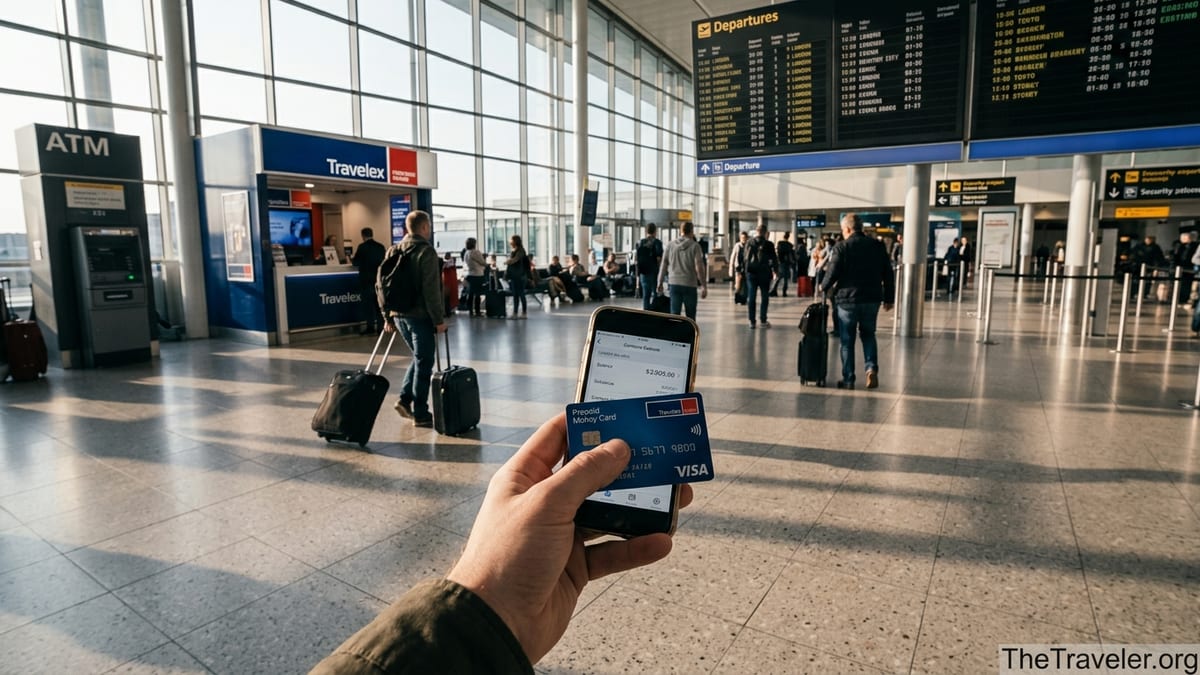
What the Travelex Money Card Is (and Where It Is Available)
The Travelex Money Card is a prepaid, reloadable travel card that runs on the Mastercard network. You load it with money before you travel, in one or more supported currencies, and then spend on it like a debit card wherever Mastercard prepaid cards are accepted. It is designed to sit somewhere between carrying a wallet full of cash and using your everyday bank card overseas.
As of mid 2026, the Travelex Money Card is widely available in markets such as the United Kingdom, Australia, New Zealand and Japan, typically replacing older Travelex products like the Multi-currency Cash Passport. In practice, that means a British traveler flying from London Heathrow or an Australian traveler departing Sydney can walk into a Travelex bureau or use the local Travelex website to buy and load a card before boarding a flight.
In the United States, Travelex historically offered a similar multi-currency card, but availability has been more limited and can change over time. US-based travelers often encounter the Travelex Money Card while transiting major hubs such as London, Singapore or Tokyo, or when researching travel money options on international Travelex sites. Because product details and availability vary by country, it is important to look at the Travelex site for the market you will purchase the card in, rather than assuming all features are identical worldwide.
At its core, though, the concept is the same no matter where you sign up. You prepay into an e‑wallet attached to the card, choose which currencies to hold, and then run down those balances as you travel, using a mobile app or online portal to keep an eye on your spending.
How Loading and Currencies Work in Real Life
When you buy a Travelex Money Card, you choose which currency or currencies to load. For example, a UK customer can typically load British pounds, euros, US dollars and several other major currencies. An Australian customer can load Australian dollars as well as travel currencies like US dollars, euros, Japanese yen and British pounds. Exact currency options and minimum load amounts differ by country, but a common pattern in the UK is a minimum first load of about 50 pounds whether you buy online, in-store or through the Travelex Money app.
Imagine you live in Manchester and are planning a week in Spain and a city break in New York later in the year. In June, you could load 600 euros for the Spain trip and 700 US dollars for the New York trip on the same Travelex Money Card. The exchange rate is locked in at the time you load, so you know in advance exactly how many euros and dollars you will have to spend. You then use the card in Spain, spending and withdrawing from the euro balance. Months later, you fly to New York and the card automatically starts using your US dollar balance for payments and withdrawals there.
If you travel somewhere and do not hold that local currency on the card, the Travelex Money Card can still be used. Suppose the same traveler makes a stopover in Dubai with only euros and US dollars loaded. When they pay for a taxi in dirhams, the card will convert from whichever of their loaded currencies Travelex’s system is configured to draw from first, typically based on a pre-set order of currencies or on the best available balance. A foreign exchange margin is applied in this case, so the transaction costs more than if they had loaded that currency directly.
Reloading is handled either online, through the Travelex Money app or in person at participating Travelex stores. For example, a traveler in Melbourne might realize mid-trip that they are down to 50 US dollars on the card but still have three days in Los Angeles. From their hotel, they can open the app, move additional Australian dollars from their bank via PayID or card load, and convert those into US dollars on the travel card within a few minutes, subject to daily load limits published in the card terms.
Fees, Limits and the True Cost of Using the Card
The headline attraction of the Travelex Money Card is often simple fee messaging such as no Travelex ATM withdrawal fee, combined with the comfort of fixed exchange rates at the time of loading. The reality is more nuanced, and understanding the fee structure helps you avoid unpleasant surprises on your statement after the trip.
Most Travelex markets advertise free loading when you top up the card in a foreign currency. For instance, a UK customer who loads 500 euros or 800 US dollars pays no separate load fee, although the exchange rate itself includes a margin over mid-market rates. If the same customer decides to load pounds and convert them later or holds pounds and spends in euros, a separate loading or cross-currency fee may apply. Some recent UK guides note a two percent fee when loading in pounds instead of directly in the destination currency, which quickly adds up if you are funding a larger family trip.
ATM withdrawals are often where travelers pay the most attention. Travelex typically does not charge its own ATM fee for withdrawing cash in foreign currency, and in some markets the official documents mention generous ATM limits. In Australia, for example, recent consumer reviews cite an ATM allowance of around 3,000 Australian dollars equivalent within 24 hours. However, the bank that owns the ATM can still add its own surcharge. A traveler in Paris might find that a high street bank’s machine lets them withdraw 200 euros with no ATM fee, while a branded airport ATM operated by an independent provider could flash a message warning of a 3 or 4 euro local fee on each withdrawal.
Other costs to watch for include foreign exchange fees when the card needs to convert between currencies at the time of the transaction, inactivity fees if the card sits unused for a long period, and cash-out or closure fees if you want to recover any remaining balance back to your bank once you finish traveling. The exact amounts vary by country and are detailed in the product disclosure statement or terms and conditions for that market. A practical approach is to think of the Travelex Money Card as advantageous when you can plan and load the main currencies you will spend, but potentially expensive if you constantly rely on on-the-fly conversions and leave small leftovers on the card for months.
Day-to-Day Use: Payments, ATMs and Contactless
Once loaded, the Travelex Money Card behaves much like a debit card in everyday travel scenarios. It is chip-and-PIN enabled, supports contactless payments in markets that accept contactless Mastercard, and can be added to mobile wallets such as Apple Pay or Google Pay in several countries. That means you can tap to pay for a metro ride in London, insert the card and enter your PIN to settle a restaurant bill in Rome, or pay with your phone for a coffee in Vancouver while the Travelex card sits safely in your money belt.
Consider a couple flying from Sydney to Tokyo. On arrival at Haneda Airport, they head to a Seven Bank ATM, insert their Australian-issued Travelex Money Card and choose to withdraw 20,000 yen for small purchases. The ATM screen warns them of a small local operator fee in yen, which they accept, but the Travelex side does not add its own ATM charge. Later that evening, they pay for dinner in Shinjuku by tapping the card on the restaurant’s contactless terminal. Both transactions draw directly from the yen balance they loaded before leaving Australia, so no additional foreign exchange fee is charged on top of the original load rate.
In destinations where card acceptance is nearly universal, such as much of Western Europe, you can realistically live on the Travelex Money Card for most expenses. A solo traveler in Berlin might use it to tap through metro turnstiles, pay museum entry, cover their hotel bill and buy groceries at a supermarket, all without visiting a currency exchange booth. In more cash-heavy markets, such as parts of Southeast Asia or smaller towns in Eastern Europe, the card still has value but mainly as a tool to withdraw local cash from ATMs, which you then spend in markets and small family-run guesthouses that do not accept cards.
Because the card is prepaid, purchases are limited by the balance on the card and by transaction and ATM limits that Travelex and the issuing bank apply. A UK customer, for example, might be able to spend several thousand pounds equivalent per day in card transactions but might be limited to withdrawing about 500 pounds equivalent in cash from ATMs over a 24-hour period. These caps are designed both to limit fraud and to keep the product aligned with typical holiday spending rather than high-value corporate use.
Managing the Card with the Travelex Money App
The modern Travelex Money Card experience is built around the Travelex Money app, available on major app stores. The app lets you check balances in each currency, review recent transactions, move money between currencies and top up while you are on the road. For many travelers, the app replaces the old habit of keeping every receipt in a paper envelope and manually adding up totals at the hotel each night.
Imagine you are a student from Auckland on a semester abroad in Canada. You arrive in Toronto with 1,500 Canadian dollars loaded on your Travelex Money Card. Over the first few weeks you use the card for groceries, public transit and occasional nights out. One Friday you open the app and see that your Canadian dollar balance has dropped to 220 dollars, with rent and a weekend trip to Montreal coming up. From your dorm room, you log into your New Zealand online banking, send funds via a supported top-up method such as bank transfer or BPAY into your Travelex card account, and then confirm in the app that the new funds are available before you book your accommodation.
The app is also where you can freeze or block the card if it is lost, misplaced or suspected to be compromised. A family traveling from London to Orlando, for example, might use the Travelex Money Card as a shared spending pool for theme park tickets and meals. If one family member misplaces their wallet on a roller coaster, the primary cardholder can open the app, freeze the card immediately and then work with Travelex customer support to arrange a replacement or emergency cash if necessary. This app-based control is one of the key reasons some travelers prefer prepaid cards to carrying large amounts of cash.
Notifications and transaction details inside the app provide a useful check on spending and exchange rates. When you pay for a 40 euro dinner in Barcelona, the app might show the euro amount and a rough converted value in your home currency at the locked-in rate you loaded. Over the course of a two-week trip, reviewing that running list of transactions helps you adjust your daily budget instead of discovering only after you get home that you blew through far more than planned.
Safety, Security and How the Card Compares to Alternatives
From a security perspective, the Travelex Money Card offers some of the same protections as a debit card, combined with the risk-limiting benefits of a prepaid balance. Because the card is not directly linked to your main checking account, a thief who gets hold of the card and your PIN can only access the amount loaded on it, subject to withdrawal and purchase limits. This is a clear advantage over carrying several thousand dollars or euros in cash in a single money belt that could be lost in a moment.
However, prepaid cards like the Travelex Money Card do not always enjoy the same level of chargeback rights or fraud protections that top-tier credit cards offer in some jurisdictions. For example, if a hotel in Rome accidentally charges your card twice for the same stay or a compromised terminal in Bangkok runs an unauthorized transaction, resolving the issue may take longer than disputing a transaction on a premium travel credit card. Many travelers therefore treat the Travelex Money Card as one layer in a broader toolkit, combining it with a no-foreign-transaction-fee credit card and a backup debit card from their home bank.
In terms of total cost, comparisons with digital banking platforms like Wise, Revolut or specialized travel accounts from big banks can be mixed. Recent independent reviews often find that the foreign exchange rate on the Travelex Money Card is slightly less favorable than that offered by some app-based competitors, once you factor in their transparent percentage mark-ups and lower or zero cash-out fees. On the other hand, Travelex has a physical presence in airports and city centers, which is convenient for less tech-savvy travelers or those who want to walk away from a kiosk with a card and printed documentation in hand.
For a typical American family heading to Europe for a two-week vacation, the trade-off often comes down to convenience versus pure rate optimization. If they start their planning at a US airport where a Travelex counter is located, they may value the ability to load euros on a card immediately and get basic support in person. A more digitally confident traveler might be comfortable signing up online weeks in advance for an alternative provider that offers stronger exchange rates but no physical branch network. The right answer depends on comfort level, how much money is at stake, and how important it is to have a recognizable brand like Travelex acting as a single point of contact while overseas.
When a Travelex Money Card Makes Sense (and When It Does Not)
The Travelex Money Card is particularly suited to travelers who like structure and certainty. If you are planning a family trip to the United Kingdom and know you have 3,000 pounds to spend on everything except flights and accommodation, loading exactly that amount of pounds onto a Travelex card can act as a self-imposed spending limit. You can mentally separate day-to-day travel expenses from your regular bank accounts at home, reducing the risk of accidentally dipping into rent money or other commitments.
It is also a reasonable fit if you visit one or two major currencies repeatedly. An Australian based in Brisbane who makes regular business trips to Singapore, for example, could keep a core Singapore dollar balance on the card year-round. Each time they fly over, they top it up via the app the night before, then tap through airport transit, pay for meals and cover taxis directly in Singapore dollars without worrying about the latest market rate shifting overnight.
On the other hand, the card is often less compelling for spontaneous, multi-country trips where you cannot predict your routes and currencies in advance. A backpacker from Denver planning to bounce across ten European countries plus a side trip to Morocco may find it cumbersome to manage which balances to hold, and may end up paying multiple cross-currency fees when jumping between destinations. In such cases, a bank account or provider that automatically converts at a transparent market-based rate with a single multi-currency balance can be simpler.
Similarly, if your home bank already offers a debit or credit card with no foreign transaction fees, strong fraud protection and competitive ATM reimbursement policies, the marginal benefit of adding a Travelex Money Card might be modest. Some US online banks, for example, refund ATM operator fees worldwide and apply only a small currency conversion margin. In those scenarios, the main reason to add a Travelex card would be to ring-fence a specific travel budget and keep a backup payment method in case your primary card is lost or blocked overseas.
The Takeaway
Used thoughtfully, the Travelex Money Card can be a helpful tool for managing travel spending. It offers the discipline of a pre-set budget, the convenience of chip, PIN and contactless payments across the Mastercard network, and the reassurance of a well-known currency brand with physical locations in many international airports. The companion app makes it easy to reload, move between currencies and monitor your transactions while you are on the road.
At the same time, the card is not automatically the cheapest way to pay abroad. The value you get depends heavily on whether you load the right currencies in advance, how often you rely on on-the-spot conversions, the specific fees and limits in the country where your card is issued, and how its exchange rates compare with alternatives like digital multi-currency accounts or fee-free bank cards from your home provider.
Before you sign up, take the time to read the latest product disclosure statement and terms for your local Travelex site, check example exchange rates for the currencies you care about, and think through realistic scenarios for your own trip: how often you will need cash, where you are likely to pay by card, and what backup options you will carry. With those answers in hand, you can decide whether the Travelex Money Card should be your primary spending tool, a secondary backup, or simply one of several options in a well-prepared traveler’s wallet.
FAQ
Q1. How does the Travelex Money Card actually work when I am overseas?
The Travelex Money Card is a prepaid Mastercard that you load with one or more currencies before you travel. When you pay in a store, online or at an ATM abroad, the card draws from the matching currency balance where possible. If there is no matching currency, it converts from another balance on the card according to Travelex’s rules and applicable exchange margins.
Q2. What is the difference between loading in my home currency and loading in a foreign currency?
If you load directly in the foreign currency you plan to spend, the exchange rate is locked in at that moment and you usually avoid a separate foreign exchange fee on each transaction. If you load in your home currency and later spend in another currency, Travelex may apply an additional fee or margin when converting between those currencies at the time of the transaction or when you move balances.
Q3. Are ATM withdrawals with the Travelex Money Card really free?
Travelex often advertises no additional ATM fee of its own, but that does not mean every withdrawal is free. The bank or company that operates the ATM can still charge a local fee, which you will see on the ATM screen before you confirm the withdrawal. Daily ATM limits also apply, which vary by country of issue.
Q4. Can I use the Travelex Money Card in countries whose currencies are not supported?
Yes. If the card does not hold the local currency, it will convert from one of your existing balances using Travelex’s exchange rate at the time of the transaction, plus any applicable fee. This is convenient but can be more expensive than loading the local currency in advance if it is one of the supported options for your version of the card.
Q5. What happens if my Travelex Money Card is lost or stolen on a trip?
If your card is lost or stolen, you should immediately freeze or block it using the Travelex Money app or by contacting customer support. In many cases Travelex can arrange a replacement card or emergency cash, depending on where you are and which country issued your card. The remaining balance is normally protected once the loss is reported.
Q6. How do I check my balance and recent transactions while travelling?
You can check balances and transactions through the Travelex Money app or by logging into the My Account area of your local Travelex site. The app is generally the easiest option, giving near real-time updates, basic budgeting information and options to transfer funds between currencies on the go.
Q7. Is the Travelex Money Card cheaper than using my regular bank card abroad?
It depends on your bank and how you use the card. Some home bank cards have high foreign transaction and ATM fees, in which case a well-managed Travelex Money Card can be cheaper. If your bank already offers low or zero foreign transaction fees and refunds ATM surcharges, the cost advantage of the Travelex card may be smaller.
Q8. Can I keep money on the Travelex Money Card between trips?
You can usually keep funds on the card between trips and reuse it, provided it remains within its validity period. However, inactivity fees may apply after a certain period without transactions, and exchange rate movements could change the value of your balance relative to your home currency, so it is worth checking the terms before leaving large amounts dormant.
Q9. How much can I load on a Travelex Money Card and are there daily limits?
Each country where the card is issued sets its own maximum load, reload and balance limits, as well as daily purchase and ATM withdrawal caps. For example, some markets allow a total card balance in the tens of thousands of local currency units but cap ATM withdrawals to a smaller amount each day. You can find the current limits for your card in the product disclosure statement or key facts sheet from your local Travelex site.
Q10. Is the Travelex Money Card a good option for a round-the-world or backpacking trip?
The card can work for extended trips, especially if you spend most of your time in a few major currencies, but it is not always the most flexible or cheapest choice for highly variable, multi-country itineraries. Many long-term travelers combine a prepaid card like Travelex with a low-fee debit or credit card from their home bank so they can compare exchange rates on the road and choose whichever method is better in each destination.