


Far north in Finnish Lapland, where the road ends at the Norwegian border and winter nights can last for weeks, Utsjoki has quietly become one of Europe’s most rewarding places to see the northern lights. Away from the crowds of bigger resorts, this Sámi-majority municipality on the banks of the Teno River combines dark skies and big Arctic landscapes with culture-rich tours and small, locally run accommodations. Here is a detailed guide to the best Utsjoki northern lights experiences and Arctic adventures to book now.
Get the latest updates straight to your inbox!
Why Utsjoki Is Exceptional for Northern Lights Trips
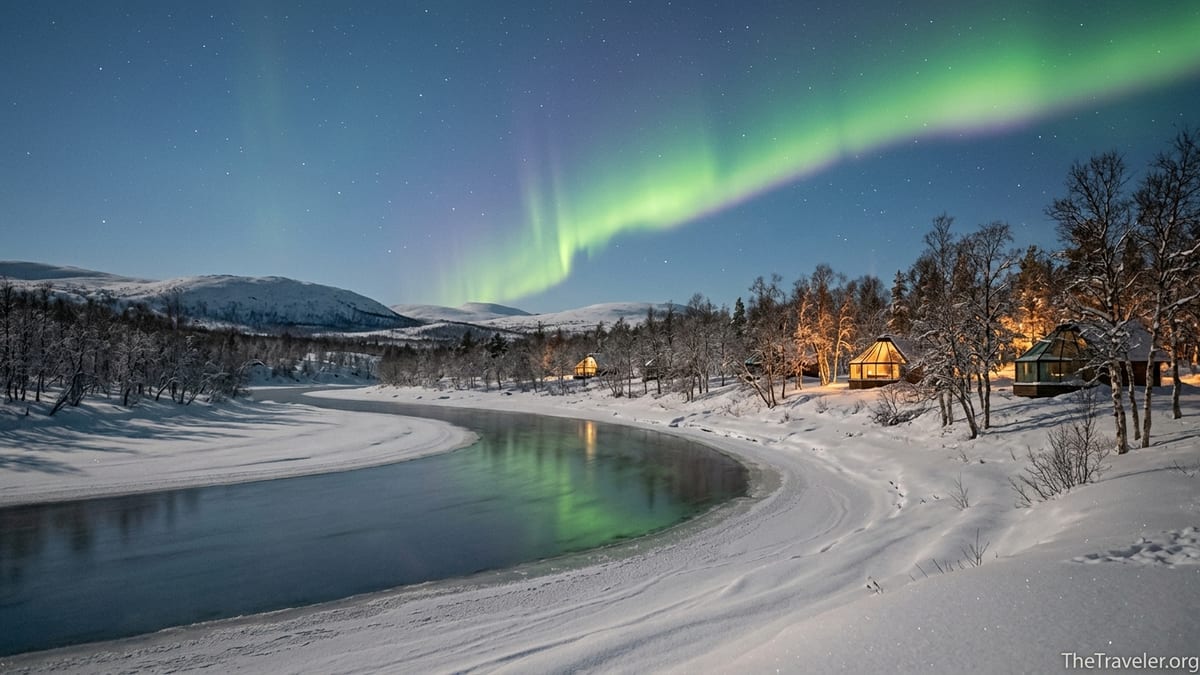
Utsjoki sits at Finland’s northernmost tip, well above the Arctic Circle and within the auroral oval, the zone where northern lights activity is statistically strongest through the long winter. From roughly late August until early April, clear nights here offer frequent aurora displays, particularly around the equinox months of September, October, February and March. Because Utsjoki is a small community with limited artificial light, you can see the aurora from riverbanks, wilderness fells and even directly from many cabins and igloos just outside the village.
Unlike busier hubs such as Rovaniemi or Saariselkä, Utsjoki’s tourism is still relatively low-key. Typical groups for aurora tours are small, and it is common to have an entire frozen river bay or fell viewpoint to yourself and a handful of fellow travelers. For many visitors, that quiet atmosphere is exactly the point. Several local operators build their itineraries around slow travel principles, with unhurried evenings outdoors rather than rigid, rushed schedules.
The geography also works in your favor. Utsjoki lies close to both the Paistunturi and Muotkatunturi wilderness areas, as well as the Kevo Strict Nature Reserve. Short drives from the village take you up to treeless fells where the horizon is wide open, giving better chances to spot arcs or corona shapes forming overhead when the aurora activity ramps up.
Because the region is inland but near the Arctic Ocean in neighboring Norway, weather systems can be quite variable. Many guides actively chase clearer skies during the night, sometimes driving an hour or more along the Teno River or toward the coast. This flexibility, combined with low light pollution, makes Utsjoki one of the more reliable options in Lapland for dedicated aurora hunters who are prepared to be patient and stay multiple nights.
Top Northern Lights Tours to Book in Utsjoki
Several small, specialist operators are based in or around Utsjoki and offer guided aurora experiences that range from straightforward evening outings to week-long packages. One of the better-known names is Aurora Holidays, based near the village. They run northern lights chasing tours that typically last around three hours but are not strictly capped in length. If the aurora flares up right at the end of the scheduled time, guides frequently stay out longer so guests can fully enjoy the show. Their packages combine accommodation, meals and nightly aurora hunts, which can be helpful if you prefer an all-in-one arrangement rather than piecing together separate services.
Another option is Utsjoki Tours, which focuses on small-group outdoor adventures in the local area. Among snowmobile safaris, dog sledding and snowshoeing outings, they also offer dedicated northern lights tours. These usually involve a short transfer from your accommodation to darker viewpoints in the surrounding fells, hot drinks by a fire and support with photography. For visitors who already have a place to stay but want a professional guide on one or two evenings, booking an individual night tour with such an operator is a flexible approach.
Some accommodations such as Utsjoki Arctic Resort and Holiday Village Valle bundle aurora viewing into broader winter programs. While they may not market standalone “chasing” tours in the same way, in practice many guests spend evenings on-site watching the skies from glass-roofed igloos, cabins with large picture windows or outdoor terraces facing the river and fells. In these cases, staff might provide aurora alerts or a phone call to your room when the lights appear, which is comforting if you do not want to wait outside in subzero temperatures for hours.
Whichever operator you choose, it is worth staying at least three to four nights to increase your chances of success. Prices for guided evening aurora tours in the region typically fall in a range that is comparable to other Lapland destinations, and you should expect to pay a premium for highly personalized small-group or private experiences. Before booking, check whether winter clothing, boots and tripod use are included or available for rent, as this can make a big difference to comfort and photography results on very cold nights.
Where to Stay: Glass Igloos, Riverside Cabins and Boutique Hotels
Accommodation around Utsjoki has grown more diverse in recent years, with a mix of glass igloos, traditional log cabins and straightforward hotel rooms now available. For many northern lights travelers, the big draw is the chance to lie in bed and watch the sky through a glass roof on clear nights. Utsjoki Arctic Resort, located in a birch forest above the Teno River, offers Kelo-glass igloos that blend rustic log walls with domed glass ceilings over the bedroom. These igloos typically include a private sauna, fireplace and kitchenette, making them appealing for couples or small families who want both comfort and an immersive view.
Holiday Village Valle, on the riverbank near the bridge to Norway, is another popular base. It combines hotel-style rooms and self-catering cottages with a restaurant and a strong Sámi cultural focus. Several cabins face north toward the open sky, and the immediate surroundings are dark enough that you can step outside your door to watch swirling green curtains when conditions line up. For travelers coming by car, on-site parking and simple access to the main road along the Teno River make it easy to set off on daytime excursions too.
In Utsjoki village itself, Hotel Utsjoki offers rooms in its main building and a distinctive log igloo accommodation on the riverside. The hotel is a practical choice if you prefer a central location near basic services, with the bonus that snow-covered riverbanks just a short walk away can serve as satisfying aurora viewing spots. For budget-conscious visitors, smaller guesthouses, aurora huts and rental cabins scattered in the broader municipality provide simpler yet atmospheric alternatives, often with direct access to ski tracks or snowmobile routes.
When comparing options, consider not just the romance of a glass igloo but also your overall budget and how much time you actually plan to spend indoors at night. Some travelers choose to book one or two premium igloo nights for the experience, then shift to a more affordable cabin or hotel room for the rest of their stay. This hybrid approach keeps costs under control while still delivering the memorable thrill of waking up under a sky streaked with aurora.
Signature Arctic Adventures: Husky Safaris, Snowmobiling and Snowshoeing
While the northern lights are the headline act, Utsjoki’s daytime Arctic adventures are just as important in shaping a memorable trip. Local outfitters and accommodations collaborate with husky farms and guides to offer dog sledding excursions that range from short introductory rides to half-day journeys across snowy plains. Typical tours include transfers to a husky farm, a safety briefing and basic instruction on handling the sled before you glide through birch forests and open fells behind an eager dog team.
Snowmobile safaris are another mainstay. Operators such as Utsjoki Tours and activity providers linked to local resorts run guided trips that can last from a couple of hours to full-day explorations. You travel in a line behind the guide along marked tracks, often climbing into high fell areas where the landscape opens into sweeping white plateaus. Some excursions include a stop at a wilderness kota or laavu, a traditional shelter where the group can grill sausages and enjoy hot berry juice around a fire. For visitors without prior snowmobile experience, guides usually start on easy terrain and keep speeds moderate.
For a quieter pace, snowshoeing and cross-country skiing tours showcase the subtle beauty of Utsjoki’s forests and river valleys. Travel Utsjoki, a local guiding company, offers easier and more demanding snowshoeing routes in areas like the Paistunturi Wilderness, along with winter fishing trips and short snowmobile-pulled sleigh tours for those who prefer to be passengers. On a clear day, standing atop a low fell with snow crunching under your snowshoes and soft pastel light spreading across the horizon can be every bit as magical as a bright aurora display.
Many visitors also use Utsjoki as a launch point for Arctic Ocean day trips into Northern Norway. Depending on road conditions, it can take roughly an hour to ninety minutes to reach small fjord villages on the Norwegian side, where wintertime light, sea ice and dramatic cliffs create a stark contrast with the inland fells. Some tour providers organize combined itineraries that pair an ocean visit or even whale-watching in season with evening northern lights pursuits back in Finland.
Sámi Culture and Nature: Adding Depth to Your Itinerary
Utsjoki is the only municipality in Finland where the majority of residents are Sámi, the Indigenous people of the region. That heritage is visible in language, reindeer husbandry and cultural events throughout the year. Thoughtfully designed tours can deepen your understanding of this living culture while also helping to support local livelihoods. Several small businesses in and around Utsjoki offer visits to reindeer herds on nearby highlands, storytelling evenings or tasting menus that highlight traditional ingredients such as reindeer, Arctic char and local berries.
Holiday Village Valle, for example, has positioned itself strongly around Sámi identity, with family owners involved in both reindeer herding and tourism. Guests might join a short reindeer experience, learning about seasonal migrations and the realities of herding in an era of climate change and increasing tourism pressure. While quick photo-stop visits do exist in the wider region, longer programs that allow time for conversation over coffee and open fire meals provide a more meaningful glimpse into local life.
Nature itself is a major part of any Utsjoki itinerary. The nearby Kevo Strict Nature Reserve protects a dramatic canyon landscape and fragile subarctic ecosystems. In winter the main hiking routes are not run as commercial tours in the same way as summer treks, but guides may bring visitors to selected viewpoints on the edges of protected areas or to gentler sections in neighboring wilderness zones. These outings emphasize respect for local regulations, as strict reserves in Finland are managed with conservation as the top priority.
Out on the land, you will encounter a landscape shaped by both humans and reindeer over centuries. Traditional lávvu tent sites, old migration routes and modern snowmobile tracks coexist. Many guides integrate explanations of how herding works today, how grazing patterns interact with tourism infrastructure and why staying on designated routes is important. For travelers who want their northern lights trip to feel grounded in place rather than just a backdrop for photos, choosing operators with clear commitments to Sámi involvement and environmental responsibility is worth the extra research.
Practical Planning: When to Go, How to Get There and What It Costs
Timing your trip is one of the most important decisions. In Utsjoki, core aurora season typically runs from late autumn to early spring. September and early October can offer relatively mild temperatures, autumn foliage and reflections of the aurora on unfrozen waters. From November to January, the polar night period brings very short days or full twilight, deep snow and a strong sense of Arctic winter. February and March are popular with many travelers thanks to longer daylight hours, good snow conditions and often very active aurora displays.
Most visitors reach Utsjoki by flying to Ivalo Airport in Finnish Lapland, then continuing by rental car or pre-arranged transfer for roughly two and a half to three hours north. Some accommodations can organize private transfers that add to the cost but remove the stress of winter driving for those unfamiliar with icy roads. Others travel via Northern Norway, combining flights to airports such as Kirkenes or Alta with cross-border driving. Whichever route you choose, build some flexibility into your schedule in case of weather-related delays.
Costs vary widely depending on season, comfort level and whether you opt for packages or independent arrangements. Glass igloos and premium cabins near Utsjoki may be priced in line with other Lapland resorts, often translating to several hundred euros per night during high season, while standard hotel rooms and simple cabins can be significantly more affordable. Guided activities like husky safaris or snowmobile tours usually cost more than self-guided snowshoeing or skiing, but they also include expertise, equipment and safety support that are difficult to replicate alone in a remote Arctic environment.
To manage expenses, some travelers book shorter, concentrated stays of three or four nights with a couple of carefully chosen guided activities, while others extend their time in Lapland by mixing Utsjoki with less expensive destinations further south. Regardless of budget, good cold-weather clothing is essential. Many tour companies will provide outer layers and boots as part of the package or for a separate rental fee, which can be worthwhile if you are not equipped for temperatures that can drop well below minus 20 degrees Celsius in mid-winter.
The Takeaway
Utsjoki offers a northern lights and Arctic adventure experience that feels more intimate and less commercial than many better-known Lapland resorts. With its dark skies, sweeping fells and living Sámi culture, this remote corner of Finland rewards travelers who are willing to journey a little farther and embrace winter on its own terms. Whether you choose a glass-roofed igloo above the Teno River, a riverside log cabin or a simple village hotel, the ingredients for a memorable aurora-focused holiday are firmly in place.
Planning carefully around season, budget and the mix of activities you want will help you get the most from your time here. Combining dedicated aurora hunting tours with daylight adventures like husky sledding, snowmobiling and snowshoeing, plus at least one cultural experience, creates a well-rounded itinerary that goes beyond chasing a single photograph. For many visitors, what lingers longest after the trip is not just the green glow in the sky, but the quiet of a polar night broken only by snow underfoot and the stories shared around a fire.
FAQ
Q1. When is the best time to visit Utsjoki for northern lights?
The most popular months are from September to early April, with particularly good conditions often in October, February and March when skies can be clear and aurora activity strong.
Q2. How many nights should I stay in Utsjoki to have a good chance of seeing the aurora?
Staying at least three to four nights is recommended to balance aurora forecasts, weather and your own energy levels. A week gives you better odds and more time for daytime activities.
Q3. Do I need to join a guided tour to see the northern lights in Utsjoki?
You can sometimes see the aurora right from your accommodation, especially in dark riverside or fell locations, but guided tours help you reach the best viewpoints and adapt to changing weather.
Q4. Is Utsjoki suitable for families with children?
Yes, many accommodations offer family rooms or cabins, and activities such as short husky rides, snowshoeing and gentle snowmobile sleigh tours can be tailored for children, provided they are dressed warmly.
Q5. How difficult is winter driving to Utsjoki?
Roads are generally well maintained, but winter driving requires experience with snow and ice. If you are unsure, consider booking transfers with your accommodation or joining organized tours instead of driving yourself.
Q6. Are glass igloos in Utsjoki worth the extra cost?
For many travelers, one or two nights in a glass igloo is a memorable splurge, especially if the sky is clear. To manage costs, some visitors combine igloo nights with more affordable cabins or hotel rooms.
Q7. What should I pack for a winter trip to Utsjoki?
Pack thermal base layers, a warm mid-layer, insulated jacket and pants, a windproof outer shell, thick socks, insulated boots, mittens, a warm hat and a buff or scarf. Hand warmers and a headlamp are also useful.
Q8. Can I combine Utsjoki with a visit to the Arctic Ocean?
Yes, Utsjoki lies close to the Norwegian border, and some tours or self-drivers add a day trip to coastal villages or fjords in Northern Norway for Arctic Ocean scenery and, in some seasons, whale-watching.
Q9. Is Utsjoki a good place to learn about Sámi culture?
Utsjoki has a Sámi-majority population, and several local companies and accommodations incorporate Sámi heritage into their programs. Look for tours that are Sámi-led or clearly emphasize local collaboration.
Q10. How cold does it get in Utsjoki in winter?
Temperatures can dip below minus 20 degrees Celsius in mid-winter and occasionally lower. Proper clothing, frequent warm-up breaks and the use of heated indoor spaces between outdoor activities are important for comfort.