


With airfares and hotel rates rising in many classic vacation hotspots, 2027 is shaping up to be the year when savvy travelers look beyond the usual suspects. Countries where the local currency is weaker against the dollar, euro or pound, or where everyday costs are simply lower, can turn a modest travel budget into something far more comfortable. From street food lunches that cost less than a takeout coffee at home to ocean view hotels priced like budget motels, the right destination choice can easily double what your money buys.
Get the latest updates straight to your inbox!
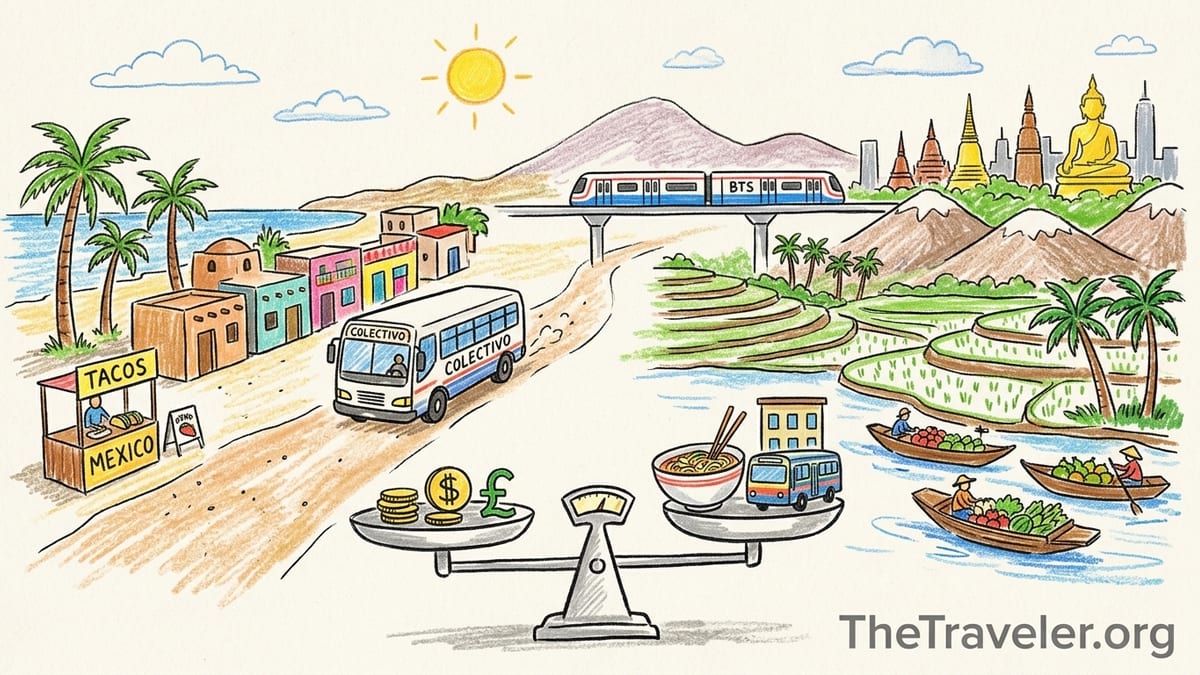
How Exchange Rates and Local Prices Shape Real Travel Costs
The value of your travel budget abroad is driven by two forces working together. The first is the exchange rate, which dictates how much local currency you receive for each dollar, euro or pound. The second is local purchasing power, meaning what residents typically pay for goods and services such as groceries, public transport, restaurant meals and rent. A country can have a weak currency but still feel expensive if local prices are high. It is the combination of favorable exchange rates and low on the ground prices that creates genuine bargains.
In practical terms, travelers notice this most clearly when paying for daily staples. A basic restaurant lunch in a Western European capital might cost the equivalent of 18 to 25 US dollars per person, often before drinks. In contrast, in parts of Southeast Asia or Eastern Europe, a cooked lunch with a drink can often come closer to 5 to 10 dollars in 2026 prices, sometimes less at local eateries. Coffee, taxis and mobile data plans frequently show the same pattern, with some destinations costing a fraction of what visitors pay at home.
Currency trends over the last few years have also shifted where budgets go further. The strong US dollar and broadly strong euro against many emerging market currencies have improved value in destinations such as Mexico, much of Southeast Asia and parts of Eastern Europe. Travelers paying in pounds have also seen better value in some regions compared with a decade ago, though exchange rates remain sensitive to political and economic news, so it is essential to check current figures close to your departure date in 2027.
When planning ahead, think in terms of real daily budgets instead of just airfares. A long haul ticket to a lower cost country may be more expensive upfront than a short hop to a familiar high cost destination, but over a 10 or 14 day trip, the savings on hotels, food and activities in the cheaper country can more than compensate, especially for couples, families or remote workers staying several weeks.
Mexico: Strong Dollar, Rich Experiences on a Modest Budget
Mexico continues to offer striking value for visitors paid in US dollars because of a relatively weak peso and comparatively low local prices outside the most luxurious resorts. In major destinations like Mexico City, Guadalajara and Oaxaca, travelers can still find comfortable mid range hotel rooms in central neighborhoods for prices that often fall around the equivalent of 50 to 100 US dollars per night in 2026, particularly outside peak holiday periods. Simple guesthouses and locally run inns can drop well below that level in smaller towns and inland regions.
Food is where many visitors feel their budget stretching furthest. In traditional markets and neighborhood eateries, a plate of tacos, a fresh juice and a coffee can often total the equivalent of 3 to 6 US dollars, while a sit down dinner at a casual restaurant with a main course and a drink might come to 10 to 15 dollars per person, even in big cities. At the higher end, chef led restaurants in Mexico City’s fashionable districts are more expensive, but tasting menus still tend to cost less than comparable experiences in cities like New York, Los Angeles or London.
Local transport also remains affordable by international standards. The Mexico City metro, for example, has kept ticket prices low in recent years, making it a very inexpensive way to cross a vast urban area. Intercity buses offer several comfort levels from basic to luxury, and even the top tier services are generally cheaper than high speed trains or internal flights in many developed countries. Ride hailing services operating in Mexican cities add another lower cost option for short hops, particularly at off peak times.
Coastal resort areas such as Cancún, Los Cabos and Tulum have seen sharp price increases at the top end as international demand has grown, which means beachfront hotels and trendy bars in those specific zones can now feel closer in cost to Mediterranean or Caribbean islands. Travelers looking to maximize value in 2027 may do better to base themselves slightly inland, choose less famous coastal towns, or split time between a few nights in a high profile beach area and a longer stay in cheaper interior cities rich in culture and food.
Southeast Asia: Thailand, Vietnam and Indonesia for Low Daily Costs
Southeast Asia has long been known for budget friendly travel, and as of late 2026 many countries in the region still offer some of the lowest day to day costs for visitors from North America and Europe. In Thailand, for example, the combination of a currency that has not kept pace with the dollar’s strength and an economy still geared to attract international tourism means that accommodation, food and services stay relatively inexpensive once you arrive.
In Bangkok and Chiang Mai, mid range hotel rooms with air conditioning and private bathrooms can often be found in the ballpark of 25 to 60 US dollars per night in 2026, with simpler guesthouses and hostels costing less. Street food remains one of the region’s great bargains. A filling plate of pad thai or a bowl of noodle soup from a licensed street vendor might cost around 1 to 3 dollars, while a restaurant meal in a modest local place with a main dish and a drink can often land between 4 and 8 dollars per person. Similar patterns hold in many parts of Vietnam and Indonesia, where bowls of pho or plates of nasi goreng in non touristy spots are still priced at levels that feel very low compared with Western capitals.
Transport within Southeast Asia amplifies the value proposition. City transit options like Bangkok’s skytrain and metro networks charge relatively low fares by global standards, particularly for short journeys, and ride hailing motorcycles in cities such as Ho Chi Minh City and Jakarta can cover several kilometers for the cost of a coffee back home. Low cost airlines based in the region frequently run promotional fares that allow travelers to hop between countries for less than what a single long distance rail ticket might cost in Europe, although luggage fees and peak season surcharges need careful checking.
The main caveat for 2027 planning is that some heavily visited islands and neighborhoods are slowly increasing tourist taxes and entry fees to deal with overcrowding and environmental concerns. Indonesian authorities, for example, have added new fees in certain areas over recent years. While these extra charges do not erase the region’s underlying value, they mean travelers should expect to pay more than in the past to access a few specific beaches, parks or protected sites, even if daily living costs remain low overall.
Eastern Europe and the Balkans: European Culture Without Western European Prices
For travelers seeking European architecture, history and café culture at lower prices, parts of Eastern Europe and the Balkans remain strong contenders. While some countries in the region use the euro and have moved closer to Western European price levels in their capitals, others still operate with local currencies that trade favorably for visitors and support lower everyday costs. Cities such as Sofia in Bulgaria, Bucharest in Romania and Sarajevo in Bosnia and Herzegovina are frequent examples in travel budgets because they combine rich cultural attractions with affordable food, accommodation and transport.
In these cities, it is still common in 2026 to find central hotel rooms or serviced apartments in the rough range of 40 to 90 US dollars per night, depending on season and comfort level, with hostels and basic pensions offering cheaper beds. A coffee at a café terrace in less touristy streets may cost around 1 to 3 dollars, while a restaurant dinner with a main course and a local beer can often be had for 10 to 18 dollars per person outside the most upscale spots. Grocery prices for self catered breakfasts or picnics usually undercut those in Western and Northern Europe, giving further room to keep daily spending in check.
Transport costs inside the region also compare well. Intercity buses and trains, while sometimes slower than Western European high speed equivalents, are generally priced at levels that suit budget travelers, enabling inexpensive overland routes between neighboring countries. In many cities, public transport tickets remain low enough that even visitors on very tight budgets can move around without resorting to taxis for every distance. Ride hailing services, where available, tend to cost substantially less than in places like Paris or London for similar journey lengths.
One point to consider when planning for 2027 is that prices in several Eastern European cities have risen noticeably over the last decade, especially in districts popular with international visitors. Craft cocktail bars, gourmet restaurants and design hotels in central Prague or Budapest, for example, now command higher prices that narrow the gap with Western capitals. Travelers who prioritize value can offset this by choosing smaller cities, staying slightly outside old town cores, or focusing on countries that have not yet seen the same level of tourist driven inflation.
Portugal and Spain: Relative Value Inside Higher Cost Europe
Western Europe is rarely considered a budget destination, yet within the region there are still meaningful differences in what day to day travel costs. Portugal and certain parts of Spain continue to offer better value than some northern neighbors, especially outside of peak summer season and away from the most heavily visited beachfronts. For travelers who want the infrastructure and familiarity of the eurozone but have a limited budget, these countries can be strategic choices.
In cities like Porto, Lisbon, Valencia and Seville, it is often possible to find comfortable mid range hotels or well rated guesthouses in late 2026 for approximate nightly rates between 70 and 130 US dollars, particularly if you avoid major festivals and last minute bookings. Business oriented hotels sometimes discount heavily on weekends, providing city center comfort at prices that would be classified as budget or lower mid range in cities such as London or Zurich. Short term apartment rentals in residential neighborhoods give additional flexibility for those willing to cook some meals at home.
Daily food and drink costs show similar patterns of relative value. A simple espresso at the counter of a Portuguese pastelaria or a Spanish neighborhood bar can cost around 1 to 2 dollars equivalent, substantially less than typical prices charged by large international coffee chains in many countries. Lunch menus in local restaurants, especially fixed price “menu del día” or “prato do dia” options, frequently bundle a starter, main course and sometimes a drink for a price that often comes in below 15 to 20 dollars per person in 2026. Only in very touristy squares or along beachfront promenades do prices rise sharply.
Public transport within these countries also helps budgets stretch. Metro systems in Lisbon, Madrid and Barcelona and intercity trains operated by national rail companies offer tickets that, while not as cheap as in some emerging economies, often feel fair for the distances covered. Discount train fares booked in advance can make cross country travel quite affordable compared with renting a car, once fuel and tolls are considered. This combination of moderate prices, safe infrastructure and extensive low cost flight connections makes Iberia an appealing choice for 2027 travelers who want Europe without the very highest daily costs.
North Africa: Morocco and Egypt for Low Everyday Prices
North African destinations, particularly Morocco and Egypt, stand out for visitors looking for distinct cultures, dramatic landscapes and low on the ground costs. Their currencies have weakened in recent years relative to the dollar and euro, and both countries maintain price levels for many daily necessities that reflect local incomes rather than international tourist standards. This creates opportunities for substantial savings on accommodation, food and internal travel for those willing to navigate environments that can be more hectic than European resorts.
In Morocco, cities such as Marrakech, Fes and Chefchaouen offer a wide range of traditional guesthouses known as riads. In late 2026, many comfortable mid range riads with breakfast included can be booked in the vicinity of 40 to 90 US dollars per night, depending on size and location. Simple local meals, such as tagine or couscous at non touristy eateries, often cost the equivalent of 4 to 8 dollars, with mint tea and fresh juice adding little to the bill. Shopping in markets for fruit, pastries and snacks can keep daytime food costs even lower.
Egypt presents a similar picture for core expenses. Outside of high end Nile cruises and top tier resort hotels on the Red Sea, accommodation in Cairo and Luxor frequently remains affordable compared with many global capitals. Street food staples like falafel sandwiches, koshari bowls and fresh bread are typically priced at levels that feel very low to visitors using stronger currencies. Entrance fees to major archaeological sites have risen in recent years and can make days focused on monuments more expensive, but overall daily budgets still tend to undercut many other destinations that offer comparable levels of historical interest.
Travelers considering North Africa for 2027 should factor in some additional costs that do not show up as clearly on hotel or restaurant price tags. Guided tours, tips and small payments for local services such as porters and informal guides are part of the travel economy in both Morocco and Egypt. Bargaining is common in markets and for some services, which requires time and patience but can help keep spending in line with expectations once visitors are familiar with typical price ranges.
Latin America Beyond Mexico: Colombia and Argentina
Beyond Mexico, other Latin American countries offer 2027 travelers intriguing combinations of culture, nature and favorable exchange rates. Colombia has worked hard to reposition itself as a tourism destination over the last decade, and the strength of the dollar versus the Colombian peso in recent years has made cities such as Medellín, Bogotá and Cartagena relatively affordable for many visitors. Argentina has experienced more dramatic currency movements, which complicates planning but can result in very low prices on the ground for those who understand the rules around currency exchange and payment methods.
In Colombia, mid range hotels and stylish guesthouses in popular neighborhoods of Medellín or Bogotá often quote rates that convert to roughly 40 to 90 US dollars per night in 2026, though luxury options cost more. Meals at neighborhood restaurants featuring local dishes, from bandeja paisa to arepas, commonly fall well below typical North American urban prices, especially at lunchtime. Public transport systems, including Medellín’s well known metro and cable car network, are priced in line with local wages and remain inexpensive for foreign currency holders.
Argentina’s economic situation means that official exchange rates and alternative rates can diverge, and visitors have in some years been able to obtain better value by using certain payment methods or by bringing foreign cash to exchange locally. As of late 2026, regulations and rate structures have changed several times in response to domestic policy, so it is crucial for anyone planning a 2027 trip to review the latest guidance from reputable financial and travel sources shortly before departure. When favorable rates are accessible, everyday prices for restaurant meals, local wine and intercity buses can feel exceptionally low to foreign visitors.
For both Colombia and Argentina, careful destination choices inside each country influence how far a budget stretches. Fashionable quarters in Cartagena’s old city or boutique districts of Buenos Aires command higher prices for hotels and dining, while smaller inland cities and less internationally known coastal towns can deliver similar comfort at noticeably reduced costs. Flight prices to reach these countries from North America or Europe can be significant, so extended stays of two weeks or more often provide the best overall value compared with shorter breaks.
Planning a 2027 Budget: Practical Daily Numbers and Strategies
Turning broad cost patterns into a workable 2027 trip plan means translating exchange rates and local prices into realistic daily budgets. As a rough frame of reference, independent travelers willing to stay in simple private rooms or good hostels, eat mostly at local restaurants and use public transport might aim for per person daily budgets that, in late 2026 conditions, fall in the approximate ranges of 40 to 70 US dollars in Southeast Asia and parts of Latin America outside the most exclusive areas, 50 to 80 dollars in Eastern Europe and North Africa, and 80 to 130 dollars in Western European countries such as Portugal and Spain, not counting flights to and from the region. These figures would usually cover accommodation, meals, city transport and a modest allowance for sightseeing and small extras.
Travelers seeking more comfort, including mid range hotels in central locations, regular café visits and some guided tours, should plan at higher levels. Couples in Mexico, Thailand or Bulgaria, for example, might target combined daily budgets in the vicinity of 100 to 160 dollars for a comfortable though not luxurious experience, while similar habits in Iberian cities might raise the range to something closer to 160 to 230 dollars per day in 2026 prices. Family travel with children increases costs for larger hotel rooms, extra tickets and occasional taxis, so realistic budgeting becomes even more important.
There are also strategies that maximize value within chosen destinations. Traveling in shoulder seasons, such as late spring and early autumn in Europe or the dry yet less crowded months in Southeast Asia, often reduces both accommodation prices and the need to pre book the most flexible options. Focusing on a smaller number of bases instead of changing cities every day trims transport expenses and allows deeper discounts on weekly stays. Using local supermarkets for some breakfasts or picnics can free up funds for special dinners, while city tourist cards in some places bundle public transport and museum entries at a reduced combined cost.
Because exchange rates and local inflation can shift significantly over a year, anyone planning 2027 trips should refresh their research a few weeks before departure. Checking recent hotel and restaurant prices in local currencies, using up to date currency conversion tools, and reading current reports from other travelers can help fine tune the daily numbers. Building a buffer of at least 10 to 20 percent above your initial estimate allows room for unexpected fees, attraction price hikes or changes in exchange rates between booking and arrival.
Conclusion: Choosing Destinations Where Your Money Works Harder
Selecting countries where your travel budget goes further in 2027 is ultimately about matching your interests with places that combine favorable exchange rates and sensible local prices. Mexico, Southeast Asia, Eastern Europe, North Africa, Portugal and Spain, and parts of Latin America such as Colombia and Argentina all illustrate how different regions can offer strong value in distinct ways, whether through inexpensive street food, modest hotel rates, low public transport costs or reasonably priced cultural attractions.
The most cost effective destination for any individual traveler will depend on where they are starting from, how long they plan to stay and what style of travel they enjoy. Someone dreaming of ancient cities and desert landscapes may find exceptional value in Morocco and Egypt, while those drawn to beaches and modern cafés might lean toward Thailand or Mexico’s interior cities. Urban culture fans focused on music, galleries and nightlife could gravitate to budget friendly European capitals or Latin American metropolises with thriving creative scenes.
Whatever destination you choose, the same principles apply. Look beyond airfare prices and focus on total daily costs, track exchange rates as your trip approaches, and balance big ticket experiences with days built around low cost local pleasures. With thoughtful planning and a willingness to explore beyond the most heavily marketed resorts, 2027 can be the year when your travel budget delivers more memories, more meals and more meaningful encounters than you expected.