


More news on this day
Large-scale protests over the cost of living and public spending are sweeping across France in early November, prompting the United States to sharpen its travel warning and urge visitors to avoid demonstration areas, monitor local news and anticipate transport disruption.
Get the latest news straight to your inbox!
Escalating Protests Across Major French Cities
Publicly available coverage indicates that France has entered a new phase of nationwide protest activity, with student-led marches expanding into broader demonstrations over wages, public services and living costs. In recent days, rallies in Paris, Marseille, Lyon, Toulouse, Nantes and Strasbourg have drawn hundreds of thousands of people into the streets, according to French media and international news reports.
Published accounts describe some events as largely peaceful during the daytime, while evening gatherings in certain districts have turned confrontational. Images from Paris show dense crowds on central boulevards and near government buildings, with lines of riot police and armoured vehicles positioned around protest routes. Similar scenes have been reported in Marseille’s city center and around major train stations in several regional capitals.
Recent figures cited by French authorities and labor unions suggest that total turnout since late September has reached into the hundreds of thousands on several separate days of action, with multiple reports referring to more than 600,000 people on the streets nationwide on November 5. Coverage also notes thousands of arrests and injuries to law enforcement personnel since the unrest began, underlining the scale and persistence of the movement.
Foreign ministries in Europe, North America and Asia now highlight protest-related risks in their France advisories. The travel advice portals of Canada, Ireland, Australia and others all reference ongoing demonstrations, potential for clashes and disruptions to transport and public services, signalling that concern about the situation is shared well beyond the United States.
U.S. Advisory Tightens While Remaining at Level 2
The U.S. Department of State continues to list France at Level 2, defined as “exercise increased caution,” but updated its advisory summary for the country on October 21, 2026. The revised text emphasizes risks linked both to terrorism and to civil unrest, explicitly urging travelers to avoid demonstrations and areas with significant police activity and to be prepared for sudden changes in local security conditions.
Separate from the global advisory, the U.S. Embassy in Paris has issued multiple recent security alerts focused specifically on protest activity. Public information about those alerts notes that Americans in France are being advised to avoid large gatherings, follow local media and official announcements, and allow extra time when moving around major cities due to possible street closures, diversions and crowd-control measures.
Coverage in U.S. outlets reports that a more detailed warning circulated to U.S. citizens this week stresses that demonstrations can form quickly, sometimes without much advance notice, and that even initially peaceful events may escalate. The messaging also encourages travelers to enroll in the U.S. government’s traveler notification system so they can receive real-time updates on curfews, transport strikes or disturbances near tourist districts.
Despite the sharper language, the advisory has not been raised to Level 3 (“reconsider travel”) or Level 4 (“do not travel”). The current posture reflects a balancing act: acknowledging heightened risks in specific locations and time periods, while still viewing France overall as accessible to visitors who stay informed, adapt their plans and heed local instructions.
Impact on Transport, Tourism Sites and Daily Travel
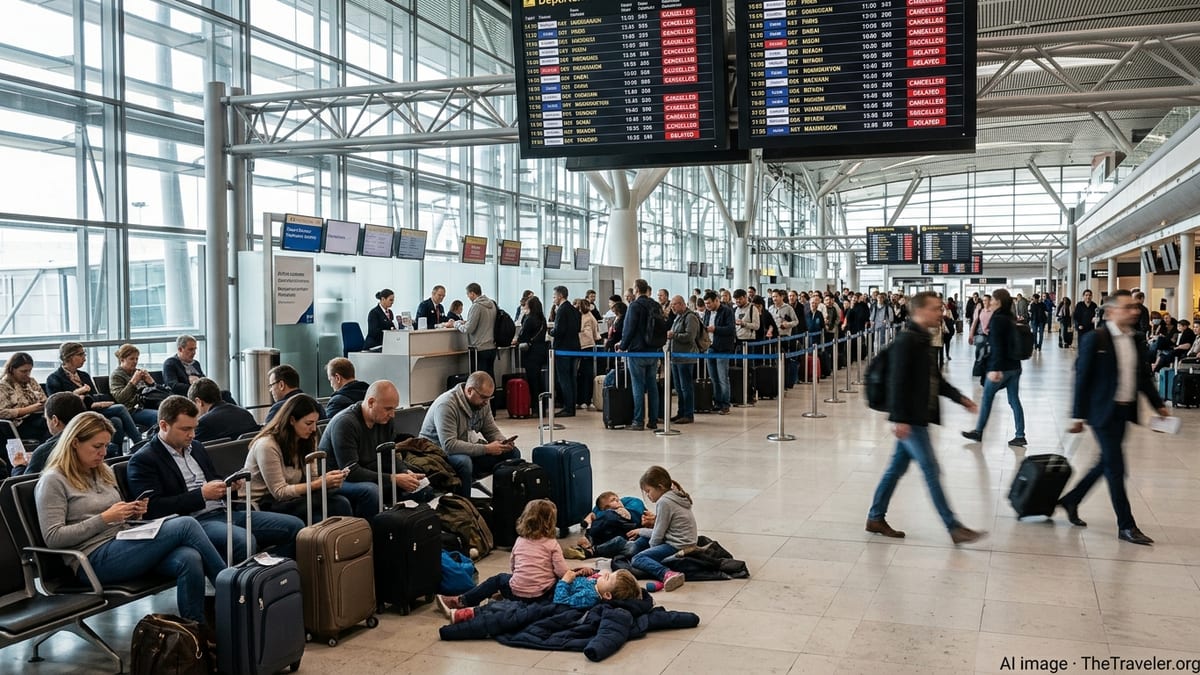
Demonstrations and labor actions are causing intermittent but sometimes significant disruption to transport networks. Reports from travel industry publications describe reduced public transportation services on key protest days, including cancellations and delays on regional trains, metro lines and trams, particularly in and around Paris and other large urban centers.
France’s national rail operator has announced timetable changes during some of the larger mobilizations, and travel advisories recommend that visitors check train status directly with operators before departure. In major cities, street demonstrations have prompted temporary closures of central metro stations, rerouting of bus lines and diversions around key squares and avenues, especially where marches are planned or crowd-control cordons are in place.
Travel-focused reporting and first-hand accounts indicate that most flagship attractions, such as the Eiffel Tower, the Louvre Museum and major chateaux, have remained open on non-strike days, but closures or reduced visiting hours are possible when marches pass nearby or when staff participate in strikes. Some visitors in October reported last-minute closures and ticket refunds for time-slot attractions located along protest routes or in areas where authorities temporarily restricted access.
For travelers already in France, the main practical effect has often been slower journeys, limited options at peak hours and the need to adjust daily itineraries away from demonstration hotspots. Tourism commentators advise allowing extra time when crossing the city, considering alternative routes that avoid central protest corridors and keeping flexible backup plans in case key sites or stations close at short notice.
How Other Governments Are Framing the Risk
France’s protest wave has triggered a series of parallel updates from foreign ministries around the world. Canada’s official advisory for France, updated on November 5, highlights scheduled demonstrations in many cities and warns that protests may occur with little warning, sometimes leading to clashes or property damage. The guidance advises visitors to stay away from gatherings and to follow the instructions of local security personnel.
Ireland’s foreign ministry similarly notes that protests in recent weeks have been accompanied by significant civil unrest and points out that France’s national security alert level has remained elevated since 2025. The advisory encourages travelers to monitor news sources and local announcements for information on curfews, restrictions or transport changes affecting their specific destination within France.
Australia’s travel advice, refreshed on November 6, reiterates that demonstrations continue across France and may take place at short notice, with an increased presence of police and military patrols at popular tourist sites, transport hubs and places of worship. The guidance recommends that visitors remain aware of their surroundings, keep identification documents accessible and stay informed about any new threats or changes to the security environment.
In Asia, at least one regional government has formally urged residents to exercise caution in France, citing persistent protests and isolated incidents in which tour groups encountered unrest. Coverage from regional broadcasters notes examples of package tours being canceled or rerouted, underscoring how the domestic political situation in France is beginning to ripple through international travel planning.
Practical Guidance for U.S. Travelers Considering France
For U.S. visitors weighing upcoming trips, publicly available advisories suggest a careful but measured approach. France’s Level 2 designation indicates that travel remains possible, provided that individuals accept a higher degree of unpredictability in certain areas and are ready to change plans if conditions deteriorate. Travelers are encouraged to review their itineraries with an eye to protest calendars, which are often announced in advance by unions and student groups.
Security guidance from multiple governments emphasizes several common themes. Visitors are urged to avoid joining demonstrations, even out of curiosity, to steer clear of crowds where police and protesters are facing each other, and to move away quickly if they notice projectiles, tear gas or sudden shifts in crowd behavior. Many advisories also recommend carrying a charged mobile phone, maintaining contact with family or tour operators, and keeping copies of key documents in secure digital form.
Travel planners note that accommodations in quieter neighborhoods away from central protest routes may offer a calmer base for city stays during periods of unrest. Evening dining or sightseeing plans can be shifted to districts that are not serving as gathering points, while daytime visits to major museums or monuments may be scheduled for non-protest days or during morning hours, before marches typically begin.
While the situation remains fluid, reports indicate that most trips to France are continuing without serious incident away from demonstration hotspots. Travelers who keep informed through reputable news sources, heed updated government advisories and remain flexible with their schedules are, according to current guidance, better positioned to navigate the latest wave of protests while still experiencing the country’s cultural and historical attractions.