


Bryce Amphitheater is the heart of Bryce Canyon National Park, a vast bowl of crimson and cream hoodoos that drop away from the rim in a dizzying maze of fins, windows, and spires. Whether you prefer to keep to the overlooks or thread your way among the rock formations on foot, the first three miles of the park road around Bryce Amphitheater offer more ways to experience the landscape than many visitors realize. Planning how you move between these viewpoints, trails, and tours can be the difference between a rushed photo stop and a truly immersive day in one of the most dramatic landscapes in the American Southwest.
Get the latest updates straight to your inbox!
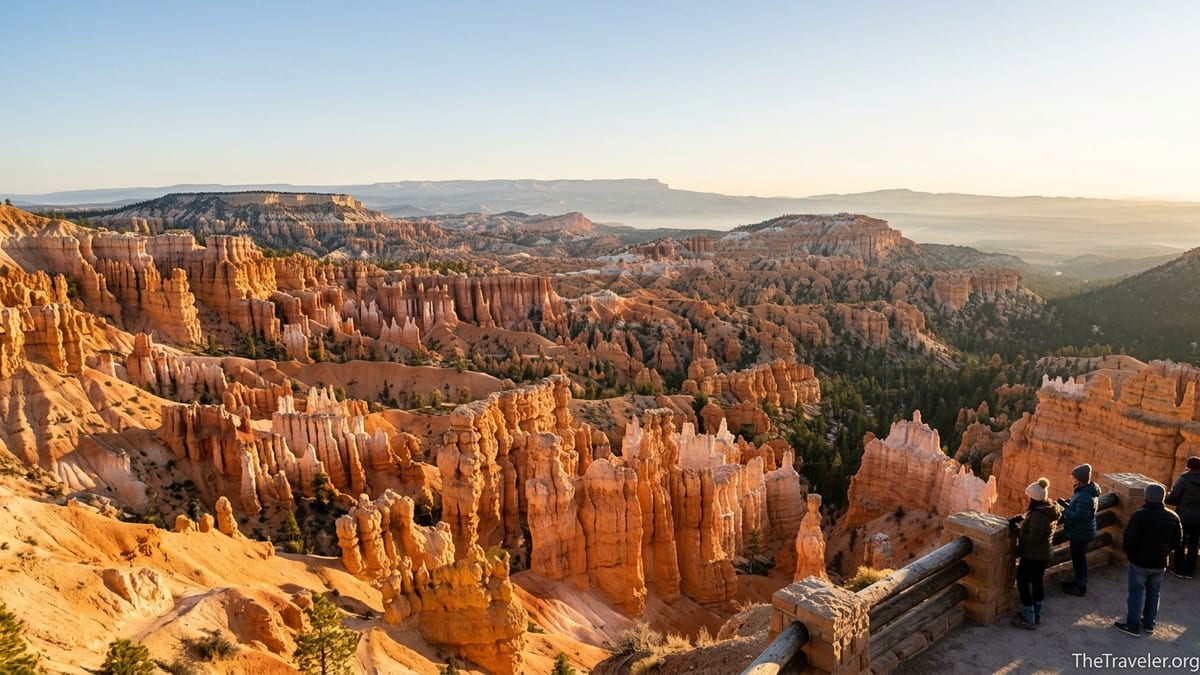
Understanding the Layout of Bryce Amphitheater
Bryce Amphitheater lies along the first few miles of the park’s main road, just south of the visitor center. The four primary rim viewpoints here are Sunrise Point, Sunset Point, Inspiration Point, and Bryce Point, all on the west side of the amphitheater. Most classic day hikes into the hoodoos start or end at Sunrise or Sunset Point, so if your time in the park is limited, you can focus almost entirely on this compact area and still feel like you have experienced the essence of Bryce.
Because the amphitheater rim sits around 8,000 feet above sea level, distances and elevation gain feel harder than the numbers suggest. A short-looking descent from Sunrise Point into the maze of the Queen’s Garden, for example, can leave sea-level visitors out of breath on the climb back out. Keeping the elevation in mind helps you choose whether to stay on the rim, descend into the hoodoos, or mix both in one day.
In practical terms, the amphitheater works best if you imagine it as a loop: you enter the park, stop at the visitor center, then encounter Sunrise Point, Sunset Point, Inspiration Point, and finally Bryce Point as you drive south. During the main season the park shuttle links all of these stops, so you can create one-way walks between them without worrying about returning to your car. That flexibility is key to experiencing different angles, light, and crowd levels without retracing your steps unnecessarily.
For many travelers, a well planned day in Bryce Amphitheater might start with sunrise at Bryce or Inspiration Point, a mid-morning hike from Sunrise to Sunset Point through the Queen’s Garden and Navajo Loop, a quiet midafternoon overlook at Inspiration Point, and a final golden hour stroll along the paved rim between Sunrise and Sunset. Understanding how everything connects makes these combinations easy to pull off.
Rim Viewpoints: The Easiest Way to See the Amphitheater
The four main amphitheater overlooks deliver radically different perspectives for minimal effort, and they are the best starting point for first-time visitors. Bryce Point, near the end of the amphitheater section of the road, offers a high, sweeping view down over a dense forest of hoodoos. Many photographers favor Bryce Point at sunrise because the early light hits the formations from the side, revealing layers of ridges that disappear into the distance.
Inspiration Point, just north of Bryce Point, is another rim stop that rewards careful timing. A short, steep walk brings you to a series of terraces where you can look straight into the central section of the amphitheater. The view is less about individual named formations and more about the overall pattern of orange and white spires packed tightly together. On a clear morning, the low sun rakes across the formations, throwing deep shadows into the gullies and making the hoodoos appear almost to glow.
Sunset Point and Sunrise Point are lower in elevation and closer to services near the lodge, general store, and restrooms, which makes them convenient bases for families or anyone who wants frequent breaks. Sunset Point looks over some of the park’s most famous hoodoos, including Thor’s Hammer and Silent City, and is the hub for several trails descending into the amphitheater. Sunrise Point offers a slightly more open, sweeping view toward Boat Mesa and the Queen’s Garden below.
To experience the best of the rim without a strenuous hike, you can park once and walk the short paved section of the Rim Trail between Sunrise and Sunset Point, then drive or shuttle to Inspiration and Bryce Point. A realistic itinerary for a half day might include sunrise at Bryce Point, midmorning at Inspiration Point, lunch at the lodge near Sunset Point, and an easy afternoon stroll along the rim to Sunrise Point, pausing at every bend to watch the light change on the rock.
Descending Among the Hoodoos: Signature Amphitheater Hikes
For most hikers, the definitive way to experience Bryce Amphitheater is to descend off the rim and walk among the hoodoos themselves. The park’s most popular loop, often called the Queen’s Garden and Navajo Combination, links Sunrise and Sunset Points in a roughly 3 mile circuit with about 600 to 650 feet of elevation change. The park recommends hiking it clockwise: down the Queen’s Garden from Sunrise Point, then up the Navajo Loop back to Sunset Point, which gives you more gradual switchbacks on the descent and saves the dramatic, tight Navajo switchbacks and Thor’s Hammer views for the climb out.
The Queen’s Garden segment is considered the least strenuous descent into the amphitheater, though it is still rated moderate. The trail winds along a ridgeline of honey-colored fins and passes through several fun little tunnels carved into the rock. Near the bottom, a short spur leads to the Queen Victoria hoodoo, which does indeed look surprisingly like a crowned figure in profile. Many families with school-age children choose to hike at least this section and then decide on the spot whether to continue on the full loop or return the way they came.
The Navajo Loop portion offers a very different feel: towering walls of orange limestone, tight engineered switchbacks, and famous features like Thor’s Hammer and the Two Bridges area. In summer, when conditions allow, the Wall Street side of the Navajo Loop opens a short slot-like canyon that many visitors remember as the highlight of their visit. When Wall Street is seasonally closed due to rockfall risk, hikers typically climb or descend the Two Bridges side instead, which is slightly less enclosed but still steep and dramatic.
Stronger hikers looking for a longer day can extend this experience on the Figure 8 Combination, which adds the Peekaboo Loop to the Queen’s Garden and Navajo circuit for a total of around 6 to 7 miles, with several short but sustained climbs. Horse groups also use portions of Peekaboo, so expect some mixed traffic and watch your footing in dusty or rutted sections. With an early start and plenty of water, this route lets you see the amphitheater from multiple levels and directions in a single continuous journey.
Rim Walks and One Way Routes Using the Shuttle
The amphitheater’s rim trail system and seasonal shuttle combine to create one of the easiest and most rewarding strategies for experiencing the landscape: walk in one direction along the rim and ride back. During the typical main season, free shuttle buses run between the park entrance area and Bryce Point, with major stops at the visitor center, Sunrise and Sunset Points, Inspiration Point, and Bryce Point. The buses reduce parking pressure and allow you to step on and off whenever a viewpoint or trailhead catches your eye.
A classic one way route is to ride the shuttle to Bryce Point in the cool of the morning and walk the Rim Trail back to Sunrise Point, a distance of roughly 2.5 to 3 miles depending on exactly where you finish. The trail undulates but avoids the steep descents of the Queen’s and Navajo routes, making it a good fit for travelers sensitive to knees or heights who still want a variety of views. Along the way you pass high overlooks, forested stretches, and quiet corners where you can sit on a rock and watch ravens wheel over the hoodoos.
For visitors with limited mobility, the paved section of the Rim Trail between Sunrise and Sunset Point is especially valuable. This half mile stretch is relatively flat, wheelchair accessible, and still offers some of the best amphitheater views in the park. It is common to see multi generational groups here, with grandparents enjoying the views from benches while younger family members take short detours down the upper switchbacks of the Queen’s Garden or Navajo Loop before returning to the rim.
If you have a full day, consider combining a one way rim walk with a descent into the amphitheater. For example, you might ride to Bryce Point, walk the Rim Trail to Sunrise Point, descend the Queen’s Garden, climb out the Navajo Loop to Sunset Point, and finish with an easy paved stroll back to Sunrise Point for sunset. This kind of interconnected route feels like a true journey across the amphitheater rather than a series of disconnected stops from a parking lot.
Guided Tours, Ranger Programs, and Horseback Rides
Independent hiking is not the only way to experience Bryce Amphitheater. In the main season, the park typically offers ranger led programs that may include geology talks at viewpoints, short guided walks along the rim, and evening presentations at the visitor center or campgrounds. While these programs change by year and season, they tend to focus on accessible locations like Sunset Point or the area near the lodge, and they are an excellent way to hear the human and natural history behind the scenery you are seeing.
Commercially, local outfitters and concessioners offer a mix of guided hiking, photography tours, and horseback rides that either pass near or descend into the amphitheater area. A typical half day photography tour might pick you up in the Bryce Canyon City hotel zone before sunrise, shuttle you to Bryce or Inspiration Point for blue hour, and then move between Sunrise and Sunset Points as the light changes, emphasizing how to handle the high contrast between shadowed gullies and glowing hoodoos. Prices vary, but travelers can expect to pay a premium compared to going on their own, with the value coming in local knowledge of light, timing, and lesser known corners of the amphitheater.
Horseback and mule rides, usually operated under concession contracts, give a different kind of access. Standard rides often last two to three hours and descend from the rim into areas near the Peekaboo Loop, where wider trails and historic routes can safely accommodate stock. For visitors uncomfortable with steep hiking or those traveling with family members at different fitness levels, booking a ride can make it possible to explore below the rim together without everyone needing to tackle the climbs on foot.
Some travelers combine a guided activity with independent time. For instance, a couple might join a morning horse ride that dips below the rim and then spend the afternoon strolling from Sunrise to Sunset Point on the paved rim trail, comparing the broad overhead views with the more intimate perspective they had in the canyon earlier in the day. Thinking of guided options as a complement rather than a replacement for your own explorations can make the amphitheater feel richer and more varied.
Seasonal Conditions, Safety, and Practical Tips
The way you experience Bryce Amphitheater will vary significantly by season. From late fall through early spring, snow and ice can linger on trails that descend into the hoodoos, especially in shady sections like the Navajo switchbacks or Wall Street. In these conditions, even experienced hikers often rely on traction devices such as microspikes and trekking poles, and the park may temporarily close certain trail segments or recommend that visitors remain on the rim.
Summer brings longer daylight and relatively mild temperatures compared to lower elevation Utah parks, but the high sun can still be intense on exposed trails. Daytime highs often feel deceptively cool in the breeze, so it is easy to underestimate how much water you need as you climb in and out of the amphitheater. Carrying at least a liter per person for even short hikes, and more for the longer combination routes, is a realistic guideline. Afternoon thunderstorms are also common, which can turn dusty switchbacks into slick mud and raise the risk of lightning on exposed rims.
Crowds also follow seasonal patterns. Spring break and summer holidays typically bring heavy visitation, which shows most clearly in parking congestion at Sunrise, Sunset, Inspiration, and Bryce Points. In those periods, planning around the shuttle system and arriving early or staying late becomes essential. A traveler who reaches Bryce Point before sunrise, for example, may find only a few dozen people on the rim and plenty of tripod space, while the same viewpoint can feel crowded by midmorning.
Regardless of season, basic safety applies: stay behind railings, keep children close at exposed viewpoints, and avoid scrambling off trail onto fragile slopes. The cliffs and hoodoos are more friable than they look, with crumbly edges that can give way under sudden weight. Taking a moment at each stop to scan for official signs, seasonal notices, and any posted closures will help you adapt your plans as conditions change.
The Takeaway
Bryce Amphitheater is compact enough that you can see its highlights in a day, yet intricate enough that you could return many times and still find new angles, light, and experiences. The key is to think in terms of layers: broad rim overlooks, intermediate rim walks, immersive below the rim hikes, and curated experiences like ranger talks or guided rides. Combining two or three of these layers in a single visit offers far more insight into the amphitheater than stopping at a single parking lot overlook and moving on.
For a first visit, a classic progression might be sunrise at Bryce or Inspiration Point, the Queen’s Garden and Navajo Loop combination in midmorning, a relaxed lunch and rest near Sunset Point, an afternoon rim walk to Sunrise Point, and a leisurely return for golden hour at whichever overlook spoke to you the most. With a second day you can add the Figure 8 Combination, a horseback ride, or a quieter exploration of the farther reaches of the rim.
There is no single right way to experience Bryce Amphitheater, but thoughtful planning around its viewpoints, trails, and seasonal realities will reward you with a sense of having truly been inside the landscape rather than just looking at it. Whether you choose an easy stroll between Sunrise and Sunset Points or commit to a full day of climbing through narrow switchbacks, the amphitheater has room for your pace, your interests, and your sense of wonder.
FAQ
Q1. What is the easiest way to experience Bryce Amphitheater if I am short on time?
The simplest approach is to focus on the four main overlooks. Drive or shuttle to Sunrise, Sunset, Inspiration, and Bryce Points, and walk the paved rim trail between Sunrise and Sunset. In two to three hours you will have seen the amphitheater from several angles without committing to a steep hike.
Q2. Which hike gives the best inside the hoodoos experience for first time visitors?
The Queen’s Garden and Navajo Combination between Sunrise and Sunset Points is the signature choice for many visitors. At roughly 3 miles with moderate elevation gain, it offers a mix of open hoodoo gardens, fun tunnels in the rock, iconic switchbacks, and close up views of formations like Queen Victoria and Thor’s Hammer.
Q3. Are there good options for people who want views but cannot handle steep trails?
Yes. The paved rim trail between Sunrise and Sunset Points is relatively flat and accessible, with frequent benches and railings. You can also enjoy outstanding views directly from the parking areas at Bryce Point and Inspiration Point with only short walks on firm surfaces.
Q4. When is the best time of day to see Bryce Amphitheater?
Early morning and late afternoon generally offer the most dramatic light and cooler temperatures. Many photographers favor sunrise at Bryce or Inspiration Point and sunset around Sunset or Sunrise Point, but any time outside the midday glare will reveal richer color and deeper shadows among the hoodoos.
Q5. How does the shuttle help me experience the amphitheater?
During the main season, the free park shuttle links the visitor center with major amphitheater stops, including Sunrise, Sunset, Inspiration, and Bryce Points. You can ride to a higher overlook like Bryce Point, walk part of the Rim Trail one way, then catch another shuttle back, avoiding parking hassles and backtracking.
Q6. Are ranger led programs available around Bryce Amphitheater?
In most warm seasons, the park offers ranger talks and guided walks based near popular viewpoints and the lodge area. Programs change by year, but you might find short geology walks along the rim, evening presentations about night skies, or family friendly activities near Sunset Point. Check the current schedule at the visitor center when you arrive.
Q7. Can I ride a horse or mule into the amphitheater area?
Yes, concession operated stock rides typically descend from the rim into routes near the amphitheater, including parts of the Peekaboo area. These guided rides usually last a few hours and are a good way to get below the rim if hiking steep trails is difficult for you or someone in your group.
Q8. What should I know about hiking here in winter or early spring?
Snow and ice can persist on shaded trails, especially in narrow sections like parts of the Navajo Loop. Trail closures or advisories are common, and traction devices and trekking poles are strongly recommended for anyone venturing below the rim. Many visitors choose to stay on the rim overlooks and paved paths until conditions improve.
Q9. How crowded does Bryce Amphitheater get, and how can I avoid the worst of it?
Peak crowds often occur during spring break and summer holidays, especially midmorning through midafternoon around Sunrise and Sunset Points. To avoid congestion, arrive before dawn or stay into the evening, use the shuttle instead of driving between every stop, and consider walking one way along the rim to spread out from the densest clusters of visitors.
Q10. Is one full day enough to experience Bryce Amphitheater well?
One day is enough for a satisfying overview if you plan carefully. You can watch sunrise from one of the high viewpoints, hike the Queen’s Garden and Navajo loop, explore the rim between Sunrise and Sunset Points, and return to your favorite overlook for sunset. A second day simply adds room for longer hikes, guided activities, and a slower pace.