


The Fairyland Loop Trail is Bryce Canyon National Park at its most intimate: quiet, sweeping, and a little bit wild. While the park’s famous Navajo and Queen’s Garden loops draw the crowds, Fairyland Loop delivers long, crowd-free miles among hoodoos and pink cliffs. This guide walks you through how to hike it safely and enjoyably, the best route variations, what to expect in each season, and how to choose a guided experience if you prefer to go with an expert.
Get the latest updates straight to your inbox!
Understanding the Fairyland Loop Trail
Fairyland Loop is one of Bryce Canyon’s classic day hikes and part of the park’s historic trail system. Officially listed by the National Park Service as a strenuous day hike, it covers roughly 8 miles in a lollipop-style loop that dips from the rim into Fairyland Canyon before climbing back to the plateau. Most hikers complete it in 4 to 5 hours, although fit, experienced hikers and trail runners sometimes move faster.
You can start Fairyland Loop either from Fairyland Point or from the Rim Trail just north of Sunrise Point at the signed Tower Bridge trail junction. The National Park Service currently recommends hiking counterclockwise, which means starting on the rim, descending into the canyon, then gradually climbing back toward Fairyland Point. There is no park shuttle stop at Fairyland Point, so if you begin there you must close the loop on foot to get back to your vehicle.
Elevation is the main reason this trail feels challenging. Bryce Canyon’s rim sits around 8,000 feet above sea level, and Fairyland Loop has a rolling elevation profile with repeated climbs and descents that add up to roughly 1,700 to 2,000 feet of total gain. Visitors coming from sea-level cities like Los Angeles or New York often notice the thinner air within the first mile. Expect to walk among spires, fins, and amphitheaters that feel similar in scenery to the main Bryce Amphitheater, but with far fewer people once you are below the rim.
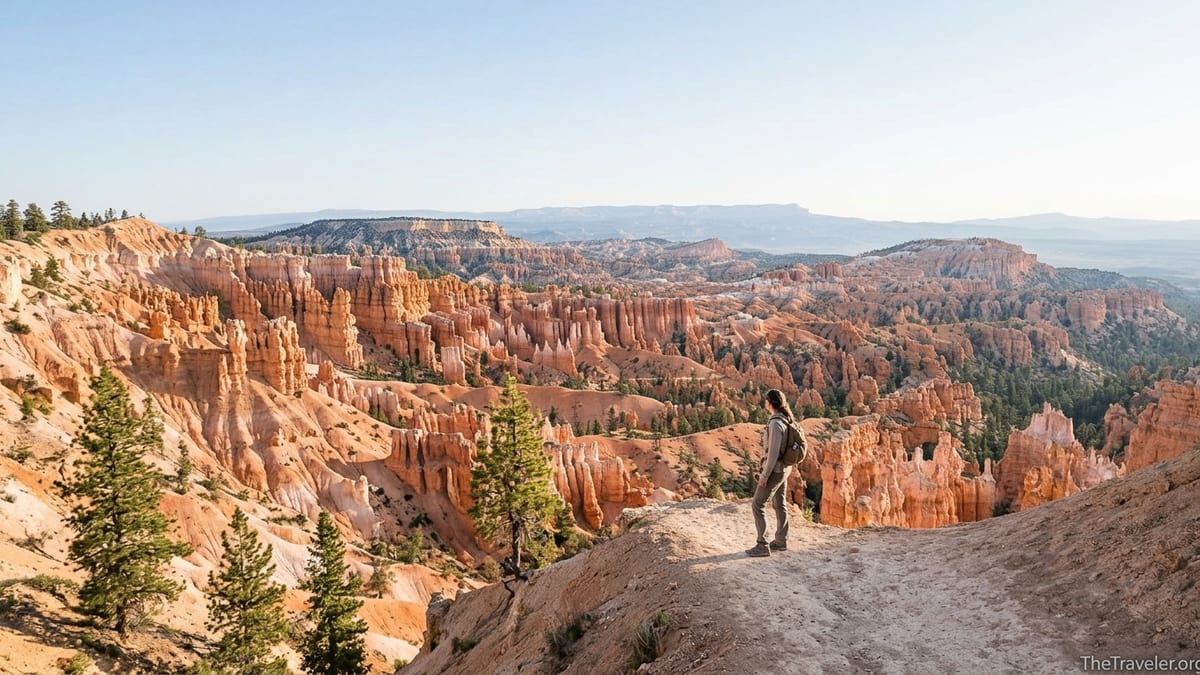
The character of the trail changes as you move along. Near the rim, you get broad panoramas toward the Aquarius Plateau and the Paria Valley. Deeper in Fairyland Canyon, you weave between towers and along clay slopes that glow orange, pink, and cream, with formations like Boat Mesa and the Sinking Ship in constant view. The loop also passes close to the Tower Bridge formation, which you can visit on a short signed spur trail.
Choosing the Best Route and Direction
Most hikers have three practical ways to experience Fairyland Loop. The first is the classic full counterclockwise loop starting and ending at Fairyland Point. You park on the short spur road about a mile south of the park entrance, walk past the Fairyland Canyon sign onto the trail, descend into the canyon, circle around Boat Mesa, and climb steadily back toward the point. This option is ideal if you want to avoid shuttle logistics and have all day to enjoy the hike.
The second popular option is to start from Sunrise Point, walk the Rim Trail north to the Tower Bridge junction, drop into the loop from there, and complete the circuit before climbing back up near Fairyland Point and returning along the rim. Visitors often choose this when Navajo Loop or other central trails are partially closed, and they want one big immersive hike instead of several short ones. You can leave your car at the large Sunrise Point parking area when the seasonal shuttle is not running, or use the park shuttle to reach Sunrise when the shuttle is in operation.
A third choice, for those short on time or unsure about the full 8 miles, is a partial out-and-back to Tower Bridge. From Sunrise Point you follow the Tower Bridge Trail down into the canyon for about 1.5 miles one way, see the arch-like formation, then turn around and climb back. This cuts your distance roughly in half while still offering a taste of Fairyland’s scenery. Families with kids or travelers dealing with altitude often find this a realistic compromise when they arrive and realize the full loop may be too ambitious for the day.
Whichever starting point you choose, going counterclockwise usually feels more gradual on the climbs and keeps the best long-distance views in front of you. Many recent hikers report that descending early while they are still fresh, then tackling the final rim section later in the day when the sun is lower and breezes pick up, makes the outing more pleasant. Clockwise is certainly possible, but the climbs tend to feel steeper and more relentless for many visitors.
Seasonal Conditions, Weather, and Safety
Fairyland Loop is accessible in most seasons, but the experience changes dramatically through the year. In late spring and fall, daytime highs are often in the 50s to 70s Fahrenheit, making this the most comfortable period for a long day on the trail. Even in May and October you should pack layers; Bryce’s elevation means frosty mornings are common, and temperatures can drop quickly when clouds roll in.
In summer, temperatures inside the canyon can feel much hotter than the forecast for Bryce Canyon City. The sun reflects off pale rock and there is limited shade. On a July afternoon when the rim may read in the 80s, hikers deep in Fairyland Canyon often describe it as feeling closer to the 90s. Monsoon season, typically late July through August, brings fast-developing thunderstorms. National Park Service rangers regularly advise hikers to start long trails like Fairyland early in the morning and be off exposed ridges by early afternoon to avoid lightning risk.
Winter introduces a very different dynamic. The one-mile access road to Fairyland Point is closed to vehicles in winter so it can be used for snowshoeing and cross-country skiing, which means your only practical access to the loop is from Sunrise Point and the Tower Bridge side. Snow and ice often linger on shaded sections of the trail. The park generally recommends traction devices and trekking poles if you plan to attempt longer hikes below the rim between roughly December and March. For many travelers, a winter visit is better spent on short snowshoe walks along the rim rather than committing to the full loop.
Regardless of season, altitude and dryness catch many visitors off guard. A typical Utah spring day might feel pleasantly cool, but the humidity is low and the sun’s intensity at 8,000 feet is high. Plan to carry at least 2 to 3 liters of water per person for the full loop, more if you are hiking in midsummer. There are no water sources on the trail itself, so fill up at the Visitor Center, Sunrise Point general store, or your accommodation before heading out. Simple precautions like setting a turnaround time, checking the park’s current conditions page the evening before, and sharing your plan with someone back home make a significant difference in overall safety.
Gear, Navigation, and On-Trail Tips
The Fairyland Loop Trail is well signed and maintained, but its length and rolling elevation profile mean lightweight, appropriate gear matters. The surface is primarily packed dirt and loose decomposed rock. Hiking shoes or boots with real tread make a difference on the steeper sandy descents and sustained climbs. Many recent visitors mention being glad they wore trail runners or mid-height boots instead of casual sneakers, especially after several hours on uneven ground.
For clothing, think in layers. A common strategy in shoulder season is a moisture-wicking T-shirt, a light fleece or synthetic mid-layer, and a windproof shell that you can stash in your pack by mid-morning. Sun protection is non-negotiable: a wide-brimmed hat, UV-rated sunglasses, and broad-spectrum sunscreen reap big dividends on a loop that spends so much time in direct sun. Even in April, hikers often report mild sunburns if they underestimate the reflection off pale rock.
Navigation is straightforward, but a downloaded offline map from an app like AllTrails, Gaia GPS, or the National Park Service app provides backup if fog or a sudden squall moves in. Because cell coverage in Bryce Canyon is patchy, it helps to pre-download the Fairyland Loop map before you arrive. On busy holiday weekends, you can use that same map to check alternate start times or variations if parking is full at your first-choice trailhead.
On the trail, pace is everything. The first two miles from either starting point often feel easy, leading some visitors to push too hard early on. A steadier approach works better: take short water breaks every 30 to 45 minutes, eat small snacks frequently, and be willing to pause at scenic benches or rock outcrops to let your heart rate come down. Many experienced Bryce hikers aim to finish the loop in around 5 hours with photography stops, building in a long snack break at a shaded point below Boat Mesa before tackling the final climb back to the rim.
Using the Park Shuttle and Local Logistics
Bryce Canyon operates a seasonal shuttle system that serves the main Bryce Amphitheater area from roughly April through mid-October. The shuttle connects the Visitor Center with key viewpoints such as Sunrise, Sunset, Inspiration, and Bryce Points, as well as major lodges and campgrounds in Bryce Canyon City. While the shuttle does not go to Fairyland Point itself, it is valuable if you plan to start or end your day at Sunrise Point, or if you are combining Fairyland Loop with other hikes that do lie on the shuttle route.
If you stay at hotels near the shuttle station or at properties like the large inns and campgrounds just outside the park entrance, you can leave your car and board the bus directly after showing your park pass. Many travelers like to ride the shuttle to Sunrise Point early, complete the Fairyland section of their day, then hop on a bus afterward to visit Sunset or Inspiration Point without hunting for extra parking. This helps avoid congestion in popular lots, particularly in mid-summer or during long holiday weekends when mid-day parking restrictions are sometimes implemented.
For those who prefer to drive, the short access road to Fairyland Point is about a mile south of the main park entrance on the left (east) side as you head into the park. The parking area is relatively small and fills early during peak season, especially with visitors who linger at the overlook. Arriving before 8:00 a.m. in June, July, or August gives you a better chance of finding a space without circling. In shoulder seasons, the lot is usually less pressured, though weekend mornings can still be busy.
Accommodation options cluster in Bryce Canyon City, just outside the park, where you will find chain-style hotels, motels, and campgrounds, as well as in smaller towns along Highway 12 such as Tropic and Panguitch. Travelers who want a relaxed start to their Fairyland hike often book one night close to the park, walk or shuttle to Sunrise Point at dawn, and then tackle the loop before returning for dinner in town. If you are combining Bryce with Zion or Capitol Reef in a larger Southwest itinerary, it is common to spend one or two nights near Bryce specifically to allow a full day for Fairyland Loop and a second, shorter hike.
Guided Hiking and Scenic Tour Options
While Fairyland Loop is perfectly feasible as a self-guided hike, many visitors appreciate the comfort and context that come with a guided experience. Several regional outfitters and local guide companies based around Bryce Canyon City and nearby towns offer both scenic driving tours and guided hikes that include Fairyland viewpoints or sections of the loop. These can be especially helpful if you are new to desert hiking, traveling with children, or simply prefer not to manage navigation and timing yourself.
Small-group scenic tours in Bryce typically last half a day and use comfortable vans or minibuses to visit viewpoints such as Fairyland Point, Sunrise Point, and Bryce Point. Prices frequently fall in the range of about 80 to 150 US dollars per adult, depending on group size and whether park entry fees are included. On these tours, guides share geology and cultural history while you step out for short walks to overlooks. This is a good option if you like the idea of seeing Fairyland Canyon from above, but are not ready for an 8-mile hike.
For more active travelers, private guided hikes offer a deeper on-foot experience. Some regional outfitters advertise 3 to 5 hour guided hikes that combine sections of Fairyland Loop with other classic Bryce trails, typically including transportation from local hotels, snacks, and a professional guide. Rates for private parties can start around 200 to 400 US dollars for one or two people, with per-person cost dropping when you add more hikers to the group. Guides can adjust the specific route based on your fitness, current trail conditions, and any temporary closures announced by the park.
When evaluating guided options, look for companies that clearly state they are authorized commercial service providers in Bryce Canyon National Park, that limit group size for safety and minimal environmental impact, and that provide gear guidance well in advance. A reputable guide will ask about your hiking experience and health conditions, confirm your footwear and clothing choices, and explain how they handle weather changes, altitude issues, and emergencies. This kind of pre-trip communication is a strong indicator that the experience will be safe and worth the investment.
Ethical Hiking and Photography on Fairyland Loop
Fairyland Loop traverses fragile desert soils and delicate formations that have taken millions of years to form. Staying on the main trail is one of the most important contributions you can make to protecting the area. The pale, bumpy soil surfaces you will see near the rim often contain biological soil crusts, living communities of lichens, mosses, and cyanobacteria that are easily damaged by a single footprint. Off-trail shortcuts carved down switchbacks may save a few seconds but result in erosion that the park spends significant resources trying to repair.
Photography is one of Fairyland’s main draws. Early morning and late afternoon light create deep shadows and pastel tones on the hoodoos, and many hikers find themselves stopping constantly for images. To keep things safe and respectful, avoid stepping out onto loose edges or narrow rock fins to “get the shot.” Plenty of dramatic compositions are possible from secure footing right on the trail, especially near rim viewpoints where guard rails or wide benches are present. Carrying a small tripod is reasonable, but be mindful not to block the path during busier times of day.
Sound and solitude are also part of the trail’s appeal. Compared with the bustling amphitheater overlooks, Fairyland often feels quiet once you descend a mile or two. Keeping voices low, using headphones instead of speakers for music, and yielding courteously to faster hikers or trail runners all contribute to a calm atmosphere that many visitors describe as the highlight of their day in Bryce. If you hike with children, this loop offers a great opportunity to practice Leave No Trace habits such as packing out every snack wrapper and observing wildlife from a distance.
Finally, consider the cumulative impact of your visit. Refilling a reusable water bottle instead of buying disposable plastics, choosing a shuttle or shared tour where practical, and supporting local businesses in Bryce Canyon City and surrounding towns all help ensure that the communities around the park benefit from tourism in sustainable ways. When you look back on your Fairyland Loop experience, it is satisfying to know your choices supported both the landscape and the people who call this part of Utah home.
The Takeaway
The Fairyland Loop Trail offers one of the most rewarding day hikes in Bryce Canyon National Park, combining long-distance views from the rim with intimate hours among hoodoos and amphitheaters. It is quieter than many of the park’s marquee trails, but the commitment of roughly 8 miles at altitude means it requires thoughtful planning.
Deciding where to start, understanding seasonal conditions, and packing appropriate gear all shape the quality of your experience. Adding a guided hike or scenic tour can deepen your understanding of Bryce’s geology and culture, while careful attention to safety and Leave No Trace ethics keeps the canyon healthy for the next visitors. Whether you tackle the full loop in a single push or sample its highlights on a shorter outing, Fairyland is well worth building into any Bryce Canyon itinerary.
FAQ
Q1. How long does it take to hike the Fairyland Loop Trail?
Most visitors take about 4 to 5 hours to complete the roughly 8-mile loop, including short breaks and photo stops. Very fit hikers may move faster, while those adjusting to altitude sometimes need 6 hours or more.
Q2. Is the Fairyland Loop Trail suitable for beginners?
It is generally considered a strenuous day hike due to distance, rolling terrain, and elevation around 8,000 feet. Motivated beginners with good fitness who start early, carry enough water, and pace themselves can complete it, but true first-time hikers may be more comfortable starting with shorter trails such as the Queen’s Garden or the Tower Bridge out-and-back.
Q3. Do I need a guide to hike Fairyland Loop?
No, the trail is well marked and most people hike it independently. However, hiring a local guide can be helpful if you are concerned about navigation, altitude, or pacing, or if you simply want added context about geology, history, and ecology as you go.
Q4. Can I reach the Fairyland Loop Trail by shuttle?
The park shuttle does not serve Fairyland Point, where one version of the loop begins. You can, however, use the shuttle to reach Sunrise Point and access the loop via the Rim Trail and Tower Bridge junction, or to combine Fairyland with other shuttle-accessible hikes on the same day.
Q5. What is the best season to hike Fairyland Loop?
Late spring and fall usually offer the most comfortable combination of temperatures and trail conditions. Summer is possible but can be hot and exposed, especially in the canyon, while winter often brings snow, ice, and a seasonal closure of the access road to Fairyland Point.
Q6. How much water should I carry on the trail?
Plan on at least 2 to 3 liters of water per person for the full loop, more during hot summer months. There are no reliable water sources on the trail itself, so fill up at the Visitor Center, Sunrise Point area, or your lodging before you start.
Q7. Are there bathrooms along the Fairyland Loop Trail?
There are no restrooms on the trail itself. Restrooms are available at the Visitor Center and near major viewpoints such as Sunrise Point. Many hikers use facilities before starting and again after finishing, planning accordingly for the hours they will be on the loop.
Q8. Can children hike the Fairyland Loop Trail?
Active older children and teenagers who are accustomed to day hikes can often handle the loop, but younger kids may find the distance and elevation changes tiring. Families frequently opt for shorter segments like the Tower Bridge out-and-back to enjoy similar scenery with less commitment.
Q9. What should I wear for a hike on Fairyland Loop?
Wear sturdy hiking shoes or trail runners with good tread, moisture-wicking layers, a hat, and sunglasses. In most seasons, a light insulating layer and a wind or rain shell in your pack are wise, as temperatures and weather can change quickly at Bryce’s elevation.
Q10. Is Fairyland Loop less crowded than other Bryce Canyon trails?
Yes, Fairyland Loop is typically quieter than high-profile routes like the Navajo and Queen’s Garden combination. You will likely see other hikers, but once you are a few miles into the loop, the density of people usually drops, especially if you start early in the day.